

Decoding the “Smart” Standard: Korean Education & HR Buzzwords
Introduction
안녕하세요, 매일한글(Daily Hangul)입니다!
If you are working in Korea, watching the news, or raising a child here, you might have noticed that the definition of “being smart” is changing. It’s no longer just about memorizing facts.
We have received questions from advanced learners who are confused by the complex terminology used in company vision statements and school newsletters.
Synthesized Case Study (Based on common learner patterns):
“Mark,” an expat manager in Seoul, often hears his CEO talk about hiring a “Chang-ui yung-hap-hyeong in-jae.” He knows the individual words, but putting them together sounds like a tongue twister. Is it a scientist? An artist? He nodded along but felt lost.
Today, we will decode this high-level vocabulary related to “Nurturing Creative Convergence Talents.” These aren’t just education terms; they are key concepts in understanding modern Korean society and business culture (C1 Level).
At a Glance: Today’s Key Expressions
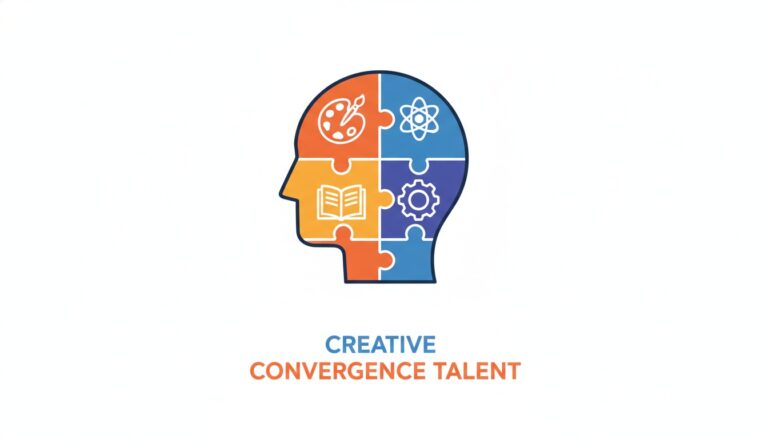
- 창의 융합형 인재 (Creative Convergence Talent): The ideal modern individual.
- 문이과 통합 (Integration of Liberal Arts and Natural Sciences): Breaking academic barriers.
- 역량 (Competency/Capability): The corporate/HR favorite word.
-
When to use: In business meetings, interviews, academic discussions, or when reading news articles.
- Difficulty: ⭐⭐⭐⭐⭐ (Advanced / Professional)
Table of Contents
- Today’s Key Expressions Deep Dive
- Textbook vs. Real Korean (The Evolution of “Smart”)
- Unique Analysis: The “Competency” Hierarchy
- Real-Life Scenario: The Strategy Meeting
- Shadowing Challenge
- FAQ & Wrap-up
Today’s Key Expressions Deep Dive
1. 창의 융합형 인재 (Chang-ui yung-hap-hyeong in-jae)
- Meaning: Creative Convergence Talent / Renaissance Man (in a modern sense)
- Context: This is the ultimate goal of the current Korean education system and corporate hiring. It refers to someone who can combine humanities imagination with scientific technology.
- Tutor’s Secret Note: This phrase is extremely formal. You will see it on university brochures or company “Mission & Vision” posters. If you use this to describe your friend, people will laugh because you sound like a textbook.
- Pronunciation Clinic:
[창의 융하평 인재]– Note that ‘형’ and ‘인’ link naturally.
Examples:
* 우리 회사는 창의 융합형 인재를 원합니다.
* (Uri hoesa-neun chang-ui yung-hap-hyeong in-jae-reul won-ham-nida.)
* Our company wants creative convergence talents.
* 미래 사회는 창의 융합형 인재가 이끌 것입니다.
* (Mirae sahoe-neun chang-ui yung-hap-hyeong in-jae-ga ikkeul geot-imnida.)
* Creative convergence talents will lead the future society.
* 학교 교육 목표가 창의 융합형 인재 육성이에요.
* (Hakgyo gyoyuk mokpyo-ga chang-ui yung-hap-hyeong in-jae yukseong-ieyo.)
* The school’s educational goal is nurturing creative convergence talents.
2. 문이과 통합 (Mun-i-gwa tong-hap)
- Meaning: Integration of Liberal Arts (Moon-gwa) and Natural Sciences (I-gwa)
- Context: Historically, Korean students had to choose between Arts/Humanities or Sciences in high school. This policy removes that barrier to foster “convergence.”
- Tutor’s Secret Note: Even though the system is integrated (통합), Koreans still jokingly ask, “Are you Moon-gwa (emotional/literary) or I-gwa (logical/mathematical)?” It’s almost like asking for an MBTI type!
Examples:
* 2015년부터 문이과 통합 교육과정이 시작되었어요.
* (I-cheon-sip-o-nyeon-buteo mun-i-gwa tong-hap gyoyuk-gwajeong-i sijak-doeeosseoyo.)
* The integrated curriculum of liberal arts and sciences started in 2015.
* 문이과 통합형 수능을 봐야 해요.
* (Mun-i-gwa tong-hap-hyeong Suneung-eul bwaya haeyo.)
* We have to take the integrated CSAT (college entrance exam).
* 이제는 문이과 통합적 사고가 중요해요.
* (Ije-neun mun-i-gwa tong-hap-jeok sago-ga jung-yo-haeyo.)
* Now, integrated thinking of arts and sciences is important.
3. 역량 (Yeok-ryang)
- Meaning: Competency / Capability / Skill set
- Context: Essential Business Word. It’s not just “ability” (능력); it implies a professional, measurable skill set required for a job or task.
- Pronunciation Clinic: Critical Point! It is pronounced [영냥] (yeong-nyang) due to nasalization rules. Do not say [yeok-ryang].
Examples:
* 문제 해결 역량을 키워야 합니다.
* (Munje haegyeol yeok-ryang-eul kiwoya hamnida.)
* We must develop problem-solving competencies.
* 그분은 리더십 역량이 뛰어나세요.
* (Geu-bun-eun lideo-sip yeok-ryang-i ttwieonaseyo.)
* That person has outstanding leadership capabilities.
* 핵심 역량이 무엇인가요?
* (Haeksim yeok-ryang-i mueot-in-gayo?)
* What is your core competency?
Mini Quiz: Click to reveal answer
- Q. Fill in the blank: “We need to improve our employee’s communication ______.”
- (직원들의 의사소통 [ ]을 강화해야 합니다.)
- Answer: 역량 (Yeok-ryang) / [영냥]
Textbook vs. Real Korean
Describing Someone’s Ability
| Context | Expression (Korean/Romanization) | Nuance |
|---|---|---|
| Book (Basic) | 공부를 잘해요 (Gongbu-reul jal-haeyo) | Used for students. Means they get good grades. |
| Real (Casual) | 머리가 잘 돌아가요 (Meori-ga jal doragayo) | Literally “Head spins well.” Quick-witted, smart. |
| Real (Biz/Edu) | 사고력이 뛰어나요 (Sago-ryeok-i ttwieonayo) | “Excellent thinking power.” Critical thinking skills. |
| Real (HR/Policy) | 핵심 인재입니다 (Haeksim in-jae-imnida) | “Core Talent.” Someone key to the organization. |
Unique Analysis: The “Competency” Hierarchy
How do you sound professional when describing talent? Let’s look at the Register Thermometer.
- 똑똑하다 (Ttok-ttok-hada): Casual. Good for kids, friends, or general situations. (Level 1)
- 유능하다 (Yu-neung-hada): Formal. “Competent.” Good for general compliments. (Level 3)
- 잠재력이 있다 (Jam-jae-ryeok-i itda): Formal. “Has potential.” Used for rookies/juniors. (Level 4)
- 역량을 갖추다 (Yeok-ryang-eul gatchuda): Professional/HR. “Possess the competency.” Used in evaluations. (Level 5)
Real-Life Scenario: The Strategy Meeting
Setting: A team leader (Teamjang) and a manager (Deri) discussing hiring new staff.
Teamjang: 이번 채용 컨셉은 뭐죠?
(Ibeon chaeyong keonsep-eun mwojo?)
What is the concept for this recruitment?
Deri: 네, 단순 암기보다는 창의 융합형 인재를 뽑으려고 합니다.
(Ne, dansun amgi-bodaneun chang-ui yung-hap-hyeong in-jae-reul ppobeuryeogo hamnida.)
Yes, rather than simple memorization (skills), we plan to hire creative convergence talents.
Teamjang: 맞아요. 요즘은 문제 해결 역량이 제일 중요하니까요.
(Majayo. Yojeum-eun munje haegyeol yeok-ryang-i jeil jung-yo-hanikkayo.)
Right. These days, problem-solving competency is the most important thing.
Deri: 면접 질문도 그쪽으로 준비하겠습니다.
(Myeonjeop jilmun-do geujjok-euro junbi-haget-seumnida.)
I will prepare the interview questions in that direction.
Culture Tip: In Korean companies, “In-jae” (Talent/Person) is often used to refer to employees or candidates in a respectful, resource-focused way.
Shadowing Challenge
Try to speak like a news anchor or a CEO. Focus on the crisp pronunciation of the Sino-Korean words.
Script:
“미래는 암기왕이 아니라, 창의 융합형 인재가 만드는 세상입니다.”
(Mirae-neun amgi-wang-i anira, chang-ui yung-hap-hyeong in-jae-ga mandeuneun sesang-imnida.)
Translation: The future is a world made not by memorization kings, but by creative convergence talents.
- [ ] Said it slowly (Focus on pronunciation)
- [ ] Said it at normal speed
- [ ] Said it with confidence (Professional tone)
FAQ (Frequently Asked Questions)
Q1: Can I say “융합형 인재” to describe my boyfriend/girlfriend?
A: No! It would sound very strange and unromantic. It sounds like you are interviewing them for a job. Use “센스 있다” (sense itda – has good sense) instead.
Q2: Is “스펙 (Spec)” related to this?
A: Yes. “Spec” (Specification) refers to degrees and scores. However, current policies emphasize 역량 (Competency) over just blind 스펙 (Specs).
Wrap-up & Mission
Summary: Today we learned that being smart in Korea is now defined as being a 창의 융합형 인재 with strong 역량.
Today’s Mission:
Next time you read a job description (even in English) or a company website in Korea, try to find where they might use the word 역량 or 인재. Replace the English word with the Korean term in your head!
Question for you:
What is the most important “Yeok-ryang” (Competency) in your field? Tell us in the comments! (e.g., Coding, Communication, Sales…)
Final Quiz (Scroll down to check)
- Which word is pronounced as [영냥]?
a) 융합
b) 역량
c) 창의 -
What does “문이과 통합” refer to?
a) Integration of elementary and middle schools
b) Integration of Liberal Arts and Sciences
c) Integration of sports and music -
Fill in the blank: “Our goal is nurturing ______ talents.”
(창의 [ ]형 인재)
Answers: 1. b, 2. b, 3. 융합 (yung-hap)
Frequently Asked Questions (FAQ)
Q: What does "창의 융합형 인재 (Chang-ui yung-hap-hyeong in-jae)" mean in Korean and how do you pronounce it?
A: In Korean, "창의 융합형 인재 (Chang-ui yung-hap-hyeong in-jae)" is pronounced [Clinic: [창의 융하평 인재] and means: Creative Convergence Talent / Renaissance Man (in a modern sense)
Q: What does "문이과 통합 (Mun-i-gwa tong-hap)" mean in Korean and how do you pronounce it?
A: In Korean, "문이과 통합 (Mun-i-gwa tong-hap)" is pronounced [see lesson guide] and means: Integration of Liberal Arts (Moon-gwa) and Natural Sciences (I-gwa)
Q: What does "역량 (Yeok-ryang)" mean in Korean and how do you pronounce it?
A: In Korean, "역량 (Yeok-ryang)" is pronounced [Clinic: Critical Point! It is pronounced [영냥] and means: Competency / Capability / Skill set







