

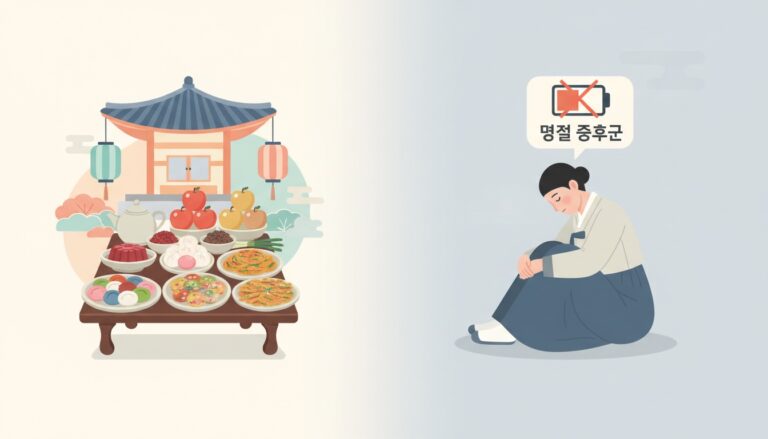
Surviving Korean Holidays: How to Handle Family Stress & Nagging Like a Local
Introduction
Hello, it’s Daily Hangul!
Most textbooks teach you that Chuseok (추석) and Seollal (설날) are happy times filled with delicious food and laughter. While that is true, there is a hidden side to Korean holidays that every advanced learner must know: Stress.
Synthetic Case Study: based on recurring stories from my students.
Many intermediate learners working in Korea have shared a similar story: “I came back to work after the long weekend, expecting everyone to be refreshed. Instead, my Korean colleagues looked exhausted, and the office was quieter than usual.” Or, learners married to Koreans often confess, “The food was great, but the questions about when we’re having a baby were intense.”
Today, we are going to learn the real language of Korean holidays—the words used to describe stress, family pressure, and the relief that comes after. This is the nuance you need to understand the true atmosphere of a Korean home.
At a Glance: Today’s Summary
- Key Expressions: 명절 증후군 (Holiday Syndrome), 잔소리 (Nagging), 눈치(를) 보다 (Walking on eggshells).
- Safe Usage: Best used with close friends or empathetic colleagues. Avoid using these directly to your elders or in-laws unless you have a very close relationship.
- Level (B2): These terms help you understand the emotional context behind the words, moving you from a “foreigner” to an “insider.”
Table of Contents
- Today’s Core Expressions: Deep Dive
- Textbook vs. Real Korean
- Analysis: The “Nagging” Defense System
- Real Life Scenario: The Car Ride Home
- Shadowing Challenge
- FAQ & Wrap-up
Today’s Core Expressions: Deep Dive
1. 명절 증후군 (Myeongjeol jeunghugun)
- Meaning: Holiday Syndrome (Physical and mental stress caused by holiday labor and family pressure).
- Usage & Register:
- Who: Often discussed among women/wives, but increasingly common for everyone facing traffic and financial pressure.
- Tone: Serious or complaining tone. Usually Haeyo-che (polite informal) or Hae-che (casual).
- Tutor’s Secret Note:
- This isn’t a medical term, but a social one. It covers everything from wrist pain (from cooking jeon) to depression from family arguments.
- Warning: Do not ask an elder, “Do you have Myeongjeol jeunghugun?” It might sound like you are accusing them of being sensitive.
- Pronunciation Clinic:
- [명절 증후군]: Pronounce distinctively. The ‘h’ in ‘hu’ (후) is often weak, sounding like Jeung-u-gun in fast speech, but try to keep the ‘h’ sound clear.
- Examples:
- Friend: 명절 증후군 때문에 몸살이 났어요.
- (Myeongjeol jeunghugun ttaemune momsal-i nasseoyo.)
- I got body aches because of the holiday syndrome.
- News: 명절 증후군을 날리는 스트레칭 방법을 소개합니다.
- (Myeongjeol jeunghugun-eul nallineun seuteureching bangbeop-eul sogaehamnida.)
- We introduce stretching methods to blow away holiday syndrome.
- Colleague: 이번엔 명절 증후군 없이 지나갔으면 좋겠어요.
- (Ibeonen myeongjeol jeunghugun eopsi jinagasseumyeon jokesseoyo.)
- I hope to get through it without holiday syndrome this time.
- Friend: 명절 증후군 때문에 몸살이 났어요.
- Alternatives:
- Formal: 명절 스트레스 (Myeongjeol seuteureseu – Holiday stress)
- Casual: 명절 후유증 (Myeongjeol huyujeung – Holiday aftereffects)
- Mini Quiz:
Click to reveal answer
Q. “I am tired because of the holiday work.” -> _______ 때문에 피곤해요.
Answer: 명절 증후군 (or 명절 스트레스)
2. 잔소리 (Jansori)
- Meaning: Nagging / Nitpicking / Unsolicited advice.
- Usage & Register:
- Who: Used by the victim of the nagging to complain to others.
- Tone: Frustrated or resigned.
- Tutor’s Secret Note:
- In Korea, nagging is sometimes excused as “affection” (정), but for the listener, it is just stress. Common topics: Marriage, Job, Diet, Baby.
- Nuance: It literally means “small sounds” (Jan + Sori), implying they are trivial but annoying noises.
- Pronunciation Clinic:
- [잔소리]: The ‘s’ often sounds slightly tense. Jan-so-ri.
- Examples:
- Single Person: 친척들의 결혼 잔소리가 너무 듣기 싫어요.
- (Chincheokdeul-ui gyeolhon jansori-ga neomu deutgi sireoyo.)
- I really hate hearing my relatives nag about marriage.
- Student: 엄마의 공부 잔소리는 끝이 없어요.
- (Eomma-ui gongbu jansori-neun kkeuch-i eopseoyo.)
- Mom’s nagging about studying never ends.
- Idiom: 잔소리 좀 그만해!
- (Jansori jom geumanhae!)
- Stop nagging me!
- Single Person: 친척들의 결혼 잔소리가 너무 듣기 싫어요.
- Alternatives:
- Polite/Indirect: 걱정어린 말씀 (Geokjeong-eorin malsseum – Words of concern)
- Slang: 꼰대질 (Kkondae-jil – Acting like an old boomer)
- Mini Quiz:
Click to reveal answer
Q. “Hearing the advice regarding getting a job is stressful.” -> 취업 _______ 듣는 게 스트레스예요.
Answer: 잔소리 (Jansori)
3. 눈치(를) 보다 (Nunchi-reul boda)
- Meaning: To walk on eggshells / To be self-conscious / To gauge the mood nervously.
- Usage & Register:
- Who: Daughters-in-law at in-laws’ houses, or employees leaving work early before a holiday.
- Tone: Anxious or sympathetic.
- Tutor’s Secret Note:
- While “having Nunchi” is good (emotional intelligence), “seeing Nunchi” (looking at Nunchi) implies fear and discomfort. You are constantly checking if others are angry.
- Pronunciation Clinic:
- [눈치]: Nun-chi.
- Examples:
- In-laws house: 시댁에서는 계속 눈치를 보게 돼요.
- (Sidaeg-eseoneun gyesok nunchi-reul boge dwaeyo.)
- I keep walking on eggshells at my in-laws’ house.
- Office: 퇴근하고 싶은데 상사 눈치 보느라 못 가고 있어요.
- (Toegeunhago sipeunde sangsa nunchi boneura mot gago isseoyo.)
- I want to leave work, but I can’t because I’m reading my boss’s mood.
- Advice: 눈치 보지 말고 편하게 먹어.
- (Nunchi boji malgo pyeonhage meogeo.)
- Don’t be self-conscious, just eat comfortably.
- In-laws house: 시댁에서는 계속 눈치를 보게 돼요.
- Alternatives:
- Similar: 마음이 불편하다 (Maeum-i bulpyeonhada – To feel uncomfortable)
- Mini Quiz:
Click to reveal answer
Q. “Don’t worry about what others think, just do it.” -> 남 _______ 보지 말고 그냥 해.
Answer: 눈치 (Nunchi)
Textbook vs. Real Korean
| Situation | Textbook Korean (Book Korean) | Real Korean (Reality) |
|---|---|---|
| Greeting | 즐거운 명절 보내세요. (Jeulgeoun myeongjeol bonaeseyo.) Have a joyful holiday. |
맛있는 거 많이 먹고 푹 쉬어. (Masinneun geo mani meokgo puk swieo.) Eat lots of yummy food and get some real rest. |
| Asking about holiday | 고향에 잘 다녀오셨어요? (Gohyang-e jal danyeo-osyeosseoyo?) Did you visit your hometown well? |
차 많이 막혔지? 고생했어. (Cha mani makhyeotji? Gosaenghaesseo.) Traffic was bad, right? You suffered/worked hard. |
| Leaving | 안녕히 계세요. (Annyeonghi gyeseyo.) Goodbye (Stay in peace). |
저 먼저 가볼게요. 쉬세요. (Jeo meonjeo gabolgeyo. Swiseyo.) I’ll get going first. Please rest. |
Tutor’s Tip: In reality, acknowledging the “suffering” (traffic, cooking, fatigue) creates a stronger bond than just wishing happiness.
Deep Analysis: The “Tone Thermometer” (Dealing with Nagging)
How should you respond when an elder asks: “When are you getting married?” (결혼 언제 할 거니?)
| Level | Expression | Nuance | Risk Level |
|---|---|---|---|
| Level 1 (Polite) | “좋은 소식 있으면 가장 먼저 알려드릴게요.” (Joeun sosik isseumyeon gajang meonjeo allyeodeurilgeyo.) If there is good news, I’ll tell you first. |
Respectful, defensive, standard. | 🟢 Safe |
| Level 2 (Witty) | “용돈 주시면 생각해 볼게요!” (Yongdon jusimyeon saenggakhae bolgeyo!) I’ll think about it if you give me pocket money! |
Joking, changes the subject. | 🟡 Moderate (Depends on relationship) |
| Level 3 (Cold) | “알아서 할게요.” (Araseo halgeyo.) I’ll take care of it myself. |
“Mind your own business.” | 🔴 Dangerous (Use only if angry) |
Real Life Scenario: Role Play
Setting: A married couple, Min-su (Korean) and Elena (Foreigner), driving back to Seoul after visiting Min-su’s parents for Chuseok.
Min-su: 엘레나, 오늘 고생 많았어. 우리 엄마가 잔소리 많이 했지?
(Elena, oneul gosaeng manasseo. Uri eomma-ga jansori mani haetji?)
Elena, you worked hard today. My mom nagged a lot, right?
Elena: 아니야, 괜찮아. 근데 아까 설거지할 때 조금 눈치 보였어.
(Aniya, gwaenchana. Geunde akka seolgeojihal ttae jogeum nunchi boyeosseo.)
No, it’s okay. But earlier when doing the dishes, I felt like I was walking on eggshells a bit.
Min-su: 미안해. 내가 더 도와줬어야 했는데. 명절 증후군 생기겠다.
(Mianhae. Naega deo dowajwosseoya haenneunde. Myeongjeol jeunghugun saenggigetta.)
Sorry. I should have helped more. You might get holiday syndrome.
Elena: 집에 가서 맛있는 거 시켜 먹으면 나을 것 같아!
(Jibe gaseo masinneun geo sikyeo meogeumyeon naeul geot gata!)
I think I’ll feel better if we order something delicious when we get home!
Min-su: 그래, 오늘 저녁은 배달이다!
(Geurae, oneul jeonyeok-eun baedal-ida!)
Okay, tonight is delivery food!
💡 Culture Tip:
Even if you are upset, using the phrase “고생 많았어” (You suffered/worked hard) to your partner after a family gathering acts as a magic spell to dissolve tension.
Shadowing & Speaking Challenge
Instructions: Read this monologue 3 times. It captures the true feeling of a “Real Korean” returning to work after a holiday.
“아, 진짜 출근하기 싫다. 연휴가 너무 짧았어. 어제 올라오는데 차가 너무 막혀서 아직도 피곤해. 이게 바로 명절 증후군인가 봐.”
(A, jinjja chulgeunhagi silta. Yeonhyu-ga neomu jjalbasseo. Eoje ollaoneunde cha-ga neomu makhyeoseo ajikdo pigonhae. Ige baro myeongjeol jeunghugun-inga bwa.)
“Ah, I really don’t want to go to work. The long weekend was too short. The traffic was so bad coming back yesterday that I’m still tired. I guess this is exactly what holiday syndrome is.”
Checklist:
* [ ] Spoke slowly checking pronunciation.
* [ ] Spoke at normal speed.
* [ ] Acted it out with a tired facial expression.
Pronunciation Focus:
* 막혀서 [마켜서]: The ‘ㄱ’ and ‘ㅎ’ combine to make a strong ‘ㅋ’ sound (Makhyeoseo).
FAQ (Frequently Asked Questions)
Q1: Can I say “명절 증후군” to my boss?
A: No. It sounds like you are complaining about being tired and might slack off. To your boss, just say “잘 쉬고 왔습니다” (I rested well and returned).
Q2: What if I don’t understand the “Jansori” (nagging)?
A: It’s actually better! Just smile and say “한국말이 아직 어려워서요…” (Hangu-mal-i ajik eoryeowoseoyo – Korean is still difficult for me…). This is the ultimate foreigner privilege/shield.
Wrap-up & Action Item
Summary: Today we learned that Korean holidays aren’t just about fun; they involve stress (명절 증후군), nagging (잔소리), and reading the room (눈치).
Today’s Mission:
Next time you watch a K-Drama scene with a big family dinner, try to spot who is giving the Jansori and who is Looking at Nunchi. It will change how you view the scene!
Comment Question:
What is the worst “Jansori” (nagging) you have ever heard from a relative? Tell me in the comments!
Final Quiz
- Which word best describes the physical/mental stress after a holiday?
A) 월요병 (Monday Sickness)
B) 명절 증후군 (Holiday Syndrome)
C) 상사병 (Lovesickness) -
What is the polite way to deflect nagging questions about marriage?
A) “알아서 할게요.” (I’ll take care of it.)
B) “잔소리 그만하세요.” (Stop nagging.)
C) “좋은 소식 있으면 알려드릴게요.” (I’ll let you know if there is good news.) -
Fill in the blank: “At the in-laws’ house, I had to _______.”
(시댁에서 계속 _______를 봤어요.)
Answer: 눈치 (Nunchi)
Answers: 1. (B), 2. (C), 3. 눈치
Frequently Asked Questions (FAQ)
Q: What does "명절 증후군 (Myeongjeol jeunghugun)" mean in Korean and how do you pronounce it?
A: In Korean, "명절 증후군 (Myeongjeol jeunghugun)" is pronounced [see lesson guide] and means: Holiday Syndrome (Physical and mental stress caused by holiday labor and family pressure).
Q: What does "잔소리 (Jansori)" mean in Korean and how do you pronounce it?
A: In Korean, "잔소리 (Jansori)" is pronounced [see lesson guide] and means: Nagging / Nitpicking / Unsolicited advice.
Q: What does "눈치(를) 보다 (Nunchi-reul boda)" mean in Korean and how do you pronounce it?
A: In Korean, "눈치(를) 보다 (Nunchi-reul boda)" is pronounced [see lesson guide] and means: To walk on eggshells / To be self-conscious / To gauge the mood nervously.







