

안녕하세요! 여러분의 한국어 실력을 업그레이드해 줄 매일한글(DailyHangul.com)입니다! 👋🌿
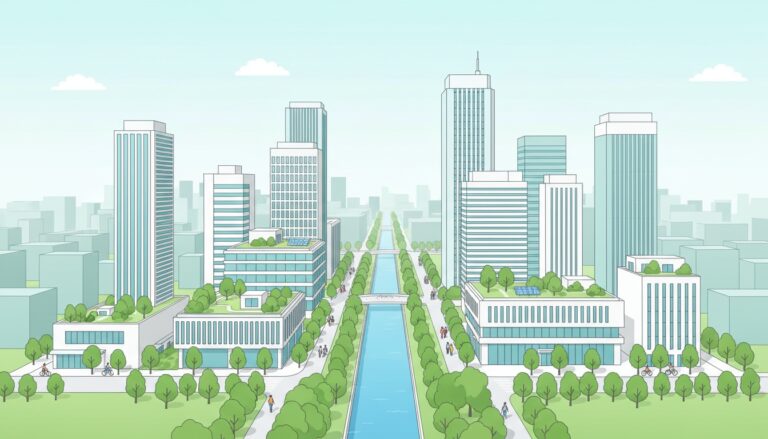
Have you ever walked through a beautiful park in the middle of a busy city like Seoul? 🏙️🌳 Just like in K-dramas where the main characters take a romantic walk along the Han River or Cheonggyecheon Stream, nature in the city is very important!
Today, we are going to learn how to talk about “Urban Ecosystems and Biodiversity” (don’t worry, we’ll make it simple!). This topic is becoming very popular in Korea as people want to live in greener, healthier cities. Let’s learn how to express our love for nature and the city! 💚
🌿 Today’s Key Expressions
Here are 4 useful expressions to discuss nature in the city!
1. 환경 (Hwangyeong)
- Pronunciation: [Hwan-gyeong]
- English Meaning: Environment
- Detail: This is the most basic and essential word. You can use it in phrases like “환경을 생각해요” (Think about the environment).
- 💡 Pronunciation Tip: The ‘gy’ (ㄱ) sound in ‘gyeong’ is soft, like the ‘g’ in ‘go’. Make sure to pronounce the final ‘ng’ (ㅇ) clearly in the throat!
2. 지키다 (Jikida)
- Pronunciation: [Ji-ki-da]
- English Meaning: To protect / To keep
- Detail: While ‘보호하다’ (bohohada) is the formal word for protect, 지키다 is used very often in daily conversation. You can say “자연을 지키자” (Let’s protect nature).
- 💡 Pronunciation Tip: The ‘k’ (ㅋ) sound is aspirated. It sounds like there is a puff of air coming out when you say ‘ki’.
3. 공존 (Gongjon)
- Pronunciation: [Gong-jon]
- English Meaning: Coexistence
- Detail: This is a slightly advanced word, but it makes you sound very smart! It’s perfect for discussing how humans and animals live together in the city.
- 💡 Pronunciation Tip: Both syllables end with ‘n’ (ㄴ). Keep your tongue touching the roof of your mouth at the end of each syllable.
4. 숲을 만들다 (Supeul mandeulda)
- Pronunciation: [Su-peul man-deul-da]
- English Meaning: To create a forest / To make a grove
- Detail: In urban planning, Koreans often talk about “making a forest” inside the city to clean the air.
- 💡 Pronunciation Tip: When 숲 (Sup) is followed by the particle 을 (eul), the ‘p’ (ㅍ) sound moves to the next syllable. So it sounds like [Su-peul], not [Sup-eul]. This is called Liaison!
🗣️ Real-life Conversation: Designing a Green City
Imagine you and your friend are looking at a building covered in plants.
Minji: 우와, 저 건물 좀 봐! 나무가 정말 많아.
(Uwa, jeo geonmul jom bwa! Namuga jeongmal mana.)
Wow, look at that building! There are so many trees.
Alex: 정말 멋지다! 도심 속에 숲이 있는 것 같아.
(Jeongmal meotjida! Dosim soge supi inneun geot gata.)
It’s so cool! It looks like there is a forest inside the city center.
Minji: 맞아. 이렇게 하면 환경을 지킬 수 있어.
(Maja. Ireoke hamyeon hwangyeongeul jikil su isseo.)
Right. If we do this, we can protect the environment.
Alex: 사람과 자연이 공존하는 도시가 되면 좋겠어!
(Saramgwa jayeoni gongjonhaneun dosiga doemyeon jokesseo!)
I hope it becomes a city where humans and nature coexist!
🇰🇷 Culture Tip: Cheonggyecheon Stream (청계천)
Did you know Seoul has a famous example of restoring an urban ecosystem? It’s the Cheonggyecheon Stream! 🌊
Originally, it was covered by a concrete highway. But in the 2000s, the city decided to remove the road and bring back the stream to cool down the city and bring nature back. Now, it’s a famous spot for couples and tourists! When you visit, you can see fish and birds right in the middle of downtown Seoul. It is a perfect example of 공존 (coexistence)! 🐟🏢
📝 Wrap-up & Quiz
Today we learned how to talk about making our cities greener! Using words like 공존 (coexistence) will definitely impress your Korean friends.
Let’s test your knowledge! (Answers are at the bottom)
- How do you say “Environment” in Korean?
(Hint: Hwan-_______) - Fill in the blank: 자연을 OOO. (Let’s protect nature.)
a) 먹다 (meokda) b) 지키다 (jikida)
Great job today! See you next time! 안녕! 👋
[Answers]
1. 경 (gyeong) -> 환경
2. b) 지키다
Frequently Asked Questions (FAQ)
Q: What does "환경 (Hwangyeong)" mean in Korean and how do you pronounce it?
A: In Korean, "환경 (Hwangyeong)" is pronounced [Hwan-gyeong] and means: Environment
Q: What does "지키다 (Jikida)" mean in Korean and how do you pronounce it?
A: In Korean, "지키다 (Jikida)" is pronounced [Ji-ki-da] and means: To protect / To keep
Q: What does "공존 (Gongjon)" mean in Korean and how do you pronounce it?
A: In Korean, "공존 (Gongjon)" is pronounced [Gong-jon] and means: Coexistence
Q: What does "숲을 만들다 (Supeul mandeulda)" mean in Korean and how do you pronounce it?
A: In Korean, "숲을 만들다 (Supeul mandeulda)" is pronounced [Su-peul man-deul-da] and means: To create a forest / To make a grove







