

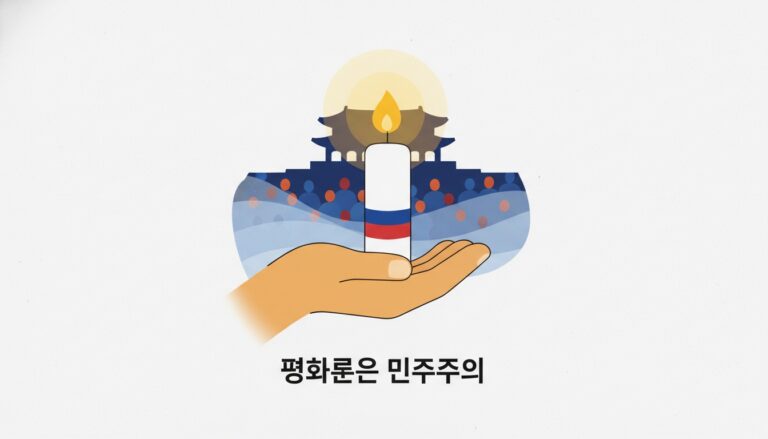
🕯️ Real Korean History: Democracy & People Power! 🇰🇷
1. Introduction
Hello, everyone! It’s your friendly Korean tutor, Daily Hangul! 👋✨
Have you ever watched intense K-movies like A Taxi Driver (택시운전사), 1987, or The Attorney (변호인)? 🎬 These films show the incredible history of Korea’s Democratization (민주화).
Today, we are going to learn meaningful words related to Korean history and society. Even if you are a beginner, knowing these words will help you understand the “spirit” of Korea and enjoy historical dramas much more! Let’s dive into the power of the people! 💪🇰🇷
2. Key Expressions
Here are 4 key words that define Korean civil society.
1️⃣ 민주주의 (Minjujuui)
- Pronunciation: [Min-ju-ju-ui]
- English Meaning: Democracy
- Detail: This is the most important word! It combines ‘Minju’ (People/Democracy) and ‘ui’ (ism). You will hear this constantly in news and history movies.
- 💡 Pronunciation Tip: The last syllable ‘의 (ui)’ can be tricky! In fast speech, Koreans often pronounce it closer to ‘이 (i)’ or ‘에 (e)’. So, [Min-ju-ju-i] is also acceptable and natural! 🗣️
2️⃣ 시민 (Simin)
- Pronunciation: [Si-min]
- English Meaning: Citizen
- Detail: In Korea, ‘Simin’ isn’t just a legal term; it represents the people who act together to change society. It implies active participation!
- 💡 Pronunciation Tip: Pronounce ‘Si’ softly like the ‘she’ in ‘sheet’, but shorter. [Shi-min].
3️⃣ 평화 (Pyeonghwa)
- Pronunciation: [Pyeong-hwa]
- English Meaning: Peace
- Detail: Modern Korean protests are known for being peaceful. You often see families and students gathering together.
- 💡 Pronunciation Tip: The ‘P’ is an aspirated sound (ㅍ). You should feel a burst of air when you say ‘Pyeong’! 🌬️
4️⃣ 촛불 (Chotbul)
- Pronunciation: [Chot-ppul]
- English Meaning: Candlelight
- Detail: This is the symbol of Korean civil movements. The “Candlelight Revolution” showed the world how peaceful protests can change a country. 🕯️
- 💡 Pronunciation Tip: Even though it is written as ‘bul’, the sound changes to a strong ‘ppul’ (뿔) because of the ‘t’ sound before it. This is a tense sound! Say it with energy!
3. Real Conversation
Let’s see how two friends talk after watching a movie like 1987.
A: Minji (Korean) | B: Tom (Foreigner)
A: 톰, 영화 어땠어?
(Tom, yeonghwa eottaesseo?)
Tom, how was the movie?
B: 정말 감동적이었어. 한국의 **시민들이 대단해.**
(Jeongmal gamdongjeogieosseo. Hangugui simindeuri daedanhae.)
It was really touching. The Korean citizens are amazing.
A: 맞아. 우리 **민주주의는 사람들이 만들었어.**
(Maja. Uri minjujuuineun saramdeuri mandeureosseo.)
That’s right. Our democracy was made by the people.
B: **평화롭게 세상을 바꾼 게 멋져.**
(Pyeonghwaropge sesangeul bakkun ge meotjyeo.)
It’s cool that they changed the world peacefully.
4. Cultural Tip & Drama Context 🎭
Did you know? The “Candlelight” Culture 🕯️
In many K-dramas or news, if people want to voice their opinion, they gather in Gwanghwamun Square (광화문 광장) holding candles. This is not a scary riot! It is often like a cultural festival with music and speeches.
If you watch the drama “Reply 1988 (응답하라 1988)”, you can see university students fighting for democracy. Knowing the word 민주주의 (Democracy) will help you understand why Bora (a character in the drama) was always out protesting!
5. Conclusion & Quiz
Today we learned words about Korean history and the power of the people. These words carry the heart of modern Korea! ❤️
📝 Pop Quiz!
- What is the Korean word for “Citizen”?
(A) Simin (B) Sagwa -
How do you say “Peace” in Korean?
(A) Pyeonghwa (B) Hakgyo -
(Fill in the blank) The symbol of peaceful protest in Korea is ______ (Chotbul).
See you next time! 안녕! 👋
Answer Key:
1. (A) Simin
2. (A) Pyeonghwa
3. 촛불 (Candlelight)
Frequently Asked Questions (FAQ)
Q: What does "민주주의" mean in Korean and how do you pronounce it?
A: In Korean, "민주주의" is pronounced [Democracy] and means: will help you understand why Bora (a character in the drama) was always out protesting!







