

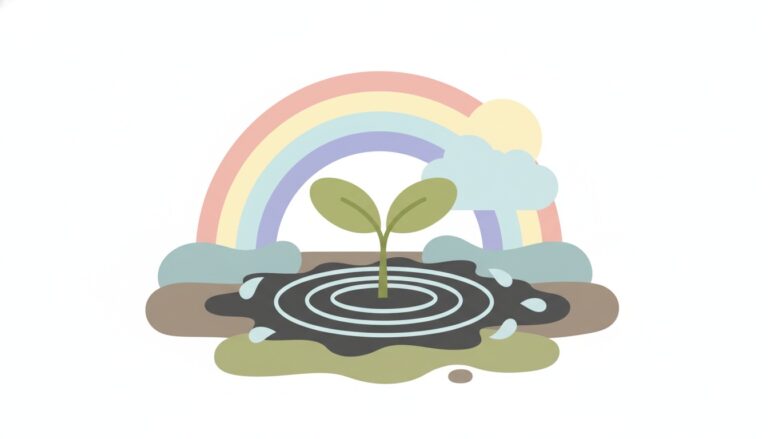
Failure is Growth! 🌱 Korean Phrases for Resilience
1. Introduction
Annyeonghaseyo! (안녕하세요!) It’s your friendly Korean tutor, Daily Hangul! 😃
Have you ever watched a K-Drama like Start-Up or Itaewon Class? The main characters often face huge failures, but they always stand back up stronger, right? That is the spirit we want to learn today! 💪
In life, we all face stressful moments and failures. But in Korean, simply changing how you speak about these moments can change your mindset. Instead of saying “I failed,” let’s learn how to say “I learned a lesson” or “This is an opportunity.”
Ready to turn your stress into strength? Let’s go! 🚀
2. Key Expressions for Growth Mindset
Here are 4 essential phrases to rephrase failure into a positive experience.
1. 좋은 경험이었어
- Pronunciation: [Joeun gyeongheomieosseo]
- English Meaning: It was a good experience.
- Detail: This is the perfect phrase to use when you want to show that even though the result wasn’t perfect, the process was valuable. It turns a negative event into a positive memory.
- 💡 Pronunciation Tip: Connect the sounds! ‘좋은’ sounds like [Jo-eun]. When you say ‘경험이었어’, the final ‘m’ in ‘heom’ slides over to the next vowel. So it sounds like [Gyeong-heo-mi-eo-sseo].
2. 실수해도 괜찮아
- Pronunciation: [Silsuhaedo gwaenchana]
- English Meaning: It’s okay to make a mistake.
- Detail: You can say this to a friend or even to yourself in the mirror! ‘Gwaenchana’ is the magic word in Korea for “It’s okay/I’m fine.”
- 💡 Pronunciation Tip: In ‘괜찮아’ (gwaenchana), the ‘h’ (ㅎ) sound is weak and often silent between vowels. It sounds more like [Gwaen-cha-na].
3. 배운 게 많아
- Pronunciation: [Baeun ge mana]
- English Meaning: I learned a lot.
- Detail: Use this when you want to emphasize the lesson rather than the failure. It makes you sound very mature and professional!
- 💡 Pronunciation Tip: ‘많아’ is written with ‘nh’ (ㄶ), but the ‘h’ is silent. It is pronounced as [Ma-na].
4. 비 온 뒤에 땅이 굳는다
- Pronunciation: [Bi on dwie ttangi gunneunda]
- English Meaning: After the rain, the ground hardens.
- Detail: This is a famous Korean proverb (Sokdam). It means that after going through hard times (rain), you become stronger (ground hardens). It’s a poetic way to describe resilience.
- 💡 Pronunciation Tip: ‘굳는다’ undergoes a sound change (Nasalization). It is written as ‘gut-neun-da’ but pronounced as [Gun-neun-da].
3. Real Conversation: Turning Failure into Opportunity
Let’s see how these expressions work in a real chat between two friends, Minji and Jason.
(Situation: Jason failed his job interview.)
Jason: 아, 면접을 완전히 망쳤어. (Ah, myeonjeobeul wanjeonhi mangchyeosseo.)
Ah, I completely ruined the interview.
Minji: 너무 실망하지 마. 실수해도 괜찮아. (Neomu silmanghaji ma. Silsuhaedo gwaenchana.)
*Don’t be too disappointed. It’s okay to make a mistake.
Jason: 그래도 너무 속상해. (Geuraedo neomu soksanghae.)
I’m still so upset though.
Minji: 이번이 끝이 아니잖아. 좋은 경험이었어. (Ibeoni kkeuchi anijana. Joeun gyeongheomieosseo.)
*This isn’t the end. It was a good experience.
Jason: 맞아. 배운 게 많아. 다음엔 더 잘할게! (Maja. Baeun ge mana. Daeumen deo jalhalge!)
Right. I learned a lot. I’ll do better next time!
Minji: 그래! 비 온 뒤에 땅이 굳는다고 하잖아! (Geurae! Bi on dwie ttangi gunneundago hajana!)
Yeah! They say the ground hardens after the rain!
4. Culture Tip & Drama Scene 🎬
“Fighting!” (화이팅 / Paiting)
In Korea, when someone is facing a challenge or recovering from a failure, you will hear the word “Paiting!” (Fighting!) everywhere.
Also, the proverb “Bi on dwie ttangi gunneunda” is a classic trope in K-Dramas. When the protagonist hits rock bottom—loses their job, gets rejected, or fails a business—a wise grandmother or a mentor will often say this phrase. It reflects the Korean cultural value of Ingo (인고), which means enduring hardship to achieve success. Failure is not the end; it’s just the rain necessary to make your ground solid! 🌧️➡️🧱
5. Wrap-up & Quiz
Today, we learned how to turn stress into strength using positive Korean phrases! Remember, mistakes are just stepping stones to fluency. 💖
📝 Mini Quiz
- How do you say “It was a good experience” in Korean?
( J_ _ _ n G_ _ _ _ h _ _ _ _ _ _ _ _ _ ) -
Fill in the blank for the proverb: “______ 온 뒤에 땅이 굳는다.”
(After the ______, the ground hardens.)
A) 눈 (Snow) B) 비 (Rain) -
True or False: “실수해도 괜찮아” means “You are not allowed to make mistakes.”
Answers:
1. Joeun gyeongheomieosseo (좋은 경험이었어)
2. B) 비 (Rain)
3. False (It means “It’s okay to make a mistake”)
See you next time! Annyeong! 👋
Frequently Asked Questions (FAQ)
Q: What does "실수해도 괜찮아" mean in Korean and how do you pronounce it?
A: In Korean, "실수해도 괜찮아" is pronounced [Silsuhaedo gwaenchana] and means: It's okay to make a mistake.
Q: What does "배운 게 많아" mean in Korean and how do you pronounce it?
A: In Korean, "배운 게 많아" is pronounced [Baeun ge mana] and means: I learned a lot.
Q: What does "비 온 뒤에 땅이 굳는다" mean in Korean and how do you pronounce it?
A: In Korean, "비 온 뒤에 땅이 굳는다" is pronounced [Bi on dwie ttangi gunneunda] and means: After the rain, the ground hardens.






