

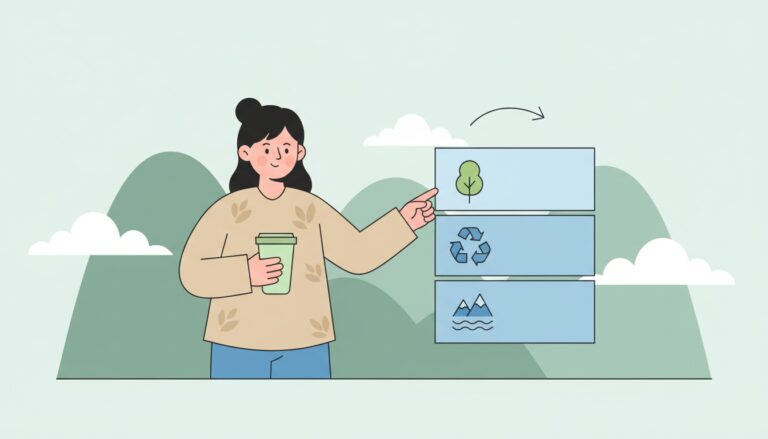
🌿 Sharing My Eco-Friendly Trip in Korean!
👋 Hello, K-Culture Fans!
안녕하세요! Hello! It’s your friendly Korean tutor, Daily Hangul (매일한글)! 😊
Today, we are going to talk about a very important and trendy topic: Sustainable Tourism (지속 가능한 관광). Have you ever traveled to Korea and wanted to do something good for the planet? Or maybe you want to tell your Korean friends about your eco-friendly travel experiences?
Imagine you are at a local community meeting or chatting with friends at a cafe, sharing how you traveled responsibly. It sounds difficult, but don’t worry! I will teach you the easiest expressions to show off your kind heart. ❤️
If you’ve seen the K-variety show Hyori’s Bed and Breakfast (효리네 민박), you know how beautiful living in harmony with nature is. Let’s learn how to speak like that!
📚 Key Expressions for Eco-Travelers
Here are 4 essential phrases to describe your sustainable trip. Let’s practice!
1. 환경을 보호하다 (To protect the environment)
- Pronunciation: [Hwangyeong-eul bohohada]
- Meaning: To protect the environment
- Detail: This is a formal but very common phrase. You can use this to state your goal. “Hwangyeong” means environment.
- 💡 Pronunciation Tip: When you say 환경 (Hwangyeong), the ‘ng’ (ㅇ) sound flows into the next vowel if you speak fast, but try to pronounce each block clearly first: Hwan-gyeong.
2. 쓰레기를 줍다 (To pick up trash)
- Pronunciation: [Sseuregi-reul jupda]
- Meaning: To pick up trash
- Detail: Have you heard of “Plogging”? It’s very popular in Korea! You can say this when you clean up a beach or a park during your trip.
3. 텀블러를 사용하다 (To use a tumbler/reusable cup)
- Pronunciation: [Teombeulleo-reul sayonghada]
- Meaning: To use a tumbler (reusable cup)
- Detail: In Korea, “Tumbler” (텀블러) refers to any reusable water bottle or coffee cup. Many cafes give you a discount if you use one!
4. 뿌듯했어요 (I felt proud)
- Pronunciation: [Ppudeusaesseoyo]
- Meaning: I felt proud / It was rewarding
- Detail: This is the perfect feeling word to end your story. It describes the satisfaction of doing something good.
- 💡 Pronunciation Tip: The bottom consonant ‘ㅅ’ in 듯 (deut) moves to the next block ‘했 (haess)’ but changes sound. It sounds more like [Ppu-deu-taess-eo-yo]. The ‘h’ sound often weakens or disappears in rapid speech!
🗣️ Real-Life Dialogue: Community Meeting
Imagine you are presenting your trip experience to a small group.
Minji (Korean Local): 이번 여행 어땠어요? (How was this trip?)
You: 정말 좋았어요. 저는 환경을 보호하고 싶었어요. (It was really good. I wanted to protect the environment.)
Minji: 우와! 그래서 무엇을 했어요? (Wow! So, what did you do?)
You: 바다에서 쓰레기를 주웠어요. (I picked up trash at the sea.)
Minji: 정말 멋지네요! (That’s really cool!)
You: 네, 기분이 정말 뿌듯했어요. (Yes, I felt really proud.)
🎭 Culture Tip & K-Drama Vibes
Did you know?
In Korea, Recycling (분리수거, Bunli-sugeo) is taken very seriously! If you stay at an Airbnb or a Hanok guesthouse, you will see specific bins for plastic, paper, and cans. Showing that you know how to recycle or use a personal tumbler will make Koreans think, “Wow, you are a true local!” 👍
Also, in many K-dramas like Hometown Cha-Cha-Cha, you often see the community coming together to clean the village. Using phrases like “쓰레기를 줍다” shows you care about the community just like the main characters!
📝 Wrap-up & Quiz
Today, we learned how to talk about sustainable travel. You are now ready to be a green traveler in Korea! 🌏
Let’s check what you remember! (Answer O or X)
- “Teombeulleo” (텀블러) means a disposable plastic cup in Korea. ( )
- If you want to say “I picked up trash,” you say “쓰레기를 주웠어요.” ( )
- “Ppudeusaesseoyo” (뿌듯했어요) means “I was sad.” ( )
Good luck, and see you next time! 안녕! 👋
[Answers]
1. X (It means a reusable cup!)
2. O
3. X (It means “I felt proud/rewarded”)
Frequently Asked Questions (FAQ)
Q: What does "환경을 보호하다 (To protect the environment)" mean in Korean and how do you pronounce it?
A: In Korean, "환경을 보호하다 (To protect the environment)" is pronounced [Hwangyeong-eul bohohada] and means: To protect the environment
Q: What does "쓰레기를 줍다 (To pick up trash)" mean in Korean and how do you pronounce it?
A: In Korean, "쓰레기를 줍다 (To pick up trash)" is pronounced [Sseuregi-reul jupda] and means: To pick up trash
Q: What does "텀블러를 사용하다 (To use a tumbler/reusable cup)" mean in Korean and how do you pronounce it?
A: In Korean, "텀블러를 사용하다 (To use a tumbler/reusable cup)" is pronounced [Teombeulleo-reul sayonghada] and means: To use a tumbler (reusable cup)
Q: What does "뿌듯했어요 (I felt proud)" mean in Korean and how do you pronounce it?
A: In Korean, "뿌듯했어요 (I felt proud)" is pronounced [Ppudeusaesseoyo] and means: I felt proud / It was rewarding







