

Master Advanced Korean: Talking about Korea’s Circular Economy
Hello! Welcome back to [Maeil Hangeul], your trusted partner for leveling up your Korean proficiency!
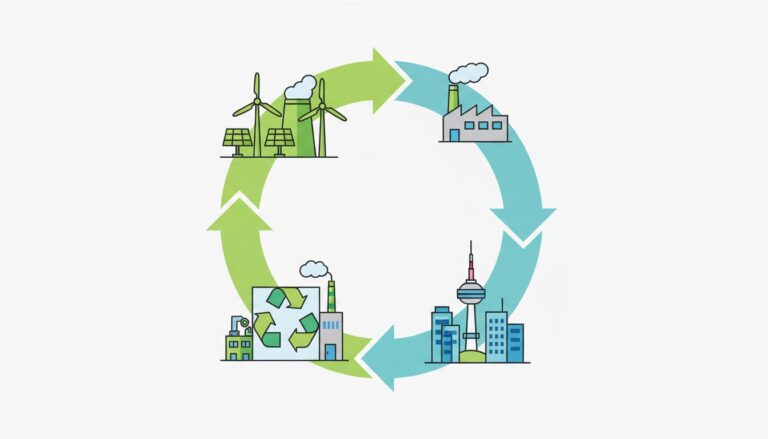
Today, we’re diving into a sophisticated and highly relevant topic: the circular economy (순환 경제). As you advance in your Korean journey, you’ll need the vocabulary to discuss complex global issues. In Korea, where resource efficiency and technological innovation are paramount, the circular economy is a hot topic in business, policy, and daily life. You’ll hear these terms in news reports, corporate meetings, and academic discussions. Let’s get you ready to participate confidently!
Core Expressions for Advanced Discourse
Here are some essential terms to master.
1. 순환 경제 (Sunhwan Gyeongje)
* Pronunciation [Romanization]: Sunhwan gyeongje
* English Meaning: Circular Economy
* Detailed Explanation: This is the core concept, referring to an economic model that minimizes waste and makes the most of resources. It’s a high-level term often used in professional or academic contexts. It contrasts with the traditional ‘linear economy’ (선형 경제, seonhyeong gyeongje) of ‘take, make, dispose’.
* 💡 Pronunciation Tip: In ‘순환’ (sunhwan), the ‘ㄴ’ (n) sound at the end of the first syllable can subtly influence the ‘ㅎ’ (h) in the next, making the ‘h’ sound slightly softer or more nasalized in rapid speech. Practice saying it smoothly: sun-hwan.
2. 자원 선순환 (Jawon Seonsunhwan)
* Pronunciation [Romanization]: Jawon seonsunhwan
* English Meaning: Virtuous Cycle of Resources
* Detailed Explanation: This phrase beautifully captures the essence of a circular economy. ‘자원’ means resources, and ‘선순환’ means a virtuous cycle or a positive feedback loop. It emphasizes the continuous, beneficial reuse of resources, creating a positive outcome for both the economy and the environment. It’s a more descriptive and somewhat idealistic term.
* 💡 Pronunciation Tip: The key here is the nasal assimilation. The ‘ㄴ’ (n) in ‘선(seon)’ causes the following ‘ㅅ(s)’ to be pronounced more like a soft ‘ㄴ(n)’. While not a strict rule that changes the letter, in natural, fast speech, it sounds closer to [서눈환 (seonunhwan)]. This is a subtle nuance that will make you sound more like a native speaker.
3. 폐기물 에너지화 (Pyegimul Eneojihwa)
* Pronunciation [Romanization]: Pyegimul eneojihwa
* English Meaning: Waste-to-Energy
* Detailed Explanation: This is a technical term for the process of generating energy from waste. ‘폐기물’ means waste material, ‘에너지’ is energy, and ‘-화 (-hwa)’ is a suffix that means ‘to turn into’ or ‘-ization’. You’ll frequently encounter this term in discussions about renewable energy and waste management policy.
* 💡 Pronunciation Tip: Notice the word ‘에너지화’. The ‘지(ji)’ sound followed by ‘화(hwa)’ can sometimes be tricky. Ensure you pronounce them as distinct syllables, [e-neo-ji-hwa], without blending them too much.
4. 지속 가능한 발전 (Jisok Ganeunghan Baljeon)
* Pronunciation [Romanization]: Jisok ganeunghan baljeon
* English Meaning: Sustainable Development
* Detailed Explanation: This is a foundational concept in global policy and a cornerstone of corporate ESG (Environmental, Social, and Governance) strategy. It refers to development that meets the needs of the present without compromising the ability of future generations to meet their own needs. It’s the broader goal that a circular economy helps to achieve.
* 💡 Pronunciation Tip: The magic happens between ‘가능한’ and ‘발전’. The final ‘ㄴ’ (n) of ‘가능한’ links to the ‘ㅂ’ (b) of ‘발전’. In standard pronunciation, ‘발전’ is [발쩐 baljjeon] due to tensification. However, after a noun-modifying verb ending in ㄴ/ㅁ, this tensification is often softened. Listen carefully to native speakers; you’ll hear a subtle difference compared to when ‘발전’ is said alone.
Example Dialogue
Let’s see these terms in a real-world business context.
A: 김 부장님, 이번 ESG 보고서 초안 검토하셨나요? 특히 순환 경제 파트가 인상 깊었습니다.
(Kim Bujang-nim, ibeon ESG bogoseo choan geomtohasyeonnayo? Teuki sunhwan gyeongje pateuga insang gipeotseumnida.)
(Mr. Kim, have you reviewed the draft of the ESG report? I was particularly impressed with the circular economy section.)
B: 네, 저도 봤습니다. 우리 회사의 폐기물 에너지화 기술 덕분에 자원 선순환 구조를 구축한 점을 잘 강조했더군요.
(Ne, jeodo bwatseumnida. Uri hoesaui pyegimul eneojihwa gisul deokbune jawon seonsunhwan gujoreul guchukhan jeomeul jal gangjohaetdeogunyo.)
(Yes, I saw that too. It did a good job highlighting how we’ve established a virtuous cycle of resources thanks to our company’s waste-to-energy technology.)
A: 맞습니다. 이것이 바로 우리 그룹이 추구하는 지속 가능한 발전의 핵심 아니겠습니까?
(Matseumnida. Igeosi baro uri geurubi chuguhaneun jisok ganeunghan baljeonui haeksim anigetseumnikka?)
(Exactly. Isn’t this the core of the sustainable development our group is pursuing?)
Culture Tip & Trend Analysis
In Korea, the concept of a circular economy isn’t just corporate jargon; it’s a national agenda. The government’s ‘Green New Deal’ (그린 뉴딜) heavily promotes industries related to renewable energy and resource recycling. Major conglomerates like Samsung and SK publish extensive sustainability reports detailing their efforts in creating a 자원 선순환 system. For the Korean MZ generation, a company’s commitment to 지속 가능한 발전 is a significant factor when purchasing products or even choosing a workplace. Using these terms accurately shows that you’re not just fluent in Korean, but also attuned to the country’s current economic and social priorities.
Wrap-up & Practice
Today, we’ve explored four key advanced terms related to the circular economy. Mastering this vocabulary will enable you to engage in high-level discussions about one of Korea’s most important future industries.
Practice Challenge:
Using at least two of the expressions learned today, write a short sentence in the comments describing why a circular economy is important for the future. For example:
“폐기물 에너지화는 지속 가능한 발전을 위한 필수적인 기술입니다.”
(Waste-to-energy is an essential technology for sustainable development.)
We look forward to reading your insightful sentences!







