

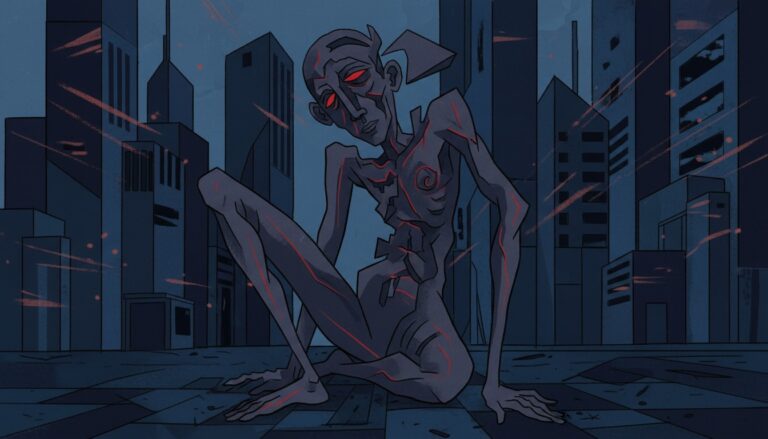
Unlock the Canvas: Reading Social Anxiety in Korean Expressionist Art
Hello! Welcome to Maeil Hangul, here to upgrade your Korean skills!
Ever stood in front of a powerful painting and wished you had the right words in Korean to describe its depth? Today, we’re moving beyond simple descriptions and diving into the world of art criticism. We’ll learn how to analyze and discuss Expressionist art, focusing on a theme that feels more relevant than ever: social anxiety.
Lately in Korea, there’s a huge interest in modern art that grapples with complex social issues. Understanding how to talk about the ‘사회적 불안감’ (social anxiety) in these works will not only impress your Korean friends at the museum but also give you a deeper insight into the Korean cultural psyche.
Key Expressions for the Art Critic
Let’s equip you with the vocabulary to sound like a seasoned art connoisseur.
1. 왜곡된 형태 (Waegokdoen hyeongtae)
- English Meaning: Distorted form/shape
- Detailed Explanation: This is a core concept in Expressionism. Artists aren’t trying to paint reality as it looks, but rather as it feels. They use ‘왜곡된 형태’ to visually represent inner turmoil, chaos, or intense emotion. This is a formal, academic term perfect for critical discussions.
- 💡 Pronunciation Tip: In ‘왜곡된’, the final syllable ‘된’ is pronounced closer to [dwen], but when spoken quickly after ‘왜곡’, the ‘ㄷ’ (d) sound becomes tensed, sounding like [t͈]. So, it sounds more like [waegokttwen]. This tensing of consonants is common in Korean and makes your speech sound more natural.
2. 내면의 불안을 표출하다 (Naemyeonui buraneul pyochulhada)
- English Meaning: To express inner anxiety.
- Detailed Explanation: This is a sophisticated phrase to describe an artist’s intention. It breaks down into ‘내면’ (the inner self), ‘불안’ (anxiety), and ‘표출하다’ (to express outwardly, to manifest). Use this to explain the why behind the distorted forms and dark colors.
- 💡 Pronunciation Tip: The ‘ㄹ’ in ‘표출’ is a ‘l’ sound, so it’s [pyochul]. Also, notice the smooth connection in ‘불안을’, which is pronounced [buraneul] as the ‘ㄴ’ sound moves into the next syllable. This is called ‘연음’ (liaison).
3. 시대상을 반영하다 (Sidaesangeul banyeonghada)
- English Meaning: To reflect the spirit of the age (Zeitgeist).
- Detailed Explanation: No piece of art exists in a vacuum! This essential phrase connects an artwork to its historical and social context. ‘시대상’ refers to the overall reality or ‘image’ of a particular era. Use this to show you understand the bigger picture.
- 💡 Pronunciation Tip: In ‘반영하다’, the ‘ㄴ’ 받침 (final consonant) influences the pronunciation. It’s not ‘ban-hyeong-ha-da’ but flows together as [banyeonghada]. The ‘ㅎ’ (h) sound often weakens between voiced sounds.
4. 암울한 색채 (Amulhan saekchae)
- English Meaning: Gloomy/dark colors (or color palette).
- Detailed Explanation: Color is a powerful tool for conveying mood. ‘암울한 색채’ describes the use of dark, somber, and oppressive colors to create a feeling of despair or gloominess. ‘암울하다’ is a descriptive verb for being dismal or grim, and ‘색채’ refers to the overall use of color.
- 💡 Pronunciation Tip: The ‘ㅎ’ in ‘암울한’ is very soft and almost disappears when spoken, so it sounds like [amuran]. This weakening of ‘ㅎ’ is a common pronunciation rule that will make you sound much more like a native speaker.
Example Dialogue at the Museum
Let’s see these phrases in action. Two friends, A and B, are at the National Museum of Modern and Contemporary Art, Korea.
A: 이 작품 속 인물의 왜곡된 형태가 정말 강렬하네요.
(The distorted form of the figure in this piece is so intense.)
B: 맞아요. 작가가 겪었던 전쟁의 트라우마와 내면의 불안을 표출한 것 같아요.
(I agree. It seems the artist was expressing the inner anxiety and trauma from the war they experienced.)
A: 확실히 1950년대 한국의 시대상을 반영하는 작품이네요. 특히 저 암울한 색채가 절망감을 더하는 것 같아요.
(It’s definitely a work that reflects the spirit of 1950s Korea. The gloomy color palette especially adds to the feeling of despair.)
B: 동감이에요. 단순히 슬픈 그림이 아니라, 한 시대의 아픔을 담고 있는 거죠.
(I feel the same way. It’s not just a sad painting; it contains the pain of an entire era.)
Culture Tip & Trend Analysis
This critical lens isn’t just for old paintings! Many contemporary Korean artists and filmmakers use these same Expressionist techniques. Think of the unsettling social commentary in Bong Joon-ho’s film Parasite or the dark, psychological themes in popular webtoons.
When you see a modern Korean drama character struggling with the pressures of ‘입시’ (college entrance exams) or ‘취업’ (job hunting), you can now see it as a reflection of modern anxieties. Being able to say, “이 드라마는 현대 한국 사회의 시대상을 반영해요” (This drama reflects the spirit of modern Korean society) shows a profound level of cultural and linguistic understanding.
Let’s Practice!
Time to test your new vocabulary!
- Fill in the blank:
그 화가는 강렬하고 ________ ________를 사용해서 자신의 분노를 표현했다.
(That artist used intense and ______ ______ to express his anger.)
Answer: 암울한 색채 -
Make a sentence:
Think of a movie or book that ‘시대상을 반영하다’. Try to make a simple sentence in Korean describing it.
Great job today! You’ve taken a huge step toward discussing complex topics in Korean. Try using one of today’s expressions in the comments below to describe a piece of art you like!
Frequently Asked Questions (FAQ)
Q: What does "왜곡된 형태 (Waegokdoen hyeongtae)" mean in Korean and how do you pronounce it?
A: In Korean, "왜곡된 형태 (Waegokdoen hyeongtae)" is pronounced [Tip: In '왜곡된', the final syllable '된' is pronounced closer to [dwen] and means: Distorted form/shape
Q: What does "내면의 불안을 표출하다 (Naemyeonui buraneul pyochulhada)" mean in Korean and how do you pronounce it?
A: In Korean, "내면의 불안을 표출하다 (Naemyeonui buraneul pyochulhada)" is pronounced [Tip: The 'ㄹ' in '표출' is a 'l' sound, so it's [pyochul] and means: To express inner anxiety.
Q: What does "시대상을 반영하다 (Sidaesangeul banyeonghada)" mean in Korean and how do you pronounce it?
A: In Korean, "시대상을 반영하다 (Sidaesangeul banyeonghada)" is pronounced [Tip: In '반영하다', the 'ㄴ' 받침 (final consonant] and means: To reflect the spirit of the age (Zeitgeist).
Q: What does "암울한 색채 (Amulhan saekchae)" mean in Korean and how do you pronounce it?
A: In Korean, "암울한 색채 (Amulhan saekchae)" is pronounced [Tip: The 'ㅎ' in '암울한' is very soft and almost disappears when spoken, so it sounds like [amuran] and means: Gloomy/dark colors (or color palette).







