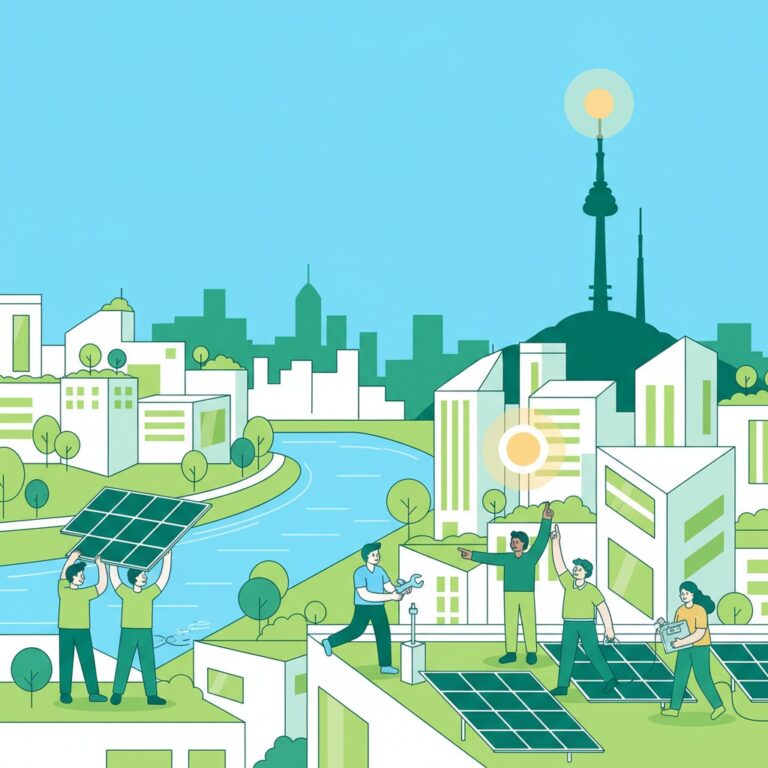
Hello! Welcome back to [Maeil Hangeul], your go-to source for upgrading your Korean skills! Ever wanted to participate in a professional discussion or write a formal proposal in Korean? Today, we’re diving into some high-level vocabulary that will make you sound like a native professional. We’ll focus on terms used when planning a campaign, specifically for an alternative energy project. Lately in Korea, there’s a huge push towards renewable energy and community-led initiatives, often called ‘에너지 자립 마을’ (energy self-sufficient towns). Mastering today’s vocabulary will not only boost your Korean but also help you understand and engage with these important social trends. Let’s get started! Here are four essential terms you’ll need to draft a persuasive and professional campaign proposal. 1. 활성화 방안 (Hwalseonghwa Bangan) – Activation Plan / Strategy for Revitalization. This is a crucial term in any planning document. 활성화 (hwalseonghwa) means ‘vitalization’ or ‘activation,’ and 방안 (bangan) means ‘a plan’ or ‘a measure.’ Together, it refers to a concrete set of strategies designed to make something (like a community or a project) more active, successful, and vibrant. 2. 기대 효과 (Gidae Hyogwa) – Expected Effects / Anticipated Outcomes. No proposal is complete without this section! 기대 (gidae) means ‘expectation,’ and 효과 (hyogwa) means ‘effect’ or ‘result.’ This term describes the positive outcomes you predict if your plan is successfully implemented. 3. 지속가능성 (Jisokganeungseong) – Sustainability. This is a global buzzword. Let’s break it down: 지속 (jisok) means ‘continuation,’ 가능 (ganeung) means ‘possibility,’ and -성 (-seong) is a suffix that turns words into abstract nouns. It refers to the long-term viability of a project. 4. 상생 협력 (Sangsaeng Hyeomnyeok) – Mutually Beneficial Cooperation / Symbiotic Partnership. This beautiful term perfectly captures the spirit of community projects. 상생 (sangsaeng) literally means ‘living together,’ and 협력 (hyeomnyeok) means ‘cooperation.’ It emphasizes a win-win relationship where all parties benefit from working together. In Korea, the government’s ‘Green New Deal’ (그린 뉴딜) policy has massively accelerated interest in renewable energy. As a result, terms like 지속가능성 (sustainability) and 상생 (mutual benefit) are no longer just business jargon; they’re part of the national conversation. Using a term like 상생 협력 shows a deeper understanding of the cultural emphasis on collective well-being and win-win outcomes.
 TOPIK 5
· 2 min read
Power Up Your Korean: Pitching a Sustainable Future!