

학습 블로그 내용
Ancient Tycoons: Discussing Phoenician Trade in Korean
1. Introduction
Hello! This is [Daily Hangeul], here to upgrade your Korean proficiency to an expert level!
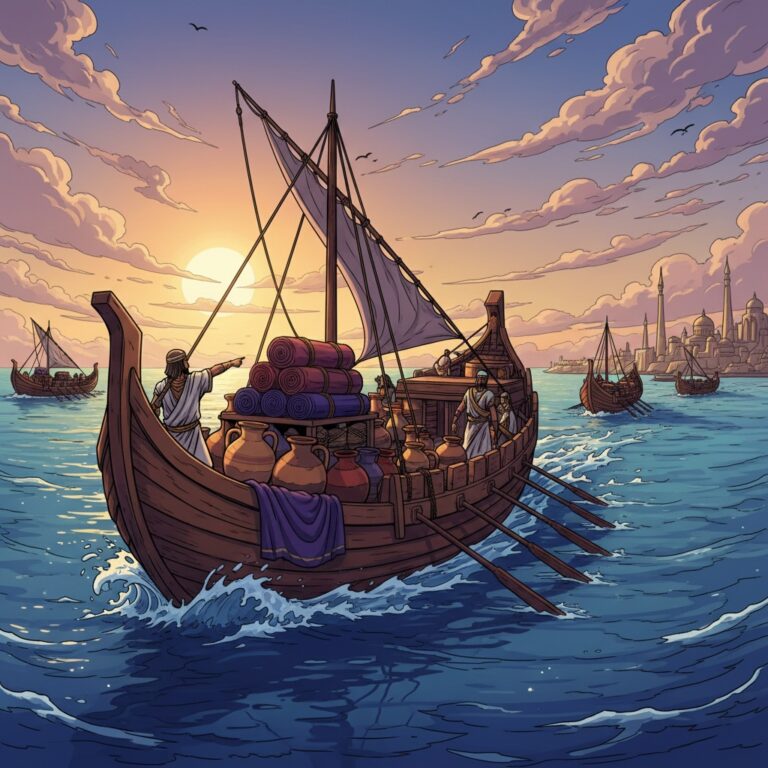
Today, we are diving into a fascinating topic within Area Studies: The Phoenician Civilization of the Levant and Maritime Trade Networks.
You might be wondering, “Why learn about ancient history in Korean?” Well, recently in Korea, humanities talk shows (인문학 토크쇼) like Naked World History (벌거벗은 세계사) have become incredibly trendy. Koreans love discussing history, economics, and the origins of civilization over coffee or drinks. Being able to discuss complex topics like the “origins of the alphabet” or “ancient economic systems” will prove that your Korean skills are truly top-tier (C2 level).
Let’s learn how to discuss these ancient masters of the sea in sophisticated Korean!
2. Key Expressions
Here are 4 advanced expressions to help you sound like a history expert.
1. 해상 무역 (Maritime Trade)
- Pronunciation: [Haesang muyeok]
- English Meaning: Maritime trade / Sea trade
- Detailed Explanation: This is a formal term used in economics and history. It refers to trade conducted via the sea. Since Phoenicia was a thalassocracy (an empire at sea), this word is essential. You can also use ‘교역’ (gyoyeok) for ‘trade/commerce’.
- 💡 Pronunciation Tip:
- When saying 무역 (muyeok), pronounce the ‘yeok’ clearly.
- If you combine it with words like ‘network’ (망), 무역망 (trade network) is pronounced [muyeongmang]. This is due to Nasalization (비음화), where the ‘ㄱ’ (k) sound becomes ‘ㅇ’ (ng) before the ‘ㅁ’ (m) sound.
2. 문명의 발상지 (Cradle of Civilization)
- Pronunciation: [Munmyeong-ui balssangji]
- English Meaning: Cradle of civilization / Birthplace of civilization
- Detailed Explanation: This is a metaphorical and academic phrase. ‘문명’ means civilization, and ‘발상지’ means place of origin. You can use this to describe the Levant, Mesopotamia, or the Indus Valley.
- 💡 Pronunciation Tip:
- 발상지 is pronounced [balssangji], not [balsangji].
- The ‘ㅅ’ becomes a tense sound ‘ㅆ’ (ss) because of the nature of the compound word structure (Sai-sori phenomenon). Make sure to stress the ‘ss’ sound!
3. 중계 무역 (Intermediary Trade)
- Pronunciation: [Junggye muyeok]
- English Meaning: Intermediary trade / Transit trade
- Detailed Explanation: This describes an economic system where goods are imported and then re-exported to others, rather than produced locally. This was the core of Phoenician wealth. It is also a very common term when discussing modern Korea or Singapore’s economy.
- 💡 Pronunciation Tip:
- 중계 (junggye) should be distinguished from ‘중계’ (broadcasting/relay) though they sound similar. Focus on the context!
4. 표음 문자 (Phonogram / Phonetic Alphabet)
- Pronunciation: [Pyoeum munja]
- English Meaning: Phonogram / Phonetic alphabet
- Detailed Explanation: The Phoenician alphabet is the ancestor of most modern alphabets. ‘표음’ means representing sound, and ‘문자’ means character. This is a great word to know because Hangeul (Korean) is also a phonogram. You can compare the two!
- 💡 Pronunciation Tip:
- Pronounce syllables clearly. [Pyo-eum-mun-ja].
- Be careful not to slur ‘pyo’ and ‘eum’.
3. Dialogue Practice
Let’s see how two intellectuals might discuss this topic after watching a documentary.
Min-jun (A): Did you watch the documentary on the Levant region yesterday? I was impressed by how the Phoenicians dominated the Mediterranean.
(어제 레반트 지역에 대한 다큐멘터리 봤어? 페니키아인들이 지중해를 장악했던 게 인상 깊더라.)
So-yeon (B): I did! It’s amazing that they built such vast wealth solely through intermediary trade, without a huge territory.
(봤지! 거대한 영토 없이 오직 **중계 무역만으로 막대한 부를 축적했다는 게 놀라워.)**
Min-jun (A): Exactly. They were truly the pioneers of maritime trade. And didn’t they say their alphabet influenced Greek and Latin?
(맞아. 진정한 **해상 무역의 선구자들이었지. 그리고 그들의 문자가 그리스어와 라틴어에 영향을 줬다고 하지 않았어?)**
So-yeon (B): Yes. The fact that they spread a phonetic alphabet to facilitate efficient trade is quite similar to the scientific nature of Hangeul, isn’t it?
(응. 효율적인 교역을 위해 **표음 문자를 전파했다는 점이 한글의 과학적인 면모와도 꽤 닮지 않았어?)**
4. Culture Tip & Trend Analysis
“Why is the ‘Levant’ trending in Korean Intellectual Circles?”
Recently, the Korean publishing and media market has seen a surge in interest in “Macro-history” (거시사). Books like Sapiens or Guns, Germs, and Steel are perennial bestsellers.
In this context, the Levant (레반트) is often discussed not just as an ancient site, but as a historical lesson in “Connectivity” (연결성).
- Trend: When discussing globalization or logistics crises (like supply chain issues), Korean experts often cite Phoenicia as the original model of a “Global Logistics Hub.”
- Pro Tip: If you want to impress your Korean friends or colleagues, try comparing Phoenicia’s alphabet with King Sejong’s Hangeul.
- Phrase to use: “Just like the Phoenicians spread the alphabet for practical trade, King Sejong created Hangeul for practical communication.”
- This shows you understand both World History and Korean History deeply!
5. Conclusion & Quiz
Today, we traveled back in time to the Levant to learn high-level vocabulary related to the Phoenician civilization and trade. These words—Maritime Trade, Cradle of Civilization, Intermediary Trade, Phonetic Alphabet—are essential for academic and professional discussions in Korean.
📝 Mini Quiz
Fill in the blank with the correct expression we learned today!
“Phoenicia did not just rely on agriculture; they became wealthy through __________, connecting the East and the West via the sea.”
(“페니키아는 농업에만 의존하지 않고, 바다를 통해 동양과 서양을 연결하는 [ ]을 통해 부유해졌습니다.”)
Answer: ___________ (Check the Key Expressions section!)
If you know the answer, please leave a comment below! I’d love to see you using these advanced terms. Keep studying, and see you in the next post!
Stay smart with [Daily Hangeul]!
Frequently Asked Questions (FAQ)
Q: What does "'교역'" mean in Korean and how do you pronounce it?
A: In Korean, "'교역'" is pronounced [gyoyeok] and means: for 'trade/commerce'.
Q: What does "무역" mean in Korean and how do you pronounce it?
A: In Korean, "무역" is pronounced [muyeok] and means: , pronounce the 'yeok' clearly.
Q: What does "무역망" mean in Korean and how do you pronounce it?
A: In Korean, "무역망" is pronounced [trade network] and means: is pronounced
Q: What does "중계" mean in Korean and how do you pronounce it?
A: In Korean, "중계" is pronounced [junggye] and means: should be distinguished from '중계' (broadcasting/relay) though they sound similar. Focus on the context!







