

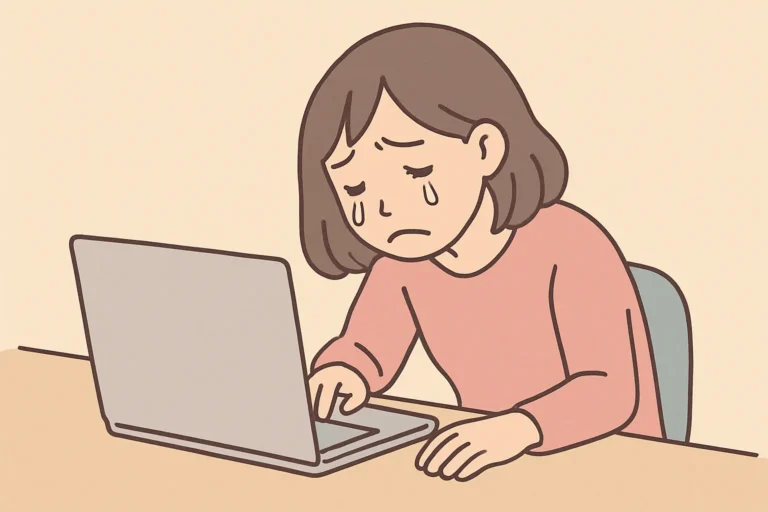
“So Sad! 😢 Essential Korean Phrases for Disappointment”
Introduction
Hello! This is [Daily Korean], here to upgrade your Korean skills with fun and useful expressions! 👋
Today, we are going to learn how to express disappointment in Korean. Have you ever experienced a situation where things didn’t go as planned?
Nowadays in Korea, getting tickets for popular K-pop concerts or reserving tables at trendy restaurants is like a war! 🎫 When you fail to get that ticket or the restaurant is fully booked, you need the right words to express your feelings. Let’s learn how to say “I’m sad” or “It’s a shame” like a native speaker!
Key Expressions
Here are 3 essential phrases to use when you feel let down or disappointed.
1. 아쉬워요 (It’s a shame / I feel sad about it)
- Pronunciation: [Aswiwoyo]
- English Meaning: It’s a shame / I’m sorry (to hear that) / It lacks something.
- Detail: This is the most common way to express mild disappointment. You use this when you missed an opportunity or when something isn’t quite 100% perfect. It’s not about being angry; it’s about lingering regret.
- 💡 Pronunciation Tip:
- Pronounce it smoothly as [A-swi-wo-yo].
- Be careful with ‘쉬 (swi)’. It sounds like the English word “sweet” without the ‘t’.
2. 속상해요 (I’m upset / I’m distressed)
- Pronunciation: [Soksanghaeyo]
- English Meaning: I’m upset / I’m hurt / I’m sad.
- Detail: This is stronger than Aswiwoyo. You use this when something bad happened and your feelings are hurt, or you are frustrated. ‘속 (Sok)’ means ‘inside/stomach’ and ‘상 (Sang)’ means ‘damaged’. Literally, your insides are damaged!
- 💡 Pronunciation Tip:
- The
ㄱ(k) in ‘속’ stops briefly before saying ‘상’. It sounds like [Sok-sang-hae-yo]. - Make sure to pronounce the ‘ss’ sound in ‘상’ clearly!
- The
3. 어떡해요? (What should I do? / Oh no!)
- Pronunciation: [Eotteokaeyo]
- English Meaning: What should I do? / Oh my goodness.
- Detail: You can use this as a reaction when you hear bad news or when you make a mistake. It shows empathy or worry.
- 💡 Pronunciation Tip:
- Wait, why is it written ‘hae’ but pronounced [kae]?
- This is due to ‘Aspiration’ (격음화). When the bottom consonant
ㄱ(k) meets the consonantㅎ(h), they combine to become the strongㅋ(k) sound! - So, ‘어떡 (eotteok) + 해요 (haeyo)’ becomes [어떠캐요 (Eotteokaeyo)]. It flows much better, right?
Real-life Dialogue
Let’s see how these expressions are used in real life.
Situation: A and B are talking about buying tickets for a popular K-pop concert.
A: 티켓 샀어요? (Did you buy the ticket?)
B: 아니요, 매진이에요. 너무 속상해요. (No, it’s sold out. I’m so upset.)
A: 정말요? 어떡해요? (Really? Oh no! / What to do?)
B: 진짜 가고 싶었는데… 너무 아쉬워요. (I really wanted to go… It’s such a shame.)
Korean Culture Tip & Trend
🇰🇷 Have you heard of “Pi-ket-ting” (피켓팅)?
In the dialogue above, B was upset about the tickets being sold out. In Korea, the competition to buy tickets for idols (like BTS, BLACKPINK) or famous musicals is incredibly fierce.
Koreans call this “Pi-ket-ting” (피켓팅).
It is a combination of the Korean word for Blood (피, Pi) and Ticketing. It means the ticketing war is so intense, it’s like a bloody battle! 🩸
When you fail “Pi-ket-ting,” that is the perfect moment to say, “아, 속상해요!” (Ah, I’m upset!)
Wrap-up & Practice
Today we learned how to express disappointment. Don’t hide your feelings—express them in Korean!
📝 Mini Quiz:
Fill in the blank with the correct expression we learned today.
- Situation: You went to a bakery to buy the viral “Dubai Chocolate,” but it was sold out.
- You: “Oh no… I really wanted to eat it. ___________.” (It’s a shame!)
- 사랑해요 (Saranghaeyo)
- 아쉬워요 (Aswiwoyo)
Answer: (Check the comment section for the answer!)
Did you enjoy today’s lesson? Try using these expressions next time something doesn’t go as planned. Leave a comment below with the phrase “아쉬워요” if you want more lessons!
See you next time! 안녕! (Bye!)







