

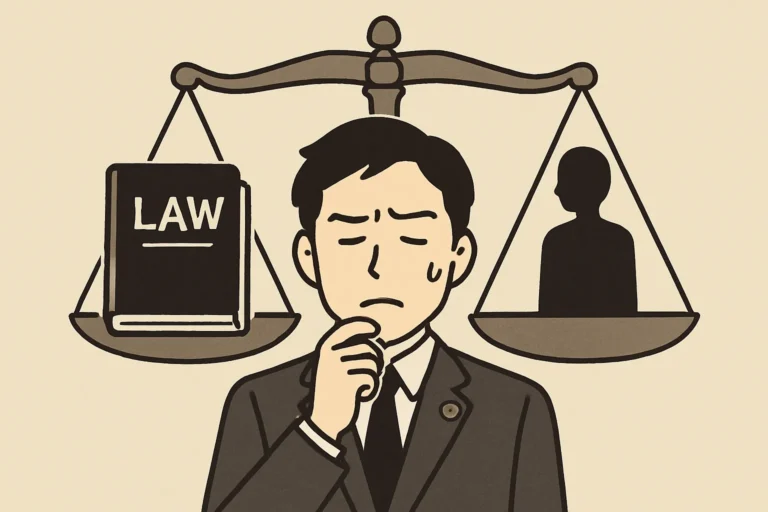
Of Justice and Conscience: A Lawyer’s Dilemma
Hello! Welcome back to Maeil Hangul, where we upgrade your Korean skills to the next level!
Today, we’re diving into a complex and fascinating topic: the ethical dilemmas faced by human rights lawyers. This might sound challenging, but it’s a perfect theme for advanced learners to tackle sophisticated vocabulary and nuanced discussions. Lately in Korea, there has been a huge surge in popular legal dramas and a growing public conversation around social justice. Understanding this vocabulary will not only improve your Korean but also give you a deeper insight into the moral questions that captivate modern Korean society. Let’s get started!
Core Expressions for Ethical Debates
Here are some key phrases you’ll need to navigate a discussion about legal ethics, just like a character in a gripping Korean drama.
1. 딜레마에 빠지다 (Dillema-e ppajida)
- Pronunciation [dillemae ppajida]
- English Meaning: To fall into a dilemma; to be in a predicament.
- Detailed Explanation: This is a powerful phrase that goes beyond simply “having a problem.” The verb 빠지다 (ppajida) means “to fall into” or “to be submerged in,” so the expression creates a vivid image of being trapped or stuck in a difficult situation with no easy way out. It’s used for serious moral, ethical, or strategic conflicts.
- 💡 Pronunciation Tip: The double consonant ‘ㅃ’ in 빠지다 is a tensed sound, called 된소리 (doen-sori). You pronounce it with more force and a higher pitch than the regular ‘ㅂ’ (b). There should be no puff of air. Think of it as a sharp, strong “pp” sound, like in the English word “spy.”
2. 공익을 우선시하다 (Gong-igeul useonsihada)
- Pronunciation [gongigeul useonsihada]
- English Meaning: To prioritize the public interest.
- Detailed Explanation: This is a formal and crucial term in legal and political discourse. It’s built from Hanja (Sino-Korean characters): 공 (公) for public, 익 (益) for benefit/interest, and 우선시하다 (優先視하다) for prioritize. It’s often contrasted with 사익 (sa-ik, 私益), which means private interest. A human rights lawyer often has to balance their client’s interests with the greater good of society.
- 💡 Pronunciation Tip: Notice the linking sound, or 연음 (yeon-eum), in 공익을. The final consonant ‘ㄱ’ (g) from 익 moves over to the next syllable, which starts with a vowel. So, instead of “gong-ik eul,” it is pronounced smoothly as [공이글 / gong-i-geul]. This is a fundamental rule that makes your Korean sound much more natural.
3. 양심의 가책을 느끼다 (Yangsim-ui gachaegeul neukkida)
- Pronunciation [yangsimui gachaegeul neukkida]
- English Meaning: To feel a pang of conscience; to feel remorseful.
- Detailed Explanation: This is a profound and somewhat literary way to say you feel guilty. 양심 (yangsim, 良心) means “conscience,” and 가책 (gachaek, 苛責) means “reproach” or “torment.” So, you are literally “feeling the torment of your conscience.” It implies a deep moral conflict, far stronger than simply feeling sorry (미안하다).
- 💡 Pronunciation Tip: Let’s look at 가책을 [gachaegeul]. The final consonant ‘ㄱ’ (k) in 책 links with the following vowel ‘을’, making the sound flow smoothly as [채글 / chae-geul]. Mastering this linking rule is key to fluent pronunciation.
4. 법리를 다투다 (Beomni-reul datuda)
- Pronunciation [beomni-reul datuda]
- English Meaning: To dispute/argue a point of law.
- Detailed Explanation: This is a highly specific legal term. 법리 (beomni, 法理) refers to the “principles of law” or “legal theory,” not just a single rule or statute. 다투다 (datuda) means to “fight” or “argue.” Therefore, this phrase means to engage in a legal battle over the interpretation and application of fundamental legal principles. It’s what lawyers do in court when they challenge the very foundation of the prosecution’s case.
- 💡 Pronunciation Tip: This phrase contains an important pronunciation rule called 비음화 (bi-eumhwa), or nasalization. In 법리, the final consonant ‘ㅂ’ (b/p) comes before ‘ㄹ’ (r/l). The ‘ㄹ’ sound influences the ‘ㅂ’, changing it to a nasal ‘ㅁ’ (m) sound. So, instead of [beop-ri], it is pronounced [범니 / beom-ni]. This change makes the pronunciation smoother and is a hallmark of a fluent speaker.
Example Dialogue
Here’s how these expressions might be used by two law students discussing a challenging case study.
A: 이 인권 침해 사례 연구, 정말 어렵네요. 수사 과정에서 피고인의 권리가 명백히 침해당했어요.
(This human rights violation case study is really difficult. The defendant’s rights were clearly violated during the investigation.)
B: 맞아요. 하지만 증거를 보면 유죄가 확실해 보여요. 변호사라면 정말 딜레마에 빠질 것 같아요.
(I agree. But looking at the evidence, he seems clearly guilty. If I were the lawyer, I’d really be in a dilemma.)
A: 바로 그 점이에요. 범죄 자체를 고려해서 공익을 우선시해야 할까요, 아니면 절차적 정의를 지켜야 할까요?
(That’s exactly it. Should I prioritize the public interest by considering the crime itself, or should I protect procedural justice?)
B: 만약 제가 그 절차적 위법을 무시한다면, 평생 양심의 가책을 느낄 것 같아요. 그건 법치주의의 근간을 흔드는 일이잖아요.
(If I were to ignore that procedural violation, I think I’d feel a pang of conscience for the rest of my life. That undermines the very foundation of the rule of law.)
A: 동의해요. 최선의 전략은 법정에서 불법적인 수사 방식에 대해 치열하게 법리를 다투는 것이겠네요.
(I agree. The best strategy would be to vigorously dispute the point of law regarding the illegal investigation methods in court.)
Cultural Tip & Trend Deep Dive
In Korea, the image of the human rights lawyer (인권 변호사) holds significant cultural weight. Many of the nation’s most respected political figures, including former presidents, began their careers as human rights lawyers fighting against past military dictatorships.
Today, this theme is constantly explored in popular culture. Dramas like “Extraordinary Attorney Woo (이상한 변호사 우영우)” and “Vincenzo (빈센조)” often feature protagonists who face intense ethical choices, forcing viewers to question what “justice” truly means.
Furthermore, when Koreans talk about 공익 (gong-ik), they often think of organizations like 민변 (Minbyun – Lawyers for a Democratic Society). This is a real-life group of lawyers dedicated to taking on cases related to human rights, democracy, and public welfare. Knowing about organizations like this shows a deep, C1-level understanding of Korean society beyond just the language. Using these expressions in a discussion about such topics will surely make you sound like an informed and advanced speaker!
Wrap-up & Practice!
Today, we learned four sophisticated expressions to discuss the complex world of legal ethics:
- 딜레마에 빠지다 (to fall into a dilemma)
- 공익을 우선시하다 (to prioritize the public interest)
- 양심의 가책을 느끼다 (to feel a pang of conscience)
- 법리를 다투다 (to dispute a point of law)
Now, it’s your turn to be the lawyer! Try these exercises.
- Fill in the blank:
변호사는 의뢰인의 이익과 사회 전체의 (__________) 사이에서 항상 고민해야 한다.
(A lawyer must always deliberate between the client’s interests and the (__________) of society as a whole.) -
Your Opinion:
If a lawyer knows their client is guilty, should they still do their best to defend them? Write a short sentence using at least one of the expressions we learned today.
Leave your answers in the comments below! We’d love to see you put these powerful expressions into practice. Great job today
Frequently Asked Questions (FAQ)
Q: What does "빠지다" mean in Korean and how do you pronounce it?
A: In Korean, "빠지다" is pronounced [ppajida] and means: means "to fall into" or "to be submerged in," so the expression creates a vivid image of being trapped or stuck in a difficult situation with no easy way out. It's used for serious moral, ethical, or strategic conflicts.
Q: What does "된소리" mean in Korean and how do you pronounce it?
A: In Korean, "된소리" is pronounced [doen-sori] and means: . You pronounce it with more force and a higher pitch than the regular 'ㅂ' (b). There should be no puff of air. Think of it as a sharp, strong "pp" sound, like in the English word "s
Q: What does "공" mean in Korean and how do you pronounce it?
A: In Korean, "공" is pronounced [公] and means: for public,
Q: What does "익" mean in Korean and how do you pronounce it?
A: In Korean, "익" is pronounced [益] and means: for benefit/interest, and







