

Sorry, I Can’t Make It: A Guide to Declining in Korean
Hello! It’s your favorite Korean booster, 매일한글 (Maeil Hangeul), here to upgrade your language skills!
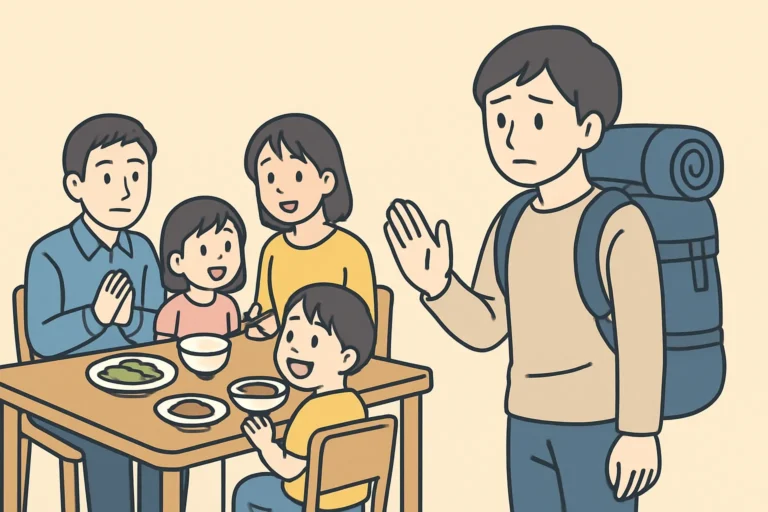
Ever been invited to a family dinner or a friend’s gathering in Korea but couldn’t go? Saying “no” can be tricky, especially in a culture that values group harmony. But don’t worry! Today, we’ll learn how to politely decline an invitation while keeping your relationships strong.
Lately in Korea, especially among the younger generation, there’s a growing trend of valuing personal time, whether it’s for a hobby, a side project, or even solo travel (혼행 – honhaeng). This means sometimes, personal plans clash with family events. Let’s learn the essential phrases to navigate this situation like a pro!
Core Expressions You Need to Know
Here are three key phrases to politely say you can’t make it.
1. 참석하기 어려울 것 같아요 (It seems it will be difficult to attend.)
- Pronunciation [Romanization]: Chamseokagi eoryeoul geot gatayo.
- English Meaning: It seems it will be difficult for me to attend.
- Detailed Explanation: This is a wonderfully polite and indirect way to say “I can’t go” (못 가요 – mot gayo). The phrase “어려울 것 같아요” (eoryeoul geot gatayo) literally means “it seems it will be difficult.” It softens the refusal, showing that you wish you could be there. It’s perfect for formal situations or when speaking to elders.
-
💡 Pronunciation Tip:
Let’s look at 같아요 [gatayo]. The letter is ‘ㅌ’ (t), but you don’t hear a strong ‘t’ sound. When a final consonant like ‘ㅌ’ (t) is followed by a vowel (like ‘아’), the sound often becomes softer and “voiced” to make it easier to say. So, instead of a sharp gat-ayo, it smoothly becomes [gachayo] or a very soft [gadayo]. It’s a small change that makes you sound much more natural!
2. 선약이 있어서요 (Because I have a prior engagement.)
- Pronunciation [Romanization]: Seonyagi isseoseoyo.
- English Meaning: I have a prior engagement / I already have plans.
-
Detailed Explanation: This is a classic and respectful reason to give when declining. 선약 (seonyak) means a “previous promise” or “prior appointment.” You don’t need to explain what the plan is. This phrase is a polite and private way to say you’re busy. The -서요 (-seoyo) ending makes it sound soft and explanatory.
-
💡 Pronunciation Tip:
The magic here is in 있어서요 [isseoseoyo]. Notice how the ‘ㅆ’ (ss) sound from 있 (iss) “links” to the next syllable 어 (eo)? This is a fundamental Korean pronunciation rule called liaison (or 연음 – yeoneum). Instead of saying it – eo – seo – yo with a pause, the final consonant of a syllable block moves over to the next syllable if it starts with a vowel. So, 있 + 어 becomes [이써/isseo]. You’ll see this everywhere in Korean!
3. 아쉽지만 다음에 꼭 봬요 (It’s a shame, but let’s definitely meet next time.)
- Pronunciation [Romanization]: Aswipjiman daeume kkok bwaeyo.
- English Meaning: That’s a shame, but let’s be sure to meet next time.
-
Detailed Explanation: This is the perfect follow-up! It shows your genuine regret and your desire to see them in the future. 아쉽다 (aswipda) is a key emotion word meaning “it’s a shame” or “what a pity.” 꼭 (kkok) adds the emphasis of “definitely” or “for sure.” Using this phrase reassures the other person that you still value them.
-
💡 Pronunciation Tip:
The word 꼭 [kkok] uses the consonant ‘ㄲ’ (kk). This is a “tense” consonant. To make this sound, don’t release any air like you would for ‘ㅋ’ (k). Start to say ‘k’, but hold the air back in your throat and release the sound with a bit of force. It should be a short, tight sound. Practice saying 가 (ga), 카 (ka), and 까 (kka) to feel the difference!
Example Dialogue
Let’s see these phrases in action! Imagine your aunt is inviting you to a family gathering, but you’ve already planned a solo trip.
- Aunt (이모): 민준아, 이번 주 토요일에 가족 다 같이 저녁 먹는데, 올 수 있지?
- Minjun, we’re all having dinner together this Saturday. You can come, right?
- You (민준): 아, 이모… 정말 죄송해요. 그날은 참석하기 어려울 것 같아요.
- Oh, Auntie… I’m so sorry. It seems it will be difficult to attend that day.
- Aunt (이모): 어머, 그래? 무슨 일 있어?
- Oh, really? Do you have something on?
- You (민준): 네, 미리 계획해 둔 선약이 있어서요. 정말 아쉽지만 다음에 꼭 봬요! 제가 따로 연락드릴게요!
- Yes, I have a prior engagement that I planned in advance. It’s such a shame, but let’s definitely meet next time! I’ll contact you separately!
Cultural Tip & Trend Spotlight
In Korea, family gatherings (가족 모임 – gajok moim) are traditionally very important. Declining an invitation, especially from an elder, requires extra politeness. That’s why simply saying “I can’t go” might sound a bit too direct or cold.
Using phrases like “~어려울 것 같아요” (it seems difficult) and expressing your regret with “아쉽지만” (it’s a shame) is crucial. It shows you respect the event and the person inviting you, even if you can’t be there.
As we mentioned, the rise of the “me time” culture among the Korean MZ Generation means more people are trying to balance family duties with personal fulfillment. So, while these situations are becoming more common, the need for polite and respectful communication is more important than ever! Using these phrases shows you understand this cultural balance.
Let’s Practice!
Ready to test your new skills?
- Fill in the blank: Your cousin invites you to their birthday party, but you already have plans.
“미안해, 그날은 ____ ___ ____. 생일 축하해!”
(Sorry, I ____ that day. Happy birthday!)Hint: Use the phrase for “I have a prior engagement.”
- Make a sentence: Your professor invites you to a department dinner, but you are not feeling well. How would you politely decline and express your regret? Try to use at least two phrases we learned today!
Great job today! Learning how to say “no” politely is a huge step toward fluency.
Now it’s your turn! Try using one of today’s expressions to make your own sentence in the comments below!
Frequently Asked Questions (FAQ)
Q: What does "매일한글" mean in Korean and how do you pronounce it?
A: In Korean, "매일한글" is pronounced [Maeil Hangeul] and means: , here to upgrade your language skills!
Q: What does "같아요" mean in Korean and how do you pronounce it?
A: In Korean, "같아요" is pronounced [gatayo] and means: . The letter is 'ㅌ' (t), but you don't hear a strong 't' sound. When a final consonant like 'ㅌ' (t) is followed by a vowel (like '아'), the sound often becomes softer and "voiced" to make it easier to say. So, instead of a sharp
Q: What does "있어서요" mean in Korean and how do you pronounce it?
A: In Korean, "있어서요" is pronounced [isseoseoyo] and means: . Notice how the 'ㅆ' (ss) sound from
Q: What does "꼭" mean in Korean and how do you pronounce it?
A: In Korean, "꼭" is pronounced [kkok] and means: uses the consonant 'ㄲ' (kk). This is a "tense" consonant. To make this sound, don't release any air like you would for 'ㅋ' (k). Start to say 'k', but hold the air back in your throat and release the sound with a bit of force. It should be a short, tight sound. Practice saying







