

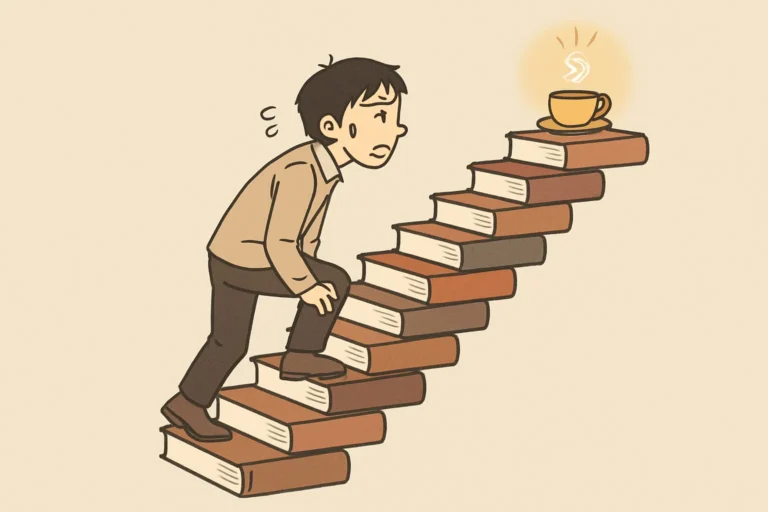
Unlock Korean Wisdom: Quotes for a Happier You!
Hello! Welcome to [Maeil Hangeul], here to upgrade your Korean skills!
Have you ever felt stressed and needed a little boost of wisdom? Sometimes, a single powerful sentence can change your whole perspective. Today, we’re going to dive into some famous Korean quotes about happiness and satisfaction. Lately in Korea, there’s a huge trend called ‘소확행’ (So-hwak-haeng), which means finding “small but certain happiness” in daily life. These classic quotes will not only teach you profound Korean vocabulary but also help you find your own ‘so-hwak-haeng’!
Let’s explore some timeless wisdom together!
Core Expressions for a Happy Mind
Here are three powerful expressions that Koreans have used for generations to talk about happiness and perseverance.
1. 웃으면 복이 와요 (Useumyeon bogi wayo)
- Romanization: [Useumyeon bogi wayo]
- English Meaning: Laughter brings good fortune. (Literally: If you laugh, fortune comes.)
- Detailed Explanation: This is a very famous and beloved Korean proverb. It’s the Korean equivalent of “look on the bright side.” It suggests that maintaining a positive and cheerful attitude will naturally attract good things into your life. You can say this to a friend who is feeling down, or even to yourself as a reminder to stay positive. It’s a very warm and encouraging phrase.
- 💡 Pronunciation Tip:
The verb stem is ‘웃다’ (utda), meaning ‘to laugh’. When you add the conditional grammar ‘-(으)면’ (-(eu)myeon), it becomes ‘웃으면’ (useumyeon). The final consonant ‘ㅅ(s)’ moves over to the next syllable, so you pronounce it smoothly as [useumyeon], not ‘ut-eu-myeon’. It’s a great example of the linking sound rule called ‘연음’ (yeoneum)!
2. 고생 끝에 낙이 온다 (Gosaeng kkeute nagi onda)
- Romanization: [Gosaeng kkeute nagi onda]
- English Meaning: At the end of hardship comes pleasure. (Similar to “No pain, no gain.”)
- Detailed Explanation: This proverb is a cornerstone of the Korean mindset, emphasizing the value of hard work and perseverance. ‘고생’ (gosaeng) means hardship or trouble, and ‘낙’ (nak) means pleasure or joy. It’s often used to encourage students studying for a big exam or anyone going through a difficult period. It promises that your efforts will be rewarded in the end.
- 💡 Pronunciation Tip:
Pay attention to ‘끝에’ (kkeute). The word ‘끝’ (kkeut) ends with a ‘ㅌ(t)’ sound. When it’s followed by the vowel ‘에(e)’, the ‘ㅌ’ sound links to the next syllable. So, instead of a harsh stop like ‘kkeut-e’, it flows into [kkeute]. Try saying it smoothly: [고생 끄테]. This linking rule makes Korean sound much more natural and fluid.
3. 일체유심조 (Ilcheyusimjo)
- Romanization: [Ilcheyusimjo]
- English Meaning: Everything is created by the mind.
- Detailed Explanation: This is a more profound and philosophical phrase that comes from Buddhism. It carries the deep meaning that your reality, including your happiness and suffering, is ultimately a projection of your own mind. It’s a powerful reminder that changing your mindset can change your life. You might see this quote in calligraphy or hear it in a more serious, reflective conversation about life.
- 💡 Pronunciation Tip:
This phrase is made of Hanja (Chinese characters), so it has a slightly more formal sound. Let’s break it down: [일(il)-체(che)-유(yu)-심(sim)-조(jo)]. The ‘ㅊ(ch)’ sound in ‘체’ is an aspirated sound, so release a puff of air like the ‘ch’ in “chart.” The rest of the syllables are quite straightforward, so practice saying them clearly and evenly.
Example Dialogue
Let’s see how these expressions might be used in a real conversation between two friends, A and B, who are studying for their final exams.
A: 아, 이번 주 시험 때문에 너무 힘들어. 진짜 지친다.
(A: Ah, I’m so tired because of the exams this week. I’m really exhausted.)
B: 맞아, 나도 그래. 그래도 고생 끝에 낙이 온다잖아! 이것만 끝나면 긴 방학이야.
(B: I know, me too. But you know what they say, at the end of hardship comes pleasure! Once this is over, we have a long vacation.)
A: 네 말이 맞아. 긍정적으로 생각해야지. 웃으면 복이 와요, 맞지?
(A: You’re right. I should think positively. Laughter brings good fortune, right?)
B: 그럼! 우리 마지막 시험 끝나고 축하하러 떡볶이 먹으러 가자!
(B: Exactly! Let’s go get some tteokbokki to celebrate after our last exam!)
Culture Tip & Trend Deep Dive
While classic proverbs like ‘고생 끝에 낙이 온다’ reflect a traditional Korean value of enduring hardship for future success, the modern Korean MZ Generation (Millennials + Gen Z) has a slightly different perspective.
They deeply connect with the idea of ‘일체유심조’ (everything is created by the mind) but apply it in a very active, present-focused way. This is where the ‘소확행’ (so-hwak-haeng) trend comes in. Instead of only waiting for the big ‘낙’ (pleasure) after ‘고생’ (hardship), they believe in creating small, certain moments of happiness for themselves every day.
For example, after a tough day at work, they might treat themselves to a fancy piece of cake or spend time on a beloved hobby. This is their way of taking control of their happiness, proving that even in a stressful life, your mindset can create pockets of joy. So, if you use these proverbs, you’ll sound wise, but if you mention ‘소확행’, you’ll also sound incredibly trendy!
Wrap-up & Practice Time!
Today, we learned three powerful Korean expressions about happiness and perseverance:
- 웃으면 복이 와요 (Laughter brings good fortune)
- 고생 끝에 낙이 온다 (At the end of hardship comes pleasure)
- 일체유심조 (Everything is created by the mind)
Now it’s your turn to practice!
1. Fill in the blank:
Your friend is studying hard for a test and feels like giving up. To encourage them, you could say:
“조금만 더 힘내! ______________!”
(Just a little more strength! ______________!)
2. Short Answer:
What is your personal ‘소확행’ (small but certain happiness)? Try to write a simple sentence in Korean!
(Example: 저는 주말에 늦잠을 잘 때 행복해요. – I’m happy when I sleep in on the weekend.)
Don’t be shy! Share your answers and your favorite quotes about happiness in the comments below using the expressions you learned today
Frequently Asked Questions (FAQ)
Q: What does "'소확행'" mean in Korean and how do you pronounce it?
A: In Korean, "'소확행'" is pronounced [So-hwak-haeng] and means: , which means finding "small but certain happiness" in daily life. These classic quotes will not only teach you profound Korean vocabulary but also help you find your own 'so-hwak-haeng'!
Q: What does "'소확행'" mean in Korean and how do you pronounce it?
A: In Korean, "'소확행'" is pronounced [so-hwak-haeng] and means: trend comes in. Instead of only waiting for the big '낙' (pleasure) after '고생' (hardship), they believe in creating small, certain moments of happiness for themselves every day.







