

Hello! This is [Maeil Hangul], here to upgrade your Korean skills!
Have you ever worked really hard on something, like passing a test or finishing a big project? Of course, you have! In those moments, it’s important to pause and celebrate your hard work. Today, we’re going to learn some fantastic Korean expressions to do just that: celebrate your small victories!
Lately in Korea, there’s a huge trend called ‘소확행’ (So-hwak-haeng), which means “small but certain happiness.” It’s all about finding joy in the little things. Learning these phrases won’t just improve your Korean; it will help you connect with this beautiful cultural trend and motivate you on your journey to achieving your big dreams!
Let’s get started!
Core Expressions for Your Victory Lap!
Here are some essential phrases to help you treat yourself after a job well done.
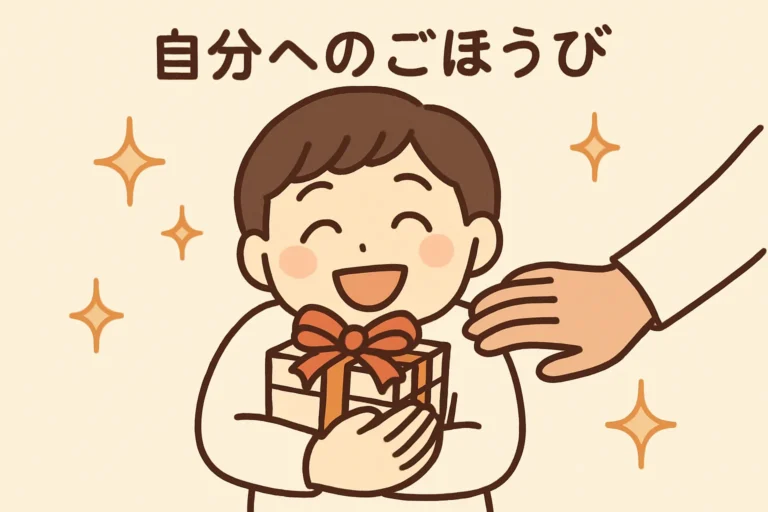
1. 나에게 주는 선물 (Na-ege juneun seonmul)
- Romanization: [Na-ege ju-neun seon-mul]
- English Meaning: A gift I’m giving to myself.
- Detailed Explanation: This is the perfect phrase to use when you buy something or do something special as a reward for your hard work. It’s a very common and heartwarming expression that you’ll see all over Korean social media. It literally means “a gift that (I) give to me.”
- 💡 Pronunciation Tip:
The key here is the는(neun) particle. In English, we might pause between “giving” and “a gift,” but in Korean,주는 선물(juneun seonmul) flows together smoothly. Try to say it as one continuous sound block: [juneun-seonmul]. This will make you sound much more natural!
2. 수고했어, 토닥토닥 (Sugohaesseo, todak-todak)
- Romanization: [Su-go-hae-sseo, to-dak-to-dak]
- English Meaning: You worked hard, pat pat.
- Detailed Explanation:
수고했어(sugohaesseo) is a casual way to say “You did a great job” or “You worked hard” to a friend or someone younger. The magic part is토닥토닥(todak-todak). This is an onomatopoeia (a word that imitates a sound) for gently patting someone on the back or shoulder to comfort them. It’s an incredibly warm and encouraging expression. You can say it to a friend, or even to yourself in the mirror! - 💡 Pronunciation Tip:
The double consonantㅆin했어(haesseo) is a tense sound. It’s stronger and sharper than the regularㅅ(s) sound. To make this sound, tense the back of your tongue and push the air out forcefully, almost like a quiet hiss. It’s not “hae-seo,” but [hae-sseo]. Practice this to master that native-like emphasis!
3. 오늘은 내가 쏠게! (Oneureun naega ssolge!)
- Romanization: [O-neu-reun nae-ga ssol-ge!]
- English Meaning: It’s my treat today! / I’ll pay today!
- Detailed Explanation: This is what you say when you feel great and want to treat your friends to a meal or coffee to celebrate.
쏘다(ssoda) literally means “to shoot,” but in this slang context, it means “to pay for everyone.” It’s a very cool, friendly, and common phrase to use when celebrating good news. - 💡 Pronunciation Tip:
This phrase has two important pronunciation points! First,쏠게has a double consonantㅆ(ss), so remember to make it a strong, tense sound. Second, the endingㄹ게is not pronounced [l-ge] but rather [ㄹ께/lkke]. Theㄱ(g) sound becomes a tenseㄲ(kk) sound afterㄹ. So, you should pronounce it [쏠께/ssolkke]. This is a very common rule, and getting it right will make you sound like a pro!
Example Dialogue
Let’s see how these expressions are used in a real conversation. Imagine two friends, A and B, after A just passed a big Korean exam.
A: 나 드디어 토픽 시험 합격했어!
(Na deudieo TOPIK siheom hapgyeokhaesseo!)
I finally passed the TOPIK exam!
B: 진짜? 와, 완전 축하해! 그동안 정말 수고했어, 토닥토닥.
(Jinjja? Wa, wanjeon chukahae! Geudongan jeongmal sugohaesseo, todak-todak.)
Really? Wow, huge congratulations! You worked so hard, pat pat.
A: 고마워! 그래서 오늘 나에게 주는 선물로 새로 나온 아이돌 앨범 살 거야.
(Gomawo! Geuraeseo oneul na-ege juneun seonmul-lo saero naon aidol aelbeom sal geoya.)
Thanks! So today, as a gift to myself, I’m going to buy that new K-pop idol’s album.
B: 좋아! 그럼 저녁은 내가 살게. 오늘은 내가 쏠게! 맛있는 치킨 먹으러 가자!
(Joa! Geureom jeonyeogeun naega salge. Oneureun naega ssolge! Masinneun chikin meogeureo gaja!)
Awesome! Then I’ll buy dinner. It’s my treat today! Let’s go eat some delicious chicken!
Culture Tip & Trend Deep Dive
The idea of ‘소확행’ (So-hwak-haeng) is more than just a trend; it’s a mindset. In Korea’s fast-paced society, focusing on big, distant goals like buying a house or getting a top job can be stressful. So, many young Koreans, especially the Z generation, have embraced finding and celebrating small, achievable joys.
On Instagram, you’ll see thousands of posts with hashtags like #소확행 or #나에게주는선물. People share pictures of a fancy cup of coffee after a long meeting, a new book they bought after finishing their assignments, or a delicious piece of cake after a tough workout.
You might even hear this in the latest K-drama, like in Lovely Runner, where a character might celebrate a small win by saying, “오늘만큼은 나를 위한 날이야!” (At least for today, it’s a day for me!). By using these phrases, you’re not just speaking Korean; you’re participating in a modern cultural movement about self-care and finding happiness in the everyday.
Let’s Wrap It Up & Practice!
Today we learned some wonderful and positive Korean expressions for celebrating our achievements, big or small. Remember:
- 나에게 주는 선물: For when you buy yourself a reward.
- 수고했어, 토닥토닥: To praise yourself or a friend for their hard work.
- 오늘은 내가 쏠게!: When you’re feeling generous and want to treat your friends.
Now it’s your turn to practice!
- Fill in the blank: You just cleaned your entire apartment! You decide to order pizza. You can say:
“이 피자는 ______ ______ ______!” (This pizza is a gift to myself!)
- Make a sentence: Think of a recent small victory you had. How would you celebrate it with a friend in Korean? Try making a short sentence!
Leave your answers in the comments below using the expressions we learned today! We’d love to celebrate your progress with you! 수고했어요! (You did a great job!)
Frequently Asked Questions (FAQ)
Q: What does "'소확행'" mean in Korean and how do you pronounce it?
A: In Korean, "'소확행'" is pronounced [So-hwak-haeng] and means: , which means "small but certain happiness." It’s all about finding joy in the little things. Learning these phrases won't just improve your Korean; it will help you connect with this beautiful cultural trend and motivate you on your journey to achieving your big dreams!
Q: What does "'소확행'" mean in Korean and how do you pronounce it?
A: In Korean, "'소확행'" is pronounced [So-hwak-haeng] and means: is more than just a trend; it's a mindset. In Korea's fast-paced society, focusing on big, distant goals like buying a house or getting a top job can be stressful. So, many young Koreans, especially the Z generation, have embraced finding and celebrating small, achievable joys.







