

Hello! It’s Maeil Hangeul, here to upgrade your Korean!
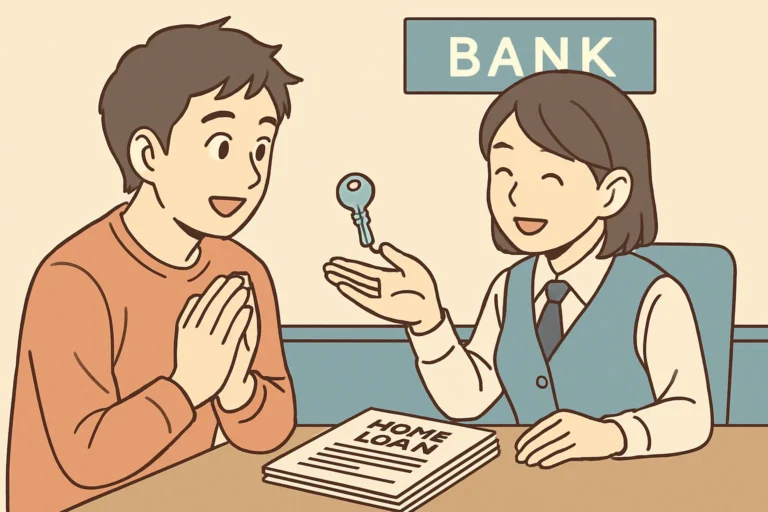
Are you dreaming of buying your own apartment in Seoul or settling down in a cozy house on Jeju Island? It’s a big dream, and often, the first step is visiting a bank. Today, we’re going to tackle a super practical and important topic: how to talk about preparing documents and asking questions for a home loan in Korea.
These days in Korea, the real estate market is a huge topic of conversation. Securing a loan can be competitive, and the government often introduces special support loans (지원 대출) for newlyweds or first-time homebuyers. Knowing the right vocabulary will not only help you navigate this process but also make you sound incredibly fluent and prepared. Let’s get you ready to impress that bank teller!
Core Expressions You Need to Know
Here are some essential phrases that will make your trip to the bank a breeze.
1. 필요 서류 (Required Documents)
- Pronunciation [Romanization]: Piryo seoryu
- English Meaning: Required documents
- Detailed Explanation: This is a must-know compound noun. 필요 (piryo) means “necessity” and 서류 (seoryu) means “documents.” When you put them together, you get “necessary documents.” You’ll use this phrase to ask what you need to bring for any official process, especially at a bank or government office. It’s a formal and clear term.
-
💡 Pronunciation Tip:
The ‘ㄹ’ (r/l) sound in Korean can be tricky! In 필요 (piryo), the ‘ㄹ’ is between two vowels, so it makes a soft ‘r’ sound, almost like the ‘r’ in the Spanish word “pero.” It’s a light tap of the tongue.
2. 서류를 떼다 (To Get/Issue an Official Document)
- Pronunciation [Romanization]: Seoryureul tteda
- English Meaning: To get/issue an official document
-
Detailed Explanation: This is a fantastic verb that will make you sound like a native! While you can use ‘받다 (batda)’ to mean ‘to receive,’ 떼다 (tteda) has the specific nuance of obtaining an official document that is issued from a government office, like a 주민센터 (community center) or online. You “tte-da” a family relations certificate or a proof of income document.
-
💡 Pronunciation Tip:
The ‘떼’ in ‘떼다’ uses the double consonant ‘ㄸ’ (tt). This is a “tense” sound. To make it, you create tension in your throat and release the sound with no puff of air. It’s different from ‘ㄷ’ (d) which is soft, and ‘ㅌ’ (t) which is airy. Practice by saying “Tada!” but without the puff of air on the ‘t’.
3. 대출 심사 (Loan Review / Credit Screening)
- Pronunciation [Romanization]: Daechul simsa
- English Meaning: Loan review / credit screening
-
Detailed Explanation: This is the formal term for the process where the bank reviews your application and decides whether to approve your loan. 대출 (daechul) means “loan,” and 심사 (simsa) means “review,” “judgment,” or “screening.” Hearing this term from a bank teller means your application is officially in progress!
-
💡 Pronunciation Tip:
Let’s focus on the ‘ㅊ’ (ch) in 대출 (daechul). This is an “aspirated” sound, meaning you should release a strong puff of air when you say it. It sounds like the “ch” in “charge.” Hold your hand in front of your mouth—you should feel the air!
4. 이자율이 어떻게 되나요? (What is the interest rate?)
- Pronunciation [Romanization]: Ijayuri eotteoke doenayo?
- English Meaning: What is the interest rate?
-
Detailed Explanation: This is an incredibly useful and polite question pattern: (Noun)이/가 어떻게 되나요? It’s a softer, more formal way of asking “What is (Noun)?” compared to “(Noun) 뭐예요?”. You can use it for all sorts of things at the bank: “대출 한도(loan limit)가 어떻게 되나요?” or “상환 기간(repayment period)이 어떻게 되나요?” Use -이 after a noun ending in a consonant and -가 after a noun ending in a vowel.
-
💡 Pronunciation Tip:
This sentence is a perfect example of liaison (연음). In 이자율이, the last consonant of the first block, ‘ㄹ’ (l), moves over to the empty ‘ㅇ’ spot in the next syllable. So, you don’t pronounce it as “i-ja-yul / i”. Instead, it flows together smoothly as [이자유리 / i-ja-yu-ri]. This rule makes Korean sound much more fluid!
Example Dialogue at the Bank
Let’s see these expressions in action! Here’s a short conversation between a customer (A) and a bank teller (B).
- A: 안녕하세요. 신혼부부 전세 대출을 신청하고 싶은데요, 필요 서류가 무엇인가요?
(Annyeonghaseyo. Sinhonbubu jeonse daechureul sincheonghago sipeundeyo, piryo seoryu-ga mueosingayo?)
Hello. I’d like to apply for a jeonse loan for newlyweds. What are the required documents? -
B: 네, 고객님. 먼저 대출 심사를 위해 재직증명서와 소득금액증명원이 필요합니다. 주민센터에서 서류를 떼 오시면 됩니다.
(Ne, gogaengnim. Meonjeo daechul simsa-reul wihae jaejikjeungmyeongseowa sodeukgeumaekjeungmyeongwoni piryohamnida. Jumin senteo-eseo seoryureul tte-eo osimyeon doemnida.)
Of course. First, for the loan review, we need a certificate of employment and an income statement. You can get those documents issued at the community center. -
A: 알겠습니다. 혹시 이자율이 어떻게 되나요?
(Algesseumnida. Hoksi ijayuri eotteoke doenayo?)
I see. By any chance, what is the interest rate? -
B: 현재 고정금리로 연 2.1%입니다.
(Hyeonjae gojeonggeumni-ro yeon i-jeom-il peosenteu-imnida.)
It’s currently a fixed rate of 2.1% per year.
Culture Tip & Trend Deep Dive
In Korea, the dream of owning one’s own home is called ‘내 집 마련’ (nae jip maryeon), and it’s a significant life goal for many. Because of this, terms like ‘주택담보대출’ (jut-aek-dam-bo-dae-chul), or mortgage loan (often shortened to 주담대 / judamdae), and ‘전세자금대출’ (jeon-se-ja-geum-dae-chul), a loan for the ‘jeonse’ deposit, are frequently discussed in the news and even in popular K-dramas!
Pro Tip: When you go to a Korean bank, being perfectly prepared with all your 필요 서류 is seen as a sign of being responsible and thorough. It makes the 대출 심사 process smoother and shows the bank staff that you are a serious and reliable client. Knowing these terms isn’t just about language; it’s about understanding a key part of modern Korean adult life!
Let’s Practice!
Time to check your understanding. You can do it!
- Fill in the blank: You need to ask the bank teller politely about the loan period (대출 기간). What would you say?
대출 기간__ ______ ______?
- Sentence Making: Your friend tells you they are going to the community center. You guess they are going to get some documents. How would you say, “Are you going to get some documents?” using the special verb we learned today?
Great job today! Navigating bureaucracy in a foreign language is a huge achievement, and now you’re one step closer.
Try using one of today’s expressions to make your own sentence in the comments below! We’d love to see what you come up with. 화이팅! (Hwaiting!)
Frequently Asked Questions (FAQ)
Q: What does "필요" mean in Korean and how do you pronounce it?
A: In Korean, "필요" is pronounced [piryo] and means: means "necessity" and
Q: What does "서류" mean in Korean and how do you pronounce it?
A: In Korean, "서류" is pronounced [seoryu] and means: means "documents." When you put them together, you get "necessary documents." You'll use this phrase to ask what you need to bring for any official process, especially at a bank or government office. It's a formal and clear term.
Q: What does "필요" mean in Korean and how do you pronounce it?
A: In Korean, "필요" is pronounced [piryo] and means: , the 'ㄹ' is between two vowels, so it makes a soft 'r' sound, almost like the 'r' in the Spanish word "pero." It's a light tap of the tongue.
Q: What does "떼다" mean in Korean and how do you pronounce it?
A: In Korean, "떼다" is pronounced [tteda] and means: has the specific nuance of obtaining an official document that is







