

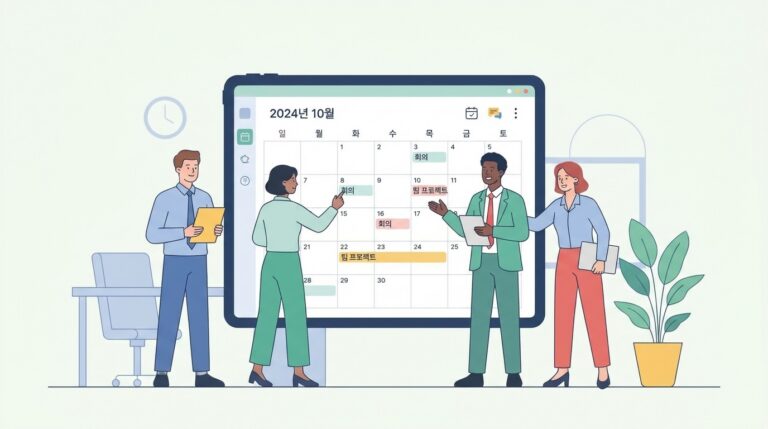
Phase 1: Empathy & Cultural Context
안녕하세요! 매일한글 에디터입니다.
Imagine this: You are steering an ambitious cross-border rollout between teams in Seoul, Jakarta, and London. Your Korean project lead sets a critical sprint review deadline for Friday afternoon, completely unaware that half of your Southeast Asian team is observing Eid al-Fitr, while the London branch is preparing for a Bank Holiday. When deadlines collide with unacknowledged regional customs, tension simmers quietly—often disguised as sudden radio silence or subtle resentment. In high-stakes Korean corporate environments, failing to account for regional nuances doesn’t just disrupt timelines; it signals a lack of nunchi (눈치, situational awareness) and fundamental respect.
Over the past ten years coaching global executives working with Korean tech giants and multinationals, I have witnessed this exact cultural friction repeatedly. The secret to frictionless cross-cultural leadership lies in articulating logistical boundaries with elevated, culturally attuned language. By learning how to propose and synchronize a shared multi-faith calendar using sophisticated Korean, you demonstrate strategic emotional intelligence. This guide equips you with C1-level executive phrasing to harmonize diverse religious observances and corporate rhythms gracefully.
Phase 2: Key C1 Expressions Deep Dive
Here are three advanced business phrases to orchestrate schedules across borders without friction.
1. 상호 존중의 차원에서 공유 캘린더에 사전 반영해 두었습니다.
- Pronunciation: [Sangho jonjung-ui chaweoneseo gong-yu kaellindeoe sajeon banyeonghae dueossseumnida] (Pronounce ‘sangho’ smoothly like ‘sung-ho’, and ‘chaweoneseo’ like ‘chah-wun-eh-suh’ with a steady cadence)
- Meaning: “As a matter of mutual respect, I have proactively reflected these dates in our shared calendar.”
- K-Culture Moment: Echoing the composed negotiation style seen in corporate K-dramas like Search: WWW or Agency, where seasoned directors assert foresight without sounding bossy.
- Editor’s Insight: The phrase
~의 차원에서(~ui chaweoneseo, ‘from the perspective of / as a matter of’) instantly elevates a mundane administrative task into a high-level strategic gesture. - Situation Spectrum: Casual 🚫 | Semi-formal ⚠️ | Formal ✅
- 🤔 Think About It: How does attributing your operational update to ‘mutual respect’ change the psychological safety of a multinational team compared to saying ‘I updated the dates’?
2. 각 지사의 종교적 축일과 근무 관행을 조율하고자 합니다.
- Pronunciation: [Gak jisa-ui jonggyojeok chug-ireul geunmu gwanhaeng-gwa joyulhagoja hamnida] (Flow through ‘joyul’—meaning fine-tuning—like adjusting the strings of a gayageum)
- Meaning: “We intend to harmonize each regional office’s religious holidays and operational practices.”
- K-Culture Moment: Reminiscent of Misaeng (Incomplete Life) when headquarters coordinates complex trade logistics across Middle Eastern and European branches.
- Editor’s Insight: Instead of using common verbs like
맞추다(match) or정하다(decide),조율하다(joyulhada, literally ‘to tune an instrument’) frames cross-cultural leadership as an art of delicate orchestration rather than rigid enforcement. - Situation Spectrum: Casual 🚫 | Semi-formal ✅ | Formal ✅
- 🤔 Think About It: Notice the linguistic balance:
종교적 축일(religious holidays) and근무 관행(working conventions) are weighed equally, validating both spiritual and structural norms.
3. 업무 공백을 최소화할 수 있는 대체 일정을 모색해 보시죠.
- Pronunciation: [Eommu gongbaegeul choesohwahal su inneun daeche iljeong-eul moseokhae bosijo] (Crisp delivery: emphasize ‘choesohwa’ [tche-so-hwa] and roll gently into ‘moseokhae’)
- Meaning: “Let us explore alternative schedules to minimize operational voids.”
- K-Culture Moment: An executive resolving a potential client clash during the Chuseok holiday rush by offering pre-emptive staffing arrangements.
- Editor’s Insight:
업무 공백(work void/gap) acknowledges the practical reality of absences without casting blame on team members taking statutory or religious leave. - Situation Spectrum: Casual 🚫 | Semi-formal ✅ | Formal ✅
- 🤔 Think About It: Why is
모색하다(to seek out/explore) far more collaborative than정하다(to fix/decide) in cross-cultural conflict management?
Phase 3: Textbook Korean vs. Real Executive Korean
Scenario 1: Proposing consideration for international holidays
- 📖 교과서 한국어 (Textbook):
외국 휴일도 중요하니까 달력에 넣읍시다.
(Oeguk hyuildo jung-yohanikka dallyeoge neo-eupsida.)
“Foreign holidays are also important, so let’s put them on the calendar.” - 🗣️ 진짜 한국어 (Executive C1):
다국적 팀의 다양성을 고려하여, 각국의 주요 축일을 통합 일정표에 사전 편성했습니다.
(Dagukjeok tim-ui dayangseong-eul goryeohayeo, gakguk-ui juyo chug-ireul tonghap iljeongpyoe sajeon pyeonseonghaessseumnida.)
“Reflecting the diversity of our multinational team, we have pre-programmed major regional holidays into our master calendar.” - 💡 왜 다를까? (Why is it different?):
Textbook Korean relies on colloquial terms like달력에 넣다(put into the calendar). High-level corporate Korean utilizes formal Sino-Korean compounds like통합 일정표(master schedule) and편성하다(to program/schedule).
Scenario 2: Addressing team availability across time zones during festive weeks
- 📖 교과서 한국어 (Textbook):
쉬는 날이라서 일할 사람이 없으니 일정을 바꿉시다.
(Swineun nariraseo ilhal sarami eopseuni iljeong-eul bakkupsida.)
“Because people are resting and nobody can work, let’s change the schedule.” - 🗣️ 진짜 한국어 (Executive C1):
각 지사의 연휴 주기와 시차를 감안하여, 산출물 납기일을 유연하게 재설정하고자 합니다.
(Gak jisa-ui yeonhyu jugiwa sichareul gamanhayeo, sanchulmul napgiireul yuyeonhage jaeseoljeonghagoja hamnida.)
“Taking into account each regional office’s holiday cycles and time differences, we would like to flexibly recalibrate our deliverable deadlines.” - 💡 왜 다를까? (Why is it different?):
Blunt references to staff taking time off can unintentionally sound resentful. Professional Korean uses abstract management vocabulary (연휴 주기,시차 감안,산출물 납기일) to maintain neutral diplomacy.
Phase 4: K-Culture Deep Dive & Non-Verbal Manners
4-1. Nunchi & Cross-Cultural Body Language
When navigating religious observances with Korean senior leaders, physical posture speaks louder than words:
* The Empathetic Nod (공감의 끄덕임): When raising that a foreign branch has an upcoming holiday (such as Ramadan, Diwali, or Christmas), do not interrupt suddenly. Wait for a natural pause, slightly tilt your head forward at approximately 15 degrees, and lower your pitch.
* Two-Handed Document Presentation: When sharing printed or digital schedule projections on an iPad/laptop, gesture toward the screen with your open palm facing upward, supported gently by your non-dominant hand at the wrist or elbow. This non-verbally conveys deep deference and thorough preparation.
4-2. Cultural Code: The Evolution of Baeryeo (배려) in Corporate Korea
Historically, Korean conglomerates prioritized homogenous corporate schedules driven by rapid execution (Ppalli-ppalli, 빨리빨리). However, globalized top-tier companies (such as Samsung, Naver, and Coupang) have embraced Baeryeo (배려, considerate thoughtfulness) as a core leadership competency. A modern cross-border leader is expected to demonstrate proactive respect (선제적 배려). Aligning your regional partners’ spiritual practices on equal footing with domestic holidays like Chuseok (추석) and Seollal (설날) signals that you operate with an authentic global mindset.
Phase 5: Real-World Roleplay Scenario
Setting: A hybrid boardroom at a global tech subsidiary in Pangyo. Team Lead Park Min-woo (박민우 팀장) is reviewing the Q4 cross-border product launch with global operations coordinator Alex.
1. 박 팀장 (Park Timjang):
알렉스 님, 싱가포르와 두바이 지사와의 연말 배포 일정이 왜 아직 확정되지 않았습니까?
(Alex-nim, Singgaporeu-wa Dubai jisa-waui yeonmal baepo iljeong-i wae ajik hwakjeongdoeji anatseumnikka?)
“Alex, why hasn’t the year-end deployment schedule with the Singapore and Dubai offices been finalized yet?”
🎭 [안경을 고쳐 쓰며 진지한 눈빛으로 문서를 넘긴다 / Pushes up his glasses, scanning documents with an intense gaze]
2. 알렉스 (Alex):
박 팀장님, 각 지사의 주요 종교적 축일과 현지 휴무일을 통합 캘린더에 먼저 대조해 보았습니다.
(Park Timjang-nim, gak jisa-ui juyo jonggyojeok chug-ilgwa hyeonji hyumuireul tonghap kaellindeoe meonje daejohae boatseumnida.)
“Team Lead Park, I first cross-referenced each office’s key religious holidays and local non-working days against our integrated calendar.”
🎭 [두 손을 테이블 위에 단정히 모으고 부드럽게 미소 짓는다 / Hands neatly folded on the table, smiling calmly]
3. 박 팀장 (Park Timjang):
종교적 축일이요? 연말 마감이 얼마 남지 않은 시점인데 그 영향이 큽니까?
(Jonggyojeok chug-iriyo? Yeonmal magam-i eolma namji aneun sijeom-inde geu yeonghyang-i keumnikka?)
“Religious holidays? With our year-end deadline looming, is the impact significant?”
🎭 [살짝 고개를 갸웃거리며 알렉스를 응시한다 / Tilts his head slightly, peering attentively at Alex]
4. 알렉스 (Alex):
네, 두바이 지사의 국경일 연휴와 싱가포르의 딥러닝 세션 일정이 겹쳐 있어 업무 공백이 우려되었습니다.
(Ne, Dubai jisa-ui gukgyeong-il yeonhyuwa Singgaporeu-ui dimneoning sesyeon iljeong-i gyeopchyeo isseo eommu gongbaeg-i uryeodoeotseumnida.)
“Yes, Dubai’s National Day weekend overlaps with scheduled sessions, which raised concerns about operational voids.”
🎭 [태블릿 화면의 공유 캘린더를 정중하게 가리킨다 / Politely gestures toward the shared calendar on the tablet screen]
5. 박 팀장 (Park Timjang):
그렇군요. 무리하게 일정을 밀어붙였다가는 현지 팀의 사기가 저하될 수도 있었겠네요.
(Geureokunyo. Murihage iljeong-eul mireobucheottaganeun hyeonji tim-ui sagiga jeohwadoel sudo isseotgenneyo.)
“I see. Forcing the schedule through might indeed have damaged local team morale.”
🎭 [고개를 깊이 끄덕이며 펜을 내려놓는다 / Nods deeply, putting down his pen]
6. 알렉스 (Alex):
상호 존중의 차원에서 대체 일정을 모색해 두었으니, 이번 주 내로 사전 점검을 마치면 문제없을 것입니다.
(Sangho jonjung-ui chaweoneseo daeche iljeong-eul moseokhae dueosseuni, ibeon ju naero sajeon jeomgeom-eul machimyeon munjeeopseul geosimnida.)
“Out of mutual respect, we explored alternative milestones; completing our dry-runs within this week will ensure smooth execution.”
🎭 [안정적이고 확신에 찬 목소리로 설명한다 / Speaks in a steady, confident tone]
7. 박 팀장 (Park Timjang):
탁월한 배려입니다. 본사와 글로벌 지사 모두 만족할 수 있는 합의점을 찾았군요.
(Takwolhan baeryeo-imnida. Bonsawa geullobeol jisa modu manjokhal su inneun hab-uijeom-eul chajatgunyo.)
“That is brilliant foresight. You found a consensus that satisfies both headquarters and regional branches.”
🎭 [환하게 미소 지으며 만족스럽게 결재 패드에 서명한다 / Smiles broadly, signing the approval tablet]
8. 알렉스 (Alex):
감사합니다. 확정된 세부 일정을 전사에 즉시 공유하겠습니다.
(Gamsahamnida. Hwakjeongdoen sebu iljeong-eul jeonsae jeuksi gong-yuhagetseumnida.)
“Thank you. I will circulate the confirmed timeline company-wide immediately.”
🎭 [정중하게 30도 각도로 인사한다 / Bows respectfully at a 30-degree angle]
🔀 Interactive Decision Point
Suppose Team Lead Park insists: “Can’t they just work through their holiday if we offer overtime pay?” How do you respond?
* Option A: “그건 현지 노동법 위반이라 절대 안 됩니다.” (That violates local labor laws, absolutely not.)
* Option B: “현지 문화를 무시하면 본사 평판이 나빠집니다.” (If we ignore local culture, headquarters’ reputation suffers.)
* Option C: “단기적 성과보다는 상호 신뢰가 중요한 만큼, 핵심 일정만 우선 조율하고 대체 인력을 탄력적으로 배치하는 방안을 제안드립니다.” (Since mutual trust is vital over short-term gains, I propose prioritizing key milestones and deploying backup personnel flexibly.)
Branch Feedback:
* Option A (Risk): Factual but overly confrontational. It risks provoking defensiveness in leadership.
* Option B (Bad): Frames the regional culture through accusation and corporate threat.
* Option C (Best!): Professional C1 mastery. Acknowledges strategic value, balances business impact, and offers an actionable solution.
Phase 6: 10-Second Emotion Shadowing Drill
Practice these lines aloud, pausing precisely at the / marks to capture the nuanced corporate rhythm:
[🤝 포용적이고 세심하게 / Inclusive & Attentive]
각 지사의 문화적 특수성을 존중하여 / 공유 캘린더에 / 선제적으로 반영해 두었습니다.
(Gak jisa-ui munhwajeok teuksuseong-eul jonjunghayeo / gong-yu kaellindeoe / seonjejeog-euro banyeonghae dueossseumnida.)-
[💼 단호하면서도 정중하게 / Firm yet Diplomatic]
일정 차질을 방지하고자 / 현지 축일 기간 동안의 / 업무 백업 체계를 구축했습니다.
(Iljeong chajir-eul bangjihagoja / hyeonji chug-il gigan dong-an-ui / eommu baek-eop chegyereul guchukhaessseumnida.) -
[😊 신뢰감 넘치는 목소리로 / Authoritative & Reassuring]
상호 조율된 일정을 바탕으로 / 프로젝트 마감일을 / 빈틈없이 준수하겠습니다.
(Sangho joyuldoen iljeong-eul batangg-euro / peurojekteu magam-ireul / binteumeopsi junsuhagetseumnida.)
Phase 7: K-Culture Mini Dictionary
-
대체공휴일 (Daeche-gonghyuil) – Substitute / Alternative Holiday
- Meaning: A statutory day off granted when a national holiday overlaps with a weekend.
- Corporate Context: Used when setting sprints:
"이번 설 연휴는 대체공휴일까지 포함하여 일정을 조율했습니다."(We aligned the timeline including the substitute holiday for this Seollal).
- 선제적 배려 (Seonjejeok Baeryeo) – Proactive Consideration
- Meaning: Anticipating others’ cultural or professional needs before they are formally brought up.
- Corporate Context: A high-value compliment in performance reviews praising autonomous cross-cultural leadership.
- 시차 적응 근무 (Sicha Jeog-eung Geunmu) – Time-Zone Aligned Flextime
- Meaning: Flexible working hours instituted to ease collaboration between wide time zone disparities.
- Corporate Context: Essential when negotiating communication windows between East Asia, Europe, and the Americas.
- 공동체적 조율 (Gongdongchejeok Joyul) – Collective Harmonization
- Meaning: Reaching a group consensus that protects communal harmony without ostracizing any demographic.
- Corporate Context: The bedrock philosophy behind managing hybrid, multi-faith global teams.
Phase 8: Expat & Business Traveler Survival Kit
Top 3 Survival Expressions
- “캘린더 초대장을 송부해 드렸으니 확인 부탁드립니다.”
(Kaellindeo chodaejang-eul songbuhae deuryeosseuni hwag-in butakdeurimnida.)
“I have dispatched the calendar invitation; please kindly review it.”
Pro Tip: Use송부하다(to send formally) instead of보내다for senior clients. -
“현지 공휴일로 인하여 회신이 다소 지연될 수 있음을 양해 바랍니다.”
(Hyeonji gonghyu-illo inhayeo hoesini daso jiyeondoel su isseum-eul yanghae baramnida.)
“Please kindly understand that replies may be delayed due to local statutory holidays.”
Pro Tip: Set this as your out-of-office autoreply whenever you celebrate home country festivities. -
“사내 위키에 국가별 휴무 일람표를 업데이트해 두었습니다.”
(Sanae wiki-e gukgabyeol hyumu illampyoreul eopde-iteuhae dueossseumnida.)
“I have updated the country-by-country holiday index on our internal company wiki.”
Pro Tip: Proactive indexing showcases organizational competence.
Editor’s Travel Note
When coordinating regional projects on the ground in Seoul, verifying statutory holidays is paramount. Always cross-check dates using the 네이버 캘린더 모바일 앱 which dynamically reflects government-designated substitute holidays and temporary public rest days (임시공휴일) declared on short notice.
Phase 9: “One Step Deeper” (Reflective Essay)
In traditional Korean culture, Jeong (정, relational bonding) and Nunchi (눈치) dictate that a true leader never burdens others during times of familial and spiritual significance. When Korean professionals celebrate Chuseok or Seollal, work stops entirely to honor roots. Extending this identical psychological grace to partners observing Eid, Hanukkah, Diwali, or Thanksgiving transforms an ordinary cross-border manager into a globally respected leader. Leadership across borders is not merely about managing calendars; it is about conveying that every teammate’s identity holds an honored place in your shared enterprise.
💬 Your Turn: Has your team ever suffered a deadline crisis because of unmapped international holidays? Share your experience in the comments below!
Phase 10: FAQ & Avoiding Misunderstandings
Q: Can I use the word “휴일” (Hyu-il) directly when addressing senior Korean executives?
A: While 휴일 (holiday) is grammatically correct, at the C1 business level it can sound casual. Opt for 법정 공휴일 (statutory public holiday), 현지 연휴 (local holiday period), or 종교적 축일 (religious celebration/feast) to present yourself with heightened professionalism.
Q: What is the most polite way to decline an urgent meeting requested during a foreign holiday?
A: Use the formula: Gratitude + Context + Alternative. For example: "제안해 주신 일정에 감사드립니다. 다만 해당 기간은 현지 축일로 인하여 즉각적인 참여가 어려운 점 양해 부탁드리며, 명주 월요일 대체 미팅을 제안드립니다." (Thank you for proposing this schedule. However, please understand that immediate attendance is challenging due to local holidays; I propose an alternative meeting next Monday.)
Q: How do Korean companies handle team members working on foreign religious holidays?
A: Most multinational or modernized Korean companies offer flexible floating holidays (선택적 휴가제). It is best to propose this arrangement formally using the phrase: "대체 휴무제를 활용하여 업무 연속성을 유지하겠습니다." (We will maintain business continuity utilizing alternative time off).
🚨 Common Mistakes Alert
- Mistake: Saying “우리 지사 쉬니까 일 못 해요” (Our branch is resting so we can’t work).
Correction: Say “지사 연휴로 인한 업무 공백을 최소화하고자 대체 근무자를 지정해 두었습니다.” (We have designated alternate coverage to minimize gaps during the branch holiday). - Mistake: Assuming all Asian teams share Korean Seollal (Lunar New Year) dates.
Correction: Always specify the exact statutory dates per country via a shared calendar. - Mistake: Forcing meetings during global prayer times or holy weeks without acknowledgment.
Correction: Acknowledge the season first: “라마단 기간임을 감안하여 오전 시간대로 회의를 조율하고자 합니다.” (Reflecting the Ramadan period, we wish to arrange our meetings in the morning hours).
Phase 11: Action Mission & Engagement
- Bronze Mission (Solo Mastery): Read Phase 6’s three Shadowing Drills aloud 5 times until you can articulate
상호 존중의 차원에서seamlessly under 4 seconds. - Silver Mission (Social Sharing): Craft a sample 2-sentence Slack or Teams out-of-office message in formal Korean announcing your national holiday and post it in the comments below for real-time feedback.
- Gold Mission (Real-World Execution): Open your shared team calendar today, create an event entry for an upcoming regional holiday, and apply the phrasing learned here in the meeting invite description!
🎮 K-Culture Mission: Watch an episode of a workplace drama like Misaeng or King the Land. Listen closely for how project managers announce holiday shifts (연휴, 휴무) and jot down the politeness particles used.
Phase 12: Interactive Quiz Challenge
Test your executive leadership Korean!
1. Situational Judgment
You must inform headquarters in Seoul that your European branch cannot deliver a report this Friday due to Good Friday. Which phrase is the most culturally adept?
* A) 금요일에 다들 놀러 가니까 보고서는 다음 주에 낼게요.
* B) 현지 종교적 축일로 인한 휴무 일정을 감안하여, 납기일을 익주 월요일로 조율하고자 합니다.
* C) 본사 캘린더에 안 나와 있어도 우리도 쉬는 날입니다.
2. Fill in the Blank
다국적 지사 간의 ( ) 차원에서 연간 주요 축일을 공유 캘린더에 사전 등록했습니다.
(Hint: Mutual respect)
3. True or False
In Korean corporate discourse, attributing project calendar adjustments to 선제적 배려 (proactive consideration) diminishes leadership authority.
* (True / False)
🔍 Click to Reveal Answers & Explanations
- Answer: B
Explanation: Option B deploys elevated C1 vocabulary (종교적 축일,휴무 일정 감안,익주 월요일 조율) to communicate boundaries professionally without sounding petulant or casual. -
Answer: 상호 존중의 (Sangho jonjung-ui)
Explanation:상호 존중의 차원에서(as a matter of mutual respect) is the gold standard idiom for equitable cross-cultural negotiations. -
Answer: False
Explanation: In modern high-level Korean management culture, practicing and articulating proactive consideration (선제적 배려) is regarded as a hallmark of sophisticated global leadership.
🎬 Watch Our Daily Videos! (Daily Hangul Official Instagram)
Review the expressions you learned in this article with our fun daily short videos! Check out native pronunciation and real-life nuances in action.
- Instagram @dailyhangul_en







