

Phase 1: 공감 (스토리 몰입형 오프닝)
안녕하세요! 매일한글 에디터입니다.
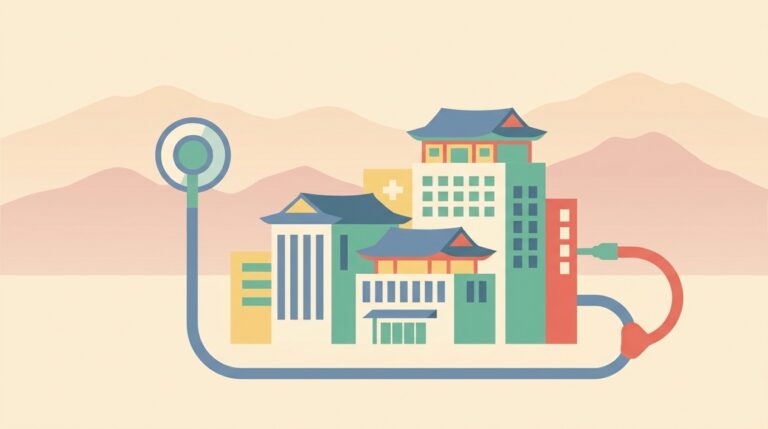
Have you ever watched the iconic medical K-Drama Hospital Playlist or Dr. Romantic and felt your heart race during those nail-biting transfer scenes? A critically injured patient arrives at a rural clinic, but the lack of subspecialists forces the staff to scramble for an emergency transport to Seoul before the golden hour expires. In Korea, this high-stakes narrative is not merely theatrical melodrama—it reflects an ongoing national discourse regarding healthcare access. While Seoul boasts world-renowned tertiary facilities, regional medical centers frequently face acute specialist shortages. To address this, Korean policymakers and civic leaders are intensely debating the “contract-based regional essential physician system” (계약형 지역필수의사제). The crux of the dialogue is straightforward: talented doctors must be granted fair professional compensation and robust research environments so they choose to settle and practice outside the capital. As a C1-level learner, engaging in these socio-political debates will elevate your Korean from everyday casual banter to nuanced, professional fluency. This guide synthesizes real-world policy discourse, insider linguistic habits, and classroom-tested insights to help you discuss Korea’s healthcare delivery system with poise and depth.
Phase 2: 핵심 표현 3선 심층 분석
1. 정당한 대우를 보장하다 (Jeongdanghan dae-ureul bojanghada)
- Pronunciation: [Jeong-dang-han dae-u-reul bo-jang-ha-da] (Pronounced like jung-dahng-hahn deh-oo-reul boh-jahng-hah-dah, with an open, resolute cadence on bojang).
- Meaning: Literally “to guarantee just treatment”; practically signifies offering equitable, commensurate financial compensation and professional dignity.
- K-Culture Moment: Often uttered by physician-union spokespersons or principled department heads in medical dramas during high-stakes negotiations with hospital boards.
- Editor’s Insight: In C1 administrative Korean, 대우 (treatment/compensation) conveys both monetary remuneration and social respect. Pairing it with 보장하다 (to guarantee) transforms an ethical plea into an institutional imperative.
- Situation Spectrum: Casual 🚫 | Semi-formal ⚠️ | Formal ✅
- 🤔 Think About It: In your home culture, does “fair treatment” primarily denote salary parity, or does it also encompass institutional standing and community respect?
2. 지역 거점 병원 (Jiyeok geojeom byeongwon)
- Pronunciation: [Ji-yeok geo-jeom byeong-won] (Think of jee-yuck guh-jum byung-won; crisp consonants with an assertive landing on geojeom).
- Meaning: Literally “regional foothold hospital”; refers to designated provincial base hospitals that serve as anchor institutions for critical care.
- K-Culture Moment: Think of the fictional “Doldam Hospital” from Dr. Romantic—a remote facility that practically shoulders the entire region’s trauma emergency system.
- Editor’s Insight: 거점 (hub/foothold) is an indispensable keyword across Korean urban planning and public administration. Calling a facility a 거점 병원 elevates it from a generic clinic to a cornerstone of public welfare.
- Situation Spectrum: Casual ⚠️ | Semi-formal ✅ | Formal ✅
- 🤔 Think About It: How does your home country balance centralized urban medical super-centers against regional public healthcare safety nets?
3. 정주 여건을 개선하다 (Jeongju yeogeoneul gaeseonhada)
- Pronunciation: [Jeong-ju yeo-geo-neul gae-seon-ha-da] (Flows as jung-joo yuh-guh-neul geh-sun-hah-dah, using refined scholarly pacing).
- Meaning: Literally “to improve settlement conditions”; refers to upgrading comprehensive quality-of-life factors—such as housing, schooling, and research facilities—to encourage permanent residency.
- K-Culture Moment: Featured prominently in investigative current-affairs programs like KBS 추적 60분 when discussing brain drain from provincial areas to the Seoul capital zone.
- Editor’s Insight: Moving beyond the simple verb 살다 (to live), 정주하다 implies long-term, rooted living. Policy experts favor 정주 여건 because retention requires holistic community infrastructure, not just a workplace.
- Situation Spectrum: Casual 🚫 | Semi-formal ⚠️ | Formal ✅
- 🤔 Think About It: Why do financial incentives often fail to retain skilled professionals unless living and educational infrastructure are addressed simultaneously?
Phase 3: 교과서 한국어 vs 진짜 한국어
Situation 1: Discussing how to retain surgeons in non-capital areas
- 📖 교과서 한국어: 지방 병원에 의사를 강제로 근무하게 해야 합니다. (Jibang byeongwone uisareul gangjero geunmuhage haeya hamnida.)
- “We must force doctors to work in provincial hospitals.”
- 🗣️ 진짜 한국어: 실효성 있는 유인책 없이는 지방 필수의료 인력을 붙잡아 둘 수 없어요. (Silhyoseong inneun yuinchaek eopsineun jibang pilsu-uiryo illyeogeul butchaba dul su eopseoyo.)
- “Without realistic incentives, it’s impossible to retain vital medical personnel in regional areas.”
- 💡 왜 다를까? Advanced speakers avoid simplistic imperatives like 강제로 근무하다 (compulsory labor), opting instead for refined policy terms like 실효성 있는 유인책 (effective incentives) and 인력을 붙잡아 두다 (to retain talent).
Situation 2: Emphasizing clinical research funding alongside base salary
- 📖 교과서 한국어: 의사들에게 연구할 돈을 더 주어야 합니다. (Uisadeurege yeon-guhal doneul deo jueoya hamnida.)
- “We must give doctors more money to do research.”
- 🗣️ 진짜 한국어: 적정 보상과 더불어 임상 연구 인프라 조성이 뒷받침되어야 해요. (Jeokjeong bosang-gwa deobureo imsang yeon-gu impeura joseongi dwitbatchimdoeeoya haeyo.)
- “Alongside adequate compensation, the establishment of clinical research infrastructure must serve as a backbone.”
- 💡 왜 다를까? Professional policy discussions use 적정 보상 (adequate compensation) rather than blunt monetary terms, combined with idiomatic compound verbs like 뒷받침되다 (to back up/underpin).
Phase 4: K-Culture 딥다이브 & 비언어적 매너
4-1. 눈치 (Nunchi) & Non-Verbal Manners
When debating sensitive socioeconomic issues such as the regional allocation of doctors, Koreans place immense value on measured neutrality. Avoid abrupt gestures or dismissive head shakes. Instead, maintain steady eye contact paired with periodic, deliberate nods (고개 끄덕임) that demonstrate active listening before offering a counter-perspective. If you disagree with another person’s stance, preface your remarks with softeners such as 물론 그 말씀도 일리가 있습니다만 (Of course that point is also valid, but…) while keeping both hands open on the table. This non-confrontational posture projects executive maturity and intellectual balance.
4-2. Cultural Code Analysis: The “Seoul Republic” & Regional Healthcare Disparities
In South Korea, the concentration of educational, economic, and cultural power in the Seoul Capital Area is widely described by the critical phrase 서울공화국 (“The Republic of Seoul”). This socio-spatial divide profoundly affects medical choices. Patients across the peninsula often ride the KTX high-speed train early in the morning just to secure an outpatient consultation at the “Big 5” hospitals in Seoul. Consequently, regional doctors frequently struggle with institutional underfunding, high burnout, and litigation risks. Introducing the 계약형 지역필수의사제 (Contract-based regional essential physician system) seeks to restore regional pride and preserve provincial life-support systems by recognizing physicians who dedicate their careers to local communities.
Phase 5: 실전 롤플레이 시나리오
Setting: The conference room of a provincial medical hub in Gyeongsangbuk-do.
Characters:
* Director Kang (강 원장): A seasoned hospital director passionate about securing regional pediatric and surgical capacity.
* Dr. Min-woo Lee (이민우 선생님): A fellowship-trained trauma surgeon evaluating a long-term contract track outside Seoul.
Turn 1
강 원장: 이 선생님, 먼 길 오시느라 고생 많으셨습니다. 계약 조건은 검토해 보셨습니까? (I seonsaengnim, meon gil osineura gosaeng maneusyeossumnida. Gyeyak jogeoneun geomtohye bosyeossumnikka?)
(🎭 정중하게 따뜻한 차를 권하며 온화한 미소를 짓는다)
“Dr. Lee, thank you for making the long journey. Have you reviewed the contract terms?”
Turn 2
이민우: 네, 원장님. 취지는 공감합니다만, 실질적인 진료 역량을 유지할 수 있을지 우려가 됩니다. (Ne, wonjangnim. Chwijineun gonggamhamnidaman, siljiljeogin jinryo yeongnyang-eul yujihal su isseulji uryeoga doemnida.)
(🎭 계약 서류를 조심스럽게 매만지며 신중한 눈빛을 교환한다)
“Yes, Director. I sympathize with the underlying intent, but I am concerned about maintaining practical clinical competence.”
Turn 3
강 원장: 아무래도 수도권 대형 병원에 비해 연구 인프라가 미흡하다고 느끼셨겠지요. (Amuraedo sudogwon daehyeong byeongwone bihae yeon-gu impeuraga miheup-hadago neukkisyeotgetjiyo.)
(🎭 상대의 고충을 헤아리듯 고개를 끄덕이며 경청하는 태도를 취한다)
“You must feel our research infrastructure is inadequate compared to mega-hospitals in the capital.”
Turn 4
이민우: 솔직히 말씀드리면, 정당한 보상뿐 아니라 최신 의료 장비와 학술 연구 지원이 확실해야 정주할 명분이 섭니다. (Soljiki malsseumdeurimyeon, jeongdanghan bosangppun anira choesin uiryo jangbiwa haksul yeon-gu jiwoni hwaksilhaeya jeongjuhal myeongbuni seomnida.)
(🎭 두 손을 테이블 위에 모으고 차분하지만 단호한 어조로 말한다)
“Frankly speaking, beyond fair compensation, robust support for up-to-date medical devices and clinical research is essential for me to justify settling here.”
Turn 5
강 원장: 백번 옳으신 지적입니다. 그래서 이번 지자체 협약에 연구 펠로우십과 주거 지원 조항을 명문화했습니다. (Baekbeon oreusin jijeogimnida. Geuraeseo ibeon jijache hyeobyage yeon-gu pellousip-gwa jugeo jiwon johang-eul myeongmunhwahaesseumnida.)
(🎭 준비해 둔 지방자치단체 협약 부속서를 펼쳐 보이며 확신을 담아 가리킨다)
“You are entirely correct. That is why we codified research fellowships and residential support in our municipal agreement.”
Turn 6
이민우: 지방 거점 병원으로서의 위상을 지키려면 단순한 당직 중심이 아닌, 전문 분과 육성이 필수적이니까요. (Jibang geojeom byeongwon-eoroseoui wisang-eul jikilryeomyeon dansunhan dangjik jungsimi anin, jeonmun bun-gwa yukseongi pilsujeoginikkayo.)
(🎭 서류의 세부 조항을 꼼꼼히 살피며 목소리에 안도감을 담는다)
“Because maintaining our stature as a regional anchor requires fostering subspecialties rather than running staff purely on emergency shifts.”
Turn 7
강 원장: 맞습니다. 이 선생님 같은 핵심 인재가 안정적으로 정주할 수 있도록 전폭적인 지원을 아끼지 않겠습니다. (Masseumnida. I seonsaengnim gateun haeksim injaega anjeongjeogeuro jeongjuhal su itdorok jeonpokjeogin jiwoneul akkiji anketseumnida.)
(🎭 결의에 찬 눈빛으로 악수를 청하며 상호 신뢰를 확인한다)
“Exactly. We will spare no effort to ensure core talent like you can settle securely on a long-term basis.”
Turn 8
이민우: 지역 주민의 생명을 지키는 최전선이라는 사명감으로 전향적으로 검토하겠습니다. (Jiyeok jumini saengmyeong-eul jikineun choejeonseon-iraneun samyeong-gameuro jeonhyangjeogeuro geomtohagessumnida.)
(🎭 두 손으로 악수를 마주 잡으며 묵직한 책임감을 표현한다)
“I will review this favorably with a sense of mission, knowing this is the frontline protecting local residents’ lives.”
🔀 인터랙티브 분기점 (Interactive Decision Point)
If you were Dr. Lee negotiating Turn 4, which response best protects your professional trajectory while honoring civic responsibility?
- Option A: 서울보다 연봉을 세 배 이상 주시지 않으면 지방 근무는 절대 고려할 수 없습니다.
- (Feedback – Bad): Highly transactional and confrontational. In Korean administrative culture, ignoring civic purpose and demanding raw monetary terms destroys mutual trust.
- Option B: 정당한 대우를 보장함과 동시에 연구 활동과 전문성을 이어갈 수 있는 환경이 마련되어야 합니다.
- (Feedback – Best): Perfectly calibrated C1 level. It elegantly balances compensation with intellectual growth and societal necessity.
- Option C: 원장님이 알아서 잘 챙겨주실 테니 조건에 상관없이 무조건 내려오겠습니다.
- (Feedback – Risk): Excessively passive. Yielding critical contractual considerations without clear systemic assurances leads to swift physician burnout.
Phase 6: 10초 감정 섀도잉 드릴
Practice these lines using the slash marks / for precise micro-pauses:
[🧐 단호하고 설득력 있게]
지역 필수의료 공백을 막으려면 / 계약형 의사제에 대한 / 과감한 재정 투입이 선행되어야 합니다.
(Jiyeok pilsu-uiryo gongbaegeul mageuryeomyeon / gyeyakhyeong uisaje-e daehan / gwagamhan jaejeong tu-ibi seonhaengdoeeoya hamnida.)
“To prevent gaps in regional essential care, bold financial investment in contract-based tracks must lead the way.”-
[🤝 신중하면서도 따뜻하게]
의료진이 보람을 느끼며 정주할 수 있도록 / 병원과 지자체가 / 함께 머리를 맞대야 해요.
(Uiryojini borameul neukkimyeo jeongjuhal su itdorok / byeongwon-gwa jijachega / hamkke meorireul matdaeya haeyo.)
“So that clinicians can find fulfillment and settle down, hospitals and local governments must put their heads together.” -
[⚖️ 차분하고 분석적으로]
단순한 의무 복무를 넘어서 / 정당한 보상 체계와 / 진료 자율성이 뒷받침되어야 합니다.
(Dansunhan uimu bongmureul neomeoseo / jeongdanghan bosang chegyewa / jinryo jayulseongi dwitbatchimdoeeoya hamnida.)
“Transcending mere mandatory service, an equitable compensation system and clinical autonomy must serve as the foundation.”
Phase 7: K-Culture 미니 사전 (핵심 키워드 4선)
-
수가 (Suga)
- Translation: Medical reimbursement rate / National Health Insurance fee schedule.
- Real-life Nuance: The bedrock of Korean health reform discussions. When doctors argue that critical specialties (like trauma, pediatrics, and obstetrics) are dying, they point out 저수가 (low reimbursement rates) that fail to cover operational costs.
- 정주율 (Jeongjuyul)
- Translation: Long-term settlement / retention rate.
- Real-life Nuance: Frequently contrasted with temporary public service rotations (공중보건의). High 정주율 signifies that medical talent establishes families and integrates into regional civil society permanently.
- 골든타임 (Goldeuntaim)
- Translation: Golden hour / critical rescue window.
- Real-life Nuance: Adopted from English into Korean everyday parlance; used in news reports and dramas to describe the acute window needed to treat ischemic stroke, cardiac arrest, or severe regional trauma.
- 필수의료 (Pilsu-uiryo)
- Translation: Essential/vital medicine.
- Real-life Nuance: Denotes emergency care, critical surgery, neonatology, and maternal health services directly tied to human survival, which cannot be left solely to free-market dynamics.
Phase 8: 여행자를 위한 생존 키트
서바이벌 표현 TOP 3
- 응급실이 어디인가요? (Eung-geupsiri eodi-in-gayo?)
- “Where is the emergency room?”
- Pro Tip: Useful when arriving at large general hospitals where outpatient clinics and trauma entrances are physically segregated.
- 진료 의뢰서가 필요한가요? (Jillyo uiroeseoga piryohangayo?)
- “Do I need a referral letter?”
- Pro Tip: Korea’s tiered system requires a referral letter (진료의뢰서) from a primary clinic before insurance covers visits to tertiary anchor hospitals (상급종합병원).
- 가장 가까운 지방 거점 병원으로 가주세요. (Gajang gakkaun jibang geojeom byeongwoneuro gajuseyo.)
- “Please take me to the nearest regional anchor hospital.”
- Pro Tip: Tell this to taxi drivers or emergency responders if you face an urgent health condition outside metropolitan Seoul.
Editor’s Travel Note
When venturing outside major metropolitan centers into scenic rural provinces like Gangwon-do, Jeollanam-do, or Gyeongsangbuk-do, download emergency medical apps beforehand. We strongly recommend installing 응급의료정보제공 E-Gen 앱 다운로드 to locate open night clinics, regional emergency wards, and weekend pharmacies. Remember that in Korea, local pharmacies (약국) can dispense high-grade over-the-counter medication for minor ailments instantly without long hospital waits.
Phase 9: “한 발 더 깊이” (생각 질문)
South Korea’s National Health Insurance (NHI) is celebrated globally for its high accessibility, low co-pays, and seamless administrative efficiency. Yet this remarkable efficiency rests upon a delicate equilibrium: private sector providers operating within a universally mandated public pricing system. When hyper-specialized medical infrastructure concentrates disproportionately around the capital’s conglomerates, the fundamental constitutional principle of equal healthcare access comes under intense strain. Addressing this requires more than coercive redistribution; it demands recognizing medical practitioners as dignified partners whose regional dedication must be rewarded with professional empowerment and societal honor.
💬 Your Turn:
How does your home country incentivize top-tier medical doctors and legal professionals to live outside capital metropolitan hubs? Do financial incentives suffice, or is community integration the true key? Share your perspective in the comments below using the expression 정당한 대우 (fair treatment)!
Phase 10: FAQ & 오해 방지 (FAQ Schema)
Q: What is the primary difference between a public medical bond system and the 계약형 지역필수의사제?
A: While traditional bond models often enforce mandatory rural service under threat of license revocation, the 계약형 지역필수의사제 (Contract-based regional essential physician system) operates on a contractual incentive partnership. Clinicians voluntarily sign multi-year contracts with regional governments and anchor hospitals in exchange for premium compensation, protected research sabbatical time, and tailored housing perks.
Q: Can foreign residents utilize regional anchor hospitals under Korea’s National Health Insurance?
A: Absolutely. As long as you are enrolled in National Health Insurance (국민건강보험), you receive equal coverage across all regions. However, visiting tertiary base hospitals (3차 상급종합병원) generally requires a primary clinic’s referral document to avoid paying non-reimbursable out-of-pocket surcharges.
Q: Why do Korean doctors emphasize “수가 체계 개편” (reimbursement reform) so intensely in these debates?
A: In Korea’s single-payer system, the government sets reimbursement rates (수가) for every treatment. High-risk, labor-intensive procedures like emergency pediatric laparotomies historically received relatively low reimbursement compared to elective aesthetic procedures. Thus, doctors argue that without restructuring these baseline rates, regional departments cannot maintain financial viability.
🚨 흔한 실수 (Common Mistakes) 경고판
- Mistake: Using 시골 병원 (countryside clinic) when referring to university-affiliated regional medical centers.
- Correct Action: Use 지방 거점 병원 (regional anchor hospital) or 지방 국립대 병원 (regional national university hospital) to reflect their advanced trauma capabilities and institutional weight.
- Mistake: Translating “fair salary” literally as 공평한 돈 (equitable money).
- Correct Action: Utilize professional terminology such as 정당한 대우 (fair treatment/standing) or 적정 수준의 보상 (commensurate compensation).
- Mistake: Confusing 거주 (simple physical residence) with 정주 (settling down permanently with roots in the community).
- Correct Action: Employ 정주 여건 (settlement conditions) whenever discussing long-term civic retention strategies.
Phase 11: 액션 미션 & 참여 유도
- 🥉 Bronze Mission (Solo Practice): Read the Phase 6 Shadowing Drills aloud three times, emphasizing the rhythmic pauses (
/) and capturing the formal, measured cadence. - 🥈 Silver Mission (Social Learning): Leave a comment below answering the “Your Turn” prompt in Korean, incorporating at least two key terms: 지방 거점 병원 and 정주 여건.
- 🥇 Gold Mission (Real-World Application): Next time you watch a Korean medical drama or read an editorial regarding healthcare reform on Naver News, spot the usage of 수가 and 필수의료, and summarize the central thesis in your personal Korean study log.
- 🎮 K-Culture Mission: Watch an episode of Dr. Romantic (낭만닥터 김사부). Identify scenes where the protagonist advocates for trauma patients against bureaucratic capital interests, and note how the phrase 사명감 (sense of calling/duty) is contextualized.
Phase 12: 인터랙티브 퀴즈 챌린지
1. Contextual Application
Which expression best completes this policy statement?
“지방 의료 붕괴를 막으려면 전문의들에게 단순한 의무를 지우기보다, 연구 인프라와 함께 (________)을/를 제도적으로 보장해야 합니다.”
* A) 무조건적 희생 (Unconditional sacrifice)
* B) 정당한 대우 (Fair compensation and standing)
* C) 형식적 격려 (Superficial encouragement)
🔍 정답 및 해설 확인하기 (Click to reveal)
정답: B) 정당한 대우
해설: C1-level policy discourse focuses on concrete, dignified institutional backing (정당한 대우를 제도적으로 보장하다) rather than demanding moral sacrifice (희생) or offering perfunctory praise (형식적 격려).
2. Fill-in-the-Blank
Complete the term for institutional community conditions that encourage doctors to settle permanently:
“지방 의료 인력 확보의 핵심은 주거와 교육 등 전반적인 (정__ 여__)을 획기적으로 개선하는 데 있다.”
🔍 정답 및 해설 확인하기 (Click to reveal)
정답: 정주 여건 (Jeongju yeogeon)
해설: 정주 여건 describes comprehensive settlement infrastructure, encompassing housing, educational institutions, and living amenities essential for long-term population retention.
3. True / False Cultural Check
True or False: In South Korea, any patient can walk directly into a high-tier university hospital (상급종합병원) for a non-emergency cold treatment and receive full public insurance benefits without a doctor’s referral letter from a primary clinic.
🔍 정답 및 해설 확인하기 (Click to reveal)
정답: False
해설: To prevent congestion at major anchor facilities, Korea’s healthcare delivery system requires patients to present a referral slip (진료의뢰서) from a primary clinic (1차 의료기관) before obtaining standard insurance coverage at tertiary hospitals.
🎬 Watch Our Daily Videos! (Daily Hangul Official Instagram)
Review the expressions you learned in this article with our fun daily short videos! Check out native pronunciation and real-life nuances in action.
- Instagram @dailyhangul_en







