

안녕하세요! 매일한글 에디터입니다.
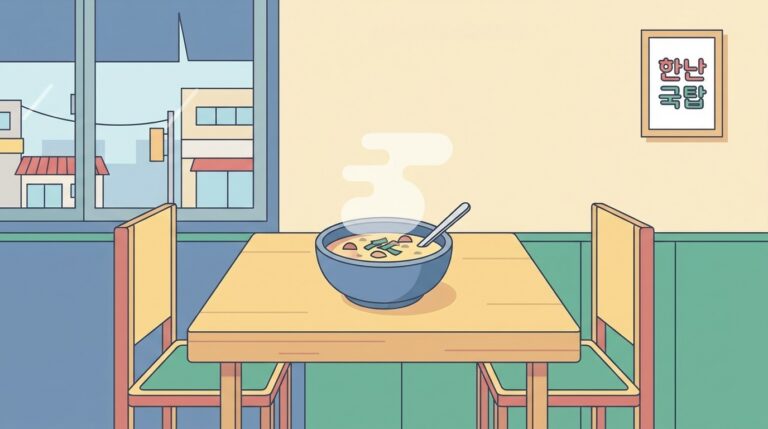
Imagine this: You’ve just spent the afternoon wandering through the charming, stone-walled alleyways of Ikseon-dong in Seoul. The autumn breeze has made you famished, and the rich, savory aroma of toasted sesame oil and simmering broth pulls you right into a bustling local eatery. Red stools, clattering steel chopsticks, and steam rising from tabletop stoves create the ultimate K-drama dining scene.
You take a seat, ready to feast. But as you open the menu, your heart drops. It’s an intimidating list of 30 unfamiliar dishes in Hangul, with zero pictures and no English translations. Across the room, a friendly server wipes down a table and begins walking towards you with a small notepad and a pen. Panic sets in! Do you frantically point at someone else’s table? Do you pick a random dish and hope it isn’t spicy chicken feet?
Take a deep breath! As an educator who has guided hundreds of beginners through their first meals in Seoul, I can tell you this: you don’t need to memorize a 50-word culinary glossary to eat like royalty. In fact, locals rarely read the entire menu anyway! Instead, they rely on one magical phrase to unlock the chef’s absolute masterpiece. By the end of this guide, you will know exactly how to ask for the house special with the confidence and warmth of a true local.
Phase 2: Top 3 Core Expressions for Ordering Signature Dishes
1. 여기 뭐가 제일 맛있어요? (Yeogi mwo-ga je-il ma-si-sseo-yo?)
- Pronunciation: [Yeo-gi mwo-ga je-il ma-si-sseo-yo?] (Think: ‘Yuh-gi’ like a yoga yawn + ‘mwo-ga’ + ‘JAY-il’ + ‘mah-she-so-yo’)
- Meaning: Literal: “What is the most delicious thing here?” | Actual Nuance: “What do you guys do best? What’s your personal recommendation?”
- K-Culture Moment: You will hear this in almost every Korean reality food show like Street Food Fighter or Omniscient Interfering View when a celebrity visits a local neighborhood gem.
- Editor’s Insight: Koreans love this question because it praises the cook right away. It shows you trust their culinary skill rather than treating them like an order-taking machine.
- Situation Spectrum: Casual (⚠️ with friends only) | Semi-formal (✅ ideal for restaurant staff) | Formal (✅)
- 🤔 Think About It: In Western dining, asking a server “What’s good?” might sometimes feel vague. In Korea, chefs take tremendous pride in their flagship dish, making this question an instant sign of respect.
2. 대표 메뉴가 뭐예요? (Dae-pyo me-nyu-ga mwo-ye-yo?)
- Pronunciation: [Dae-pyo me-nyu-ga mwo-ye-yo?] (Sounds like: ‘Day-pyo’ like day-ticket + ‘menu-ga’ + ‘mwo-yay-yo’)
- Meaning: Literal: “What is the representative menu?” | Actual Nuance: “What is this restaurant’s signature dish?”
- K-Culture Moment: Often seen in travel vlogs and food documentaries where hosts ask trendy restaurant owners for the dish that represents their brand.
- Editor’s Insight: ‘대표’ (Dae-pyo) means “representative” or “flagship.” While slightly more structured than Expression 1, it sounds very polite, crisp, and direct. It’s great when the menu has confusing categories.
- Situation Spectrum: Casual (⚠️) | Semi-formal (✅ universally safe) | Formal (✅)
- 🤔 Think About It: Why does Korean culture value a “representative” item so much? Notice how many Korean diners focus entirely on mastering just one dish (like pork soup or handmade dumplings) rather than serving everything under the sun.
3. 추천해 주세요. (Chu-cheon-hae ju-se-yo.)
- Pronunciation: [Chu-cheon-hae ju-se-yo.] (Sounds like: ‘Choo-chuhn-hay’ like a train sound + ‘joo-seh-yo’)
- Meaning: Literal: “Please recommend.” | Actual Nuance: “I leave it in your hands! Surprise me with your favorite.”
- K-Culture Moment: Think of romantic K-Drama date scenes where the male lead warmly tells the waiter, “추천해 주세요” to let the restaurant showcase their freshest seasonal offering.
- Editor’s Insight: When paired with a smile, this short phrase saves you from decision fatigue. You can also combine it with Expression 1: “여기 뭐가 제일 맛있어요? 추천해 주세요!”
- Situation Spectrum: Casual (🚫 drop the -yo to sound casual) | Semi-formal (✅ standard) | Formal (✅)
- 🤔 Think About It: When you say “추천해 주세요,” you establish a personal connection with the host. Korean hospitality (Jeong) thrives on this mutual trust!
Phase 3: Textbook Korean vs. Real Korean
Let’s compare stiff classroom phrases with how real people talk in Seoul today:
Situation 1: Asking for the best-selling item
- 📖 교과서 한국어 (Textbook): 이 식당의 대표 요리는 무엇입니까? (I sik-dang-ui dae-pyo yo-ri-neun mu-eot-im-ni-kka? – “What is this establishment’s representative culinary dish?”)
- 🗣️ 진짜 한국어 (Real-Life): 여기 뭐가 제일 잘 나가요? (Yeogi mwo-ga je-il jal na-ga-yo? – “What sells the best here?”)
- 💡 왜 다를까? (Why the difference?): The textbook phrase sounds like an official inspection or a written food critique! In day-to-day conversation, native speakers say “잘 나가요” (literally “goes out well”), meaning it flies off the counter as a bestseller.
Situation 2: Asking the owner to pick for you
- 📖 교과서 한국어 (Textbook): 저에게 좋은 음식을 추천해 주십시오. (Jeo-e-ge jo-eun eum-sik-eul chu-cheon-hae ju-sip-si-o. – “Please recommend a favorable food unto me.”)
- 🗣️ 진짜 한국어 (Real-Life): 사장님, 여기서 뭐 먹을까요? (Sajangnim, yeogi-seo mwo meog-eul-kka-yo? – “Boss, what should I eat here?”)
- 💡 왜 다를까? (Why the difference?): Calling the owner “사장님” (Boss/Owner) instantly breaks the ice, and asking “What should I eat?” sounds warm, natural, and inviting.
Phase 4: K-Culture Deep Dive & Non-verbal Manners
4-1. 눈치 (Nunchi) & Table Gestures
- The Gentle Hand Raise: In Korea, never snap your fingers, wave your arms wildly, or shout loudly across the room. Make brief eye contact and raise your hand gently to chest height while saying “저기요!” (Jeo-gi-yo! / “Excuse me!”).
- The Table Bell Secret: Look at the wooden table edges! Almost 80% of casual dining restaurants in Korea feature a small wireless button labeled 호출 (Call) or 벨 (Bell). Pressing it rings a pleasant chime that alerts the staff to your table number without making any fuss.
- The Spoon & Napkin Etiquette: While waiting for your food, place paper napkins down and set your chopsticks and spoons on top. Doing this for your dining companion earns you instant bonus points for having great restaurant manners (Maenneo)!
4-2. The Soul of Korean “Matjib” (맛집)
In many countries, menus feature endless options from burgers to salads to pasta. In Korea, the most famous restaurants (known as 맛집, Matjib) specialize in just one or two things. If you visit a Kimchi Jjigae restaurant, they might only serve one stew and a rolled omelet. Because their reputation hinges entirely on that single recipe, asking for their signature dish (대표 메뉴) is the ultimate compliment you can pay the chef!
Phase 5: Real-Life Roleplay Scenario
Setting: You walk into Halmeoni Bapsang (Grandma’s Dining Table), a cozy mom-and-pop shop in Mapo-gu. The walls are adorned with vintage posters and the aroma of roasted pork fills the air. The owner, a sweet, energetic auntie (Imo-nim), greets you with a warm smile.
- 이모님 (Imo-nim): 어서 오세요! 몇 분이세요? (Eoseo oseyo! Myeot bun-iseyo?)
🎭 Greeting you with two fingers raised, pointing to an open booth.
(Welcome! How many people?) -
You: 혼자예요! (Hon-ja-ye-yo!)
🎭 Smiling politely, taking a seat at the small wooden table.
(Just one person!) -
이모님 (Imo-nim): 편한 데 앉아요. 물은 셀프야! (Pyeon-han de anj-a-yo. Mul-eun sel-peu-ya!)
🎭 Placing a metal cup and a handwritten menu on your table.
(Sit wherever you like. Water is self-service!) -
You: 네! 저기요, 이모님… (Ne! Jeogiyo, imo-nim…)
🎭 Making eye contact with a gentle hand raise.
(Yes! Excuse me, auntie…) -
이모님 (Imo-nim): 네, 주문하시겠어요? (Ne, jumun-hasigess-eoyo?)
🎭 Stepping closer, notepad ready.
(Yes, are you ready to order?) -
You: 여기 뭐가 제일 맛있어요? (Yeogi mwo-ga je-il ma-si-sseo-yo?)
🎭 Tilting your head slightly with a friendly, inquisitive look.
(What is the most delicious thing here?) -
이모님 (Imo-nim): 우리 집은 제육볶음이 대표 메뉴야! 조금 매운데 괜찮아요? (Uri jib-eun jeyuk-bokkeum-i daepyo menyu-ya! Jogeum maeunde gwaenchanh-ayo?)
🎭 Beaming with pride while pointing to the spicy stir-fried pork on the wall.
(Our house signature is the spicy stir-fried pork! It’s a little spicy, is that okay?) -
You: 네, 좋아요! 제육볶음 하나 주세요. (Ne, jo-a-yo! Jeyuk-bokkeum hana ju-se-yo.)
🎭 Nodding with two hands holding the menu back toward her.
(Yes, sounds great! One spicy stir-fried pork, please.)
🔀 Interactive Choice Branch
What would you say if you can’t eat spicy food after she recommends her spicy signature dish?
- Option A: “안 매운 건 뭐가 제일 맛있어요?” (An mae-un geon mwo-ga je-il ma-si-sseo-yo?)
- Outcome: Best Choice! (100% Native). You clearly state your preference for mild food while still asking for the best option. The owner will gladly recommend their savory bulgogi or beef bone soup!
- Option B: “대표 메뉴 싫어요. 다른 거 주세요.” (Daepyo menyu sirh-eo-yo. Dareun geo juseyo.)
- Outcome: Bad Choice! Saying “I hate the signature menu” sounds confrontational and blunt. Never use “싫어요” (I hate/dislike it) when declining a food recommendation.
- Option C: “매운 거 절대 안 돼요. 그냥 물만 주세요.” (Maeun geo jeoldae an dwaeyo. Geunyang mulman juseyo.)
- Outcome: Risky Choice! Saying “Absolutely no spicy food, just give me water” might make the owner feel embarrassed or worried that you’re unhappy. Keep it friendly!
Phase 6: 10-Second Emotion Shadowing Drill
Speak out loud! Follow the rhythm slashes / and adopt the indicated emotions:
[😊 Bright & Friendly]- 여기 / 뭐가 / 제일 맛있어요?
- (Yeo-gi / mwo-ga / je-il ma-si-sseo-yo?)
[🤔 Curious & Crisp]- 이 식당 / 대표 메뉴가 / 뭐예요?
- (I sik-dang / dae-pyo me-nyu-ga / mwo-ye-yo?)
[🤤 Excited & Trusting]- 사장님! / 추천 하나만 / 해 주세요!
- (Sa-jang-nim! / chu-cheon ha-na-man / hae ju-se-yo!)
Phase 7: K-Culture Mini Dictionary
- 대표 메뉴 (Dae-pyo me-nyu) | Signature Dish / Flagship Menu
- The pride and joy of the restaurant. If you see this next to a menu item with a star icon (★), you can order without hesitation.
- 시그니처 (Si-geu-ni-cheo) | Signature (Konglish)
- Widely used in modern Korean cafes, trendy bistros, and bakeries. E.g., “이 카페 시그니처 음료가 뭐예요?” (What’s this cafe’s signature drink?)
- 잘 나가는 거 (Jal na-ga-neun geo) | Bestseller / Popular Item
- A colloquial phrase referring to what customers buy the most. Literally translates to “the thing that moves fast.”
- 이모님 (Imo-nim) | Auntie / Respected Female Restaurant Staff
- A heartwarming, polite term of endearment for middle-aged women running traditional diners. It creates an instant friendly rapport.
Phase 8: Traveler’s Survival Kit
Survival Phrases TOP 3
- 이거 하나 주세요. (I-geo ha-na ju-se-yo.)
- Meaning: Please give me one of this (pointing at the menu).
- Pro Tip: Hold up one index finger politely while pointing to avoid any quantity confusion!
- 덜 맵게 해 주세요. (Deol maep-ge hae ju-se-yo.)
- Meaning: Please make it less spicy.
- Pro Tip: Essential for beginners navigating Korean stews and braised dishes.
- 계산해 주세요. (Gye-san-hae ju-se-yo.)
- Meaning: Check, please / I’d like to pay.
- Pro Tip: In Korea, you usually pay at the front counter near the door on your way out, not at the dining table!
Editor’s Travel Note
- Navigation Tip: Google Maps does not provide walking routes accurately in South Korea due to national security map data laws. Make sure you install Naver Map app on your smartphone before landing in Incheon. You can easily find local restaurant ratings (별점) and bookmark must-visit spots!
- Water is Self-Service: When you see the sign 물은 셀프 (Mul-eun sel-peu), don’t wait for the server. Simply grab a metal cup from the sterilizer machine and help yourself to the cold water dispenser!
Phase 9: Going One Step Deeper (Reflection)
In many Western cultures, dining out is hyper-individualized: you modify your burger, swap your sides, and choose your dressing. However, traditional Korean dining culture is rooted in communal hospitality and harmony. When you ask a Korean chef, “What is your representative dish?”, you are stepping into their culinary universe and honoring their expertise. You aren’t merely ordering food; you are building a bridge of Jeong (warm affection) between host and guest.
💬 Your Turn: What is your absolute favorite comfort food, and how would you explain your hometown’s signature dish to a Korean friend? Drop your answer in the comments below!
Phase 10: FAQ & Avoiding Misunderstandings
Q: Can I use “이모님” (Imo-nim) for any female server?
A: Use “이모님” mainly in casual, traditional spots like K-BBQ joints, street markets, or neighborhood soup shops (Bapsang). At trendy cafes, high-end fine dining, or hotel restaurants, stick to “저기요” (Jeogiyo) or “직원분” (Jik-won-bun).
Q: What should I do if a signature dish requires a 2-person minimum?
A: Many Korean dishes like barbecue, stews (Jeongol), and Dakgalbi are designed for sharing. If you are solo, look for the text 1인분 가능 (1-in-bun ga-neung / 1 serving possible) or ask: “혼자 식사 돼요?” (Hon-ja sik-sa dwae-yo? / Can I dine solo?).
Q: Is tipping customary in Korea after receiving a great recommendation?
A: No! Tipping does not exist in South Korea. Excellent service is already included in the bill. Leaving money on the table will often result in the server chasing you down the street to return the money you forgot!
🚨 Common Mistakes TOP 3
- Snapping your fingers or shouting “Hey!”: This is considered very rude. Always use the call bell or say a soft “저기요” (Jeogiyo).
- Waiting for the check at the table: In 95% of Korean casual eateries, you take your order receipt slip to the front counter register to pay.
- Leaving chopsticks stuck vertically into rice: Never stick chopsticks straight up into a bowl of rice. This mimics an ancestral memorial ritual (Jesa) and brings bad luck.
Phase 11: Action Mission & Engagement
- 🥉 Bronze Mission (Solo Mastery): Stand in front of your mirror, smile warmly, and repeat “여기 뭐가 제일 맛있어요?” 5 times until it rolls off your tongue smoothly.
- 🥈 Silver Mission (Community Share): Head to your local Korean restaurant or grocery store, snap a picture of a dish, and post it online with the caption: “오늘의 대표 메뉴!” (Today’s signature menu!).
- 🥇 Gold Mission (Real-world Challenge): Visit an authentic Korean diner. When the server approaches, avoid pointing at pictures—ask them directly for their recommendation using today’s phrases!
- 🎮 K-Culture Media Mission: Watch an episode of Let’s Eat (식샤를 합시다) or Jinny’s Kitchen (서진이네) and listen for how customers ask about popular menu items.
Phase 12: Interactive Quiz Challenge
Question 1: Situational Judgment
You enter a busy dumpling restaurant in Insadong. The menu has 20 different items and you want the chef’s absolute masterpiece. What is the most natural sentence to say?
* A) 이거 싫어요. (I-geo sirh-eo-yo.)
* B) 여기 뭐가 제일 맛있어요? (Yeogi mwo-ga je-il ma-si-sseo-yo?)
* C) 물을 빨리 가져오세요. (Mul-eul ppal-li ga-jyeo-o-se-yo.)
Question 2: Fill in the Blank
Complete the phrase to ask for a recommendation:
* “사장님, ________ 해 주세요!”
Question 3: True or False (Culture)
In South Korea, it is polite to leave a 15% cash tip on the table if the server recommends a delicious signature menu.
* [True / False]
👉 Click here to check your answers and detailed feedback!
Answer Key & Explanations:
- Correct Answer: B (여기 뭐가 제일 맛있어요?)
- Explanation: This asks “What is the most delicious thing here?” politely and warmly. Option A means “I dislike this,” and Option C means “Bring me water quickly,” both of which are inappropriate.
- Correct Answer: 추천 (Chu-cheon)
- Full Sentence: “사장님, 추천해 주세요!” (Boss, please recommend something!)
- Correct Answer: False
- Explanation: South Korea is a strictly non-tipping culture. Showing gratitude with a warm “잘 먹었습니다!” (Jal meog-eoss-seum-ni-da! / I ate really well!) is the best tip you can ever give.
- Explanation: South Korea is a strictly non-tipping culture. Showing gratitude with a warm “잘 먹었습니다!” (Jal meog-eoss-seum-ni-da! / I ate really well!) is the best tip you can ever give.
🎬 Watch Our Daily Videos! (Daily Hangul Official Instagram)
Review the expressions you learned in this article with our fun daily short videos! Check out native pronunciation and real-life nuances in action.
- Instagram @dailyhangul_en







