

Phase 1: 공감 (Empathy Opening)
안녕하세요! (Annyeonghaseyo!) I’m your Daily Hangul editor, your personal cultural navigator.
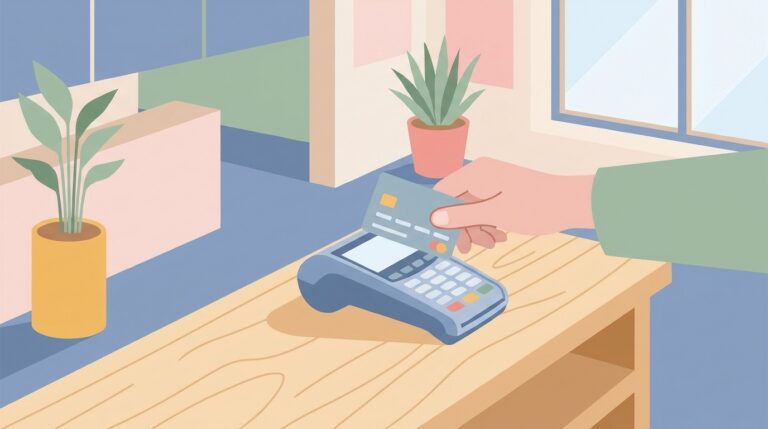
Picture this: You just had the most mind-blowing meal of your life at a buzzing barbecue spot in Seoul. The pork belly was sizzling, the side dishes were endless, and you feel like you’ve stepped right into a classic K-Drama scene. But now comes the moment that makes every beginner freeze: the bill. You grab your wallet, walk over to the counter, and make eye contact with the friendly owner. Suddenly, your brain goes totally blank. Do you leave cash on the table like in Italy? Do you wait for the server to bring a folder like in the US? You awkwardly hold out your plastic card, stammering in English, hoping they won’t think you’re rude.
Take a deep breath—we have all been there! Dining in Korea is fast, fun, and warm, but checkout etiquette has its own unique rhythm. Today, we are mastering the single most useful phrase for wrapping up any meal smoothly: 카드로 계산할게요 (Kadeu-ro gyesan-halgeyo – I will pay by card). Backed by real questions from hundreds of A1 learners, this guide will give you the exact words, manners, and confidence you need to wrap up your meals like a true Seoulite!
Phase 2: Core 3 Expressions Deep Dive
1. 카드로 계산할게요 (Kadeu-ro gyesan-halgeyo)
- Pronunciation: [Ka-deu-ro gye-san-hal-ge-yo] (Sound analogy: Say ‘card’ with a soft ‘eu’ ending, then ‘gay-sahn-hahl-gay-yo’ like ‘get, son, hal, get, yo’.)
- Meaning: Literal: “I will calculate with a card” | Real Nuance: “I’d like to pay by card, please.”
- K-Culture Moment: Think of that classic K-Drama moment where the handsome CEO smoothly taps his black card at a sleek restaurant counter.
- Editor’s Insight: In Korean, the verb 계산하다 (gyesanhada) means ‘to calculate’, but in everyday life, it is the standard, natural word for ‘settling the bill’.
- Situation Spectrum:
- Casual (Friends): 🚫 (Sounds too formal between close peers)
- Semi-formal (Polite everyday): ✅ (Perfect for restaurants and cafes)
- Formal (High protocol): ⚠️ (Understood, but honorific business phrasing differs)
- 🤔 Think About It: Why does Korean use the concept of ‘calculating’ (계산) rather than directly saying ‘buying’ or ‘spending money’? Does your native language separate the math from the payment?
2. 영수증은 버려주세요 (Yeongsujeung-eun beoryeo-juseyo)
- Pronunciation: [Yeong-su-jeung-eun beo-ryeo-ju-se-yo] (Sound analogy: ‘Young-sue-jung-oon burr-yuh-joo-say-yo’)
- Meaning: Literal: “Please throw away the receipt” | Real Nuance: “No receipt needed, thank you!”
- K-Culture Moment: At convenience stores and busy lunch spots in Gangnam, office workers say this lightning-fast to save paper and keep the line moving.
- Editor’s Insight: Instead of saying “I don’t need a receipt,” Koreans politely request the staff to discard it on their behalf. It is polite and ultra-natural.
- Situation Spectrum:
- Casual: ⚠️ (Use 버려줘 only with friends)
- Semi-formal: ✅ (Standard polite counter phrase)
- Formal: ✅ (Polite enough for any establishment)
- 🤔 Think About It: Notice how Korean often asks the other person to do an action for you (주세요 – please do for me) rather than stating a blunt negative like “I don’t want it.”
3. 남은 거 포장해 주세요 (Nameun geo pojang-hae juseyo)
- Pronunciation: [Na-meun geo po-jang-hae ju-se-yo] (Sound analogy: ‘Nah-moon go po-jahng-hae joo-say-yo’)
- Meaning: Literal: “Please package the remaining things” | Real Nuance: “Could I get this packed to go, please?”
- K-Culture Moment: When ordering a massive feast of fried chicken or Korean stew that you can’t finish, locals pack it home without hesitation.
- Editor’s Insight: 포장 (Pojang) means packaging or takeout. Adding 남은 거 (nameun geo – leftover stuff) immediately explains your request clearly at beginner level.
- Situation Spectrum:
- Casual: ⚠️ (남은 거 포장해줘 with close friends)
- Semi-formal: ✅ (Standard polite restaurant request)
- Formal: ✅ (Appropriate for upscale dining)
- 🤔 Think About It: In many cultures, asking for a doggy bag feels awkward. In Korea, finishing or saving food is deeply respected to avoid waste!
Phase 3: 교과서 한국어 vs 진짜 한국어 (Textbook vs Real Korean)
Situation 1: Paying with your credit card
- 📖 교과서 한국어 (Textbook): 신용카드로 결제하겠습니다. (Sinyongkadeu-ro gyeolje-hagetseumnida. – “I shall execute payment via credit card.”)
- 🗣️ 진짜 한국어 (Real-life): 카드로 계산할게요. (Kadeu-ro gyesan-halgeyo.) or simply 카드로 할게요. (Kadeu-ro halgeyo. – “Card, please.”)
- 💡 왜 다를까?: Textbook phrasing sounds like an official boardroom announcement or an automated terminal voice. Real humans keep it snappy and friendly with -할게요 (-halgeyo).
Situation 2: Declining a paper receipt
- 📖 교과서 한국어 (Textbook): 영수증을 주시지 않아도 됩니다. (Yeongsujeung-eul jusiji anado doemnida. – “It is permissible not to provide a receipt.”)
- 🗣️ 진짜 한국어 (Real-life): 영수증은 버려주세요. (Yeongsujeung-eun beoryeo-juseyo.) or 영수증 괜찮아요. (Yeongsujeung gwaenchanayo. – “Receipt is okay/no need.”)
- 💡 왜 다를까?: Nobody uses formal negative permission grammar at a checkout counter during the lunch rush! Short and clean phrases are preferred.
Phase 4: K-Culture Deep Dive & Non-Verbal Manners
4-1. 눈치 (Nunchi) & The Two-Hand Card Gesture
In Korea, payment is not just a financial transaction; it is an exchange of respect.
* The Counter Rule: Unlike in Western countries where the server brings the credit card reader to your table, in Korea, you almost always take your bill clip or table number and walk up to the 계산대 (gyesandae – cash register near the front door).
* The Two-Hand Rule (두 손): Never toss or flick your card across the counter with one hand! Hold the credit card with both hands, or support your right forearm/wrist with your left hand, and hand it over with a slight head nod. When the clerk returns your card, receive it with both hands as well.
4-2. The Cashless Society Phenomenon
South Korea is one of the most cashless societies in the world. Even for a 1,000 KRW ($0.75) bottle of water at a convenience store or a taxi ride, card and mobile payments (like Samsung Pay, Apple Pay, and T-money) are universally welcomed. You will rarely, if ever, encounter a minimum card spend requirement. Just pull out your card with confidence!
Phase 5: 실전 롤플레이 시나리오 (Real-Life Roleplay Scenario)
- Location: Mapo Galbi, a cozy neighborhood Korean barbecue joint in Seoul.
- Characters: You (A hungry traveler full of good food) & Imo-nim (이모님) (The warm, energetic restaurant owner).
- You: 저기요, 계산할게요! (Jeogiyo, gyesan-halgeyo!)
🎭 Action: Standing up from table 4, holding the plastic bill clip, walking to the counter with a smile.
(Translation: Excuse me, I would like to pay!) -
Imo-nim: 네! 4번 테이블이시죠? 갈비 2인분에 된장찌개 하나요. (Ne! Sabeon teibeul-isijyo? Galbi i-inbun-e doenjangjjigae hanayo.)
🎭 Action: Tapping keys on the touch POS monitor rapidly.
(Translation: Yes! Table 4, right? Two servings of ribs and one soybean paste stew.) -
You: 네, 맞아요. 카드로 계산할게요. (Ne, majayo. Kadeu-ro gyesan-halgeyo.)
🎭 Action: Presenting your travel credit card using both hands.
(Translation: Yes, that’s right. I will pay by card.) -
Imo-nim: IC칩 위로 해서 여기 꽂아주세요. (Aisi-chip wi-ro haeseo yeogi kkoja-juseyo.)
🎭 Action: Pointing toward the card terminal facing you.
(Translation: Please insert it right here with the IC chip facing up.) -
You: (카드 꽂으며) 네, 꽂았어요! (Ne, kkojas-eoyo!)
🎭 Action: Inserting the card gently until it beeps.
(Translation: Yes, I inserted it!) -
Imo-nim: 영수증 드릴까요? (Yeongsujeung deurilkkayo?)
🎭 Action: Terminal prints receipt with a tiny zipping sound.
(Translation: Would you like a receipt?) -
You: 아니요, 영수증은 버려주세요. (Aniyo, yeongsujeung-eun beoryeo-juseyo.)
🎭 Action: Waving hands lightly and shaking head gently with a friendly smile.
(Translation: No thanks, please throw the receipt away.) -
Imo-nim: 네! 안녕히 가세요, 또 오세요! (Ne! Annyeonghi gaseyo, tto oseyo!)
🎭 Action: Handing back your card with both hands and bowing warmly.
(Translation: Okay! Goodbye, please come again!)
🔀 Interactive Decision Point
The clerk asks you: “영수증 필요하세요? (Do you need a receipt?)” What do you say?
* Option A: “영수증은 버려주세요! (Yeongsujeung-eun beoryeo-juseyo!)”
* Feedback: [BEST] 100% natural, polite, and saves paper! The cashier will smile and dispose of it immediately.
* Option B: “싫어요! (Sireoyo!)”
* Feedback: [BAD] “싫어요” means “I hate it / I refuse!” It sounds aggressive and child-like. Never use this with service staff!
* Option C: “네, 주세요. (Ne, juseyo.)”
* Feedback: [SAFE] Great choice if you are tracking your travel budget or need proof of purchase for tax refunds!
Phase 6: 10초 감정 섀도잉 드릴 (10-Second Emotion Shadowing Drill)
Practice these aloud! Match the emotion tags and pause at the slashes (/):
[💳 차분하고 공손하게 - Calm and polite]
저기요, / 카드로 / 계산할게요.
(Jeo-gi-yo, / ka-deu-ro / gye-san-hal-ge-yo.)-
[😊 산뜻하고 가볍게 - Light and cheerful]
영수증은 / 버려주세요!
(Yeong-su-jeung-eun / beo-ryeo-ju-se-yo!) -
[🙏 감사한 마음을 담아 - Warm and appreciative]
잘 먹었습니다, / 안녕히 계세요!
(Jal meog-eot-seum-ni-da, / an-nyeong-hi gye-se-yo!)
Phase 7: K-Culture Mini Dictionary
- 계산대 (Gyesandae) | Checkout Counter / Cash Register
Usage: The designated station near the entrance where all restaurant payments are settled. - 일시불 (Il-si-bul) | Lump-sum Payment (Single Payment)
Usage: When paying over 50,000 KRW, card machines often ask if you want installments. The cashier might ask: “일시불로 해드릴까요? (Single payment?)”. Just say: “네, 일시불이요!” - 영수증 (Yeongsujeung) | Receipt
Usage: Paper receipt given after payment. Essential to keep if you plan to get an airport tax refund. - 포장 (Pojang) | Takeout / To-Go Packaging
Usage: Used at restaurants to ask for leftover packaging or when ordering takeout directly.
Phase 8: Traveler’s Survival Kit
Survival Expressions TOP 3
- 계산해 주세요 (Gyesan-hae juseyo) – [Please calculate the bill]
Pro Tip: If you forget -할게요, this simple imperative form works flawlessly anywhere. - 따로따로 계산돼요? (Ttaro-ttaro gyesan-dwaeyo?) – [Can we pay separately / split the bill?]
Pro Tip: Many busy lunch spots in Korea prefer one payment, but asking politely beforehand will let you know if split card billing is possible. - 잘 먹었습니다! (Jal meogeotseumnida!) – [I ate very well / Thank you for the meal!]
Pro Tip: Shout this warmly to the kitchen staff as you exit. It is the ultimate compliment in Korean food culture.
Editor’s Travel Note
- App Essentials: Always check restaurant locations and reviews using the [Naver Map navigation app] rather than Google Maps, which has limited walking route features in South Korea. For quick rides home after late-night Korean BBQ, keep the [Kakao T taxi hailing app] installed.
- Terminal Tip: Foreign Visa and Mastercard credit cards often require inserting the physical chip rather than tapping contactless pay, though Apple Pay is growing rapidly in Seoul. Be ready to sign your name on the little digital pad screen!
Phase 9: 한 발 더 깊이 (One Step Deeper)
In Western dining culture, payment is often a slow, isolated ritual at your table. In South Korea, payment is integrated into community rhythm. Walking up to the register reflects the bustling, communal spirit of Korean establishments where dining rooms remain dynamic and unencumbered. When you hand over your card with both hands and say “잘 먹었습니다” (I ate well), you are closing an unspoken social contract of gratitude between host and guest. Language is never just grammar; it is an invisible handshake.
💬 Your Turn: What is the payment etiquette in your home country? Do you pay at the table or at the door? Drop your experience in the comments below!
Phase 10: FAQ & Avoiding Misunderstandings
Q: Can I split the bill between three different foreign credit cards in Korea?
A: Technically yes, but during peak rush hours (12:00-1:00 PM lunch or 7:00-8:00 PM dinner), cashiers may find multiple separate card swipes stressful. It is best to have one person pay with “카드로 계산할게요” and transfer money to each other later via travel money apps.
Q: The card machine screen made a beep sound and showed a blank box. What should I do?
A: That is the electronic signature pad! For payments over 50,000 KRW, a signature is legally required. Simply use the stylus (or your finger) to make a quick squiggle or initial, then press the green button.
Q: Do I need to leave a tip on top of my card payment?
A: Absolutely not! Tipping does not exist in South Korea. The amount listed on your bill includes all service charges and tax. Attempting to tip may confuse the staff or even cause them to run after you to return your “forgotten money!”
🚨 Common Mistakes (경고판)
- ❌ Mistake 1: Leaving money or your card on the dining table and walking out.
- Correct Action: Pick up the paper bill clip and carry it to the front checkout counter (계산대).
- ❌ Mistake 2: Handing over your card with one hand like tossing a frisbee.
- Correct Action: Use two hands or hold your elbow to display respect and gratitude.
- ❌ Mistake 3: Saying “영수증 싫어요!” when declining a receipt.
- Correct Action: Say “영수증은 버려주세요” (Please throw it away) or “괜찮아요” (It’s okay).
Phase 11: Action Mission & Engagement
- 🥉 Bronze Mission: Stand in front of your mirror with an old card. Practice bowing your head slightly, extending both hands, and saying: “카드로 계산할게요!”
- 🥈 Silver Mission: Film a quick 5-second TikTok or Instagram story showing how to decline a receipt politely in Korean and tag @DailyHangul.
- 🥇 Gold Mission: Next time you order at a Korean restaurant or grocery store in your area, say “카드로 계산할게요” to the cashier with two hands!
- 🎮 K-Culture Mission: Watch an episode of a slice-of-life drama (like Hospital Playlist or Weightlifting Fairy Kim Bok-joo). Spot the exact moment characters finish their meal and listen for the word “계산” (Gyesan)!
Phase 12: Interactive Quiz Challenge
Question 1: [Situational Judgment]
You have finished your bibimbap at an authentic restaurant in Insadong. Where should you go to pay?
A) Stay seated and wave your credit card in the air
B) Leave cash under your plate and walk away
C) Pick up your bill clip and walk to the counter near the entrance
Question 2: [Fill in the Blank]
Complete the sentence to say “Please throw away the receipt”:
영수증은 _______ 주세요.
(Hint: Sounds like beo-ryeo)
Question 3: [True or False Cultural Fact]
True or False: In South Korea, it is polite to add a 15% tip onto the credit card machine terminal when paying for your dinner.
👉 Click to reveal answers & explanations!
- Answer 1: C – In almost all traditional Korean restaurants, payment is settled at the front counter (계산대) near the exit door.
- Answer 2: 버려 (beoryeo) – The full sentence is “영수증은 버려주세요” (Please discard the receipt for me).
- Answer 3: FALSE – Korea is strictly a non-tipping country! Tipping is never expected, and the price on the menu is the final amount you pay.
🎬 Watch Our Daily Videos! (Daily Hangul Official Instagram)
Review the expressions you learned in this article with our fun daily short videos! Check out native pronunciation and real-life nuances in action.
- Instagram @dailyhangul_en







