

Phase 1: Empathy & Immersion
안녕하세요! 매일한글 에디터입니다. (Hello! This is your Daily Hangul editor.)
Have you ever walked down the buzzing streets of Seongsu-dong or Hannam-dong in Seoul and felt a sudden wave of deja vu? Everywhere you turn, effortlessly cool locals seem to rock similar oversized silhouettes, carry matching silver padded bags, and hold cups from the exact same artisanal roastery. Yet, if you sit down and chat with them, nobody wants to admit they are just “copying a trend.” Instead, they smile and point out a tiny silver key ring, a unique vintage watch, or an indie poetry book tucked under their arm, whispering: “It’s all about that one tiny difference.”
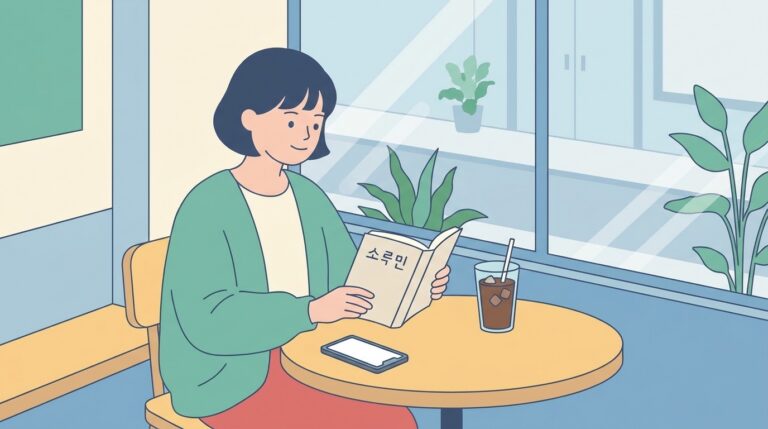
Welcome to modern Korea’s “Nano-Society.” Today, cultural trends move at breakneck speed. Dopamine-heavy algorithms serve us micro-trends daily, while consumers battle the fear of missing out by turning to “Ditto consumption”—following creators who mirror their aesthetic. At the same time, people aggressively curate their individuality through counter-trends like “Text-Hip” (finding reading books aesthetically and intellectually cool).
If you have ever felt caught between wanting to blend in with your Korean peers and wanting your authentic taste to shine through, this guide is crafted specifically for you. As someone who has spent ten years decoding Korean socio-linguistic shifts, I have heard countless intermediate learners express frustration: “I know the textbook words for shopping and hobbies, but why do I feel totally lost when my Korean friends talk about what they bought on Instagram?”
By mastering these contemporary cultural buzzwords, you will not only unlock the secrets of modern Korean street culture, but you will also learn how to speak with natural, B2-level nuance that immediately earns respect.
Phase 2: Core Expressions Deep Dive
1. 디토 소비 (Ditto Sobi)
- Pronunciation: [Dit-to so-bi] (Think of the English phrase “ditto” plus “so-bee” as in bumblebee.)
- Meaning: Literal: “Ditto consumption.” Nuance: The modern consumer habit of skipping tedious research and buying products recommended by a trusted influencer, celebrity, or brand whose aesthetic you admire—essentially saying, “Same for me!”
- K-Culture Moment: Seen frequently on YouTube Vlogs and Instagram reels when Korean lifestyle creators say, “I loved this influencer’s cozy room decor, so I just did some ditto consumption and bought the entire lamp set.”
- Editor’s Insight: This word stems from the Latin “ditto” (as famously popularized by NewJeans’ hit song “Ditto”). It does not mean mindless copying; rather, it implies smart efficiency. In an era of choice overload, consumers align their identity with someone else’s curated taste.
- Situation Spectrum: Casual ✅ | Semi-formal ✅ | Formal ⚠️
- 🤔 Think About It: In your home culture, is copying an influencer seen as lacking originality, or is it embraced as a smart shortcut to finding good taste?
2. 텍스트힙 (Tek-seu-teu-hip)
- Pronunciation: [Tek-seu-teu-hip] (Sounds exactly like “Text-Hip”, with a crisp Korean vowel at the end.)
- Meaning: Literal: “Text + Hip.” Nuance: The trend of viewing reading physical books, writing handwritten notes, or visiting independent bookstores as culturally sophisticated, deeply cool, and rebellious against short-form video addictions.
- K-Culture Moment: An idol or actor spotted reading a classic novel backstage or in an airport lounge, triggering thousands of fans to share aesthetic book photos with aesthetic quotes on social media.
- Editor’s Insight: Born as a rebellion against brain-frying short-form algorithms, “Text-Hip” merges intellectual curiosity with visual aesthetics. It is not just about finishing an 800-page philosophy tome; it is about embracing slow reflection as a personal statement.
- Situation Spectrum: Casual ✅ | Semi-formal ✅ | Formal 🚫
- 🤔 Think About It: Why has an activity as traditional as reading a printed book transformed into a viral status symbol among digital natives?
3. 한 끗 차이 (Han Kkeut Chai)
- Pronunciation: [Han kkeut cha-i] (Pronounce ‘han’ like ‘hahn’, ‘kkeut’ like ‘good’ ending on a crisp Korean ‘t’ without aspiration, and ‘chai’ like spiced tea.)
- Meaning: Literal: “A difference of a single point (in traditional card games).” Nuance: A razor-thin margin or a subtle detail that transforms something ordinary into something extraordinary.
- K-Culture Moment: Fashion designers and beauty YouTubers analyzing styling: “Both outfits are just white shirts and blue jeans, but tucking it in right here is the ‘한 끗 차이’ that makes it look high-fashion.”
- Editor’s Insight: In Korean society, showing off excessively can invite criticism. However, mastering the han kkeut chai allows you to demonstrate sophisticated individuality without breaking social harmony. It is the gold standard of effortless chic.
- Situation Spectrum: Casual ✅ | Semi-formal ✅ | Formal ✅
- 🤔 Think About It: What constitutes “a one-point difference” in your own personal style or communication habits?
Phase 3: Textbook Korean vs. Real Korean
Situation 1: Explaining why you bought a trendy item
- 📖 교과서 한국어: 저는 인플루언서가 추천한 물건을 그대로 샀습니다. (Jeoneun impeullueonseoga chucheonhan mulgeoneul geudaero satseumnida. / I bought the item recommended by an influencer as it was.)
- 🗣️ 진짜 한국어: 알아보기 귀찮아서 그냥 디토 소비해 버렸어. (Arabogi gwichanaseo geunyang ditto sobihae beoryeosseo. / I couldn’t be bothered to research, so I just ditto-consumed it.)
- 💡 왜 다를까? Textbook Korean sounds like a dry post-purchase survey. Modern native speakers lean into casual, expressive neologisms like 디토 소비 combined with ~해 버렸어 to convey relatable honesty.
Situation 2: Praising a friend’s curated aesthetic
- 📖 교과서 한국어: 당신의 옷차림은 다른 사람들과 조금 다릅니다. (Dangsin-ui otcharim-eun dareun saramdeulgwa jogeum dareumnida. / Your outfit is a little different from others.)
- 🗣️ 진짜 한국어: 기본 템인데도 한 끗 차이로 분위기가 확 사네! (Gibon tem-indedo han kkeut chairo bunwigiga hwak sane! / It’s made of basic items, but that subtle twist brings the whole vibe alive!)
- 💡 왜 다를까? Simply saying someone is “different” (다릅니다) can sound neutral or slightly awkward. Using 한 끗 차이로 분위기가 확 사네 specifically compliments their aesthetic discernment.
Phase 4: K-Culture Deep Dive & Non-Verbal Manners
4-1. Nunchi & Understated Gestures: The Art of Subtle Display
In Korea’s fast-moving urban spaces like Seongsu or Yeonnam-dong, bragging loudly about your rare possessions violates good nunchi (social situational awareness). Instead, trend-conscious Koreans practice intentional understatement:
* The Nonchalant Reveal: When someone asks where you got a unique book or bag, tilt your head slightly, smile softly, and present it casually with both hands rather than waving it in the air.
* The Empathetic Nod: When a peer confesses to buying something impulsively on TikTok, do not lecture them on personal finance. Give an understanding nod, chuckle, and validate their burnout: “요즘 다 도파밍하느라 그렇잖아.” (Yoyozeump da dopaming-haneura geureotjana. / Everyone’s dopamine farming these days anyway.)
4-2. Cultural Code Analysis: The Seongsu Pop-up Phenomenon & Text-Hip Cafes
Why do pop-up stores in Seoul boast two-hour waiting lines while independent bookstores simultaneously enjoy a renaissance? In Korea’s hyper-connected “Nano-Society,” social groups have fractured into tiny, passion-based tribes.
On one hand, people experience sensory overload from digital “dopamine farming” (도파밍), chasing ephemeral pop-up experiences. On the other hand, the craving for mental detox fuels “Text-Hip” (텍스트힙). In places like Gwanghwamun Kyobo Bookstore or quiet Hannam book bars, you will see young Koreans reading paperbacks with covers wrapped in craft paper. It proves that within the same generation, following collective digital hype and cultivating serene offline depth comfortably coexist.
Phase 5: Real-World Roleplay Scenario
Setting: A minimalist indie book cafe in Seongsu-dong. Minimalist ambient jazz plays softly.
Characters:
* Minji (민지): Your stylish, culturally savvy Korean coworker who loves hunting for hidden local brands.
* You (학습자): Visiting the cafe to unwind and check out some newly released essay collections.
민지: 이 카페 분위기 진짜 독특하지 않아? 요즘 성수동에서 제일 핫해.
(I kape bunwigi jinjja dokteukhaji ana? Yojeum Seongsu-dong-eseo jeil hathae.)
(Isn’t this cafe’s vibe super unique? It’s the hottest spot in Seongsu right now.)
🎭 둘러보며 뿌듯한 미소를 짓는다 (Looks around with a proud smile)
You: 맞아, 보통 북카페랑은 느낌이 완전 다르네. 다들 책 읽는 모습이 되게 멋지다.
(Maja, botong bukkaperang-eun neukkimi wanjeon dareune. Dadeul chaek ingneun moseubi doege meotjida.)
(Totally, it feels completely different from normal book cafes. Everyone looks so cool reading books.)
🎭 인테리어를 천천히 감상하며 고개를 끄덕인다 (Slowly appreciates the interior while nodding)
민지: 그게 바로 요즘 말하는 ‘텍스트힙’이잖아! 나도 도파민 중독에서 벗어나려고 에세이 한 권 샀어.
(Geuge baro yojeum malhaneun ‘tekseuteu-hip’-ijana! Nado dopamin jungdog-eseo beoseonaryeogo esei han gwon sasseo.)
(That’s exactly what people call ‘Text-Hip’ these days! I also bought an essay book to break away from dopamine addiction.)
🎭 새로 산 종이책을 테이블 위에 올려놓으며 (Places her new paperback gently on the table)
You: 오, 표지 디자인도 깔끔하다. 이거 누구 추천받고 산 거야?
(O, pyoji dijaindo kkalkkeumhada. Igeo nugu chucheonbatgo san geoya?)
(Oh, the cover design is so clean too. Did someone recommend this to you?)
🎭 책 표지를 부드럽게 넘겨보며 묻는다 (Gently glances at the cover while asking)
민지: 내가 좋아하는 작가 브이로그 보고 바로 디토 소비했지. 정보 찾기도 귀찮아서.
(Naega joahaneun jakga beuilogeubogo baro ditto sobihaetji. Jeongbo chatgido gwichanaseo.)
(I saw it on my favorite author’s vlog and immediately ditto-consumed it. Finding info was too much work anyway.)
🎭 어깨를 으쓱하며 유쾌하게 웃는다 (Shrugs her shoulders and chuckles cheerfully)
You: 그래도 민지가 고른 책갈피 하나만으로 분위기가 확 달라 보여.
(Geuraedo Minjiga goreun chaekgalpi hanamaneuro bunwigiga hwak dalla boyeo.)
(Still, that single bookmark you picked makes the whole aesthetic feel so distinctive.)
🎭 가방에 달린 가죽 북마크를 살짝 가리키며 (Lightly points toward the leather bookmark on her bag)
민지: 알아채 줬네? 유행하는 책이라도 이런 한 끗 차이가 있어야 내 취향 같거든.
(Arachae jwonne? Yuhaenghaneun chaegirado ireon han kkeut chaiga isseoya nae chwihyang gatgeodeun.)
(You noticed? Even with a trendy book, having that one subtle difference makes it feel like my own taste.)
🎭 눈을 반짝이며 즐거워한다 (Her eyes light up with delight)
You: 공감해. 남들과 유행을 공유하면서도 나만의 디테일을 챙기는 게 진짜 매력인 것 같아.
(Gonggamhae. Namdeulgwa yuhaeng-eul gong-yuhamyeonseodo naman-ui dite-ireul chaenggineun ge jinjja maeryeog-in geot gata.)
(I agree. Sharing trends with others while holding onto your own detail is the real charm.)
🎭 따뜻한 라테를 한 모금 마시며 공감한다 (Sips warm latte thoughtfully in mutual understanding)
🔀 Interactive Decision Point
Minji asks you what you want to do after finishing your coffee: “우리 다음엔 어디 갈까?” (Where should we go next?) How do you respond?
- Option A: “근처에 팝업스토어 많던데, 줄 서서 도파밍이나 제대로 하러 갈래?” (I hear there are lots of pop-ups nearby, want to line up and do some proper dopamine farming?)
- 👉 Feedback [Best]: Natural, humorous, and incorporates trendy slang effortlessly. Minji will laugh and lead the way!
- Option B: “저는 소비를 좋아하지 않으니 서점에서 한국어 문법 책을 사겠습니다.” (Since I do not like consumption, I will buy a Korean grammar book at a bookstore.)
- 👉 Feedback [Bad]: Overly rigid, textbook-stiff, and instantly dampens the relaxed, aesthetic atmosphere.
- Option C: “디토 소비는 나쁜 거니까 더 이상 아무것도 사지 마.” (Ditto consumption is bad, so don’t buy anything else.)
- 👉 Feedback [Risk]: Judgemental tone. In Korean conversational etiquette, unsolicited criticism of someone’s consumer habits creates awkward tension.
Phase 6: 10-Second Emotional Shadowing Drill
Practice these lines out loud with the designated emotional cues and natural rhythm pauses (/ indicates a brief micro-pause).
[😏 유쾌하고 쿨하게 - Cheerful & Nonchalant]
알아보기 귀찮아서 / 그냥 디토 소비해 버렸어.
(Arabogi gwichanaseo / geunyang ditto sobihae beoryeosseo.)
(I couldn’t be bothered to research, / so I just ditto-consumed it.)-
[✨ 감탄하며 진심 어린 어조로 - Expressing Genuine Admiration]
평범한 옷인데도 / 한 끗 차이로 / 느낌이 확 사네!
(Pyeongbeomhan osindedo / han kkeut chairo / neukkimi hwak sane!)
(It’s an ordinary outfit, / but that subtle twist / brings the whole vibe alive!) -
[😌 차분하고 지적인 느낌으로 - Calm & Thoughtful]
요즘엔 숏폼보다 / 책 읽는 텍스트힙이 / 훨씬 멋있더라.
(Yojeumen syot-pomboda / chaek ingneun tekseuteu-hibi / hwolssin meositdeora.)
(These days, / the text-hip vibe of reading books / is way cooler than short-form videos.)
Phase 7: K-Culture Mini-Dictionary
-
도파밍 (Dopaming)
Translation: Dopamine Farming.
Real-World Usage: A blend of “Dopamine” and gaming “Farming.” It describes intentionally seeking out quick, stimulating activities (short-form videos, random gacha machines, ultra-sweet desserts) to trigger instant happiness. -
평균 실종 (Pyeonggyun Siljong)
Translation: Disappearing Average / Polarization.
Real-World Usage: A key socio-economic term in Korea indicating that mid-tier products or standard lifestyles are disappearing; consumers gravitate either toward extreme cost-effectiveness (Daiso, convenience stores) or ultra-luxury niche items. -
팝업 투어 (Papeop Tueo)
Translation: Pop-Up Store Hopping.
Real-World Usage: Spending weekends in trendy neighborhoods visiting temporary experiential concept stores (fashion, beauty, anime, K-pop merchandise) rather than traditional malls. -
별다꾸 (Byeoldakku)
Translation: Decorating absolutely everything.
Real-World Usage: Short for “별걸 다 꾸민다” (decorating literally everything). Refers to customizing everyday items—phone cases, crocs, keychains, tumblers, and journal spreads—to stamp your personal identity on mass-produced goods.
Phase 8: Traveler’s Survival Kit
Top 3 On-the-Street Phrases
-
이거 요즘 SNS에서 제일 핫한 아이템 맞죠?
(Igeo yojeum SNS-eseo jeil hathan aitem matjyo?)
Pro Tip: Use this at Seongsu or Hongdae boutique shops when you want the staff to confirm if something is the trending signature item. -
사진 찍기 좋은 자리로 안내해 주실 수 있나요?
(Sajin jjikgi joeun jariro annaehae jusil su innayo?)
Pro Tip: Perfect when entering an aesthetic book cafe or rooftop where natural lighting elevates your Text-Hip photo shots. -
포장할 때 선물용 스티커도 같이 주실 수 있어요?
(Pojanghal ttae seonmuryong seutikeodo gachi jusil su isseoyo?)
Pro Tip: Great for picking up decorative stickers at stationery pop-ups for your Byeoldakku personalization.
Editor’s Travel Note: Conquering Trend Hotspots
When exploring Seoul’s fast-changing subcultures, standard global map tools often fail to list newly opened pop-ups. Make sure to download the Naver Map navigation app for real-time reviews and foot-traffic indicators. If you are eyeing popular aesthetic restaurants or experiential pop-up cafes, reserve your slot in advance via the CatchTable dining booking service to bypass lengthy street queues. Most trend-driven local shops accept international credit cards and mobile simple payments without requiring paper cash.
Phase 9: Stepping Deeper: Cultural Insight
Korea has historically been recognized for strong collective harmony (우리 – “We” culture). In the traditional paradigm, deviating too far from the group norm was viewed with caution. However, in today’s hyper-individualized “Nano-Society,” this dynamic has transformed into a sophisticated dance. Young Koreans crave the belonging that comes from validating shared cultural phenomena, yet simultaneously fear losing themselves in the faceless crowd. The solution is not rebellion; it is the art of nuance—signaling collective belonging through shared platforms while claiming sovereignty through subtle, highly personal details.
💬 Your Turn: Have you ever felt the pressure to fit into a collective trend while secretly looking for that “한 끗 차이” to stand out? Share your favorite subtle styling or consumer habits in the comments below!
Phase 10: FAQ & Avoiding Misunderstandings
Q: Is calling someone’s purchase ‘디토 소비’ (Ditto consumption) considered an insult in Korea?
A: No, not at all! In the past, words like “따라쟁이” (copycat) carried negative weight. However, 디토 소비 is viewed as a rational, modern way to navigate information overload by trusting curated taste. Just ensure your tone is playful and lighthearted rather than cynical.
Q: Can I use ‘텍스트힙’ (Text-Hip) in professional workplace settings?
A: It is ideal for casual chat with colleagues during coffee breaks or in marketing presentations discussing consumer trends. However, in formal executive reports or contracts, stick to formal terms like 독서 문화 확산 (expansion of reading culture) or 텍스트 콘텐츠 소비 트렌드 (text content consumption trends).
Q: How does ‘한 끗 차이’ differ from just saying ‘개성’ (individuality)?
A: 개성 (individuality) refers to an overarching personal uniqueness that can be bold and dramatic. In contrast, 한 끗 차이 specifically pinpoints the microscopic, subtle detail—a stitch, a color accent, a timing choice—that creates an elevated outcome.
🚨 Common Mistakes Board
- Mistake 1: Pronouncing 한 끗 차이 as 한 끝 차이 with a long aspirated “kheut.”
Correct Action: Pronounce the double consonant ㄲ tightly [kkeut] without puffing air out. - Mistake 2: Using 도파밍 (Dopaming) to describe deep intellectual study.
Correct Action: Reserve 도파밍 for quick, thrilling, instant-gratification rewards. For deep contemplation, use terms aligned with 텍스트힙 or 힐링 (healing). - Mistake 3: Saying “디토 소비를 당했다” (I was victimized by Ditto consumption).
Correct Action: 디토 소비 is an active personal choice. Use “디토 소비했다” (I did ditto consumption) or “디토 소비로 샀어” (I bought it via ditto consumption).
Phase 11: Action Missions
- 🥉 Bronze Level (Solo Practice): Stand in front of your mirror or open your wardrobe. Pick out one accessory or item and say aloud: “이건 작지만 확실한 한 끗 차이야!” (This is small, but it’s a definite subtle twist!)
- 🥈 Silver Level (Social Media Mission): Next time you read a physical book or visit an aesthetic coffee shop, snap a photo and post a story with the hashtag
#텍스트힙and a short Korean caption: “오늘의 텍스트힙 충전 완료!” (Today’s Text-Hip recharge complete!) - 🥇 Gold Level (Real-World Execution): When hanging out with Korean friends or chatting with a shop staff in Korea, casually use the phrase: “알아보기 귀찮아서 그냥 디토 소비했어요.” Observe how naturally their eyes light up at your cultural vocabulary!
- 🎮 K-Culture Discovery Mission: Watch the latest vlog of your favorite K-pop idol or Korean lifestyle YouTuber. Count how many times they customize an item (별다꾸) or explain a purchase based on someone else’s recommendation (디토 소비).
Phase 12: Interactive Quiz Challenge
Test your mastery of modern Korean lifestyle buzzwords!
1. Situation Judgment: Your Korean friend bought a vintage mechanical pencil just because their favorite novelist used it in an interview. How do you describe this naturally?
* A) 친구가 문법 공부를 하고 있어요.
* B) 친구가 제대로 디토 소비를 했네요.
* C) 친구가 평균 실종에 빠졌어요.
2. Fill-in-the-Blank: Complete the sentence with the correct B2 expression:
“남들과 똑같은 가방이지만, 이 키링 하나가 바로 분위기를 바꾸는 ( )예요.”
(It’s the same bag as everyone else, but this one keyring is the subtle twist that changes the vibe.)
3. True or False: In Korea, “Text-Hip” (텍스트힙) only refers to people who read thick academic textbooks for exams.
* True / False
👉 Click to reveal answers & explanations!
- 1. Answer: B | Explaining a purchase inspired by someone you respect whose taste you mirror is the textbook definition of 디토 소비.
- 2. Answer: 한 끗 차이 (Han kkeut chai) | That single accessory providing the defining aesthetic twist is the classic 한 끗 차이.
- 3. Answer: False | Text-Hip is a cultural aesthetic movement where reading physical paperbacks, essays, or poetry is embraced as trendy, cool, and mindful living, far beyond just studying for tests.
🎬 Watch Our Daily Videos! (Daily Hangul Official Instagram)
Review the expressions you learned in this article with our fun daily short videos! Check out native pronunciation and real-life nuances in action.
- Instagram @dailyhangul_en







