

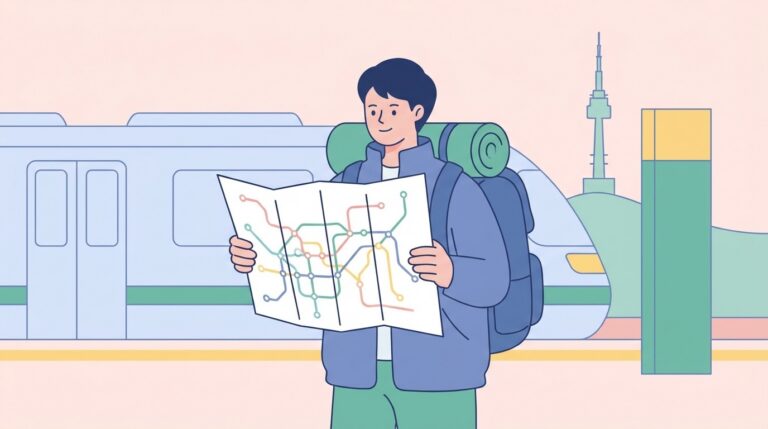
Never Miss a Train or Tteokbokki: How to Ask How Long Does It Take in Korean
Phase 1: Empathy & Storytelling Opening
안녕하세요! 매일한글 에디터입니다. (Hello! This is your Daily Hangul editor.)
Imagine this: You are standing in the middle of Hongik University Station in Seoul on a Friday evening. Neon signs shimmer around you, the aroma of spicy tteokbokki and roasted chestnuts drifts through the cold evening air, and people are gliding past you with incredible speed and purpose. You have tickets to an indie concert in Sangsu, but your phone battery just dropped to 3%. You look at the bus stop queue, then down toward the subway entrance, feeling that familiar knot of beginner anxiety in your stomach. You want to ask the friendly convenience store clerk or a fellow commuter how long the journey takes, but your mind goes completely blank. Do you ask about time? Distance? Minutes?
If you have ever felt frozen in place while navigating Korea’s ultra-fast transit or bustling food alleys, you are not alone. Asking about time is easily the number one survival skill for anyone stepping foot outside Seoul’s airport express train. For over ten years, I have guided first-time travelers, exchange students, and K-drama fans through this exact hurdle. Mastering this single question pattern does more than prevent missed trains—it unlocks the rhythm of modern Korean life. Let us break down how to ask “How long does it take?” with total confidence, zero textbook stiffness, and full local charm.
Phase 2: Top 3 Essential Expressions Deep Dive
1. 얼마나 걸려요? (Eolmana geollyeoyo?)
- Pronunciation: [Eol-ma-na geol-ryeo-yo] (Sound analogy: Think of saying ‘all-ma-na’ like ‘almond’, followed by ‘girl-leo-yo’)
- Meaning: Literal: “How much catches/hangs?” | Natural Nuance: “How long does it take?”
- K-Culture Moment: You hear this in practically every episode of Crash Landing on You or Hospital Playlist whenever characters are stuck in traffic or waiting for a surgery update in the hallway.
- Editor’s Insight: The verb 걸리다 (geollida) literally means to catch, hang, or snag. When used with time, think of time being “caught” or “hooked” by an activity. It is warm, polite, and universally understood anywhere in Korea.
- Situation Spectrum: Casual (⚠️ only with close friends as 얼마나 걸려?) / Semi-formal (✅ 얼마나 걸려요?) / Formal (✅ 얼마나 걸립니까?)
- 🤔 Think About It: In English, we ask how long something “takes” (an active taking of time), whereas Korean conceives time as something that gets “caught” or suspended (걸리다). How does viewing time as an environment rather than an object shift the way you perceive a busy day?
2. 몇 분 걸려요? (Myeot bun geollyeoyo?)
- Pronunciation: [Myeot-bun geol-ryeo-yo] (Sound analogy: ‘Myut’ like ‘mutt’ with a soft y, followed by ‘boon girl-leo-yo’)
- Meaning: Literal: “How many minutes does it take?” | Natural Nuance: “How many minutes will this take? / Is it just a few minutes?”
- K-Culture Moment: Used at takeout coffee shops in Gangnam during the 12:30 PM lunch rush when office workers need an iced Americano before their next sprint meeting.
- Editor’s Insight: While 얼마나 (eolmana) asks broadly about time (could be hours, days, or months), 몇 분 (myeot bun) specifically targets minutes. Use this when you are pretty sure the wait is short and you want a precise number.
- Situation Spectrum: Casual (⚠️ 몇 분 걸려?) / Semi-formal (✅ 몇 분 걸려요?) / Formal (✅ 몇 분 정도 걸립니까?)
- 🤔 Think About It: Koreans love efficiency. Asking specifically about “minutes” rather than vague “time” shows that you value the other person’s schedule as well as your own.
3. 금방 돼요? (Geumbang dwaeyo?)
- Pronunciation: [Geum-bang dwae-yo] (Sound analogy: ‘Geum’ like ‘gum’ with a closed jaw, ‘bang’ like a door slam, ‘dway-yo’)
- Meaning: Literal: “Does it become quickly?” | Natural Nuance: “Will it be ready soon? / Does it take just a moment?”
- K-Culture Moment: A hungry customer standing at a pojangmacha (street food tent) asking the cook if the hotteok (sweet pancake) or fresh kimbap will be ready right away.
- Editor’s Insight: 금방 (geumbang) means “in a flash” or “very soon.” This is an informal, ultra-natural expression to use when you are waiting for food, a receipt, or a service counter.
- Situation Spectrum: Casual (✅ 금방 돼?) / Semi-formal (✅ 금방 돼요?) / Formal (🚫 금방 됩니까? – sounds slightly awkward; use 곧 완료됩니까? instead)
- 🤔 Think About It: “금방” reflects Korea’s famous ppalli-ppalli (fast-paced) lifestyle. It does not just demand speed; it reassures the listener that you are ready for a quick, effortless transaction.
Phase 3: Textbook Korean vs Real Native Korean
Situation 1: Asking a stranger or driver how long until you reach your stop
- 📖 교과서 한국어 (Textbook): 목적지까지 소요 시간이 얼마나 됩니까? (Mokjeokjikkaji soyo sigani eolmana doemnikka? – “How much is the required time to the destination?”)
- 🗣️ 진짜 한국어 (Real Native): 거기까지 얼마나 걸려요? (Geogikkaji eolmana geollyeoyo? – “How long does it take to get there?”)
- 💡 왜 다를까? (Why the difference?): Words like 목적지 (destination) and 소요 시간 (required duration) belong on official transit authority posters and written contracts. Real native speakers simply point or say 거기 (there) combined with the natural verb 걸리다.
Situation 2: Asking a street food vendor when your snack will be handed to you
- 📖 교과서 한국어 (Textbook): 음식이 준비되는 데 시간이 얼마나 필요합니까? (Eumsigi junbidoeneun de sigani eolmana piryohamnikka? – “How much time is required for the food to be prepared?”)
- 🗣️ 진짜 한국어 (Real Native): 이거 얼마나 걸려요? (Igeo eolmana geollyeoyo? – “How long for this one?”) or 몇 분 걸려요? (Myeot bun geollyeoyo? – “How many minutes?”)
- 💡 왜 다를까? (Why the difference?): Street vendors work at lightning speed. Overly grammatical clauses like ~하는 데 시간이 필요하다 slow down the conversation. Two or three words are all you need to sound polite yet delightfully natural.
Phase 4: K-Culture Deep Dive & Non-Verbal Manners
4-1. 눈치 (Nunchi) & Body Language
When asking 얼마나 걸려요? in Korea, your non-verbal cues matter just as much as your pronunciation:
* The Soft Head Tilt: When asking a stranger on the platform or an employee at a bus counter, bow your head roughly 15 degrees while making brief, friendly eye contact. Staring unblinkingly can come across as aggressive or demanding.
* The Open-Hand Gesture: If you are pointing at a subway map, your phone screen, or a menu item, never point with an outstretched single index finger directly into someone’s personal space. Instead, gesture toward the screen with an open palm facing upward. It conveys immediate respect and situational tact (nunchi).
4-2. The “Ppalli-Ppalli” Transit Code
Korea is internationally celebrated for its hyper-efficient public transit and delivery culture. When you ask “얼마나 걸려요?”, local Koreans genuinely want to help you optimize every second. If an elder tells you “10분 걸려요 (It takes 10 minutes),” they usually mean “10 minutes at an energetic Korean walking pace”! Understanding this fast-moving rhythm helps you realize that people are not rushing to brush you off—they are helping you catch the very next bus.
Phase 5: Real-Life Roleplay Scenario
Setting: A vibrant, steamy street stall in Myeongdong on a brisk winter evening. You want to order a skewer of tteok-kkochi (rice cake skewer), but you need to catch the subway in 15 minutes.
Characters: You (excited traveler) & Emo-nim (the warm, energetic street food cart auntie).
- You: 🎭 (Hesitantly stepping toward the stall, bowing slightly) 저기요, 떡꼬치 하나 주세요. (Jeogiyo, tteok-kkochi hana juseyo. / Excuse me, one rice cake skewer please.)
- Emo-nim: 🎭 (Wiping the grill with a clean towel, smiling warmly) 네! 지금 구워줄게요. (Ne! Jigeum guwojulgeyo. / Sure! I’ll grill it for you right now.)
- You: 🎭 (Glancing at your wristwatch politely) 혹시 이거 얼마나 걸려요? (Hoksi igeo eolmana geollyeoyo? / By any chance, how long does this take?)
- Emo-nim: 🎭 (Flipping the skewers quickly over the hot grill) 5분이면 돼요! 금방 나와요. (O-bun-imyeon dwaeyo! Geumbang nawayo. / It’s fine in 5 minutes! It comes out super quick.)
- You: 🎭 (Looking relieved and nodding with both hands loosely clasped) 아, 다행이다. 감사합니다! (A, dahaeng-ida. Gamsahamnida! / Oh, what a relief. Thank you!)
- Emo-nim: 🎭 (Brushing sweet-spicy sauce generously over the skewer) 안 매운 소스로 해줄까, 학생? (An maeun soseu-ro haejulkka, haksaeng? / Shall I make it with mild sauce for you, dear student?)
- You: 🎭 (Smiling enthusiastically) 네, 안 맵게 해주세요! (Ne, an maepge haejuseyo! / Yes, make it not spicy please!)
- Emo-nim: 🎭 (Handing over the piping hot skewer wrapped in paper) 자, 나왔어요! 조심히 가요! (Ja, nawasseoyo! Josimhi gayo! / Here it is! Travel safely!)
🔀 Interactive Choice Point
Imagine Emo-nim looks over and says she has to start a fresh batch from scratch. What do you reply?
- Option A: “10분 넘게 걸려요? 그럼 다음에 올게요!” (Does it take over 10 minutes? Then I’ll come next time!)
- Option B: “왜 이렇게 오래 걸려요? 빨리 줘요.” (Why does it take so long? Give it to me fast.)
- Option C: “조리 소요 예정 시각을 말씀해 주십시오.” (Please state the anticipated cooking completion time.)
Feedback:
* Option A (Best): Friendly, realistic, and completely polite. Koreans completely understand when transit schedules cut your street food stops short.
* Option B (Bad): Extremely rude! Even in a fast culture, demanding speed with flat language ruins the friendly street cart vibe.
* Option C (Risk): Grammatically correct in a military briefing, but at a street cart, Emo-nim will look at you like you just landed from another planet!
Phase 6: 10-Second Emotion Shadowing Drill
Practice these natural rhythm pauses (marked with /) and match your voice to the mood tags!
[😊 Curiously and politely]
저기요, / 홍대입구역까지 / 얼마나 걸려요?
(Jeogiyo, / Hongdae-ipgu-yeok-kkaji / eolmana geollyeoyo? / “Excuse me, / to Hongik Univ. Station / how long does it take?”)-
[⚡ Quick, light, and breezy]
이거 / 몇 분 걸려요? / 금방 돼요?
(Igeo / myeot bun geollyeoyo? / geumbang dwaeyo? / “For this, / how many minutes does it take? / Is it ready soon?”) -
[🥺 A bit worried but sweet]
제가 기차를 타야 해서요… / 많이 걸려요?
(Jega gichareul tayahae-seoyo… / mani geollyeoyo? / “Because I have to catch a train… / does it take long?”)
Phase 7: K-Culture Mini Dictionary
- 얼마나 (Eolmana) | How much / How long | A magic beginner question starter used for time, weight, and general scale.
- 걸리다 (Geollida) | To take (time) / To catch (a cold) | The core native verb that pairs with minutes, hours, and travel intervals.
- 금방 (Geumbang) | Just around the corner / In a moment | The ultimate comforting reassurance used by baristas, cooks, and taxi drivers.
- 도착 (Dochak) | Arrival | Look for this on subway screens: 도착 예정 시간 (Estimated Time of Arrival).
Phase 8: Traveler’s Survival Kit
Top 3 Survival Phrases
- 여기서 얼마나 걸려요? (Yeogiseo eolmana geollyeoyo?)
Translation: How long does it take from here?
Pro Tip: Perfect when asking someone on the street while showing a landmark photo on your phone. - 걸어서 갈 수 있어요? (Georeoseo gal su isseoyo?)
Translation: Can I walk there?
Pro Tip: Saves you unnecessary taxi fares in dense walkable districts like Insadong or Ikseon-dong. - 곧 와요? (Got wayo?)
Translation: Is it coming soon?
Pro Tip: Handy at bus stops when the electronic display is undergoing maintenance.
Editor’s Travel Note
Before stepping out into the neon lights, make sure you complete your Naver Map navigation app download. Global map services often lack walking route precision in South Korea due to local mapping regulations. Pair Naver Map with this phrase whenever you double-check routes with station staff!
Phase 9: One Step Deeper
In many Western cultures, asking someone repeatedly about waiting time can feel like you are tapping your foot impatiently. In Korea, however, checking “얼마나 걸려요?” is often considered proactive and collaborative. Because shared spaces move so quickly, communicating your timeline helps service providers, friends, and hosts coordinate smoothly with you. It is not an interrogation—it is a warm synchronization of schedules.
💬 Your Turn: Have you ever experienced the sheer speed of Korean delivery or transport? What is the fastest service experience you have ever had in your home country? Drop your story in the comments below!
Phase 10: Frequently Asked Questions & Misconception Buster
Q: Can I use “얼마나 걸려요?” to ask for prices?
A: No! While 얼마나 means “how much,” 걸려요 specifically attaches to time. To ask how much something costs in money, swap the verb to: 얼마예요? (Eolmayeyo?).
Q: What is the difference between 시간 (sigan) and 분 (bun)?
A: 시간 means hours (or general time), while 분 means minutes. So 한 시간 걸려요 (Han sigan geollyeoyo) means “It takes 1 hour,” whereas 10분 걸려요 (Sip-bun geollyeoyo) means “It takes 10 minutes.”
Q: Is it rude to ask a taxi driver “얼마나 걸려요?” right when I get in?
A: Not at all! Taxi drivers in Korea hear this all day. Simply add “기사님 (Gisanim – driver)” at the front: “기사님, 명동까지 얼마나 걸려요?” (Driver, how long to Myeongdong?).
🚨 Common Mistakes Alert
- Saying “몇 시간 걸려요?” for everything: If your destination is nearby, asking for hours makes you sound lost. Stick to 얼마나 걸려요? unless you know it is an intercity trip.
- Forgetting the polite ending “-요”: Dropping the “-요” turns the phrase into casual speech (반말). Always keep the “-요” on with strangers!
- Confusing 얼마예요? (price) with 얼마나 걸려요? (duration): Keep them distinct: 얼마예요? = Money / 얼마나 걸려요? = Time.
Phase 11: Action Missions
- 🥉 Bronze Level (Solo Drill): Stand in front of your bathroom mirror and repeat “얼마나 걸려요?” 5 times with a gentle head tilt.
- 🥈 Silver Level (Social Practice): Watch a K-drama clip featuring a subway or cafe scene. Pause it, ask “얼마나 걸려요?”, and tag @DailyHangul with your reaction!
- 🥇 Gold Level (Real Life): Next time you order at a Korean bakery, restaurant, or ask a Korean friend for directions, use “이거 얼마나 걸려요?” naturally in conversation.
- 🎮 K-Culture Bonus Mission: Open your favorite K-pop variety show (like Going Seventeen or Run BTS) and spot the subtitle “얼마나 걸려요?”. Screenshot it when you catch it!
Phase 12: Interactive Quiz Challenge
Q1. Situational Judgment:
You are ordering freshly brewed pour-over coffee at a hip cafe in Seongsu-dong. How should you ask the barista how long it will take?
* A) 얼마예요?
* B) 얼마나 걸려요?
* C) 목적지가 어디예요?
👉 Click to reveal Answer & Explanation
Correct Answer: B
Explanation: 얼마나 걸려요? is the polite, natural question for preparation time. Option A asks for price, and Option C asks where the destination is!
Q2. Fill-in-the-Blank:
“홍대까지 몇 ______ 걸려요?” (How many minutes does it take to Hongdae?)
👉 Click to reveal Answer & Explanation
Correct Answer: 분 (bun)
Explanation: 분 is the Korean counter for minutes. “몇 분 걸려요?” asks specifically for the number of minutes.
Q3. True or False:
In Korea, saying “금방 돼요?” is considered extremely impolite and should never be used at food stalls.
👉 Click to reveal Answer & Explanation
Correct Answer: False
Explanation: 금방 돼요? is friendly, polite, and completely standard at casual eateries, snack carts, and take-out counters across Korea!






