

Phase 1: Empathy (Storytelling Opening)
안녕하세요! 매일한글 에디터입니다.
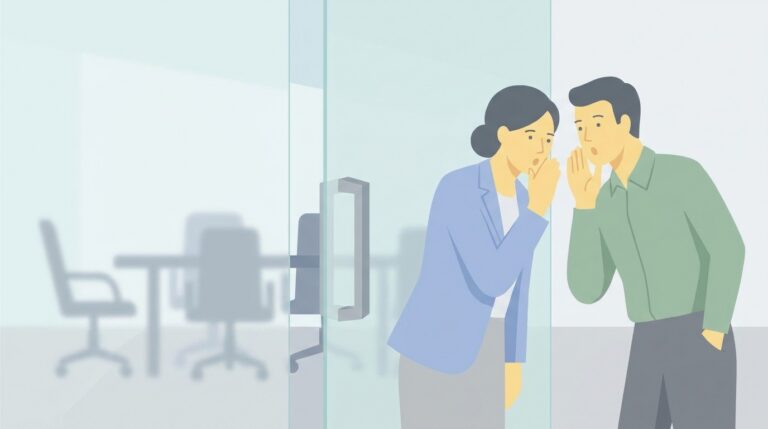
Picture this classic K-drama scenario: You are standing in the sleek, fluorescent-lit corridor of a Gangnam corporate tower. In five minutes, the department director is going to interrogate your team about why the quarterly project deadline was missed. Panic is palpable. Suddenly, your senior colleague grabs your sleeve, pulls you into an empty pantry, and whispers: “우리 들어가기 전에 입부터 맞춰야 해!” (Uri deureogagi jeone ipbuteo matchwoya hae!).
If you translate this literally, you might freeze in utter bewilderment: “Before we go in, we have to match our mouths? Are we… kissing in the pantry?!”
Take a deep breath—nobody is making a romantic pass at you! In Korean, 입을 맞추다 (Ibeul matchuda) is an indispensable social survival idiom meaning “to coordinate our stories” or “to get on the exact same page so nobody contradicts each other.” When working or building deep relationships with Koreans, social coordination is an art form. From avoiding falling out of favor to gracefully severing ties when things go south, figurative expressions about body parts dictate interpersonal navigation. Based on years of feedback from intermediate learners like you who felt blindsided by boardroom whispers and drama subplots, this guide will unlock three powerhouse idioms for mastering Korean office politics and social circles.
Phase 2: Core Expressions Deep Dive
1. 입을 맞추다 (Ibeul matchuda)
- Pronunciation: Ibeul matchuda (Sounds like “ee-beul ma-choo-da”)
- Meaning: Literally “to match mouths” vs. Actual nuance: To coordinate stories beforehand, rehearse an alibi, or synchronize statements so an external party hears a unified story.
- K-Culture Moment: You will hear this in nearly every suspense or legal drama (like Stranger or Vincenzo), right before characters enter an investigation room or a tense shareholder meeting.
- Editor’s Insight: Yes, in romantic literature, 입을 맞추다 can poetically mean “to kiss,” but in everyday adult life and workplace settings, 95% of the time it refers to tactical alignment. It implies secrecy: making sure everyone tells the exact same version of the truth (or an excuse) to avoid trouble.
- Situation Spectrum: Casual: ✅ | Semi-formal: ✅ | Formal: ⚠️ (In formal legal documentation, use 사전 협의 or 진술 일치)
- 🤔 Think About It: In many Western individualistic workspaces, people speak for their own distinct roles. Why does Korean culture value presenting a collective, airtight front before an authority figure?
2. 눈 밖에 나다 (Nun bakke nada)
- Pronunciation: Nun bakke nada (Sounds like “noon bahk-kay nah-da”)
- Meaning: Literally “to fall out of someone’s eyes” vs. Actual nuance: To fall from someone’s good graces, lose someone’s trust, or become persona non grata to a superior.
- K-Culture Moment: In Misaeng (Incomplete Life), when an employee openly challenges a tyrannical director and suddenly finds all their project approvals stalled indefinitely.
- Editor’s Insight: In Korean relational psychology, being “inside someone’s gaze” (눈 안에 들다) implies care, mentorship, and protection. Once you slip “outside” of their benevolent gaze, you become socially invisible or an object of quiet disapproval.
- Situation Spectrum: Casual: ✅ | Semi-formal: ✅ | Formal: ⚠️
- 🤔 Think About It: Notice how eye contact in Korea isn’t just about staring; someone’s “gaze” represents their circle of favor and societal endorsement.
3. 발을 끊다 (Bareul kkeunta)
- Pronunciation: Bareul kkeunta (Sounds like “bah-reul kkeun-tah”)
- Meaning: Literally “to cut feet” vs. Actual nuance: To completely stop visiting a place, or to cut ties with a particular venue, social group, or circle.
- K-Culture Moment: When a gourmet YouTuber announces they are boycotting a once-beloved restaurant because the owner treated staff poorly: “거기 서비스 안 좋아져서 발 끊었어요.” (Geogi seobiseu an joajyeoseo bal kkeuneosseoyo.)
- Editor’s Insight: This isn’t about physical injury. It symbolizes withholding your footsteps. Unlike 손을 씻다 (soneul ssitda) which means “washing one’s hands” of a shady crime or vice, 발을 끊다 emphasizes terminating physical presence and mutual patronage.
- Situation Spectrum: Casual: ✅ | Semi-formal: ✅ | Formal: ✅
- 🤔 Think About It: Why does Korean link human relationships so heavily to bodily presence? If your feet don’t show up, the relationship no longer exists.
Phase 3: Textbook Korean vs. Real-World Korean
Situation 1: Aligning on an excuse before a boss reviews a late report
- 📖 Textbook Korean: 우리는 회의 전에 발표 내용을 미리 상의했습니다. (Uri-neun hoeui jeone balpyo naeyong-eul miri sang-uihaessseumnida. – “We consulted beforehand on presentation details before the meeting.”)
- 🗣️ Real-World Korean: 팀장님 들어오시기 전에 우리끼리 입 좀 맞춰 둡시다. (Timjangnim deureoosigi jeone urikkiri ip jom matchwo dupsida. – “Let’s coordinate our stories amongst ourselves before the team manager walks in.”)
- 💡 Why the difference? The textbook phrasing sounds like an academic protocol manual. Real Korean coworkers operate under tactical camaraderie, using “입을 맞추다” to indicate solidarity against top-down scrutiny.
Situation 2: Explaining why someone got bypassed for a promotion
- 📖 Textbook Korean: 그는 상사와의 신뢰 관계를 상실했습니다. (Geuneun sangsawaui sinroe gwangyereul sangsilhaessseumnida. – “He lost the relation of trust with his supervisor.”)
- 🗣️ Real-World Korean: 걔 부장님 눈 밖에 나서 이번 인사는 글렀어. (Gyae bujangnim nun bakke naseo ibeon insaneun geulleosseo. – “He fell out of the director’s good graces, so this promotion cycle is doomed.”)
- 💡 Why the difference? Koreans rarely describe workplace tension in abstract nouns like “loss of trust.” Instead, they describe physical perception: whose gaze you crossed and how that affects your workplace momentum.
Phase 4: K-Culture Deep Dive & Non-Verbal Manners
4-1. 눈치 (Nunchi) & Body Language Cues
When someone says “우리 입 맞춰야 해” in a Korean social or office context, notice their body language:
* The Perimeter Scan: Their eyes will quickly flick toward hallway doorways or open office cubicles to ensure nobody with higher rank is listening.
* The Cupped Hand Lean: Koreans often place an open palm alongside their cheek or mouth while speaking, leaning their torso 15 degrees closer. This is not just acoustic discretion; it signals intimate, conspiratorial solidarity.
* The Mutual Chin Nod: While coordinating, a sharp single nod of the chin while maintaining eye contact confirms: “Understood. We do not deviate from this script.”
4-2. The Cultural Code Behind the Screen
In corporate Korean dramas like Agency or Reborn Rich, survival depends on collective loyalty. In an intensely connected society with minimal physical degrees of separation, stepping out of line individually exposes the entire cohort. When you agree to “match mouths,” you are entering a micro-contract of mutual protection. Conversely, if you fall “outside someone’s eyes” (눈 밖에 나다), Korean hierarchical structures mean that rarely will someone confront you directly; instead, project allocations drop, lunch invitations fade, and silence does the punishing.
Phase 5: Real-World Roleplay Scenario
Setting: Outside the main conference room of Miru Tech in Pangyo. The big quarterly client review starts in 3 minutes. A system glitch occurred this morning, and Team Lead Park is notoriously short-tempered.
Characters:
* Minji (민지): Your sharp senior coworker.
* Alex (알렉스): You, an intermediate-level international associate.
- 민지: 🎭 (주변을 두리번거리며 알렉스의 소매를 잡아당긴다) 알렉스 씨, 박 팀장님 오시기 전에 우리 입부터 맞춰 둬야 해요.
(Minji: Alex-ssi, Bak timjangnim osigi jeone uri ipbuteo matchwo dwoya haeyo.)
“Alex, before Team Lead Park gets here, we need to coordinate our stories right now.” -
알렉스: 🎭 (깜짝 놀란 눈으로) 네? 입을 맞춘다고요? 여기서요?
(Alex: Ne? Ibeul matchundagoyo? Yeogiseoyo?)
“Pardon? Match mouths? Right here?” -
민지: 🎭 (어이없다는 듯 작게 웃으며) 키스하자는 게 아니고요! 아까 서버 점검 건, 외부 통신망 오류 때문이라고 말 통일하자고요.
(Minji: Kiseuhajaneun ge anigoyo! Akka seobeo jeomgeom geon, oebu tongsinmang oryu ttaemun-irago mal tong-ilhajagoyo.)
“I’m not asking to kiss you! I mean let’s unify our statement that this morning’s server audit was caused by an external network error.” -
알렉스: 🎭 (안도의 한숨을 쉬며 가슴을 쓸어내린다) 아, 그 뜻이군요! 괜히 긴장했네요. 알겠습니다. 통신망 지연으로 보고할게요.
(Alex: A, geu tteus-igunyo! Gwaenhi ginjanghaenneyo. Algesseumnida. Tongsinmang jiyeon-euro bogohalgeyo.)
“Ah, that’s what it means! I got nervous for nothing. Understood. I’ll report it as network latency.” -
민지: 🎭 (진지한 표정으로 목소리를 낮춘다) 맞아요. 자칫 내부 실수라고 했다가는 팀장님 눈 밖에 나서 이번 분기 내내 고생해요.
(Minji: Majayo. Jachit naebu silsu-rago haettaganeun timjangnim nun bakke naseo ibeon bungi naenae gosaenghaeyo.)
“Exactly. If it slips that it was an internal slip-up, we’ll fall out of his favor and suffer the entire quarter.” -
알렉스: 🎭 (결의에 찬 표정으로 끄덕이며) 지난번 김 대리님도 보고서 실수로 눈 밖에 나서 고생하셨잖아요.
(Alex: Jinanbeon Gim daerinimdo bogoseo silsu-ro nun bakke naseo gosaenghasyeotjanayo.)
“Right, like Assistant Manager Kim who fell out of favor after that report error and suffered so much.” -
민지: 🎭 (회의실 문 쪽을 가리키며) 그래요. 그리고 거래처 김 대표 알죠? 불친절해서 지난달부터 우리 회사랑 발 끊었대요. 우리도 조심해야 해요.
(Minji: Geuraeyo. Geurigo georaecheo Gim daepyo aljyo? Bulchinjeolhaeseo jinandalbuteo uri hoesarang bal kkeuneottaeyo. Urido josimhaeya haeyo.)
“Precisely. And you know CEO Kim at the client firm? They say he cut ties with our company since last month due to bad service. We have to be careful.” -
알렉스: 🎭 (다부지게 서류를 챙기며) 명심하겠습니다. 팀장님 오시면 맞춰 둔 대로 딱 말씀드릴게요!
(Alex: Myeongsihamkess-eumnida. Timjangnim osimyeon matchwo dun daero ttak malsseumdeurilgeyo!)
“I’ll keep that in mind. When the Team Lead arrives, I’ll say exactly what we aligned on!”
🔀 Interactive Choice
The Team Lead enters the room with a scowl, throws his tablet on the desk, and asks: “Why was the deployment delayed by 40 minutes?” How do you respond?
- Option A: “민지 선배랑 입 맞췄는데요, 외부 통신사 회선 장애 때문입니다.” (Minji seonbaerang ip matchwonneunde-yo, oebu tongsinsa hoeseon jang-ae ttaemun-imnida. – “I matched mouths with Minji, and it’s because of external telecom network failure.”)
- Outcome (Bad): Never say out loud to the boss that you “matched mouths”! You just revealed that you secretly conspired on an excuse.
- Option B: “제가 아침에 늦잠을 자서 점검을 제시간에 못 마쳤습니다.” (Jega achime neutjameul jaseo jeomgeomeul jesigane mot machyeosseumnida. – “I overslept this morning so I couldn’t finish the check on time.”)
- Outcome (Risk): You break the team consensus and take individual blame, risking falling out of favor (눈 밖에 나다) instantly while undermining Minji’s coordinated plan.
- Option C: “오전 8시경 발생한 외부 회선 지연 현상으로 인해 데이터 동기화가 지연되었습니다.” (Ojeon yeodeolssigyeong balsaenghan oebu hoeseon jiyeon hyeonsang-euro inhae deiteo donggihwaga jiyeondoeeossseumnida. – “Data synchronization was delayed due to an external network latency incident around 8 AM.”)
- Outcome (Best): Flawless! You execute the alibi you coordinated (입을 맞춘 내용) with professional terminology without disclosing the pre-meeting alignment.
Phase 6: 10-Second Emotional Shadowing Drill
Read these out loud, observing the rhythmic breath pauses (/) and channeling the exact emotion indicated in brackets.
[🤫 속닥거리며 다급하게 / Whispering urgently]
“팀장님 들어오시기 전에 / 우리끼리 / 입부터 맞춰 둬야 해.”
(Timjangnim deureoosigi jeone / urikkiri / ipbuteo matchwo dwoya hae.)-
[😨 걱정스럽고 조심스럽게 / Worried and cautious]
“한 번 눈 밖에 나면 / 다시 신뢰를 얻기가 / 정말 어려워요.”
(Han beon nun bakke namyeon / dasi sinroereul eotgiga / jeongmal eoryeowoyo.) -
[😤 단호하고 단절된 어조로 / Firm and decisive]
“거기 서비스가 너무 엉망이라 / 지난달부터 / 아예 발을 끊었어요.”
(Geogi seobiseuga neomu eongmang-ira / jinandalbuteo / aye bareul kkeuneosseoyo.)
Phase 7: K-Culture Mini Dictionary
- 입을 맞추다 (Ibeul matchuda) | To coordinate testimonies / get stories straight | Frequently utilized in group projects, workplace damage control, and friendly cover-ups when unexpected questions arise.
- 눈 밖에 나다 (Nun bakke nada) | To fall from favor / fall out of someone’s good graces | Common in corporate and academic environments when an unwritten hierarchy rule or trust expectation is broken.
- 발을 끊다 (Bareul kkeunta) | To cease visiting / sever patronizing ties | Used when talking about cafes, regular hangouts, or social circles you refuse to step foot in anymore due to negative experiences.
- 손발이 맞다 (Sonbari matda) | To have great teamwork / work in sync | Literally “hands and feet match.” Used when a group executes work effortlessly without even needing to over-explain.
Phase 8: Traveler’s Survival Kit
When traveling or living in Korea, situations can get socially delicate. Keep these handy:
- 말을 맞추다 (Mareul matchuda)
- Pronunciation: Mah-reul ma-choo-da
- Pro Tip: A neutral, direct synonym for 입을 맞추다. If you feel 입을 맞추다 sounds too dramatic or conspiratorial, say: “우리 미리 말 좀 맞춰 볼까요?” (Shall we coordinate our talking points in advance?).
- 눈치껏 행동하다 (Nunchikkeot haengdonghada)
- Pronunciation: Noon-chee-kkeot haeng-dong-ha-da
- Pro Tip: “Act according to the room’s vibe.” When you don’t know the exact script, stay quiet, watch the seniors, and follow their physical timing.
- 단골을 바꾸다 (Dangoreul bakkuda)
- Pronunciation: Dan-go-reul bah-kkoo-da
- Pro Tip: If 발을 끊다 feels too aggressive to say in front of acquaintances, this polite alternative means “I changed my regular hangout/spot.”
Editor’s Travel Note:
When exploring hip neighborhoods like Seongsu or Euljiro, you might find popular restaurants unexpectedly shuttered or moved because patrons stopped visiting. Use the Naver Map application for local Korean navigation to check the latest visitor reviews and opening statuses in real-time before making the trek.
Phase 9: “One Step Deeper” (Reflective Cultural Essay)
In Western contexts, authenticity is often linked to spontaneous, radical transparency. If an error happens, individual accountability is celebrated. However, in the Korean relational paradigm rooted in collectivism and jeong (정), an individual’s error quickly reflects upon their team lead and department peers.
Expressions like 입을 맞추다 arise not from a desire to be deceptive, but as a protective communal buffer. By presenting a coherent, unified response, the team preserves social harmony (화합) and shields vulnerable juniors from direct executive retribution. Language mirrors a culture’s priority: in Korea, preserving the social fabric of the group often precedes individual self-expression.
💬 Your Turn: Have you ever experienced a moment in your workplace or culture where people felt compelled to “get their stories straight” as a collective unit? How does your native language express this idea?
Phase 10: FAQ & Common Mistakes
Q: Can I use “입을 맞추다” when talking about two people kissing?
A: Yes! In poetry, romantic drama titles, or song lyrics, “두 사람이 입을 맞추었다” does mean they kissed. However, in daily spoken Korean—especially when followed by “우리” (we) or “미리” (beforehand) in relation to a situation, exam, or meeting—it almost exclusively means coordinating statements.
Q: Is “눈 밖에 나다” considered a rude idiom to say to a senior directly?
A: Absolutely do not say it to the senior! Saying “부장님, 제가 눈 밖에 났나요?” (Manager, did I fall out of your sight?) sounds confrontational and passive-aggressive. Instead, use it when talking about someone else with trusted peers in third-person.
Q: What is the exact difference between “발을 끊다” and “연을 끊다”?
A: 발을 끊다 focuses on physical presence—stopping visits to a place, shop, or gathering spot. 연을 끊다 (Yeoneul kkeunta) refers to completely severing karmic or personal ties with a family member or former partner.
🚨 Common Mistakes Alert
- Mistake: Confessing “입 맞췄어요” directly in the official meeting.
- Correct Action: Keep the idiom between your internal allies. In the official meeting, state the facts agreed upon without referencing the coordination process!
- Mistake: Using “눈 밖에 나다” to imply someone has vision trouble.
- Correct Action: Eye troubles are “눈이 안 좋다” or “시력이 떨어지다.” “눈 밖에 나다” is strictly an idiom for losing favor.
- Mistake: Saying “손을 끊다” when you stopped going to a cafe.
- Correct Action: Hands are for habits like gambling or smoking (담배를 끊다 / 손을 씻다). For physical locations, always use 발을 끊다.
Phase 11: Action Mission & Engagement
- 🥉 Bronze Level: Stand in front of your mirror and practice the Phrase 6 shadowing drill 3 times with the conspiratorial hand-near-cheek gesture.
- 🥈 Silver Level: Next time you watch a K-drama workplace scene where two colleagues whisper by the water purifier, leave a comment on social media or in your study notes using: “저 사람들 지금 입 맞추고 있네!” (Those people are coordinating their stories right now!).
- 🥇 Gold Level: Write a 3-sentence Korean diary entry describing a store you no longer visit using 발을 끊다 and the reason why.
🎮 K-Culture Mission: Watch an episode of an office or legal drama (Good Manager, Extraordinary Attorney Woo, or Suits Korea). Identify the exact scene where a team syncs their statements before stepping into a room, and check if they use 입을 맞추다 or 말을 맞추다!
Phase 12: Interactive Quiz Challenge
1. Situation Judgment
You and your friend broke a glass vase at an Airbnb in Busan. Before messaging the host, your friend says: “호스트한테 연락하기 전에 우리 입부터 맞추자.” What does your friend mean?
* A) Let’s kiss the vase to fix it.
* B) Let’s agree on how we explain what happened so our stories match.
* C) Let’s drink some water together before texting.
2. Fill-in-the-Blank
신입사원이 회의에서 말실수를 크게 해서 부장님 (_______) 났대요.
(The new recruit made a huge verbal slip during the meeting, so they say he fell out of the director’s favor.)
* A) 손 안에
* B) 눈 밖에
* C) 발 아래
3. True or False
“그 카페는 위생이 별로라서 이제 발을 끊었어요” means you hurt your foot while walking inside that cafe.
* (True / False)
👉 Click to Reveal Answers & Explanations
- Answer: B. “입을 맞추다” means to coordinate statements/excuses beforehand so both parties present the exact same account.
- Answer: B (눈 밖에). The idiom for falling from grace or losing favor with a superior is 눈 밖에 나다.
- Answer: False. It means “The hygiene at that cafe was poor, so I completely stopped going there.” Footsteps represent visitation!







