

Phase 1: Empathy
안녕하세요! 매일한글 에디터입니다.
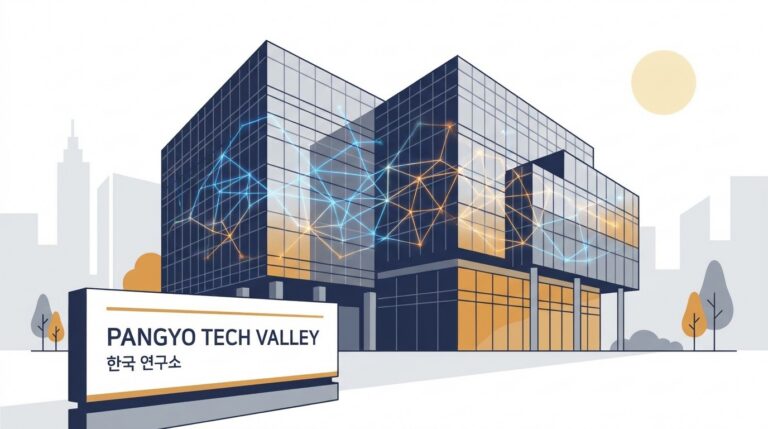
Picture this: It is 11:30 PM in a sleek glass high-rise nestled inside Pangyo Techno Valley—the Silicon Valley of South Korea. You are seated beside senior software architects who are debugging an elusive latency bottleneck in a multi-agent orchestration pipeline. The room is quiet except for the rhythmic clicking of mechanical keyboards and the hum of iced Americano cups sweating against wooden desks. In novice programming—or basic language learning—the reflex is always System 1: instantaneous, knee-jerk output. In Korean workplace slang, that’s often pushed by the infamous ppalli-ppalli (빨리빨리) culture: answer now, patch later.
However, when tackling high-order mathematical logic, autonomous agentic workflows, or test-time compute scaling, rushing is fatal. In bleeding-edge LLM architectures, models don’t just vomit the first token; they deliberately extend compute during inference, tracing internal chains of thought (CoT), backtracking, and verifying their own hypotheses. Many advanced learners tell me: “Editor, I know intermediate Korean, but when debates turn to high-stakes architecture reviews, my brain defaults to simplistic, reflexive answers. How do I express calculated, step-by-step analytical reasoning like a true C2 native?”
Mastering this transition is the hallmark of professional fluency. Today, we bridge cutting-edge artificial intelligence concepts with high-level Korean linguistic discourse. Drawn from real feedback working with foreign tech leads in Seoul, this guide gives you the precise lexical tools to articulate deliberate thought, command boardroom respect, and showcase intellectual gravitas in Korean.
Phase 2: Core Expressions Deep Dive
1. 심사숙고 끝에 가닥을 잡다 (Simsasukgo kkeute gadageul japda)
- Pronunciation: [Sim-sa-suk-go kkeu-te ga-da-geul jap-da] (Think: “Seem-sah-sook-go ggeut-eh gah-dah-gool jahp-dah”)
- Meaning: Literally “to grasp the strand after deep contemplation”; practically means “to finally find a clear direction or breakthrough after extensive deliberate reasoning.”
- K-Culture Moment: In the tech drama Start-Up, when developers spend days at the whiteboard wrestling with an algorithmic optimization hurdle before the lead architect finally sighs, circles one core pipeline, and maps out the winning workflow.
- Editor’s Insight: 심사숙고 (深思熟考) refers to mature, unhurried contemplation—the philosophical equivalent of allocating massive test-time compute. 가닥을 잡다 metaphorically refers to untangling a chaotic clump of threads until you find the primary lead strand.
- Situation Spectrum: Casual ⚠️ | Semi-formal ✅ | Formal ✅
- 🤔 Think About It: Does your native tongue distinguish between simply “thinking hard” and the sensory imagery of unweaving tangled threads until a structural path appears?
2. 차근차근 짚어가며 복기하다 (Chageunchageun jipeogamyeo bokgihada)
- Pronunciation: [Cha-geun-cha-geun ji-peo-ga-myeo bok-gi-ha-da] (Think: “Chah-geun-chah-geun jee-poh-gah-myuh bohk-gee-hah-dah”)
- Meaning: Literally “to step-by-step review each point like replaying a baduk/go match”; practically means “to rigorously verify each stage of an execution trace via internal chain-of-thought.”
- K-Culture Moment: Seen frequently in K-dramas revolving around elite strategists or board games (like The Queen’s Gambit or Misaeng), where a character places stones back onto the board one by one to pinpoint the exact inflection point of an error.
- Editor’s Insight: 복기 (復棋) is a profound Go term. Instead of merely guessing the bug, you replay the computational trajectory state by state. It denotes elite intellectual rigor.
- Situation Spectrum: Casual ⚠️ | Semi-formal ✅ | Formal ✅
- 🤔 Think About It: How does invoking board game metaphors elevate a technical post-mortem from mundane debugging to an art form in corporate Korea?
3. 섣부른 직관을 배제하고 자가 검증을 거치다 (Seotbureun jikgwaneul baejehago jaga geomjeungeul geochida)
- Pronunciation: [Seot-bu-reun jik-gwa-neul bae-je-ha-go ja-ga geom-jeung-eul geo-chi-da] (Think: “Suht-boo-reun jeek-gwahn-eul bae-jeh-goh jah-gah guhm-jeung-eul guh-chee-dah”)
- Meaning: Literally “to exclude hasty intuition and undergo self-verification”; practically means “to bypass zero-shot reflexive bias in favor of rigorous, self-correcting inference cycles.”
- K-Culture Moment: A senior lead engineer in an autonomous driving or AI research lab rejecting an overly optimistic pull request during a sprint retrospective.
- Editor’s Insight: 섣부른 captures the danger of unvalidated assumptions (System 1). Combining it with 배제 (elimination) and 자가 검증 (self-validation) reflects true C2-level professional discipline.
- Situation Spectrum: Casual 🚫 | Semi-formal ✅ | Formal ✅
- 🤔 Think About It: In an era obsessed with instant answers, how does verbalizing “intentional friction” command higher trust in professional dialogue?
Phase 3: Textbook Korean vs. Real Native Korean
Situation 1: Explaining that a solution needs deeper, multi-step calculation rather than an instant guess
- 📖 교과서 한국어 (Textbook): 천천히 생각해서 문제를 다시 풀어야 합니다. (Cheoncheonhi saenggakaeseo munjereul dasi pureoya hamnida.) — “We must think slowly and solve the problem again.”
- 🗣️ 진짜 한국어 (Real Native): 즉각적인 답보단, 추론 과정을 한 템포 늘려 단계별로 검증하며 실타래를 풀어야 해요. (Jeukgakjeogin dapbodan, churon gwajeongeul han tempo neullyeo dangyebyeollo geomjeunghamyeo silttaraereul pureoya haeyo.) — “Rather than an immediate answer, we need to extend the reasoning tempo and untangle the thread through step-by-step verification.”
- 💡 Why the difference? Textbook phrasing relies on elementary verbs (생각하다, 풀다). Native C2 professionals use pacing metaphors (한 템포 늘려) and imagery (실타래를 풀다) to express nuanced computational workflows.
Situation 2: Pointing out the risk of hallucinations or ungrounded logic in a strategic pipeline
- 📖 교과서 한국어 (Textbook): 틀린 결과가 나올 수 있으니 확인하세요. (Teullin gyeolgwaga naol su isseuni hwaginhaseyo.) — “A wrong result might come out, so please check it.”
- 🗣️ 진짜 한국어 (Real Native): 직관에만 의존하면 환각이 생기기 십상이니, 중간 추론 경로를 하나하나 짚고 넘어가야 탈이 없습니다. (Jikgwaneman uijonhamyeon hwangagi saenggigi sipsang-ini, junggan churon gyeongnoreul hanahana jipgo neomeogaya tari eopseumnida.) — “Relying purely on intuition is a recipe for hallucinations; we must audit every intermediate inference path to avoid catastrophe.”
- 💡 Why the difference? Advanced speakers pair descriptive idioms like ~기 십상이다 (prone to doing something risky) and 탈이 없다 (free of trouble/breakdowns) with high-density technical vocabulary.
Phase 4: K-Culture Deep Dive & Non-verbal Manners
4-1. 눈치 (Nunchi) & The “Deliberate Pause” in High-Tech Culture
In Western software cultures, rapid-fire debates with instantaneous counterpoints are often rewarded. In elite Korean engineering teams (Pangyo, Teheran-ro), replying too quickly to a complex architectural problem can inadvertently signal superficiality or a lack of deep consideration (가벼움).
When a complex bug or algorithmic trade-off is brought to the table, an expert displays high-level 눈치 (Nunchi) not by blurting out a hot-fix, but by adopting the “Deliberate Pause”:
* Eye Contact & Tilt: Slightly avert direct eye contact for two seconds, gazing at the architectural whiteboard or the shared terminal while slightly tilting your head.
* The Vocal Cue: Utter a low, composed “흠… (Heum…)” or “그렇군요… (Geureokunyo…)” rather than an abrupt “아니요 (No)”.
* The Gesture: Gently rest your fingers against your chin or clasp your hands together on the desk. This signals: “I am expanding my internal test-time compute rather than offering cheap intuition.”
4-2. The Cultural Shift: From “Ppalli-Ppalli” to “Jeonggyo-ham” (Precision)
Korea built its miraculous modern economy on speed (빨리빨리). However, in the high-stakes domain of frontier LLMs, semiconductor design, and distributed agent infrastructure, Korean society has shifted its ultimate value toward 정교함 (Jeonggyo-ham – exquisite precision and self-correction). Culturally, admitting that an autonomous model or engineer needs extended reasoning tokens (추론 시간 연산 확장) is no longer seen as slowness—it is revered as masterful craftsmanship.
Phase 5: Real-Life Roleplay Scenario
Setting: A glass-walled strategy room at an AI research startup in Pangyo. The team is evaluating an autonomous agent workflow that struggles with high-level multi-hop code generation.
Characters:
* Min-woo (민우 팀장): Principal AI Research Lead. Sharp, demanding, but values deep intellectual reasoning.
* You: Senior Architecture Specialist optimizing inference pipelines.
- Turn 1 (Min-woo):
“이번 모델, 코딩 벤치마크 점수가 정체된 원인이 뭡니까? 파라미터가 부족한 건가요?”
(Ibeon model, koding benchimakeu jeomsuga jeongchedoen wonini mwomnikka? Paramiteoga bujokan geon-gayo?)
“What is causing the plateau in this model’s coding benchmarks? Are we lacking parameters?”
🎭 Looking intently at the terminal logs with arms crossed. -
Turn 2 (You):
“단순 모델 크기 문제가 아닙니다. 즉각적인 시스템 1식 토큰 생성에만 의존하고 있거든요.”
(Dansun model keugi munjega animnida. Jeukgakjeogin siseutem il-sik tokeun saengseong-eman uijonhago itgeodeunyo.)
“It is not a simple parameter size issue. We are relying strictly on immediate System 1 token generation.”
🎭 Calmy pointing to the abrupt generation latency graphs. -
Turn 3 (Min-woo):
“그럼 추론 시점에 연산량을 더 투입하자는 말씀인가요?”
(Geureom churon sijeome yeonsanryangeul deo tuiphajaneun malsseumingayo?)
“So you are suggesting we scale compute at the inference stage instead?”
🎭 Leaning forward with curious intrigue. -
Turn 4 (You):
“네. 생각의 사슬을 스스로 전개하며 차근차근 짚어가며 복기하도록 설계해야 합니다.”
(Ne. Saenggagui saseureul seuseuro jeongaehamyeo chageunchageun jipeogamyeo bokgihadorok seolgyehayeoya hamnida.)
“Yes. We must design it to unfold an internal chain-of-thought and systematically verify each step like replaying a match.”
🎭 Nodding with steady, confident eye contact. -
Turn 5 (Min-woo):
“하지만 그렇게 되면 추론 지연 시간과 비용이 늘어날 텐데요?”
(Hajiman geureoke doemyeon churon jiyeon sigangwa biyong-i neureonal tende-yo?)
“However, won’t that increase inference latency and serving costs?”
🎭 Tapping his pen rhythmically on the notepad. -
Turn 6 (You):
“섣부른 직관을 배제하고 자가 검증을 거치는 편이 디버깅과 오답 비용을 획기적으로 줄여줍니다.”
(Seotbureun jikgwaneul baejehago jaga geomjeungeul geochineun pyeoni dibeoginggwa odap biyong-eul hoekgijeogeuro juryeojumnida.)
“Bypassing hasty intuition in favor of self-verification drastically slashes the downstream costs of debugging and errors.”
🎭 Presenting the accuracy-to-cost comparative curve. -
Turn 7 (Min-woo):
“일리가 있네요. 심사숙고 끝에 확실히 문제 해결의 가닥을 잡은 것 같습니다.”
(Illiga itneyo. Simsasukgo kkeute hwaksilhi munje haegyeorui gadageul jabeun geot gatseumnida.)
“That makes compelling sense. It feels like after deep consideration, we’ve finally found our clear strand.”
🎭 Uncrossing his arms and jotting down the architecture shift. -
Turn 8 (You):
“감사합니다. 에이전트 워크플로 내에서 검증 루프를 정교화하여 프로토타입을 올리겠습니다.”
(Gamsahamnida. Eijeonteu wokeupeullo nae-eseo geomjeung rupeureul jeonggyohwahayeo peurototaibeul olligesseumnida.)
“Thank you. I will refine the verification loop within the agentic workflow and push the prototype.”
🎭 Giving a crisp, respectful professional bow.
🔀 Interactive Decision Point
How would you address Min-woo if he hesitated on Turn 5 regarding latency?
* Option A: “빨리 만들면 되니까 일단 그냥 배포해 보고 나중에 고치시죠.” (Let’s just deploy fast and patch later.)
* Option B: “지연 시간을 감수하더라도, 추론 시간 연산을 확장해 정확도를 담보하는 편이 장기적으로 훨씬 경제적입니다.” (Even with latency overhead, anchoring accuracy via test-time compute scaling is far more economical long-term.)
* Option C: “비용 문제는 제 소관이 아니니 인프라 팀과 얘기해 보세요.” (Cost is not my problem, go talk to the infrastructure team.)
Feedback:
* Option A [Bad]: Reverts to the blind Ppalli-Ppalli trap; destroys your credibility as a senior strategic engineer.
* Option B [Best]: Elegant C2 phrasing (감수하다, 담보하다). It presents a mature strategic trade-off directly addressing the business pain point.
* Option C [Risk]: Abruptly dismissive; damages team 눈치 (Nunchi) and demonstrates poor cross-functional leadership.
Phase 6: 10-Second Emotion Shadowing Drill
Master the rhythmic pauses (/) and subtle vocal intonations of a top-tier systems engineer.
[🧐 진중하고 냉철하게 / Serious & analytical]
“섣부른 직관에 기대지 않고 / 추론 경로를 / 하나하나 복기해 봐야 합니다.”
(Seotbureun jikgwane gidaeji anko / churon gyeongnoreul / hanahana bokgihae bwaya hamnida.)
“Without relying on hasty intuition / we must trace back / each inference path step by step.”-
[💡 확신에 찬 목소리로 / Confident & enlightening]
“추론 시점의 연산 확장이 / 고난도 코딩의 / 핵심 실마리를 풀어줄 열쇠입니다.”
(Churon sijeomui yeonsan hwakjang-i / gonando koding-ui / haeksim silmarireul pureojul yeolsoe-imnida.)
“Scaling test-time compute / is the key / that unlocks the core puzzle of complex coding.” -
[🤝 정중하면서도 결단력 있게 / Courteous yet decisive]
“심사숙고 끝에 / 가닥을 잡았으니 / 이 방향으로 파이프라인을 구축하겠습니다.”
(Simsasukgo kkeute / gadageul jabasseuni / i banghyang-euro paipeuraineul guchukagesseumnida.)
“Having found the right direction / after deep deliberation / I will construct the pipeline along this path.”
Phase 7: K-Culture Mini Dictionary
- 복기 (Bokgi, [Bohk-gee]): Originating from Go/Baduk, meaning to replay every single move of a finished game to analyze errors. Widely used in Korean tech, finance, and consulting to mean a meticulous, blame-free retrospective.
- 가닥 (Gadak, [Gah-dahk]): An individual strand of thread or hair. Commonly used in abstract problem solving (가닥을 잡다 – to identify the structural thread; 가닥이 잡히다 – for a solution to take form).
- 내재화 (Naejaehwa, [Nae-jae-hwah]): Internalization. In business and high-tech, this refers to mastering external architectures or algorithms so thoroughly that your internal systems own the capability end-to-end.
- 담금질 (Damgeumjil, [Dahm-geum-jeel]): Quenching/tempering hot metal in water. Figuratively used in Korean engineering to describe grueling optimization, stress-testing, and self-correction cycles that turn raw code into resilient production infrastructure.
Phase 8: Expat & Tech Professional Survival Kit
Top 3 Executive Tech Phrases
- 한 템포 쉬어가며 로직을 짚어보시죠. (Han tempo swieogamyeo rojigeul jipeobosijo.)
Pro Tip: Use this to diffuse heated, chaotic meetings. It asserts control and shifts the room from emotional reaction to analytical reflection. - 자가 검증 루프가 빠지면 환각을 제어하기 어렵습니다. (Jaga geomjeung rupuga ppajimyeon hwangageul jeeohagi eoryeopseumnida.)
Pro Tip: A stellar line for technical architecture defense when explaining why agentic step verification is essential. - 역산하여 원인을 추적해 보겠습니다. (Yeoksanhayeo wonineul chujeokae bogesseumnida.)
Pro Tip: 역산 (Back-calculation) shows you understand how to reason backward from an unexpected terminal state to the input prompt.
Editor’s Tech & Travel Note
When visiting Korea for tech conferences or client work, you will likely spend time around Pangyo Station or Gangnam’s Teheran-ro. Never rely solely on global map providers, as local security regulations limit their routing features. Make sure to download the Naver Map app download for real-time subway routing and indoor underground mapping. For seamless collaboration across Korean tech ecosystems, configure your corporate accounts with KakaoTalk Work or Slack local integrations, and always have your digital business card ready via the Remember (리멤버) app.
Phase 9: A Step Deeper (한 발 더 깊이)
In traditional Korean scholarship, there is a venerated concept known as 침묵과 숙고 (silence and mature reflection). While modern Western business discourse frequently glorifies the fastest quip in the room, classical Korean intellectual tradition honors the person who listens fully, processes internally, and speaks only when their thoughts have been refined through rigorous self-editing.
When we apply this cultural lens to artificial intelligence, “Scaling Test-Time Compute” is the algorithmic reincarnation of this ancient virtue. Rather than praising a model for spewing answers in 200 milliseconds, we applaud its capacity to ponder, conduct internal chain-of-thought verification, and refine its output. When you speak Korean at a C2 level, adopting this reflective pacing doesn’t just improve your grammar—it aligns your communication with deep-seated Korean cultural values of gravitas and precision.
💬 Your Turn: Have you ever experienced a moment in your professional or academic life where slowing down to “think through your reasoning steps” prevented a critical mistake? Share your story below using one of today’s expressions!
Phase 10: FAQ & Common Mistakes
Q: Can I use “복기하다 (Bokgihada)” in everyday casual conversation with close friends?
A: While perfectly understood, using 복기하다 when talking about casual matters (like why a blind date went poorly or why you missed a train) gives off a humorous, overly analytical vibe—like treating personal life as an intense game of chess! For casual contexts, simply say “차분히 다시 짚어보다 (chabuhi dasi jipeoboda)”.
Q: What is the exact difference between “생각하다” and “심사숙고하다”?
A: 생각하다 is the broad generic verb “to think.” 심사숙고하다 (深思熟考) specifically conveys a profound, multi-layered deliberation process over high-stakes, difficult decisions. It is the human equivalent of maximizing test-time compute.
Q: How do native speakers react when a non-native speaker uses technical idioms like “가닥을 잡다”?
A: It creates an instant “fluency halo.” Most learners stay trapped in literal phrases like “문제를 해결할 방법을 찾았어요”. When you say “이제야 가닥이 좀 잡히네요”, Korean colleagues will instantly treat you as a cultural and linguistic insider.
🚨 Common Mistakes Board
- ❌ Mistake 1: Translating “Chain of Thought” literally as 생각 체인 (Saenggak chein).
- Correct Action: Use the accepted academic and industry terminology: 생각의 사슬 (Saenggagui saseul) or simply CoT.
- ❌ Mistake 2: Using 빨리빨리 (Ppalli-ppalli) when asking an AI model or engineer for optimization.
- Correct Action: Say “추론 효율을 극대화하다 (Maximize inference efficiency)” or “레이턴시를 최적화하다 (Optimize latency)”.
- ❌ Mistake 3: Confusing 검증 (Geomjeung – Verification/Validation) with 확인 (Hwagin – Simple check/Confirmation) in technical architecture.
- Correct Action: For automated or multi-step logic verification, always use 자가 검증 (Self-verification).
Phase 11: Action Mission & Engagement
- 🥉 Bronze Mission (Solo Practice): Stand in front of a mirror and read the Phase 6 Shadowing drills aloud three times, emphasizing the pause marker (
/) before dropping your vocal tone on 복기해 봐야 합니다. - 🥈 Silver Mission (Social/Writing): Write a 2-sentence post on LinkedIn or your study blog explaining a difficult technical concept, incorporating the phrase 심사숙고 끝에 가닥을 잡았습니다.
- 🥇 Gold Mission (Real-world Application): In your next standup meeting or technical discussion with Korean colleagues or language partners, propose re-examining an error using: “이 문제는 차근차근 짚어가며 복기해 볼 필요가 있습니다.”
- 🎮 K-Culture Mission: Watch an episode of a workplace drama (such as Misaeng or Start-Up). Identify at least one instance where a character takes a “deliberate pause” before offering a solution instead of answering instantly.
Phase 12: Interactive Quiz Challenge
Test your mastery of high-level analytical Korean!
- [Context Judgment] You are leading an architecture sync. A colleague wants to ship an ungrounded prompt without verification. Which response best represents C2 deliberate reasoning?
- (A) 그냥 빨리 배포해 버리죠! (Geunyang ppalli baepohae beorijo!)
- (B) 섣부른 직관을 배제하고 자가 검증 단계를 거쳐야 안전합니다. (Seotbureun jikgwaneul baejehago jaga geomjeung dangyereul geochyeoya anjeonhamnida.)
- (C) 제 컴퓨터에서는 잘 되니까 괜찮아요. (Je keompyuteo-eseoneun jal doenikka gwaenchanayo.)
- [Fill-in-the-Blank] Complete the sentence with the correct idiom:
복잡했던 아키텍처 문제를 여러 각도에서 검토한 끝에, 마침내 해결의 (________)을/를 잡았습니다.
(After examining the complex architecture issue from multiple angles, we finally grasped the [________] of the solution.) -
[True or False] In professional Korean corporate tech culture, answering a complex question instantly without pausing is always considered the highest sign of competence.
- (True / False)
👉 Click here to reveal answers & explanations!
-
Answer: (B)
Explanation: Option B uses high-level vocabulary (섣부른 직관 배제, 자가 검증) to articulate the necessity of test-time compute and verification, whereas (A) and (C) show poor technical hygiene. -
Answer: 가닥 (Gadak)
Explanation: 가닥을 잡다 is the classic idiom for finding the structural path or beginning of a solution amidst complexity. -
Answer: False
Explanation: For high-order analytical problems, a deliberate, composed pause (침묵과 숙고) accompanied by visual cues of consideration signals gravitas and rigor, whereas knee-jerk answers can appear superficial.







