

Secret Alley Cafes in Korea: How to Talk Like a True Regular (단골)
Phase 1: Empathy (Story-Immersive Opening)
안녕하세요! 매일한글 에디터입니다. (Hello! I’m your Daily Hangul editor.)
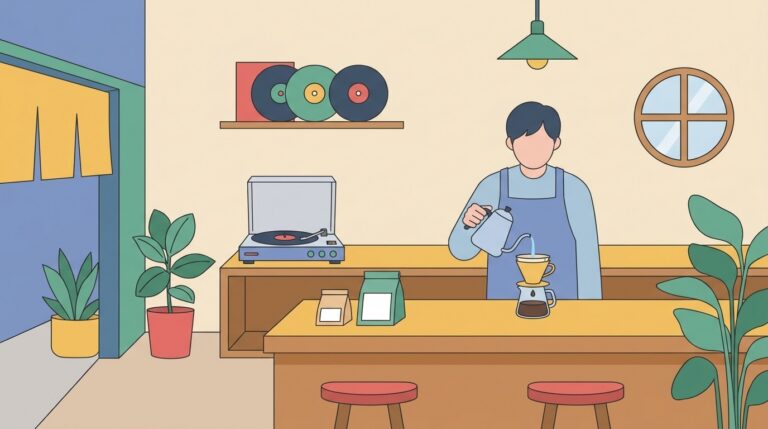
Picture this: You are walking down a quiet, winding alley in Mangwon-dong or Seochon. While massive 4-story mega bakery cafes and buzzing franchise study spaces are famous in Korea, tucked behind an old brick wall is a cozy, four-table boutique cafe. You open the wooden door, and instantly, the warmth of freshly roasted coffee beans and the crackle of a vintage vinyl record welcome you. The owner (사장님 – sajangnim) glances up from a steaming gooseneck kettle with a gentle, polite smile.
Your heart races a little. In mega cafes, you just tap a digital kiosk. But here? You want to appreciate their curated music, ask about today’s specialty hand-drip beans, and maybe—just maybe—become one of those cherished regular customers (단골 – danggol) you always see in healing K-Dramas like Would You Like a Cup of Coffee?.
Many of our intermediate learners tell us: “I know how to order an Iced Americano, but I feel tongue-tied when an independent cafe owner asks about my taste!” Don’t worry. Today, we are stepping beyond textbook robotic phrases into the soulful language of Korea’s indie cafe culture. By the end of this guide, you’ll comfortably chat with indie baristas, compliment their unique aesthetic, and unlock a warm human connection over a cup of filter coffee.
Phase 2: Top 3 Core Expressions Deep Dive
1. 단골이 될 것 같아요 (Danggol-i doel geot gat-ayo)
- Pronunciation: [Danggol-i doel geot gat-ayo] (Sounds like: dahn-gol-ee do-el got ga-ta-yo)
- Meaning: Literal: “It seems like I will become a regular customer.” | Real Nuance: “I am utterly charmed by this place; you will definitely see me again!”
- K-Culture Moment: The magic line exchanged between characters in slice-of-life K-dramas when finding their neighborhood sanctuary.
- Editor’s Insight: Korean independent shop owners pour their soul into their space. Saying this doesn’t sound presumptuous; it is considered the supreme compliment to their hospitality and craft.
- Situation Spectrum: Casual (⚠️ with friends only) | Semi-formal (✅ perfect for cafe owners) | Formal (✅)
- 🤔 Think About It: In your culture, do you usually announce your intention to return, or do you just quietly show up again? Notice how Korean culture cherishes verbalizing relational bonds (정 – Jeong).
2. 오늘의 추천 원두는 뭐예요? (Oneul-ui chucheon wondu-neun mwo-yeyo?)
- Pronunciation: [O-neul-ui chu-cheon won-du-neun mwo-ye-yo?] (Sounds like: oh-neul-weui choo-chun won-doo-neun mwo-yay-yo)
- Meaning: Literal: “What is today’s recommended bean?” | Real Nuance: “I trust your palate and expertise—what are you proud of pouring today?”
- K-Culture Moment: Often heard in specialty roasteries in Seongsu-dong when coffee lovers order single-origin pour-overs.
- Editor’s Insight: Instead of ordering a generic blend, asking about the 원두 (wondu – coffee bean) signals that you appreciate the barista’s brewing craft (핸드드립 – hand-drip).
- Situation Spectrum: Casual (⚠️) | Semi-formal (✅) | Formal (✅)
- 🤔 Think About It: Showing curiosity about a specialist’s choice instantly dissolves the cold barrier between customer and server.
3. 사장님 취향이 정말 멋져요 (Sajangnim chwihyang-i jeongmal meotjyeoyo)
- Pronunciation: [Sa-jang-nim chwi-hyang-i jeong-mal meot-jyeo-yo] (Sounds like: sah-jahng-neem chwee-hyang-ee jung-mahl muht-jyuh-yo)
- Meaning: Literal: “Owner, your taste is truly cool.” | Real Nuance: “I love the curated vibe, music, and interior you created here.”
- K-Culture Moment: Hipsters praising boutique vinyl cafes in Euljiro (Hipjiro).
- Editor’s Insight: 취향 (Chwihyang) means ‘personal taste’ or ‘aesthetic preference’. For independent cafe owners, the shop is a mirror of their identity. Complimenting their 취향 hits right in the heart.
- Situation Spectrum: Casual (⚠️) | Semi-formal (✅) | Formal (✅)
- 🤔 Think About It: Notice how even for very young business owners, Koreans address them respectfully as 사장님 (Sajangnim – Master/CEO) rather than their name.
Phase 3: Textbook Korean vs. Real Korean
Situation 1: Asking if they offer hand-drip or filter coffee
- 📖 Textbook Korean: 핸드드립 커피가 있습니까? (Haendeudeurip keopiga itsseumnikka?)
- 🗣️ Real Korean: 혹시 여기 필터 커피도 되나요? (Hoksi yeogi pilteo keopido doenayo?)
- 💡 Why it differs: Textbook style uses ultra-formal -sumnikka, which feels stiff in a small indie cafe. Starting with 혹시 (hoksi – by any chance) softens your inquiry, and 필터 커피 (filter coffee) has become the contemporary industry term used alongside 핸드드립.
Situation 2: Complimenting the cafe’s background music
- 📖 Textbook Korean: 음악 소리가 매우 좋습니다. (Eum-ak soriga maeu jotseumnida.)
- 🗣️ Real Korean: 비지엠(BGM) 선곡 완전 취향저격이에요! (BGM seon-gok wanjeon chwihyang-jeogyeog-ieyo!)
- 💡 Why it differs: 선곡 (seongok – song selection) and the trendy expression 취향저격 (chwihyang-jeogyeok – sniper shot to my taste / hits my aesthetic spot) show rich B1-level fluency and sound delightfully relatable.
Phase 4: K-Culture Deep Dive & Non-Verbal Manners
4-1. Nunchi (눈치) & Alley Cafe Etiquette
- Keep the decibel level low: Unlike massive franchise cafes where 카공족 (kagongjok – cafe studiers) or chatty groups gather with background noise, alley cafes often function as intimate listening sanctuaries. Observe the room volume before speaking.
- Two-handed respect: When handing your payment card or receiving your coffee cup, lightly support your right forearm or wrist with your left hand. This subtle gesture conveys deep politeness.
- Return to the counter with care: In tiny indie cafes, don’t just leave your empty cup on the table unless instructed. Returning it directly to the barista counter (바 테이블) with a warm smile is standard etiquette.
4-2. Cultural Code: The Counter-Movement to “Ppalli-Ppalli”
Korea is world-famous for 빨리빨리 (Ppalli-ppalli – hurry, hurry) and lightning-fast mega cafes serving iced americanos in 30 seconds. However, the rise of indie alley cafes represents a cultural oasis: 느림의 미학 (the aesthetics of slowness). Here, a single cup of hand-drip coffee takes 5 to 7 minutes to brew. The experience is not about fueling up on caffeine; it is about human connection, tactile contemplation, and appreciating someone else’s artistic curation.
Phase 5: Real-World Roleplay Scenario
Setting: Cafe Noc (카페 녹), a hidden alleyway roastery in Seochon with warm wooden furniture, subtle jazz, and four bar seats.
Character: Min-ho (사장님), an artisan barista with round glasses and an apron.
- 민호 (Min-ho): 🎭 따뜻한 미소로 고개를 숙이며 (Bowing lightly with a warm smile)
안녕하세요! 편하신 자리에 앉으세요.
(Annyeonghaseyo! Pyeonhasin jarie anjeuseyo.)
“Hello! Please sit wherever you feel comfortable.” -
Learner: 🎭 카운터 쪽으로 다가가 메뉴판을 보며 (Stepping up to the counter and looking at the menu)
안녕하세요! 혹시 여기 필터 커피도 되나요?
(Annyeonghaseyo! Hoksi yeogi pilteo keopido doenayo?)
“Hello! By any chance, do you also brew filter coffee here?” -
민호 (Min-ho): 🎭 원두 유리병을 가리키며 (Pointing to the glass bean jars)
네, 물론이죠. 오늘 에티오피아랑 과테말라 준비되어 있어요.
(Ne, mollon-ijyo. Oneul Etiopia-rang Gwatemalla junbidoeeo isseoyo.)
“Yes, of course. Today we have Ethiopian and Guatemalan beans ready.” -
Learner: 🎭 호기심 어린 눈빛으로 (With a curious gaze)
산미 적고 고소한 맛을 좋아하는데, 오늘의 추천 원두는 뭐예요?
(Sanmi jeokgo gosohan maseul joahaneunde, oneul-ui chucheon wondu-neun mwo-yeyo?)
“I prefer nutty flavors with less acidity; what bean do you recommend today?” -
민호 (Min-ho): 🎭 과테말라 원두 향을 살짝 맡게 해주며 (Letting you gently smell the roasted Guatemalan beans)
그럼 과테말라 안티구아로 정성껏 내려드릴게요. 초콜릿 향이 나요.
(Geureom Gwatemalla Antiguaro jeongseongkkeot naeryeodeurilgeyo. Chokollit hyang-i nayo.)
“Then I will carefully brew our Guatemala Antigua for you. It carries notes of chocolate.” -
Learner: 🎭 매장 음악과 빈티지 소품을 둘러보며 (Looking around at the store’s music and vintage decor)
감사합니다! 카페 음악이랑 인테리어가 너무 편안해요. 사장님 취향이 정말 멋져요.
(Gamsahamnida! Kape eum-agirang interi-eoga neomu pyeon-anhaeyo. Sajangnim chwihyang-i jeongmal meotjyeoyo.)
“Thank you! The cafe music and interior feel so comfortable. Owner, your taste is really wonderful.” -
민호 (Min-ho): 🎭 기분 좋게 웃으며 커피를 정성껏 내린다 (Smiling happily while carefully pouring the drip)
알아봐 주셔서 감사해요! LP판 모으는 게 취미거든요. 맛있게 드세요.
(Arabwa jusyeoseo gamsahaeyo! Elpipan moeuneun ge chwimigeodeunyo. Mas-itge deuseyo.)
“Thank you for noticing! Collecting vinyl is my hobby. Please enjoy!” -
Learner: 🎭 한 모금 음미한 후 눈을 크게 뜨며 (Tasting a sip and widening eyes in delight)
우와, 커피 진짜 맛있네요. 여기 단골이 될 것 같아요!
(Uwa, keopi jinjja mas-itneyo. Yeogi danggol-i doel geot gat-ayo!)
“Wow, this coffee is truly delicious. I think I’m going to become a regular here!”
🔀 Interactive Branching Decision Point
After finishing your coffee, you are preparing to leave. What will you do?
- Option A: Stand up, shout loudly across the quiet room “잘 먹었습니다! (Thanks for the food!)” and leave the empty cup at the low sofa table.
- Option B: Bring your cup back to the barista bar counter, gently hand it to the owner, and say: “커피 정말 잘 마셨습니다. 또 올게요! (I really enjoyed the coffee. I will come again!)”
- Option C: Put your laptop in your backpack, leave without saying anything because the owner looks busy brewing another cup.
[Feedback Box]
- Choice A (Bad): Shouting in a quiet indie listening cafe breaks the serene ambiance, and leaving cups on low tables makes extra work for a solo barista.
- Choice B (Best!): Bringing the cup directly to the counter with a quiet, polite farewell proves you have top-tier Nunchi and solidifies your status as a beloved regular!
- Choice C (Risk): While not openly rude, disappearing silently misses the golden chance to build rapport (정) with the owner.
Phase 6: 10-Second Emotional Shadowing Drill
Practice these lines out loud! Pay attention to the pauses marked with /.
[😊 미소 짓고 다정하게 - Warmly & Smiling]
혹시 여기 / 필터 커피도 되나요?
(Hoksi yeogi / pilteo keopido doenayo?)-
[✨ 진심 어린 감탄을 담아 - Sincere & Impressed]
사장님 / 취향이 정말 멋져요!
(Sajangnim / chwihyang-i jeongmal meotjyeoyo!) -
[☕ 기대감 가득하고 부드럽게 - Expectant & Gentle]
산미 적은 걸로 / 추천해 주실 수 있나요?
(Sanmi jeogeun geollo / chucheonhae jusil su innayo?) -
[🥰 기분 좋은 약속처럼 - Joyful & Promising]
커피가 너무 맛있어서 / 단골이 될 것 같아요!
(Keopiga neomu mas-isseoseo / danggol-i doel geot gat-ayo!)
Phase 7: K-Culture Mini Dictionary
- 단골 (Dan-gol) | Regular customer
- Historically referred to designated shaman patrons, but now describes someone who frequents a specific local spot. Becoming a 단골 often yields free extra treats (서비스 – seobiseu).
- 취향 (Chwi-hyang) | Personal taste / Aesthetic orientation
- A core keyword among Korean Millennials and Gen Z. Indie cafes are celebrated as physical manifestations of an owner’s 취향.
- 핸드드립 / 필터 커피 (Haen-deu-deu-rip / Pil-teo-keo-pi) | Hand-drip / Filter Coffee
- Pour-over coffee meticulously brewed by hand. In Korea, this represents slow, artisanal craftsmanship compared to automated espresso machines.
- 골목 감성 (Gol-mok Gam-seong) | Alleyway aesthetic / Vibe
- The nostalgic, cozy, and poetic atmosphere found inside old residential Korean backstreets away from loud commercial avenues.
Phase 8: Traveler’s Survival Kit
Top 3 Survival Phrases
- 연하게 부탁드려요 (Yeonhage butakdeuryeoyo)
- “Please make it light/mild.” (Korean hand-drips can occasionally be extracted quite strong; use this if you are caffeine-sensitive!)
- 원두 테이스팅 노트 있나요? (Wondu teiseuting noteu innayo?)
- “Do you have tasting notes for the beans?” (Great for picking flavor profiles like fruity, nutty, or floral).
- 사진 한 장 찍어도 될까요? (Sajin han jang jjigeodo doelkkayo?)
- “May I take a photo?” (Indie cafe owners appreciate when you politely ask before photographing their counter or workspace).
Editor’s Travel Note
- Finding these hidden gems on Google Maps can be tricky because small alleys are rarely updated. For precise locations, search reviews and save bookmarks using the 네이버 지도 앱 다운로드 (Naver Map App Download).
- Most indie cafes in Seoul take credit cards or mobile payment (Apple Pay / Samsung Pay), but carrying a small backup card is always handy for private specialty workshops.
Phase 9: “One Step Deeper” (Reflective Question)
In traditional Korea, homes featured a special detached room called the 사랑방 (Sarangbang)—a cozy reception area where the host invited neighbors and travelers to share warm tea, poetry, and conversation. Today’s indie alley cafe is arguably the modern reincarnation of the Sarangbang. Even in a hyper-digitalized society dominated by unmanned kiosks and mega study cafes, humans long for tactile warmth and curated individuality.
💬 Your Turn: Does your home country have spaces similar to Korea’s cozy alley cafes? What is your personal coffee style: quick kiosk takeout or slow hand-drip contemplation? Share your favorite cafe moments in the comments below!
Phase 10: FAQ & Common Mistakes
Q: Can I study or work on my laptop for hours in a small indie cafe?
A: It depends on the cafe’s policy, but generally, staying more than 1.5 to 2 hours on a laptop in a 3-table shop is discouraged. If you plan to stay longer, it is polite manners to order a second drink or a dessert.
Q: Is it rude to ask for milk in a single-origin hand-drip coffee?
A: It is not rude, but most indie hand-drip baristas formulate their brew recipe specifically to be enjoyed black. If you want milk, check if they offer a 드립오레 (Drip au Lait) or standard latte instead!
Q: What should I call the cafe owner if they look very young?
A: Always call them 사장님 (Sajangnim)! In Korea, calling an independent business owner 저기요 (Jeogiyo) or 선생님 (Seonsaengnim) is awkward. 사장님 is both respectful and welcoming.
🚨 Common Mistakes Alert
- Calling out “여기요!” (Yeogiyo!) loudly: In a small boutique cafe, simply catch the owner’s eye with a slight nod. Loud shouting disrupts the chill music.
- Ignoring bean acidity warnings: In Korean cafes, 산미 (sanmi) means fruity acidity. If you dislike sour notes, ensure you ask for 고소한 원두 (nutty/savory beans).
- Leaving trash without checking: In mega franchise stores, there are large trash stations. In indie cafes, hand your tray directly to the counter.
Phase 11: Action Missions
- 🥉 Bronze Mission (Solo Practice): Stand in front of your mirror and practice saying: “사장님, 취향이 정말 멋져요!” three times with a bright, appreciative smile.
- 🥈 Silver Mission (Social Audio): Record your voice saying: “커피가 너무 맛있어서 단골이 될 것 같아요” and upload it to your Instagram story or study log, tagging our channel!
- 🥇 Gold Mission (Real-World Execution): Next time you visit a boutique Korean cafe (or a local roastery in your city), ask the barista for a recommendation using “오늘의 추천 원두는 뭐예요?”.
- 🎮 K-Culture Mission: Watch an episode of a healing K-Drama set in a cafe (like Would You Like a Cup of Coffee? or Coffee Prince) and listen closely for the words 단골 and 원두.
Phase 12: Interactive Quiz Challenge
Test your knowledge before your next cafe hop!
1. Situational Judgment
You walk into a quiet, 4-seat indie cafe in Ikseon-dong. What is the most natural way to ask if they have filter coffee?
– A) 헤이! 필터 커피 줘! (Hei! Pilteo keopi jwo!)
– B) 혹시 여기 필터 커피도 되나요? (Hoksi yeogi pilteo keopido doenayo?)
– C) 필터 커피가 반드시 존재합니까? (Pilteo keopiga bandeusi jonjaehamnikka?)
2. Fill-in-the-Blank
To compliment the barista’s curated interior and music aesthetic, fill in the blank:
“사장님, ________이 정말 멋져요!”
– Hint: A 2-syllable word meaning personal taste / vibe.
3. Cultural True or False
Statement: When you fall in love with a small Korean indie cafe and want to compliment the owner, it is impolite to say “단골이 될 것 같아요” because it sounds like an empty promise.
– [True / False]
👉 Click to reveal answers & explanations!
- Answer: B | 혹시 여기 필터 커피도 되나요? is polite, natural, and perfectly softened for intermediate conversational Korean.
- Answer: 취향 (Chwihyang) | 사장님, 취향이 정말 멋져요! means “Owner, your aesthetic taste is truly wonderful!”
- Answer: False | Saying 단골이 될 것 같아요 is one of the highest compliments you can offer an independent Korean business owner—it instantly brings a warm smile to their face!







