

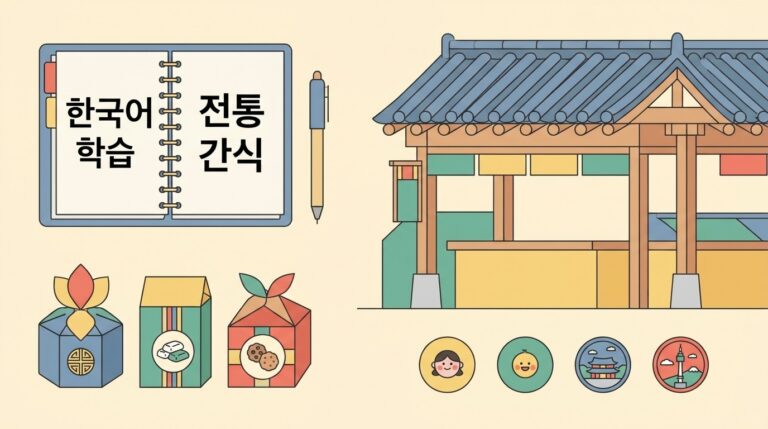
Talking About Travel Memories: Buying Korean Souvenirs and Local Snacks
Phase 1: Empathy (Story-Immersive Opening)
안녕하세요! 매일한글 에디터입니다. (Hello! I am your Daily Hangul editor.) Have you ever walked through a bustling local market in Gyeongju or Jeju, hands full of warm paper bags smelling of sweet red bean pastries, while your backpack clinks with cute fridge magnets? You land back home, gather your loved ones around, and want to say: “I bought this regional pastry and cute magnets for you!” But suddenly, your mind freezes. How do you describe local specialties in Korean without sounding like a robotic dictionary? Many of our A2 learners tell us they know the word for “gift” (선물, seonmul), but freeze when distinguishing between everyday gifts and regional travel treasures. In this lesson, built on real student feedback and everyday Korean habits, you will master natural, heartwarming ways to share your travel stories and souvenir gifts like a true local insider.
Phase 2: 3 Key Expressions Deep-Dive
1. 가족들에게 줄 선물이에요. (Gajokdeurege jul seonmurieyo.)
- Pronunciation: [Gajokdeurege jul seonmurieyo] (Sounds like gah-jok-deul-eh-geh jool sun-mool-ee-eh-yo)
- Meaning: “This is a gift for my family.” (Literal: “Family-to will-give gift-is.”)
- K-Culture Moment: In K-dramas like Welcome to Samdal-ri, characters returning from Seoul or Jeju hand over gift boxes saying this exact phrase with a humble smile.
- Editor’s Insight: The ending
~에게 줄 선물means “a gift intended for [person]”. Using줄(jul) shows future giving intention, making you sound thoughtful and organized. - Situation Spectrum:
- Casual (Friends/Siblings): ⚠️ (Use
가족들 줄 선물이야/ Gajokdeul jul seonmuriya) - Semi-formal (Polite everyday): ✅
가족들에게 줄 선물이에요. - Formal (Business/Elderly): ✅
가족분들께 드릴 선물입니다.(Gajokbundeulkke deuril seonmurimnida.)
- Casual (Friends/Siblings): ⚠️ (Use
- 🤔 Think About It: In English, we simply say “gifts for family,” but Korean attaches
~에게(to) and줄(to give) directly to show emotional direction. Who is the first person you think of when buying travel gifts?
2. 지역 특산품 과자예요. (Jiyeok teuksanpum gwajayeyo.)
- Pronunciation: [Jiyeok teuksanpum gwajayeyo] (Sounds like jee-yeok teuk-sahn-poom gwa-ja-yeh-yo)
- Meaning: “These are local specialty snacks.”
- K-Culture Moment: Seen frequently on variety shows like 2 Days & 1 Night whenever the cast tastes regional delicacies such as Cheonan walnut cakes or Jeju Hallabong cookies.
- Editor’s Insight:
지역(jiyeok) means “region” and특산품(teuksanpum) means “special local product.” Combining them with과자(gwaja – snack/cookie) turns any humble treat into a culturally rich souvenir. - Situation Spectrum:
- Casual: ✅
지역 특산품 과자야.(Jiyeok teuksanpum gwajaya.) - Semi-formal: ✅
지역 특산품 과자예요. - Formal: ✅
지역 특산품 과자입니다.(Jiyeok teuksanpum gwajaimnida.)
- Casual: ✅
- 🤔 Think About It: Korea has an incredible regional food pride. Why do you think sharing local foods is such a central part of Korean travel bonding?
3. 기념으로 마그넷 샀어요. (Ginyeomeuro mageunet sasseoyo.)
- Pronunciation: [Ginyeomeuro mageunet sasseoyo] (Sounds like gee-nyeom-eu-ro mah-geu-net sah-sseo-yo)
- Meaning: “I bought a magnet as a souvenir/keepsake.”
- K-Culture Moment: Travelers visiting Hanok villages or N Seoul Tower browsing rows of colorful magnetic pins shaped like Dol Hareubang or Hanbok.
- Editor’s Insight:
기념으로(ginyeomeuro) means “as a souvenir” or “in commemoration of.” It gives a nostalgic reason for buying something small. - Situation Spectrum:
- Casual: ✅
기념으로 마그넷 샀어.(Ginyeomeuro mageunet sasseo.) - Semi-formal: ✅
기념으로 마그넷 샀어요. - Formal: ✅
기념으로 마그넷을 샀습니다.(Ginyeomeuro mageuneseul satseumnida.)
- Casual: ✅
- 🤔 Think About It: A magnet is tiny, but
기념(keepsake) holds memory. How does your language express buying items purely for memories?
Phase 3: Textbook Korean vs Real Korean
Situation 1: Asking what treats to bring back home
- 📖 교과서 한국어 (Textbook):
이 지역의 특산품은 무엇입니까?(I jiyeogui teuksanpumeun mueosimnikka? – What is the special product of this region?) - 🗣️ 진짜 한국어 (Real-life):
여기서 제일 유명한 게 뭐예요?(Yeogiseo jeil yumyeonghan ge mwoyeyo? – What’s the most famous thing here?) - 💡 왜 다를까? (Why the difference?): While
특산품is great for describing what you bought, everyday shoppers ask what is “famous” (유명한 것, yumyeonghan geot) when asking vendors for quick recommendations.
Situation 2: Telling someone you bought souvenirs
- 📖 교과서 한국어 (Textbook):
저는 어제 기념품 매장에서 선물을 구매하였습니다.(Jeoneun eoje ginyeompum maejang-eseo seonmureul gumaehayeotseumnida. – I purchased gifts at a souvenir store yesterday.) - 🗣️ 진짜 한국어 (Real-life):
가족들 주려고 선물 좀 샀어요!(Gajokdeul juryeogo seonmul jom sasseoyo! – I bought some gifts to give to my family!) - 💡 왜 다를까? (Why the difference?): Everyday Korean speakers rarely use the formal verb
구매하다(gumaehada, to purchase) in daily chat; they use사다(sada, to buy) combined with좀(jom, a little/some) to sound natural and warm.
Phase 4: K-Culture Deep Dive & Non-verbal Manners
4-1. Nunchi & Gestures: Giving and Receiving Gifts
When buying or giving souvenirs in Korea, physical gestures convey your heart (정, Jeong):
* The Two-Hand Rule: Hand over gift boxes or travel bags using both hands, or support your right forearm with your left hand. It signals respect and genuine goodwill.
* Humble Demeanor: When giving souvenirs, avoid saying “This was very expensive!” Instead, say: 약소하지만 받아주세요 (Yaksohajiman badajuseyo – “It is modest, but please accept it”) or simply 맛있게 드세요! (Masitge deuseyo! – “Enjoy eating this!”).
4-2. Cultural Code: The Culture of “Jeong” and Souvenir Snacking
In Korea, returning empty-handed from a trip can feel slightly lonely. Coworkers, family, and close friends eagerly anticipate gansik (간식, snacks) from faraway provinces—like walnut cookies from Cheonan, Choco Pies from Jeonju, or Hallabong chocolates from Jeju. It is not about the price tag; sharing a taste of where your feet have traveled is the warmest expression of everyday Korean affection.
Phase 5: Real-Life Roleplay Scenario
- Setting: A warm, charming souvenir shop in Gyeongju filled with wooden trinkets and freshly packaged Gyeongju bread.
- Characters:
- Alex (A2 Traveler): Visiting Gyeongju, eager to find gifts for family.
- Imo (Shop Owner): A cheerful, grandmotherly shop owner who treats visitors like family.
Dialogues:
1. Alex: 안녕하세요! 여기서 제일 유명한 과자가 뭐예요? (Annyeonghaseyo! Yeogiseo jeil yumyeonghan gwajaga mwoyeyo? – Hello! What is the most famous snack here?) 🎭 Smiling warmly and looking around the shelves
2. Imo: 어서 와요! 우리 집은 경주빵이랑 찰보리빵이 제일 유명해. (Eoseo wayo! Uri jibeun Gyeongju-ppang-irang chalbori-ppangi jeil yumyeonghae. – Welcome! Our Gyeongju bread and glutinous barley bread are the most famous.) 🎭 Pointing proudly at freshly boxed pastries
3. Alex: 가족들에게 줄 선물인데, 어떤 게 더 달아요? (Gajokdeurege jul seonmurinde, eotteon ge deo darayo? – It’s a gift for my family, which one is sweeter?) 🎭 Leaning in with curiosity
4. Imo: 단 거 좋아하면 경주빵 사 가! 팥이 가득 들었거든. (Dan geo joahamyeon Gyeongju-ppang sa ga! Pati gadeuk deureotgeodeun. – If they like sweet things, take the Gyeongju bread! It is packed with red bean.) 🎭 Handing a small sample piece
5. Alex: 우와, 진짜 맛있네요! 경주빵 두 상자 주세요. (Uwa, jinjja masinneyo! Gyeongju-ppang du sangja juseyo. – Wow, it’s really delicious! Please give me two boxes of Gyeongju bread.) 🎭 Bowing slightly with delight
6. Imo: 알겠어요. 자, 이건 맛보기 덤이야! (Algesseoyo. Ja, igeon matbogi deomiya! – Got it. Here, this is an extra sample on the house!) 🎭 Slipping an extra snack into the bag
7. Alex: 감사합니다! 혹시 저기 있는 마그넷도 하나 살 수 있나요? (Gamsahamnida! Hoksi jeogi inneun mageunetto hana sal su innayo? – Thank you! By any chance, can I buy one of those magnets over there too?) 🎭 Pointing gently to the postcard stand
8. Imo: 그럼! 첨성대 마그넷이 제일 예뻐요. (Geureom! Cheomseongdae mageunesi jeil yeppeoyo. – Of course! The Cheomseongdae observatory magnet is the prettiest.) 🎭 Wrapping everything carefully with two hands
🔀 Interactive Decision Point
Alex is ready to pay for the souvenirs. How should Alex reply?
* Option A: 이거 얼마예요? 깎아주세요. (Igeo eolmayeyo? Kkak-ajuseyo. – How much is this? Give me a discount.)
* Feedback (Risk): The owner already gave free snacks (덤, Deom). Asking for discounts on small souvenir items can feel impolite.
* Option B: 포장해 주셔서 정말 감사합니다. 잘 먹을게요! (Pojanghae jusyeoseo jeongmal gamsahamnida. Jal meogeulgeyo! – Thank you so much for wrapping it. We will enjoy eating it!)
* Feedback (Best): Extremely polite, warm, and shows great cultural appreciation!
* Option C: 이거 맛없으면 환불돼요? (Igeo mateopseumyeon hwanbuldwaeyo? – Can I get a refund if this doesn’t taste good?)
* Feedback (Bad): Asking about taste refunds immediately after receiving samples will definitely spoil the mood.
Phase 6: 10-Second Emotional Shadowing Drill
Practice these lines out loud with feeling! Pay attention to the pauses marked by /.
[😊 Proud and smiling]
가족들에게 줄 / 지역 특산품 과자예요!
(Gajokdeurege jul / jiyeok teuksanpum gwajayeyo!)
“These are regional specialty snacks / to give to my family!”-
[✨ Fond and nostalgic]
여행 기념으로 / 귀여운 마그넷 샀어요.
(Yeohaeng ginyeomeuro / gwiyeoun mageunet sasseoyo.)
“As a travel souvenir / I bought a cute magnet.” -
[🙏 Grateful and sweet]
선물 포장 / 예쁘게 해 주셔서 감사해요!
(Seonmul pojang / yeppeuge hae jusyeoseo gamsahaeyo!)
“Thank you / for wrapping the gift so nicely!”
Phase 7: K-Culture Mini Dictionary
- 특산품 (Teuksanpum): Regional specialty goods. Commonly used when discussing food, crafts, or local agricultural produce unique to a Korean province.
- 기념품 (Ginyeompum): Keepsake or souvenir. Used for items purchased to remember an event or travel destination.
- 덤 (Deom): Something extra added for free out of generosity. In traditional markets, shopkeepers frequently toss in extra treats as deom.
- 마그넷 (Mageunet): Refrigerator magnet. Pronounced with a light Korean accent; a ubiquitous and beloved collector’s travel souvenir.
Phase 8: Traveler’s Survival Kit
Top 3 Survival Phrases
선물용으로 포장해 주세요.(Seonmulyong-euro pojanghae juseyo.)- Meaning: “Please wrap this as a gift.”
- Pro Tip: Department stores and traditional bakeries often have beautiful gift boxes ready if you mention this.
유통기한이 언제까지예요?(Yutonggihani eonjekkajiyeyo?)- Meaning: “When is the expiration date?”
- Pro Tip: Fresh rice cakes and handmade cookies have very short shelf lives (often 2–3 days), so check before flying home!
깨지지 않게 싸 주세요.(Kkaejiji anke ssa juseyo.)- Meaning: “Please wrap it so it doesn’t break.”
- Pro Tip: Perfect for ceramic magnets, soju glasses, or glass jars of regional honey.
Editor’s Travel Note
- Navigation Tip: Find the most authentic local bakeries on Naver Map App Download by searching
지역 명물 빵집(regional specialty bakeries). - Payment & Tax: Most small souvenir booths take international credit cards, but keeping 10,000 KRW bills handy is helpful in traditional outdoor markets. Always ask for tax-refund slips at duty-free tourist shops!
Phase 9: A Step Deeper (Reflective Questions)
In many Western cultures, souvenirs are often personal trinkets—a t-shirt, a hat, or a keychain chosen just for oneself. In Korea, however, a trip is never truly finished until you share the experience with your community through food. Bringing back local snacks is a tangible declaration: “Even while I was away resting and having fun, I was thinking of you.” It reflects a communal culture where joy multiplies when shared across a table.
💬 Your Turn: What is the most memorable souvenir you have ever received from a friend’s trip? Would you rather receive a box of delicious regional snacks or a decorative magnet? Tell us below!
Phase 10: FAQ & Common Mistakes
Q: Can I use the word “과자” (gwaja) for traditional pastries like Hwangnam-ppang or Yakgwa?
A: Yes! While 과자 formally translates to “crackers” or “snacks,” in colloquial Korean it broadly refers to sweet treats, traditional cookies, and confections.
Q: How do I say I bought a souvenir for a coworker versus family?
A: For coworkers, swap 가족 (gajok) with 회사 동료 (hoesa dongnyo): 회사 동료들에게 줄 과자예요 (Hoesa dongnyodeurege jul gwajayeyo).
Q: What is the polite way to ask a shop owner for a recommendation?
A: Say 선물하기에 뭐가 좋아요? (Seonmulhagie mwoga joayo? – “What is good for gifting?”). They will gladly point out crowd favorites.
🚨 Common Mistakes
- Mistake: Saying
마그넷을 만들었어요(I made a magnet) instead of마그넷을 샀어요(I bought a magnet).- Correct Action: Keep your verbs clear:
사다(to buy) ->샀어요(bought).
- Correct Action: Keep your verbs clear:
- Mistake: Using
너에게 줄 선물to an elder or shopkeeper.- Correct Action: Never use
너(informal ‘you’) with older adults. Stick to가족들에게 줄 선물이에요.
- Correct Action: Never use
- Mistake: Forgetting the particle
~으로in기념으로.- Correct Action:
기념으로 샀어요means “bought as a keepsake.” Don’t drop the~으로!
- Correct Action:
Phase 11: Action Missions
- Bronze Mission (Solo Practice): Stand before your fridge magnet or favorite snack. Practice saying out loud 3 times:
가족들에게 줄 선물이에요!(Gajokdeurege jul seonmurieyo!). - Silver Mission (Social Share): Take a photo of your favorite travel keepsake or snack, post it on your social story, and caption it in Korean:
여행 기념으로 샀어요! 🎁 - Gold Mission (Real-life Execution): Next time you visit a Korean convenience store or mart, pick up a traditional snack (like Yakgwa) and tell the clerk or your Korean buddy:
이 과자 정말 맛있어요! - 🎮 K-Culture Mission: Watch any travel episode of your favorite K-variety show (like Running Man or Seojin’s). Spot how cast members share local treats when returning from their journeys!
Phase 12: Interactive Quiz Challenge
1. Situation Challenge:
You bought a box of Jeonju Choco Pies and want to tell your coworker that they are regional specialty snacks for everyone. What do you say?
* (A) 이거 그냥 쓰레기예요.
* (B) 지역 특산품 과자예요. 같이 드세요!
* (C) 마그넷을 팔았어요.
👉 Click to Reveal Answer & Explanation
Answer: (B) 지역 특산품 과자예요. 같이 드세요! (These are local specialty snacks. Please have some together!)
Explanation: Option (A) means “This is just trash,” and (C) means “I sold a magnet.” Option (B) is warm, polite, and grammatically spot on.
2. Fill-in-the-Blank:
Complete the sentence meaning “I bought a magnet as a keepsake/souvenir”:
기념______ 마그넷을 샀어요.
👉 Click to Reveal Answer & Explanation
Answer: 으로 (euro)
Explanation: 기념으로 (ginyeomeuro) is the standard phrase for “as a souvenir / keepsake.”
3. True or False Culture Check:
True or False: In Korea, giving travel food gifts (간식) to close friends and coworkers is seen as a thoughtful way of sharing travel memories.
👉 Click to Reveal Answer & Explanation
Answer: True!
Explanation: Sharing regional delicacies is a beloved expression of Korean Jeong (warm affection) and bonding.







