

Phase 1: Empathy (Story-Driven Opening)
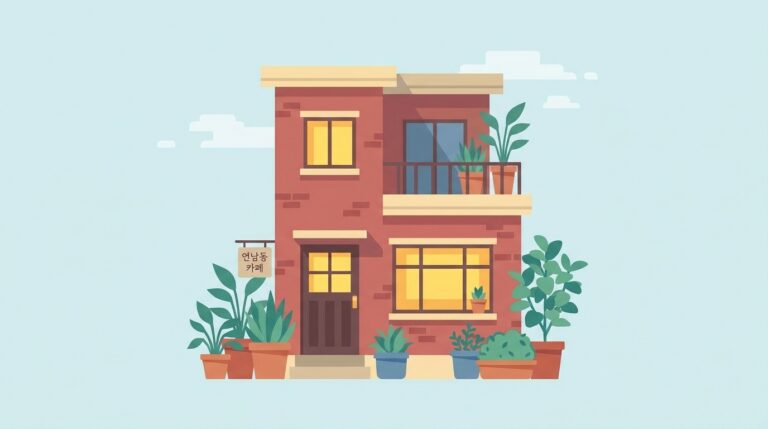
안녕하세요! I’m your Daily Hangul editor and your personal Seoul culture navigator. Have you ever turned into a quiet, sunlit alleyway behind the buzzing streets of Yeonnam-dong or Seongsu-dong and stopped right in your tracks? In front of you stands a classic 1980s two-story red-brick house—the kind you always see in warm, nostalgic K-dramas like Reply 1988. You spot vintage lace curtains fluttering behind clear glass, push open a heavy wooden door, and are instantly greeted by the smell of freshly pulled espresso and cinnamon pastries.
Everything about the space—the creaky wooden parquet floor, the intimate separate rooms where bedrooms used to be, and the sunlight pouring into the living room—makes you exhale and smile. You feel an overwhelming sense of calm, as if you’ve just stepped into your Korean bestie’s family home for an afternoon tea. But when you want to share this magical feeling with your travel partner or complement the barista, you freeze. Your textbook only taught you basic phrases like 이 카페는 좋아요 (I kape-neun joayo / This cafe is good).
That sentence is grammatically correct, but it doesn’t capture even ten percent of the cozy charm you’re feeling right now! That’s why today, we’re diving into the exact phrase native Seoulites use to praise these nostalgic hidden gems: 주택을 개조한 카페라서 마치 친구 집에 놀러 온 것처럼 아늑하고 편안해요 (Since the cafe is a converted house, it feels cozy and comfortable like visiting a friend’s home). Based on real feedback from dozens of our learners who felt tongue-tied during cafe-hopping in Seoul, this guide will turn you from a hesitant tourist into a confident local aesthetic connoisseur. Let’s step right inside!
Phase 2: Top 3 Core Expressions (Deep Dive)
1. 마치 친구 집에 놀러 온 것 같아요 (Machi chingu jibe nolleo on geot gat-ayo)
- Pronunciation: [Machi chin-gu ji-be nol-leo on geot gat-a-yo] (Pronounce it rhythmically: mah-chee chin-goo jee-beh nol-luh on guht gah-tah-yo. The ‘machi’ flows smoothly like sliding your feet into warm house slippers.)
- Meaning: Literal: “It feels as if I came over to a friend’s house to play.” | Real Nuance: “It feels so unpretentious, welcoming, and relaxed, exactly like chilling at a close friend’s place.”
- K-Culture Moment: Picture a quiet healing scene from Hospital Playlist or an indie vlog where the characters gather on a living room sofa with mugs in hand, laughing without any pretense.
- Editor’s Insight: The magic word here is 마치 (machi), meaning “as if” or “just like.” Pairing 마치 with ~것 같아요 (~geot gat-ayo / it seems like) instantly elevates your Korean from a dry statement to an expressive, emotive compliment.
- Situation Spectrum: Casual ✅ | Semi-formal ✅ | Formal ⚠️ (Too conversational for boardroom presentations, but perfect for friendly cafe chats).
- 🤔 Think About It: In English, adults often say “hanging out” or “visiting.” Why do Koreans of all ages use the verb 놀다 (nolda / to play) when spending time with friends? What does that reveal about Korean warmth and lifelong camaraderie?
2. 주택을 개조해서 아늑해요 (Jutaekeul gaejohaeseo aneukhaeyo)
- Pronunciation: [Ju-tae-geul gae-jo-hae-seo a-neu-kae-yo] (Joo-taek-eul geh-joh-heh-suh ah-neuk-heh-yoh. Let the final ‘aneukhaeyo’ drop gently, just like sinking into a soft, worn-in armchair.)
- Meaning: Literal: “Because it remodeled a house, it is cozy.” | Real Nuance: “Since this space preserved an actual home’s structure, the ambiance is so intimate and soothing.”
- K-Culture Moment: When K-indie artists shoot live acoustic sessions in Seongsu-dong cafes surrounded by original exposed brick walls and warm amber lamps.
- Editor’s Insight: 아늑하다 (aneukhada) is the quintessential Korean equivalent of Danish hygge. It describes spaces that wrap around you like a soft wool blanket on a chilly rainy evening.
- Situation Spectrum: Casual ✅ | Semi-formal ✅ | Formal ✅ (Completely polite and polished across any social situation).
- 🤔 Think About It: In modern Seoul, where high-rise apartment complexes dominate the skyline, why do younger generations seek comfort in these preserved single-family houses (주택)?
3. 구석구석 구경하는 재미가 있어요 (Guseok-guseok gugyeonghaneun jaemiga isseoyo)
- Pronunciation: [Gu-seok-gu-seok gu-gyeong-ha-neun jae-mi-ga i-sseo-yo] (Goo-suhk-goo-suhk goo-gyung-hah-neun jeh-mee-gah ee-ssuh-yo. Give a gentle bounce to the repeated word ‘guseok-guseok’!)
- Meaning: Literal: “Watching every corner-corner has fun.” | Real Nuance: “It is such a delight exploring all the little hidden nooks, hallways, and themed rooms.”
- K-Culture Moment: In cafe tours featured on variety shows like Hangout with Yoo, when cast members walk through eccentric converted cafes, discovering mini sunrooms and hidden attic tables.
- Editor’s Insight: Reduplication like 구석구석 (guseok-guseok / nook and cranny) brings vivid rhythm to your sentences. Rather than simply saying “The cafe is big,” this highlights curiosity and appreciation for detail.
- Situation Spectrum: Casual ✅ | Semi-formal ✅ | Formal ⚠️
- 🤔 Think About It: Does your native culture celebrate spatial exploration in cafes, or are cafe visits purely functional transactions for quick caffeine fixes?
Phase 3: Textbook Korean vs. Real Korean
Situation 1: Expressing that you adore the cozy interior vibe
- 📖 교과서 한국어 (Textbook Korean): 이 카페의 인테리어가 매우 아름답습니다. (I kape-ui interi-eoga maeu areumdapseumnida. / The interior of this cafe is very beautiful.)
- 🗣️ 진짜 한국어 (Real Korean): 분위기 진짜 아늑하고 편해요! (Bunwigi jinjja aneukhago pyeonhaeyo! / The vibe is so cozy and comfortable!)
- 💡 왜 다를까? (Why is it different?): Koreans rarely say 인테리어가 아름답다 in everyday speech. Instead, locals talk about 분위기 (bunwigi / vibe, atmosphere) and describe physical comfort using 편하다 (pyeonhada / comfortable).
Situation 2: Remarking on the preserved vintage rooms
- 📖 교과서 한국어 (Textbook Korean): 이 건물에는 작은 방들이 여러 개 있습니다. (I geonmureneun jageun bangdeuri yeoreo gae itseumnida. / There are several small rooms in this building.)
- 🗣️ 진짜 한국어 (Real Korean): 방 구조가 그대로 남아 있어서 정감 가요! (Bang gujoga geudaero nama isseoseo jeonggam gayo! / The original room layout is preserved, so it feels so warm and nostalgic!)
- 💡 왜 다를까? (Why is it different?): Saying rooms simply “exist” sounds like a real estate agent. Saying 정감 가요 (jeonggam gayo) means it evokes feelings of human warmth, affection, and emotional nostalgia (Jeong).
Phase 4: K-Culture Deep Dive & Non-Verbal Manners
4-1. Nunchi & Cafe Gestures
- Quiet Residential Etiquette (주택가 매너): Converted cafes in Yeonnam-dong and Seongsu-dong are frequently situated right next to everyday residential homes where local families live. When entering the front courtyard or taking photos by the gate, keep your speaking volume low. Look around for signs reading 주민들이 살고 있어요 (Residents live here).
- The Shoe Dilemma: While 90% of converted house cafes allow outdoor shoes throughout, some heritage cafes maintain a traditional raised wooden floor (마루 – maru) or tatami/ondol nook. If you spot a lowered threshold with slippers lined up, pause and look down before stepping up! Stepping onto raised wood with outdoor shoes is a major cultural faux pas.
- Table Stewardship (자리 매너): Converted houses often feature former master bedrooms with large communal vintage wooden tables. If you visit solo or as a duo during weekend peak hours, don’t occupy a six-person dining table unless invited by staff. Pick cozy window-ledge seats or small former study rooms.
4-2. The “Newtro” House Phenomenon (양옥 주택 개조)
Why are Korean 20-somethings and 30-somethings obsessed with these cafes? Between the 1970s and early 1990s, the Western-style brick house known as 양옥 (yang-ok) was the symbol of cozy middle-class family dreams in South Korea. As high-rise apartment complexes became ubiquitous across modern Seoul, young creatives began reclaiming these vintage architectural treasures in older neighborhoods like Yeonnam-dong and Seongsu-dong.
Instead of tearing them down, innovative baristas preserve original hand-carved wooden ceilings, vintage floral wallpapers, stained-glass transoms, and bathroom tilework. Visiting these spaces is not just an aesthetic trend; it is an emotional journey back to childhood memories, offering emotional refuge from the rapid pace of Seoul city life.
Phase 5: Real-Life Roleplay Scenario
Setting: Cafe Yeon-woo (연우), a two-story red-brick converted house nestled in an alley of Yeonnam-dong. Soft bossa nova plays, warm amber light glints off parquet floors, and the scent of freshly baked scones fills the air. Behind the low counter stands Minho, the friendly barista-owner.
[Characters]
- Alex: A passionate cafe traveler exploring Yeonnam-dong.
- Minho: The warm barista-owner of Cafe Yeon-woo.
Alex: (🎭 Entering through the wooden door, eyes wide with gentle awe)
안녕하세요! 카페가 너무 예뻐요.
(Annyeonghaseyo! Kapega neomu yeppeoyo.)
“Hello! The cafe is so pretty.”
Minho: (🎭 Welcoming with a warm two-handed bow and a bright smile)
어서 오세요! 편하신 자리에 먼저 앉으세요.
(Eoseo oseyo! Pyeonhasin jarie meonjeo anjeuseyo.)
“Welcome! Please feel free to take a comfortable seat first.”
Alex: (🎭 Looking around the spacious living room and small connected rooms)
주택을 개조한 카페라서 마치 친구 집에 놀러 온 것처럼 아늑하고 편안해요.
(Jutaekeul gaejohan kaperaseo machi chingu jibe nolleo on geotcheoreom aneukhago pyeon-anhaeyo.)
“Since the cafe is a converted house, it feels cozy and comfortable like visiting a friend’s home.”
Minho: (🎭 Beaming with genuine pride, touching the wooden counter gently)
감사합니다! 저희 할머니께서 사시던 집을 그대로 카페로 꾸몄어요.
(Gamsahamnida! Jeohui halmeonikkeseo sasideon jibeul geudaero kape-ro kkumyeosseoyo.)
“Thank you! We actually turned the home my grandmother used to live in into this cafe.”
Alex: (🎭 Pointing toward a small winding staircase bathed in sunlight)
와, 정말요? 2층에도 자리가 있나요?
(Wa, jeongmalyo? I-cheung-edo jariga innayo?)
“Wow, really? Are there seats on the second floor as well?”
Minho: (🎭 Nodding enthusiastically, gesturing toward the stairs)
네! 2층 옛날 다락방 자리가 제일 아늑해요. 구석구석 구경해 보세요!
(Ne! I-cheung yennal darakbang jariga jeil aneukhaeyo. Guseok-guseok gugyeonghae boseyo!)
“Yes! The old attic space on the second floor is the coziest. Feel free to explore every nook and cranny!”
Alex: (🎭 Smiling cheerfully while holding the drink menu)
네, 구경하고 올게요! 시그니처 크림라떼 한 잔 부탁드려요.
(Ne, gugyeonghago olgeyo! Sigeunicheo keurim-ratte han jan butakdeuryeoyo.)
“Great, I’ll go explore! I’d like one signature cream latte, please.”
Minho: (🎭 Handing over an aesthetic wooden buzzer buzzer token)
네, 자리 잡으시면 음료 준비해 드릴게요. 편히 쉬세요!
(Ne, jari jabeusimyeon eumryo junbihae deurilgeyo. Pyeonhi swiseyo!)
“Sure, once you find a seat, we’ll prepare your beverage. Please rest comfortably!”
🔀 Interactive Branching Point: What would you say next to Minho?
- Choice A: “사진 많이 찍어도 돼요? 인스타에 올리고 싶어요!” (Sajin mani jjigeodo dwaeyo? Seuta-e olligo sipeoyo! / May I take lots of photos? I want to post on Instagram!)
- Outcome (Best! 🎉): Baristas love this! Minho will enthusiastically point out the best photo spots and angles where the daylight hits prettiest.
- Choice B: “여기서 제일 비싼 거 주세요.” (Yeogiseo jeil bissan geo juseyo. / Give me the most expensive item here.)
- Outcome (Risk ⚠️): While not rude, it sounds somewhat abrupt and transactional in an intimate, aesthetic cafe setting. Asking for the 시그니처 메뉴 (signature menu) is far more natural.
- Choice C: “방이 너무 좁고 답답한데요?” (Bangi neomu jopgo dabdabhandeyo? / Why are these rooms so cramped and stuffy?)
- Outcome (Bad 🚫): Ouch! Criticizing the historic layout directly insults the vintage charm and family heritage the owner meticulously preserved.
Phase 6: 10-Second Emotion Shadowing Drill
Shadowing with emotional authenticity transforms textbook phrases into authentic self-expression. Pause at the slashes (/) and embody the bracketed emotions!
[😊 Deeply relaxed and amazed]
주택을 개조한 카페라서 / 마치 친구 집에 놀러 온 것처럼 / 아늑하고 편안해요.
(Jutaekeul gaejohan kaperaseo / machi chingu jibe nolleo on geotcheoreom / aneukhago pyeon-anhaeyo.)-
[✨ Curious and eyes sparkling with enthusiasm]
방마다 분위기가 달라서 / 구석구석 구경하는 재미가 / 쏠쏠해요!
(Bangmada bunwigiga dallaseo / guseok-guseok gugyeonghaneun jaemiga / ssolssolhaeyo!) -
[🥺 Polite and gentle whisper]
혹시 2층 창가 자리 / 비어 있나요?
(Hoksi i-cheung changga jari / bieo innayo?)
Phase 7: K-Culture Mini Dictionary
- 주택 개조 카페 (Jutaek Gaejo Kape) | Converted House Cafe
- Everyday Usage: Refers specifically to commercial cafes transformed from residential single-family houses (단독주택). You will see this term constantly on Korean lifestyle blogs and Naver Map reviews.
- 아늑하다 (Aneukhada) | Cozy / Snug / Intimate
- Everyday Usage: Used when describing spaces, lighting, or bedding that make you feel protected, warm, and comforted from the chilly outside world.
- 감성 (Gamseong) | Aesthetic / Mood / Sensibility
- Everyday Usage: While literally meaning “emotion” or “sensibility,” today’s Korean youth use it to mean “a curated, photogenic aesthetic vibe” (e.g., 인스타 감성 카페 – an Instagram-aesthetic cafe).
- 단골 (Dangol) | Regular Customer / Patron
- Everyday Usage: Once you visit a cozy neighborhood cafe two or three times and exchange greetings with the owner, you officially earn the status of being a 단골.
Phase 8: Traveler’s Survival Kit
Survival Expressions TOP 3
- 2층에도 자리 있어요? (I-cheung-edo jari isseoyo?)
- English: “Are there seats on the second floor as well?”
- Pro Tip: Converted cafes often feature multi-level layouts, outdoor balconies, and hidden attics. Always ask before settling on the first table you see!
- 다 마신 잔은 어디로 가져다드릴까요? (Da masin janeun eodiro gajyeodadeurilkkayo?)
- English: “Where should I return my empty cup?”
- Pro Tip: In converted houses, the return station (반납대 – bannapdae) might be tucked around a vintage hallway. Asking this shows supreme manners.
- 여기 와이파이 비밀번호가 뭐예요? (Yeogi wa-i-pa-i bimilbeonhoga mwoyeyo?)
- English: “What is the Wi-Fi password here?”
- Pro Tip: Look at the bottom of your printed paper receipt or tiny vintage cards near the counter before asking; it’s almost always printed there!
Editor’s Travel Note: Conquering Alley Cafes in Seoul
- Download the Right App: Google Maps often struggles with tiny winding alleyways in Yeonnam-dong and Seongsu-dong. Before your trip, download the Naver Map app on Apple App Store or Google Play Store. It gives exact walking directions through converted residential alleys.
- Card-Only Culture: Over 95% of boutique cafes in Hongdae, Yeonnam, and Seongsu are strictly cashless. Have your credit card, T-Money card, or mobile payment ready.
- Restroom Code Hunt: Because converted houses have retro layouts, restrooms are often located outside on a half-landing. Check your receipt for a 4-digit keypad door code and
#or*sign!
Phase 9: One Step Deeper (Reflective Thought)
In South Korea, high-density apartment complexes account for well over 60% of urban living spaces. While apartments offer modern convenience and high-tech efficiency, they can sometimes feel sterile and uniform. The meteoric rise of converted house cafes in cultural hubs like Seongsu-dong and Yeonnam-dong is more than just an architectural trend—it represents a collective longing for 정 (Jeong) and tangible human warmth.
By preserving weathered wooden banisters, worn red bricks, and small sunlit yards, these spaces recreate the comforting aura of grandma’s house (할머니 집). When you tell a barista that their converted cafe feels like a friend’s home, you aren’t just making small talk; you are validating their creative mission to preserve soul, memory, and community in the heart of a fast-moving metropolis.
💬 Your Turn: What kind of cafe makes you feel genuinely at home? A sleek modern glass box, or a cozy retro space full of stories? Leave a comment below and share your favorite cafe vibe in Korean!
Phase 10: FAQ & Avoiding Misunderstandings
Q: Can I study or work on my laptop for several hours in converted house cafes?
A: While casual laptop use for an hour is generally accepted, converted house cafes usually prioritize ambiance and conversation over desk work. Many vintage tables don’t have nearby wall outlets, and during busy weekends, seating time may be gently capped at 2 hours. If you need a marathon work session, a spacious chain cafe (like Hollys or Twosome Place) is a safer bet.
Q: What is the difference between “편안하다 (pyeon-anhada)” and “아늑하다 (aneukhada)”?
A: 편안하다 (pyeon-anhada) refers to physical comfort or peace of mind (e.g., a comfortable chair or feeling unstressed). 아늑하다 (aneukhada) specifically captures spatial intimacy and coziness—the feeling of a warm, snug sanctuary sheltered from the cold.
Q: Is it okay to explore and take pictures of empty rooms in a converted cafe?
A: Yes, absolutely! Barista-owners take tremendous pride in their interior styling. However, always exercise 눈치 (nunchi): never point your camera lens directly at other seated guests, turn off your shutter sound if possible, and avoid blocking narrow vintage hallways.
🚨 Common Mistakes Alert
- ❌ Mistake 1: Calling the cafe a “hotel” or “motel” by accident.
- Why: Learners sometimes confuse 주택 (jutaek / residential house) with 숙소 (sukso / lodging).
- Correct Action: Stick to 주택을 개조한 카페 (jutaekeul gaejohan kape).
- ❌ Mistake 2: Leaving empty trays on the counter without checking.
- Why: In some multi-story converted cafes, the 2nd floor has its own tray drop station.
- Correct Action: Ask: 반납 어디에 해요? (Bannap eodie haeyo? / Where do I return this?)
- ❌ Mistake 3: Shouting across rooms to call staff.
- Why: Brick walls reflect sound unpredictably.
- Correct Action: Walk back to the main counter living room area to speak quietly with staff.
Phase 11: Action Mission & Engagement
- 🥉 Bronze Mission (Solo Practice): Read Phase 6’s emotion shadowing sentences aloud 3 times in front of your mirror, adjusting your facial expression to look relaxed and happy.
- 🥈 Silver Mission (Social Media): Post a photo of your cozy study desk or local coffee spot on Instagram or Threads with the caption: “마치 친구 집에 온 것처럼 아늑해요! ☕” Tag us at
@DailyHangul! - 🥇 Gold Mission (Real-World Execution): Next time you visit a cafe in Korea (or a Korean-style indie cafe in your city), look the barista in the eye while ordering or picking up your cup and say: “카페가 진짜 아늑하고 편해요!”
- 🎮 K-Culture Mission: Watch an episode of a cozy slice-of-life K-drama (like Our Beloved Summer or When the Weather Is Fine). Spot a scene where characters visit a converted house or neighborhood cafe, and listen closely for the words 아늑하다 or 편하다!
Phase 12: Interactive Quiz Challenge
Test your knowledge before heading out to Yeonnam-dong!
Q1. Situational Judgment:
You just walked into a converted house cafe in Seongsu-dong. Every room is decorated with 1980s retro furniture. What is the most natural, native-like compliment to give the barista?
– A) 이 식당은 매우 큽니다. (I sikdangeun maeu keumnida.)
– B) 주택을 개조해서 그런지 정말 아늑하고 편안해요! (Jutaekeul gaejohaeseo geureonji jeongmal aneukhago pyeon-anhaeyo!)
– C) 집을 왜 안 부수고 카페를 만들었나요? (Jibeul wae an busugo kape-reul mandeureonnayo?)
Q2. Fill-in-the-Blank:
Complete the sentence to mean: “It feels just like visiting a friend’s house.”
마치 친구 집에 ________ 온 것 같아요.
(Clue: to play / hang out)
Q3. True or False Culture Check:
True or False? Because converted cafes in Yeonnam-dong are commercial businesses, it is totally acceptable to be as loud as you want in the outdoor garden late at night.
👉 Click to view answers and explanations!
- Q1 Answer: B
- Explanation: Option B is polite, warm, and specifically compliments the converted house ambiance (주택을 개조해서). Option A calls the cafe a restaurant and sounds robotic, while Option C is bluntly asking why they didn’t demolish the house!
- Q2 Answer: 놀러 (nolleo)
- Explanation: The phrase is 놀러 오다 (nolleo oda), meaning “to come over to hang out/play.”
- Q3 Answer: False
- Explanation: Converted cafes are situated deep inside quiet residential neighborhoods where local residents live right next door. Maintaining low voices in courtyards and alleyways is essential 눈치 (nunchi) and etiquette!
- Explanation: Converted cafes are situated deep inside quiet residential neighborhoods where local residents live right next door. Maintaining low voices in courtyards and alleyways is essential 눈치 (nunchi) and etiquette!







