

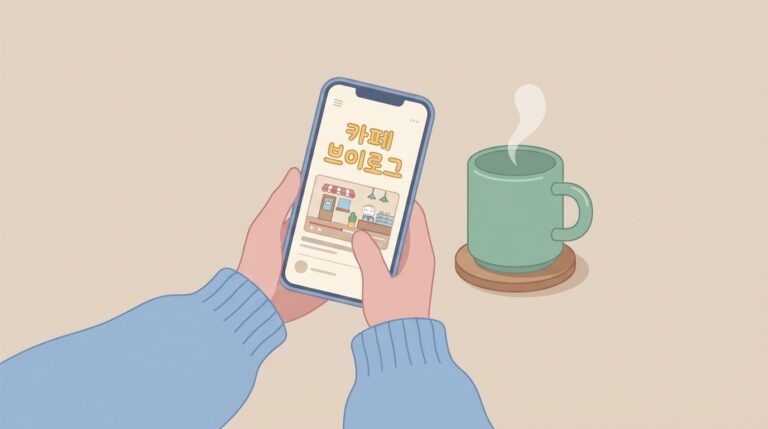
Sound Like a Native on YouTube: Leave the Sweetest Korean Healing Vlog Comments
Phase 1: 공감 (Empathy & Opening)
안녕하세요! 매일한글 에디터입니다. Have you ever wrapped up an exhausting day, curled under a blanket, and turned on a silent Korean daily vlog? You watch the steam rising from a bowl of hot tteokbokki, listen to the rhythmic rain outside a quiet Seoul window, and instantly feel your tension melt away. You desperately want to leave a sweet comment under the video to thank the creator, but you freeze. You open Google Translate, type “Your video comforted my soul,” and end up with a stiff sentence that sounds like an instruction manual.
You are not alone! Thousands of learners tell us they love Korean lifestyle content but feel shy leaving comments because textbook Korean feels too formal or robotic. Today, we are changing that. In this guide, you will master the warmest, most natural internet comment expressions—specifically tailored for beginners (A1). By the end of this lesson, you will be able to leave genuine, heartwarming comments that your favorite creators might even pin with a little red heart!
Phase 2: 핵심 표현 3선 심층 분석 (3 Core Expressions)
1. 힐링 그 자체 (Hilling geu jache)
- Pronunciation: [Hil-ling geu ja-che] (Sounds like the English word “healing” with a crisp Korean ‘L’, followed by “guh” and “cha-che” like “cha-cha” with a soft ‘eh’).
- Meaning: Literal: “Healing itself” | Actual Nuance: “Pure healing” or “The absolute definition of comfort.”
- K-Culture Moment: Commonly seen on soothing Jeju travel vlogs or baking videos where calm music plays.
- Editor’s Insight: Koreans borrowed the English word “healing” (힐링), but use it far more broadly as a noun or adjective describing anything peaceful that recharges your mental battery.
- Situation Spectrum: Casual ✅ | Semi-formal ✅ | Formal ⚠️
- 🤔 Think About It: Why do you think modern Koreans use “healing” for relaxing everyday moments rather than medical treatments?
2. 영상 잘 봤어요 (Yeongsang jal bwasseoyo)
- Pronunciation: [Yeong-sang jal bwa-sseo-yo] (“Yeong” rhymes with “young”, “sang” like “song”, “jal” rhymes with “balm”, and “bwasseoyo” sounds like “bwah-ssuh-yo”).
- Meaning: Literal: “I watched the video well” | Actual Nuance: “Thanks for the wonderful video!”
- K-Culture Moment: The gold-standard polite comment on YouTube, Webtoons, or Instagram reels.
- Editor’s Insight: Saying you did something “well” (잘) in Korean conveys gratitude and appreciation toward the person who created it.
- Situation Spectrum: Casual ⚠️ (needs informal drop) | Semi-formal ✅ | Formal ✅
- 🤔 Think About It: In English, we say “Great video!” In Korean, we say “I watched it well.” What does this show about how Koreans acknowledge the creator’s effort?
3. 오늘도 힐링하고 가요 (Oneuldo hillinghago gayo)
- Pronunciation: [Oh-neul-do hil-ling-ha-go ga-yo] (“Oh-neul” sounds like “oh-null”, “do” like “dough”, “hago” like “ha-go”, and “gayo” like “guy-yo”).
- Meaning: Literal: “Today too, I heal and go” | Actual Nuance: “Leaving refreshed after watching today’s upload as always!”
- K-Culture Moment: Pinned at the top of comment sections on Sunday evening student study-vlogs.
- Editor’s Insight: The verb “가요” (gayo – I go) reflects visiting an internet space as if it were a cozy physical room.
- Situation Spectrum: Casual ⚠️ | Semi-formal ✅ | Formal 🚫
- 🤔 Think About It: How does visiting a digital channel feel like dropping by a cozy neighborhood cafe in Korean digital culture?
Phase 3: 교과서 한국어 vs 진짜 한국어 (Textbook vs Real Korean)
Situation 1: Telling a creator their video made you relaxed
- 📖 교과서 한국어: 이 동영상은 저에게 큰 위로가 되었습니다. (I dongyeongsangeun jeoege keun wiroga doeeotseumnida. / This motion video provided immense consolation to me.)
- 🗣️ 진짜 한국어: 오늘 브이로그도 힐링 그 자체예요! (Oneul beuilogeudo hilling geu jacheyeyo! / Today’s vlog is pure healing too!)
- 💡 왜 다를까?: The textbook phrase sounds like an acceptance speech at an academic film festival! Real netizens use trendy, lighthearted loanwords like 힐링 (healing) combined with 그 자체 (itself) to sound warm and relatable.
Situation 2: Subscribing and cheering for future uploads
- 📖 교과서 한국어: 저는 당신의 계정을 구독하였으니 다음 작품을 기다리겠습니다. (Jeoneun dangsinui gyejeongeul gudokhayeosseuni daeum jakpumeul gidarigesseumnida. / I have subscribed to your account, hence I shall await your next work.)
- 🗣️ 진짜 한국어: 구독 완료! 다음 영상도 기대할게요. (Gudok wanryo! Daeum yeongsangdo gidaehalgeyo. / Subscribed! Looking forward to the next video.)
- 💡 왜 다를까?: Koreans love efficiency online. Using noun phrases like 완료 (completed) paired with friendly polite endings shows excitement without sounding stiff.
Phase 4: K-Culture 딥다이브 & 비언어적 매너 (Deep Dive & Netiquette)
4-1. 눈치 (Nunchi) & Typing Manners
On Korean YouTube and Instagram, punctuation carries emotion. Leaving a sentence with just a period (“.”) can feel blunt, cold, or passive-aggressive. Instead, Koreans use soft tildes (~), exclamation marks (!), or cute vowel elongations (like ㅎㅎ or ㅠㅠ). Pair your comments with comforting emojis like 🌿 (sprout/nature), ☕ (warm drink), or 🤍 (soft heart) to reflect the peaceful aesthetic of the video.
4-2. The “Healing Vlog” Phenomenon
Why are healing vlogs (힐링 브이로그) so massive in Korea? South Korea is famous for its fast-paced, high-pressure “Ppalli-Ppalli” (hurry-hurry) lifestyle. After surviving packed subways and overtime work, young Koreans look for “소확행” (Small But Certain Happiness). Watching a creator quietly chop carrots, brew drip coffee, or walk through a sleepy alley in Mangwon-dong serves as a collective emotional sanctuary. When you comment “힐링 그 자체”, you become part of that shared sigh of relief.
Phase 5: 실전 롤플레이 시나리오 (Real-Life Roleplay)
Setting: You are scrolling through YouTube at 10 PM. A cozy vlog by Korean creator Yuna titled “Quiet Rainy Day, Making Pumpkin Soup & Reading” pops up. You want to leave a sweet comment.
- Turn 1 (Yuna): 🎭 Pins a welcome comment
오늘도 보러 와주셔서 감사합니다. 따뜻한 밤 보내세요! (Oneuldo boreo wajusyeoseo gamsahamnida. Ttatteutan bam bonaeseyo! / Thank you for coming to watch today as well. Have a warm night!) - Turn 2 (You): 🎭 Typing with a happy smile
유나 님, 영상 잘 봤어요! (Yuna nim, yeongsang jal bwasseoyo! / Yuna, I really enjoyed the video!) - Turn 3 (Yuna): 🎭 Leaves a heart on your comment
재미있게 보셨다니 다행이에요! (Jaemiitge bosyeotdani dahaeng-ieyo! / I’m so glad you enjoyed it!) - Turn 4 (You): 🎭 Expressing your genuine comfort
오늘 브이로그도 힐링 그 자체예요. (Oneul beuilogeudo hilling geu jacheyeyo. / Today’s vlog is pure healing too.) - Turn 5 (Yuna): 🎭 Replies happily
힐링이 되셨다니 제가 더 기뻐요! (Hilling-i doesyeotdani jega deo gippeoyo! / Hearing that it was healing makes me even happier!) - Turn 6 (You): 🎭 Leaving a parting blessing
오늘도 힐링하고 가요. 감기 조심하세요! (Oneuldo hillinghago gayo. Gamgi josimhaseyo! / Leaving refreshed today too. Be careful not to catch a cold!) - Turn 7 (Yuna): 🎭 Adds cozy smile emoji
감사해요! 따뜻하게 입고 다니세요~ (Gamsahaeyo! Ttatteuthage ipgo daniseyo~ / Thank you! Please dress warmly~) - Turn 8 (You): 🎭 Finishing with support
다음 영상도 기대할게요! (Daeum yeongsangdo gidaehalgeyo! / Looking forward to the next video!)
🔀 Interactive Choice Point: How will you comment on her warm pumpkin soup scene?
- Choice A: 언니, 수프 진짜 맛있어 보여요! 오늘 브이로그도 힐링 그 자체 🥣🌿 (Unnie, the soup looks delicious! Today’s vlog is pure healing too!)
- Choice B: 동영상이 조용해서 잠이 왔습니다. (The video was so quiet that sleep arrived.)
- Choice C: 야 너 요리 잘한다 ㅋㅋㅋ (Hey you, you cook well lol)
-
Feedback:
- Choice A (Best): Perfect! It is warm, polite, uses natural healing vocabulary, and adds lovely emojis.
- Choice B (Risk): While you might mean “it put me to sleep peacefully,” this phrasing sounds like “your video was boring and put me to sleep.”
- Choice C (Bad): Calling a stranger “야 너” (Hey you) in casual banmal is considered rude internet behavior!
Phase 6: 10초 감정 섀도잉 드릴 (10-Second Emotion Shadowing)
Practice speaking these comment phrases out loud with natural intonation:
[😊 Soft and deeply relaxed]
오늘 / 브이로그도 / 힐링 그 자체예요~ ☕
(O-neul / beu-i-ro-geu-do / hil-ling geu ja-che-ye-yo~)
Pause gently after each slash, letting the tone soften at the end.-
[✨ Bright and full of cheer]
영상 / 너무 잘 봤어요! / 오늘도 최고! 👍
(Yeong-sang / neo-mu jal bwa-sseo-yo! / O-neul-do choe-go!)
Give an energetic upward bounce on “최고!” (Choego!). -
[🥺 Warm and affectionate]
오늘도 / 힐링하고 가요… / 힘내세요! 🤍
(O-neul-do / hil-ling-ha-go ga-yo… / him-nae-se-yo!)
Speak slowly, as if wrapping the creator in a warm hug.
Phase 7: K-Culture 미니 사전 (Mini Dictionary)
- 힐링 (Hilling): Derived from “healing.” In daily Korean life, it describes any moment, food, walk, or melody that alleviates stress and restores emotional peace.
- 브이로그 (Beu-i-ro-geu): Vlog. Video blogs chronicling everyday routines like cooking, studying, or office life, immensely popular on Korean YouTube.
- 소확행 (So-hwak-haeng): An acronym for “Small But Certain Happiness” (소소하지만 확실한 행복). Refers to simple pleasures like a freshly baked pastry or a peaceful video.
- 좋댓구알 (Jot-daet-gu-al): Slang acronym for “좋아요, 댓글, 구독, 알림 설정” (Like, Comment, Subscribe, Notification Bell). The standard Korean YouTuber sign-off!
Phase 8: 여행자를 위한 생존 키트 (Traveler’s Survival Kit)
Survival Comment Phrases TOP 3
- 영상 잘 봤어요! (Yeongsang jal bwasseoyo!)
- Pro Tip: The safest, most universally polite compliment for any creator.
- 오늘 브이로그도 힐링 그 자체! (Oneul beuilogeudo hilling geu jache!)
- Pro Tip: Drop this under cozy lifestyle, pet, or cafe videos for an instant like from the creator.
- 다음 영상도 기다릴게요! (Daeum yeongsangdo gidarilgeyo!)
- Pro Tip: Means “I will wait for your next video!” Showing anticipation makes creators feel appreciated.
Editor’s Travel Note
When traveling in South Korea, finding the quiet spots you see in healing vlogs requires local tools. Google Maps often struggles with walking routes in Korea, so be sure to check the Naver Map application for foreign travelers to easily bookmark peaceful neighborhood cafes in Yeonnam-dong or Samcheong-dong. Also, keep a T-Money transportation card ready in your phone wallet for quick access to scenic subway lines along the Han River!
Phase 9: “한 발 더 깊이” (Deeper Cultural Reflection)
In many Western digital spaces, comments focus heavily on debate, critique, or clever punchlines. Korean comment sections on lifestyle channels, however, often function as a quiet communal terrace. People share their daily exhaustion and leave messages wishing total strangers good health, peaceful nights, and good meals. Writing a supportive comment in Korean is not just practicing grammar—it is participating in this unique culture of collective care (정, Jung).
💬 Your Turn: What is your favorite type of vlog to unwind with after a busy day? Have you ever left a comment in Korean?
Phase 10: FAQ & 오해 방지 (FAQ Schema)
Q: Can I just write “힐링” by itself in a comment?
A: Yes! Leaving just “힐링… 🌿” or “힐링 그 자체!” is completely natural and very common on Korean social media.
Q: Should I use 반말 (informal) or 존댓말 (polite language) when commenting?
A: Always start with 존댓말 (polite ending like -요) using semi-formal phrases like “잘 봤어요”. Even if the creator is younger than you, polite language is standard netiquette unless you are close real-life friends.
Q: What does it mean when a creator pins my comment?
A: It means the creator loved your comment so much they pinned it to the very top of the comment section (고정 댓글), making it the first thing everyone reads!
🚨 흔한 실수 (Common Mistakes) 경고판
- Mistake 1: Translating “I like your video” directly as “당신의 비디오를 좋아합니다”. This sounds like a stiff legal document. Correct Action: Say “영상 너무 좋아요!” (Yeongsang neomu joayo!).
- Mistake 2: Calling the creator “당신” (Dangsin). While “dangsin” means “you” in dictionaries, calling a stranger “dangsin” online can sound confrontational. Correct Action: Use their channel name followed by 님 (Nim), e.g., “민지 님” (Minji Nim).
- Mistake 3: Ending sentences bluntly without any punctuation or emojis. Correct Action: Add friendly markers like ~, !, or ㅎㅎ to sound warm.
Phase 11: 액션 미션 & 참여 유도 (Action Missions)
- 🥉 Bronze Mission (Solo Practice): Read “오늘 브이로그도 힐링 그 자체예요!” aloud three times, emphasizing the relaxed feeling.
- 🥈 Silver Mission (Social Sharing): Take a screenshot of your favorite cozy Korean vlog and share it on Instagram Stories with the caption: “오늘도 힐링 완료 🌿” (Healing completed today too).
- 🥇 Gold Mission (Real-world Leap): Go to YouTube right now, find a Korean vlog you love, and post: “영상 잘 봤어요! 오늘 브이로그도 힐링 그 자체예요 🤍”.
- 🎮 K-Culture Mission: Watch a vlog by popular creators like Ondo (온도) or Haegreendal (해그린달) and spot how many times the word 힐링 appears in their comment section!
Phase 12: 인터랙티브 퀴즈 챌린지 (Quiz Challenge)
Question 1 (Situation Judgment): You just watched a peaceful 20-minute video of a creator baking bread in silence. Which comment is the most culturally natural?
* A) 비디오가 저를 치유했습니다.
* B) 오늘 브이로그도 힐링 그 자체예요 🍞✨
* C) 야, 빵 맛있냐?
Question 2 (Fill in the Blank): Complete the common polite closing phrase:
“영상 잘 ________!” (I watched the video well!)
* A) 봤어요 (bwasseoyo)
* B) 잤어요 (jasseoyo)
* C) 샀어요 (sasseoyo)
Question 3 (True or False Cultural Check): Using the word “힐링” in Korea is only acceptable when talking about medical treatment in hospitals.
* True or False?
👉 Click to reveal answers and explanations!
- Q1 Answer: B | Explanation: “힐링 그 자체예요” is natural, trendy, and warm. Option A sounds like an awkward robotic translation, and Option C is overly rude casual speech.
- Q2 Answer: A (봤어요) | Explanation: “보다” means to see/watch, so “봤어요” is the past tense “watched.” “잤어요” means slept, and “샀어요” means bought!
- Q3 Answer: False | Explanation: “힐링” is used universally across lifestyle, food, travel, and media to describe peaceful emotional comfort!







