

The Highball Revolution: Why Korea’s Young Crowd Swapped Somaek for Citrus Highballs
Phase 1: Empathy (Story-Driven Opening)
안녕하세요! 매일한글 에디터입니다. (Hello! I’m your Daily Hangul editor.)
Picture this: You step into a neon-lit, buzzing pub in Euljiro—the heart of Seoul’s trendy “Hip-jiro” district. It’s Friday night, and you’re mentally bracing yourself for the classic K-drama drinking scene: endless green bottles of soju, thunderous “One shot!” chants, and aggressive somaek (soju + beer) concoctions flying across the table.
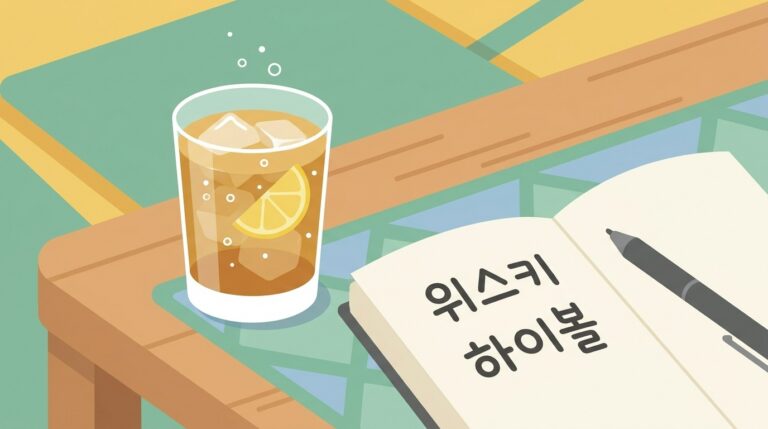
But wait. You look over at the nearby table of young professionals in their twenties and thirties. There are no chaotic shot glasses in sight. Instead, large, frosted mugs filled with clear ice, sparkling soda bubbles, a splash of amber whisky, and a bright slice of yellow lemon clink gently together. The room echoes with laughter, not hangover regrets.
“하이볼 한 잔 주세요! (Haibol han jan juseyo! – One highball, please!)”
Welcome to modern Korea’s drinking renaissance. For decades, Korean work drinks (회식, hoesik) meant forced rounds of heavy liquor. Today, the MZ generation (Millennials and Gen Z) has completely reshaped nightlife around the concept of “Healthy Pleasure” and individual choice. Whisky highballs—crisp, refreshing, customizable, and remarkably low in alcohol—have become the undisputed star of gatherings.
If you’ve ever felt nervous about keeping up with traditional Korean drinking etiquette, or if you simply want to order at trendy Seoul izakayas with effortless confidence, this guide is crafted specifically for you based on real questions from our Daily Hangul learners. Let’s dive in!
Phase 2: Core Expressions Deep Dive
Here are three essential expressions you will hear and use at every modern bar and restaurant across Korea.
1. 하이볼 한 잔 주세요 (Haibol han jan juseyo)
- Pronunciation: [Ha-i-bol han jan ju-se-yo] (Sounds like: “Hi-bowl hahn jahn joo-say-yo”)
- Meaning: Literal: “Please give me one highball.” / Nuance: The smoothest, most natural way to order Korea’s trendiest mixed drink.
- K-Culture Moment: In modern slice-of-life K-Dramas like Work Later, Drink Now, characters frequently switch from brutal shots to stylish highballs when they want to chat without passing out.
- Editor’s Insight: Most Korean highball bars offer customized bases! You might be asked whether you want “탄산수 (tansansu – plain soda water / dry)” or “토닉워터 (tonik-woteo – sweet tonic water)”. Saying this phrase opens the door to enjoying a drink on your own terms.
- Situation Spectrum: Casual ✅ | Semi-formal ✅ | Formal ⚠️ (Best for after-work dinners or pub hangs, not boardroom meetings)
- 🤔 Think About It: In many Western bars, you specify the spirit brand first (e.g., “Jameson ginger”). Why do you think Korean bars default to the collective label “하이볼” before asking for your preferred base?
2. 도수가 낮아서 부담 없어요 (Dosuga najaseo budam eopseoyo)
- Pronunciation: [Do-su-ga na-ja-seo bu-dam eop-seo-yo] (Sounds like: “Doh-soo-gah nah-jah-suh boo-dahm up-suh-yo”)
- Meaning: Literal: “The alcohol degree is low, so there is no burden.” / Nuance: “It’s light and easy to drink without getting drunk or feeling pressured.”
- K-Culture Moment: When declining a heavy soju shot from an older colleague, younger Koreans frequently say this while smiling and pointing to their highball glass.
- Editor’s Insight: The word 부담 (budam – burden/pressure) is a cultural cornerstone. Korean social life can carry heavy social obligations; describing something as “부담 없다 (budam eopda)” is the ultimate compliment for food, drinks, and casual gatherings.
- Situation Spectrum: Casual ✅ | Semi-formal ✅ | Formal ✅
- 🤔 Think About It: How does expressing personal limits through the concept of “no burden” protect both your well-being and the harmony of the group?
3. 깔끔하고 시원해요 (Kkalkkeumhago siwonhaeyo)
- Pronunciation: [Kkal-kkeum-ha-go si-won-hae-yo] (Sounds like: “Kkahl-kkoom-hah-goh she-won-hae-yo”)
- Meaning: Literal: “It is neat and cool.” / Nuance: “It tastes super crisp, refreshing, and cleanses the palate.”
- K-Culture Moment: Food vloggers and variety show cast members frequently say this after taking a bite of savory Korean fried chicken or grilled pork belly followed by a chilled highball gulp.
- Editor’s Insight: While “시원하다 (siwonhada)” literally means cold or cool, Koreans use it to describe feelings of deep physical relief and refreshing lightness. Combined with “깔끔하다 (kkalkkeumhada – neat/clean)”, it describes a drink that leaves zero cloying aftertaste.
- Situation Spectrum: Casual ✅ | Semi-formal ✅ | Formal ✅
- 🤔 Think About It: Notice how Korean sensory words connect temperature (“시원하다”) with emotional sensation. Does your native language blend physical and emotional sensations when describing drinks?
Phase 3: Textbook Korean vs Real Korean
Let’s upgrade your textbook Korean into natural, street-smart conversation.
Situation 1: Choosing a lighter drink during a dinner gathering
- 📖 Textbook Korean: 저는 알코올을 많이 마실 수 없습니다. (Jeoneun alkool-eul mani masil su eopseumnida. – I am unable to consume much alcohol.)
- 🗣️ Real Korean: 저는 오늘 가볍게 하이볼로 갈게요! (Jeoneun oneul gabyeopge haibollo galgeyo! – I’ll go light with a highball today!)
- 💡 Why it differs: The textbook sentence sounds like a medical confession and slightly kills the party mood. The real version is upbeat, sets a personal boundary, and keeps the friendly vibe alive.
Situation 2: Inquiring about the sweetness of a drink
- 📖 Textbook Korean: 이 음료수에는 설탕이 많이 함유되어 있습니까? (I eumryosue-neun seoltangi mani hamyudoeeo itsseumnikka? – Does this beverage contain a high amount of sugar?)
- 🗣️ Real Korean: 이거 단맛 별로 안 세요? (Igeo danmat byeollo an seyo? – Is this not too overly sweet?)
- 💡 Why it differs: Nobody asks waitstaff about chemical sugar content unless they’re reading nutritional labels. Asking if the “sweet taste is strong (단맛이 세다)” is how real locals verify if a highball uses dry soda or sugary syrup.
Phase 4: K-Culture Deep Dive & Non-Verbal Manners
4-1. Nunchi (눈치) & Body Language at Highball Bars
Even though highball culture is far more relaxed than traditional soju drinking, Korean table manners still show warmth and respect:
1. The Modern Two-Handed Clink: If someone senior or older cheers with you, touch the bottom of your highball mug with your left hand while holding the handle with your right. Clink your rim slightly lower than theirs.
2. The Turn-Away Rule (Loosened Up): With traditional soju shots, junior members turn their heads 90 degrees away from elders to drink. With highballs, this rule is much softer—a subtle tilt of the head or a brief, modest hand gesture in front of your mouth shows excellent politeness without feeling overly formal.
3. Refill Courtesy: Don’t let your friend’s glass sit empty! If their highball is down to the ice, simply tilt your chin toward their glass with a friendly smile: “한 잔 더 할래요? (Han jan deo hallaeyo? – Want another glass?)”
4-2. The Cultural Shift: “Healthy Pleasure” & Individual Taste
Why has whisky exploded in Korea? Historically, Korean drinking culture prioritized communal unity: everyone drank the same liquor at the same speed from small shot glasses. Today, young Koreans champion individual lifestyle choices. The trend of “Healthy Pleasure” (enjoying wellness without deprivation) combined with low-proof mixing has turned the highball into a lifestyle emblem. Bars now serve Earl Grey highballs, yuzu highballs, and zero-sugar tonic variations, giving every drinker the freedom to choose their sweetness, strength, and pace.
Phase 5: Real-Life Roleplay Scenario
Setting: A stylish izakaya in Euljiro. You are seated with your Korean friend and coworker, Minji (민지), who loves staying on top of food trends.
- Minji: 오늘 프로젝트 끝났는데 시원하게 한잔할까? (Oneul peurojekteu kkeutnanneunde siwonhage hanjan-halkka?)
- (🎭 Eyes sparkling as she opens the wooden menu)
- “Today’s project is finally wrapped up! Shall we have a crisp drink?”
- You: 좋아요! 혹시 여기 하이볼도 팔아요? (Joayo! Hoksi yeogi haibol-do parayo?)
- (🎭 Scanning the menu with curiosity)
- “Sounds great! By any chance, do they sell highballs here too?”
- Minji: 당연하지! 여기 산토리 하이볼이랑 얼그레이 하이볼 맛집이야. (Dangyeonhaji! Yeogi Santori haibol-irang eol-geure-i haibol matjip-iya.)
- (🎭 Pointing enthusiastically at the specials board)
- “Of course! This place is famous for Suntory and Earl Grey highballs.”
- You: 얼그레이 하이볼이요? 그거 단맛 별로 안 세요? (Eol-geure-i haibol-iyo? Geugeo danmat byeollo an seyo?)
- (🎭 Leaning in with an inquisitive expression)
- “Earl Grey highball? Is the sweetness on that not too strong?”
- Minji: 탄산수로 바꾸면 깔끔해! 도수도 낮아서 내일 출근할 때 부담 없어. (Tansansuro bakkumyeon kkalkkeumhae! Dosudo najaseo naeil chulgeunhal ttae budam eopseo.)
- (🎭 Giving a reassuring nod and thumbs-up)
- “If you swap it to plain soda water, it’s very crisp! The alcohol level is low, so there’s no pressure for work tomorrow.”
- You: 좋네요. 저도 하이볼로 갈게요! 사장님, 여기 하이볼 두 잔 주세요! (Jonne-yo. Jeodo haibollo galgeyo! Sajangnim, yeogi haibol du jan juseyo!)
- (🎭 Raising a polite hand toward the counter)
- “Awesome. I’ll go with a highball too! Boss, two highballs here, please!”
- Minji: 와, 발음 완전 자연스러운데? 오늘 진짜 고생 많았어, 짠! (Wa, bareum wanjeon jayeonseureonde? Oneul jinjja gosaeng manasseo, jjan!)
- (🎭 Raising her heavy frosted glass with a warm smile)
- “Wow, your pronunciation is completely natural! You worked so hard today, cheers!”
- You: 짠! 시원하고 진짜 깔끔해요! (Jjan! Siwonhago jinjja kkalkkeumhaeyo!)
- (🎭 Gently clinking glasses and taking a refreshing sip)
- “Cheers! It’s so refreshing and genuinely crisp!”
🔀 Interactive Choice Point
Minji asks if you want to order a second round, but you’re feeling just right and have an early morning trip.
- Choice A: “저는 하이볼 한 잔으로 딱 좋아요! 탄산수 하나 마실게요.” (Jeoneun haibol han janeuro ttak joayo! Tansansu hana masilgeyo. – One highball is just perfect for me! I’ll have a soda water.)
- Choice B: “술을 더 마시면 죽을 것 같아요.” (Sureul deo masimyeon jugeot geot gatayo. – If I drink more alcohol, I think I will die.)
- Choice C: “그냥 소주 마셔요. 밤새도록 달려요!” (Geunyang soju masyeoyo. Bamsaedorok dallyeoyo! – Let’s just drink soju. Let’s sprint all night!)
Feedback:
- Choice A (Best!): ⭐ Perfectly polite, self-aware, and socially warm. It shows you enjoyed the drink while gracefully capping your limit.
- Choice B (Awkward / Dramatic): ⚠️ While Koreans do use hyperbole, this sounds a bit too morbid and abruptly deflates the friendly dining atmosphere.
- Choice C (High Risk!): 🚫 Unless you want to wake up with a monster headache and miss your morning train, avoid reverting to extreme drinking peer pressure!
Phase 6: 10-Second Emotion Shadowing Drill
Practice these lines out loud! Pay attention to the pause markers (/) and embody the emotion tags.
[🍋 Refreshing & Thirst-Quenching]
하이볼 한 잔 마시니까 / 속이 다 시원해요!
(Haibol han jan masinikka / sogi da siwonhaeyo!)
“Having a glass of highball / makes me feel so refreshed inside!”-
[😊 Lighthearted & Confident]
도수가 낮아서 / 내일 출근해도 / 전혀 부담 없어요.
(Dosuga najaseo / naeil chulgeunhaedo / jeonhyeo budam eopseoyo.)
“The alcohol is low / so even going to work tomorrow / there’s no pressure at all.” -
[🥂 Courteous & Casual]
저는 소주 대신에 / 깔끔한 하이볼로 할게요!
(Jeoneun soju daesine / kkalkkeumhan haibollo halgeyo!)
“Instead of soju / I will go with a crisp highball!”
Phase 7: K-Culture Mini Dictionary
| Term (Hangul + Romanization) | Meaning | Real-Life Usage Note |
|---|---|---|
| 1. 하이볼 (Haibol) | Highball cocktail | Whisky mixed with carbonated water/tonic and citrus. Ubiquitous in Korean pubs and casual bistros. |
| 2. 회식 (Hoesik) | Company / Team Dinner | The traditional after-work meal. Historically mandatory; now evolving into relaxed, food-focused dining. |
| 3. 헬시 플레저 (Helsi Peullejeo) | “Healthy Pleasure” | Korean buzzword for maintaining health and wellness while still enjoying delicious treats and moderate lifestyle choices. |
| 4. 깔끔하다 (Kkalkkeumhada) | Crisp, clean, neat | Used for fashion, interior design, and crucially, food and drink that leaves no greasy or heavy residue. |
Phase 8: Traveler’s Survival Kit
Top 3 Survival Phrases
- 토닉워터 대신 탄산수로 바꿔주세요. (Tonik-woteo daesin tansansuro bakkwojuseyo. – Please swap the tonic water for plain carbonated water.)
- Pro Tip: Korean highballs are often mixed with sweet tonic water by default. If you prefer a crisp, sugar-free, authentic Japanese/Western style highball, say this!
- 레몬 조각 하나 더 넣어주실 수 있나요? (Remon jogak hana deo neoeojusil su innayo? – Could you put in one more lemon slice?)
- Pro Tip: Adds extra citrus brightness to oily pub food like fried chicken or grilled gopchang (tripe).
- 계산은 따로따로 할 수 있을까요? (Gyesaneun ttarottaro hal su isseulkkayo? – Could we pay separately?)
- Pro Tip: Known in Korea as “더치페이 (Dutch Pay)”. Very common among young friends at casual bars.
Editor’s Travel Note
When exploring Seoul’s trendiest drinking alleys in Seongsu, Yeonnam-dong, or Euljiro, avoid relying solely on Google Maps, which often lacks updated local bar listings. Instead, use the 네이버 지도 앱 다운로드 to find authentic, top-rated izakayas and highball bars. Most bars in Seoul are strictly cashless, so keep a credit card or mobile payment ready. Remember that the Seoul subway system stops running around midnight—plan your last highball accordingly!
Phase 9: “One Step Deeper” (Reflective Cultural Essay)
In traditional Korean culture, pouring drinks for one another from a shared bottle symbolized the dissolution of individual boundaries and the creation of “Jeong” (정)—communal bonding. To refuse a drink was once viewed as refusing friendship or teamwork. However, the meteoric rise of the highball reflects a profound societal evolution: respect for individual boundaries within a collective space.
Young Koreans still crave connection, shared laughs, and stress relief after work, but they no longer believe that suffering together through painful hangovers is a prerequisite for authentic friendship. A highball in hand allows someone to participate warmly in the toast while honoring their personal health and tomorrow’s clarity.
💬 Your Turn: In your home culture, has drinking evolved from heavy communal expectations toward lighter, individualized preferences? How do you gracefully set boundaries when dining with peers? Share your thoughts below!
Phase 10: FAQ & Common Mistakes
Q: Can I order highballs with non-whisky liquors in Korea?
A: Yes! In fact, Korea has created creative fusion highballs using traditional Korean spirits like Andong Soju, Cheongju, and Bokbunjaju (black raspberry wine). You will often see “전통주 하이볼 (Jeontongju haibol – Traditional liquor highball)” on hip gastropub menus.
Q: Do I need to pour highballs for other people like soju?
A: No! Because highballs are served in individual tall glasses with ice, you drink from your own glass at your own pace. You do not need to refill someone else’s highball mug from a bottle—just ask if they’d like to order another round.
Q: What food pairs best with a Korean highball?
A: Highballs pair exceptionally well with rich, savory, or oily foods. Try them with Yakitori (닭꼬치 – dakkkwochi), Korean pork cutlet (돈까스 – donkkaseu), or crispy scallion pancakes (해물파전 – haemul pajeon).
🚨 Common Mistakes Warning Board
- Mistake 1: Chugging the highball in one shot. Unlike soju shot glasses, a highball is meant to be sipped and savored throughout the meal. Don’t yell “원샷 (One-shot)!”
- Mistake 2: Assuming all highballs are unsweetened. Always clarify “달지 않게 해주세요 (Dalji anke haejuseyo – Please make it not sweet)” if you don’t like sugary drink syrups.
- Mistake 3: Forgetting to clink lower with seniors. Even with trendy drinks, clinking your glass slightly lower than an elder’s rim remains a timeless gesture of Korean politeness.
Phase 11: Action Mission & Engagement
- 🥉 Bronze Mission (Solo Practice): Stand in front of a mirror and recite: “사장님, 하이볼 한 잔 탄산수로 주세요! (Sajangnim, haibol han jan tansansuro juseyo!)” three times until it rolls off your tongue smoothly.
- 🥈 Silver Mission (Social Share): Snap your favorite refreshing beverage today, post it to your Instagram stories, and caption it: “도수가 낮아서 부담 없어요! (Dosuga najaseo budam eopseoyo!)” Tag
@DailyHangul! - 🥇 Gold Mission (Real-World Test): Visit a Korean restaurant or izakaya this weekend and order a highball using the core phrases learned in Phase 2.
- 🎮 K-Culture Mission: Watch an episode of a recent K-Drama or variety show (like I Live Alone / 나 혼자 산다) and spot someone drinking a highball at home or in a restaurant. Notice what glass they use and what snacks they pair with it!
Phase 12: Interactive Quiz Challenge
Test your knowledge before heading out to Hip-jiro!
1. Situational Judgment:
You are at a casual team dinner in Gangnam. Your manager asks what you’d like to drink, but you don’t want strong liquor. What is the most natural, polite response?
* (A) 저는 술을 혐오합니다. (Jeoneun sureul hyeom-ohamnida.)
* (B) 저는 가볍게 하이볼로 마실게요! (Jeoneun gabyeopge haibollo masilgeyo!)
* (C) 물만 마시고 집에 갈래요. (Mulman masigo jibe gallae-yo.)
2. Fill-in-the-Blank:
To describe a drink that is refreshing and leaves no heavy or cloying taste, you say:
“이 하이볼 진짜 [ ]하고 시원해요!”
* Hint: It means neat, tidy, and clean!
3. True or False:
In Korea, highballs are traditionally downed in a single “원샷 (One-shot)” like soju. (True / False)
👉 Click to reveal answers & explanations!
- Answer: (B)
- Explanation: Choice B sets your comfort boundary cheerfully without making the dinner awkward or sounding confrontational.
- Answer: 깔끔 (깔끔하다 / Kkalkkeum)
- Explanation: The full sentence is “이 하이볼 진짜 깔끔하고 시원해요!” (This highball is really crisp and refreshing!).
- Answer: False
- Explanation: Highballs are tall mixed cocktails designed for relaxed sipping and conversation, not one-shot chugging!
- Explanation: Highballs are tall mixed cocktails designed for relaxed sipping and conversation, not one-shot chugging!







