

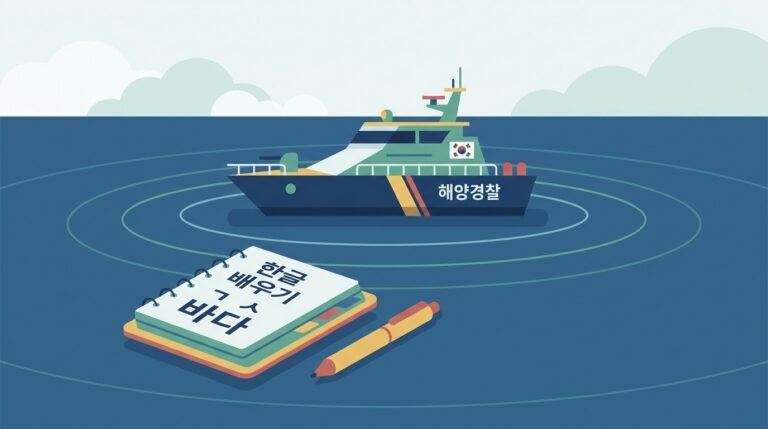
Navigating UNCLOS in Korean: Master 200-Mile EEZ Sovereign Rights Like an Elite Diplomat
Phase 1: Empathy (Story-Immersive Opening)
안녕하세요! 매일한글 에디터입니다. (Hello! This is your Daily Hangul editor.)
Have you ever watched an intense scene in a K-drama like The Whirlwind or a high-stakes geopolitical thriller where Korean diplomats and coast guard admirals sit across a tense bilateral conference table? Maps flash on digital monitors, tension mounts over maritime coordinates, and someone firmly states: “이곳은 기선으로부터 200해리 이내에 위치한 대한민국의 배타적 경제수역입니다.” (This lies within the Republic of Korea’s exclusive economic zone, located within 200 nautical miles from our baseline.)
If you have reached the C2 tier of Korean proficiency, you know that standard conversational Korean is no longer enough. The real challenge—one voiced by many of our advanced learners working in embassies, think tanks, and multinational maritime law firms in Seoul—is navigating the razor-thin distinction between public international law doctrine and authentic, authoritative Korean diplomatic registers.
Misinterpreting terms like “주권” (full sovereignty) versus “주권적 권리” (sovereign rights) or fumbling procedural terminology like “해양 경계 획정” (maritime boundary delimitation) can alter the entire legal posture of an argument. This master guide bridges technical UNCLOS (국제해양법협약) principles with nuanced, field-tested Korean phraseology so you can analyze, debate, and present maritime legal frameworks with absolute precision.
Phase 2: Core Expressions (핵심 표현 3선)
1. 배타적 경제수역 내에서 주권적 권리를 행사하다 (Baeta-jeok gyeongje-suyeok nae-eseo jugwon-jeok gwonrireul haengsahada)
- Pronunciation: [Bae-tah-jeok gyeong-jeh-soo-yeok nae-eh-seo joo-gwon-jeok gwon-ri-reul haeng-sah-hah-dah] (Think of ‘bae’ as in ‘bet’, and ‘jugwon’ rhythmically matching ‘zoo-gwon’)
- Meaning: Literally “To exercise sovereign rights within the Exclusive Economic Zone”; functionally asserts coastal state prerogative over natural exploration and exploitation.
- K-Culture Moment: Heard during press conferences held by the Ministry of Foreign Affairs (외교부) or in investigative journalism documentaries on national territorial waters.
- Editor’s Insight: Crucial C2 distinction: Never substitute “주권” (absolute sovereignty, which applies strictly to internal waters and territorial seas) for “주권적 권리” (functional, resource-specific sovereign rights under UNCLOS Article 56). Using “주권” here is a major legal solecism in Korean legal drafting.
- Situation Spectrum: Casual 🚫 | Semi-formal ⚠️ | Formal ✅
- 🤔 Think About It: How does your native language grammatically differentiate between absolute territorial possession and functional regulatory jurisdiction?
2. 기선으로부터 200해리 한계선을 획정하다 (Giseon-eurobuteo ibaek-haeri hangyeseoneul hoekjeonghada)
- Pronunciation: [Gee-seon-eu-ro-boo-teo ee-baek-hae-ri han-gyae-seon-eul hoek-jeong-hah-dah] (The ‘hoek’ sounds like ‘hwek’ said with crisp, decisive articulation)
- Meaning: Literally “To delimit the 200-nautical-mile limit line from the baseline.”
- K-Culture Moment: Frequently featured in geopolitical think-tank briefings and maritime border negotiation dramas where cartographic precision dictates national defense policy.
- Editor’s Insight: The verb “획정하다” (to delimit/demarcate legally) is strictly reserved for formal borders and treaty boundaries. Do not use everyday verbs like “나누다” (to divide) or “정하다” (to decide) when addressing state boundaries.
- Situation Spectrum: Casual 🚫 | Semi-formal ⚠️ | Formal ✅
- 🤔 Think About It: Why do legal Korean verbs often rely on Hanja roots (획정, 劃定) rather than native Korean verbs when establishing binding legal status?
3. 해양생물자원의 보존 및 환경 관할권을 행사하다 (Haeyangsaengmul jawon-ui bojon mit hwangyeong gwanhalgwoneul haengsahada)
- Pronunciation: [Hae-yang-saeng-mool jah-won-ui boh-jon meet hwan-gyeong gwan-hal-gwon-eul haeng-sah-hah-dah] (Pace ‘bojon mit’ evenly to project judicial authority)
- Meaning: “To exercise jurisdiction over the conservation of living marine resources and marine environmental protection.”
- K-Culture Moment: Invoked in news reports regarding illegal, unreported, and unregulated (IUU) fishing interdictions by the Korea Coast Guard (해양경찰청).
- Editor’s Insight: Notice the shift from “권리” (rights) to “관할권” (jurisdiction). Under UNCLOS, coastal states hold sovereign rights regarding resources, but jurisdiction (관할권) regarding artificial islands, scientific research, and environmental preservation.
- Situation Spectrum: Casual 🚫 | Semi-formal ⚠️ | Formal ✅
- 🤔 Think About It: In maritime law, how does Korean phrasing mirror the multilateral balance between coastal authority and navigation freedoms of third states?
Phase 3: Textbook Korean vs. Real Korean (교과서 한국어 vs. 진짜 한국어)
Situation 1: Explaining Coastal State Fisheries Regulation
- 📖 교과서 한국어: 우리나라 바다 200마일 안에서는 외국 배가 물고기를 마음대로 잡으면 안 됩니다. (Uri-nara bada ibaek-mail an-eseoneun oeguk baega mulgogireul maeumdaero jabeumyeon an doemnida.) – “Foreign ships cannot catch fish freely inside our country’s 200-mile sea.”
- 🗣️ 진짜 한국어 (C2 Diplomatic Register): 기선으로부터 200해리 배타적 경제수역 내 어로 행위는 연안국의 주권적 권리에 속하므로, 무허가 조업은 명백한 관할권 침해입니다. (Giseon-eurobuteo ibaek-haeri baeta-jeok gyeongje-suyeok nae eoro haengwineun yeonan-guk-ui jugwon-jeok gwonrie sok-hameuro, muheoga joeobeun myeongbaekhan gwanhalgwon chimhae-imnida.)
- 💡 왜 다를까? Textbook Korean uses terrestrial distance markers (“마일”) and plain verbs (“물고기를 잡다”). High-level legal Korean adopts nautical miles (“해리”), technical maritime economic terms (“어로 행위/조업”), and international doctrine (“관할권 침해”).
Situation 2: Addressing Overlapping Maritime Claims
- 📖 교과서 한국어: 바다가 겹치는 곳에서는 양쪽 나라가 상의해서 반으로 잘라야 합니다. (Badaga gyeopchineun gos-eseoneun yangjjok naraga sang-uihaeseo ban-euro jallaya hamnida.) – “Where seas overlap, both countries should talk and cut it in half.”
- 🗣️ 진짜 한국어 (C2 Diplomatic Register): 대향국 간 수역이 중첩될 경우, 형평한 해결을 달성하기 위해 국제법 규범에 입각한 경계 획정 협상을 추진해야 합니다. (Daehyang-guk gan suyeogi jungcheopdoel gyeong-u, hyeongpyeonghan haegyeoreul dalseonghagi wihae gukjebop gyubeome ipgakhan gyeonggye hoekjeong hyeopsangeul chujinhaeya hamnida.)
- 💡 왜 다를까? Diplomatic engagement avoids simplistic division terms (“반으로 자르다”) and frames the process under the UNCLOS Article 74/83 equitable principles standard (“형평한 해결”).
Phase 4: K-Culture Deep Dive & Non-Verbal Manners
4-1. Nunchi & Diplomatic Protocol
In Korean bilateral negotiations or administrative hearings concerning maritime boundaries, physical posture communicates sovereign gravity:
* Posture of Containment (정돈된 자세): Keep elbows lightly anchored close to the desk, hands clasped loosely in front without dramatic hand flourishes. Expansive gesturing can be perceived as theatrical or ungrounded in treaty-based negotiations.
* Measured Cadence (절제된 어조): High-register legal Korean requires steady, deliberate vocal delivery. Concluding sentences with nominalized assertive structures such as “~로 사료됩니다” (it is deemed that…) or “~임이 명백합니다” (it is unequivocal that…) projects intellectual firmness without emotional escalation.
* Eye Line Control: Maintain direct eye contact while delivering legal conclusions, softening slightly to document review when the opposing side responds to demonstrate careful consideration (nunchi).
4-2. The Cultural Reality of “Sam-myeon-i Bada” (삼면이 바다)
Korea defines itself geographically and culturally as a peninsular nation surrounded by three seas (삼면이 바다): the East Sea (동해), West Sea (서해), and South Sea (남해). Each body of water presents distinct legal friction points under UNCLOS:
* The West Sea (Yellow Sea): Characterized by narrow distances between opposing coastlines, straight baselines (직선기선), and persistent disputes over overlapping EEZs and provisional fishing zones.
* The East Sea: Profound biological depths and insular regime considerations under UNCLOS Article 121.
Understanding this context clarifies why maritime boundary terminology in Korea carries immense public resonance beyond mere academic interest.
Phase 5: Real-World Roleplay Scenario
Setting: Ministry of Foreign Affairs (외교부), Seoul. An inter-agency working group consultation between Chief Negotiator Min-woo (민우) and you, an International Law Consultant.
- 턴 1 (민우): 이번 한·일/한·중 간 중첩 수역에 대한 경계 획정 회담에서, 기선 200해리 기준 적용 방안을 어떻게 정리하셨습니까? (Ibeon Han-Il/Han-Jung gan jungcheop suyeoge daehan gyeonggye hoekjeong hoedam-eseo, giseon ibaek-haeri gijun jeok-yong bang-aneul eotteoke jeongrihasyeosseumnikka?)
🎭 [차분하면서도 예리하게 눈을 맞추며 서류를 펼친다]
“In this delimitation round regarding overlapping waters, how have you formulated our position regarding the 200-nautical-mile baseline criterion?” -
턴 2 (You): UNCLOS 제56조 및 74조에 의거하여, 200해리 EEZ 내 천연자원에 대한 주권적 권리를 확고히 하되, 중간선 원칙을 잠정적 출발점으로 삼아야 합니다. (UNCLOS je-osip-yuk-jo mit chil-sip-sa-joe uigeohayeo, ibaek-haeri EEZ nae cheon-yeonjawone daehan jugwon-jeok gwonrireul hwakgohi hade, jungganseon wonchikeul jamjeongjeok chulbaljeomeuro sam-aya hamnida.)
🎭 [서류의 조항을 펜 끝으로 짚으며 확신에 찬 어조로]
“Pursuant to UNCLOS Articles 56 and 74, we should assert sovereign rights over natural resources within the 200-nautical-mile EEZ while adopting the median line as a provisional starting point.” -
턴 3 (민우): 상대국이 대륙붕 연장 주장을 내세우며 200해리 원칙과 상충되는 논리를 펼칠 가능성은 없겠습니까? (Sangdaegugi daeryukbung yeonjang jujangeul naese-umyeo ibaek-haeri wonchikgwa sangchungdoeneun nonrireul pyeolchil ganeungseongeun eopgesseumnikka?)
🎭 [턱을 괴며 깊은 생각에 잠긴 듯 미간을 좁힌다]
“Is there no likelihood that the opposite state will rely on natural prolongation of the continental shelf, arguing positions that conflict with the 200-mile EEZ framework?” -
턴 4 (You): 국제사법재판소 판례에 따르면, 200해리 이내에서는 거리 기준이 자연적 연장론보다 우선하므로 우리 측 법리가 우세합니다. (Gukjesabeopjaepanso panryee ttareumyeon, ibaek-haeri inaeeseoneun geori gijuni jayeonjeok yeonjangronboda useonhameuro uri cheuk beopriga usehamnida.)
🎭 [절제된 미소와 함께 단호하게 고개를 끄덕인다]
“According to ICJ jurisprudence, within 200 nautical miles, the distance criterion supersedes natural prolongation, ensuring our legal doctrine remains superior.” -
턴 5 (민우): 그렇다면 해양환경 보존과 어로 자원에 대한 배타적 관할권 규정은 선언문에 명시하는 것이 좋겠군요. (Geureothamyeon haeyanghwangyeong bojongwa eoro jawone daehan baeta-jeok gwanhalgwon gyujeongeun seoneonmune myeongsihaneun geosi joketgunyo.)
🎭 [만족스러운 표정으로 메모를 적어 내려간다]
“Then it would be prudent to explicitly specify our exclusive jurisdiction over marine environmental conservation and living resources in the draft declaration.” -
턴 6 (You): 네, 특히 해양생태계 보호 및 과학적 조사 활동에 관한 연안국의 승인 권한을 필수 요건으로 포함해야 합니다. (Ne, teukhi haeyangsaengtae-gye boho mit gwahakjeok josa hwaldonge gwanhan yeonan-guk-ui seung-in gwonhaneul pilsu yogeoneuro pohamhaeya hamnida.)
🎭 [정중한 손짓으로 합의안 초안을 건네며]
“Precisely; coastal state authorization over marine scientific research and ecosystem conservation must be incorporated as a prerequisite.” -
턴 7 (민우): 훌륭합니다. 이 초안을 바탕으로 장관 보고 브리핑을 준비하도록 하겠습니다. (Hullyunghamnida. I cho-aneul batangeuro janggwan bogo beuriping-eul junbihadorok hagesseumnida.)
🎭 [안도하는 숨을 쉬며 서류철을 덮는다]
“Excellent. We will base our ministerial briefing on this exact legal draft.” -
턴 8 (You): 외교 문서의 용어 통일성을 기하기 위해 한글 및 영문 정본 대조표도 함께 첨부하겠습니다. (Oegyo munseo-ui yong-eo tong-ilseongeul gihagi wihae Hangeul mit yeongmun jeongbon daejopyodo hamkke cheombuhagesseumnida.)
🎭 [자신감 넘치는 목소리로 마무리한다]
“I will append a comparative table of authentic Korean and English texts to guarantee institutional terminological consistency.”
🔀 Interactive Decision Point
During Turn 4, the negotiator asks how to counter an aggressive overlapping claim in the Yellow Sea. How do you respond?
- Option A: “기선으로부터의 200해리 권원을 재확인하고, 형평의 원칙에 기반한 등거리 중간선 획정을 일관되게 제안해야 합니다.” (Reaffirm the 200-mile entitlement from baselines and consistently propose an equitable median-line delimitation.)
- Option B: “바다는 공유지이므로 공동 어로 구역을 설정하여 주권 논쟁을 전면 보류합시다.” (The ocean is a commons; let us designate a joint fishing area and shelve sovereignty disputes indefinitely.)
- Option C: “상대국 선박의 나포를 즉각 명령하고 무력으로 배타적 수역임을 선포해야 합니다.” (Order immediate interdiction of opposing vessels and declare the exclusive zone through force.)
Detailed Feedback:
* Choice A (Best): Stellar choice. Cements UNCLOS jurisprudence, protects national sovereign rights, and preserves diplomatic room for negotiated delimitation under international law.
* Choice B (Risk): Conceding legal entitlement prematurely without securing delimitation baselines risks forfeiting coastal state rights under customary international law.
* Choice C (Bad): Escalating to unilateral military enforcement violates UNCLOS Article 301 and peaceful dispute resolution principles, sparking immediate regional crisis.
Phase 6: 10-Second Emotion Shadowing Drill
Master the diplomatic cadence using pacing breaks (/) and emotional tone anchors:
[⚖️ 단호하고 명확하게 - Resolute & Authoritative]
기선으로부터 200해리에 이르는 수역에서, / 연안국은 / 천연자원의 탐사 및 개발에 관한 / 주권적 권리를 가집니다.
(Giseon-eurobuteo ibaek-haerie ireuneun suyeog-eseo, / yeonan-gugeun / cheon-yeonjawon-ui tamsa mit gaebare gwanhan / jugwon-jeok gwonrireul gajimnida.)-
[🤝 신중하고 협조적으로 - Deliberate & Diplomatic]
중첩 수역의 경계 획정은 / 국제법의 기본 원칙에 입각하여 / 형평한 결과를 도출하는 방향으로 / 진행되어야 합니다.
(Jungcheop suyeog-ui gyeonggye hoekjeongeun / gukjebop-ui gibon wonchike ipgak-hayeo / hyeongpyeonghan gyeolgwaleul dochulhaneun banghyang-euro / jinghaengdoe-eoya hamnida.) -
[🛡️ 엄중하게 경고하며 - Stern & Protective]
연안국의 허가 없는 / 배타적 경제수역 내 자원 채굴 및 환경 침해 행위는 / 용인될 수 없습니다.
(Yeonan-guk-ui heoga eomneun / baeta-jeok gyeongje-suyeok nae jawon chaegul mit hwangyeong chimhae haengwineun / yong-indoel su eopseumnida.)
Phase 7: K-Culture Mini Dictionary
-
영해 (Yeonghae – Territorial Sea):
The 12-nautical-mile maritime belt adjacent to the baseline where coastal states hold absolute sovereignty (주권), subject only to the right of innocent passage (무해통항권). -
배타적 경제수역 (Baeta-jeok Gyeongje-suyeok – Exclusive Economic Zone / EEZ):
Extends up to 200 nautical miles from baselines. Unlike the territorial sea, the state does not possess complete sovereignty here, but rather specialized “sovereign rights” (주권적 권리) over natural exploration/exploitation and “jurisdiction” (관할권) over marine conservation. -
중간선 원칙 (Jungganseon Wonchik – Median Line Principle):
A delimitation methodology where every point on the boundary line is equidistant from the nearest points of the baselines of the respective coastal states. Frequently advocated by Korea in narrow bilateral straits. -
해양경찰청 (Haeyanggyeongchalcheong – Korea Coast Guard / KCG):
The primary enforcement agency ensuring maritime security, fisheries enforcement, and sovereign jurisdictional policing within Korea’s contiguous zones and EEZ.
Phase 8: Traveler & Field Researcher Survival Kit
If you are visiting legal institutes, port authorities, or oceanography conferences in Busan or Songdo:
- TOP 1: 해당 수역은 현행법상 배타적 경제수역으로 분류됩니까? (Haedang suyeogeun hyeonhaengbeopsang baeta-jeok gyeongje-suyeog-euro bullyudoemnikka?) – “Is this body of water classified as an Exclusive Economic Zone under current statutory law?”
- TOP 2: 해양 조사선 입항을 위한 관할 관청의 허가 절차가 어떻게 됩니까? (Haeyang josaseon iphang-eul wihan gwanhal gwancheong-ui heoga jeolchaga eotteoke doemnikka?) – “What is the administrative permit procedure from the authority for marine research vessel docking?”
- TOP 3: 어로 한계선 및 작전 구역에 관한 최신 항행 경보를 열람할 수 있을까요? (Eoro hangyeseon mit jakjeon guyeoge gwanhan choesin hanghaeng gyeongboreul yeollamhal su isseulkkayo?) – “May I review the latest navigational warnings concerning the fishing boundary line and operational zones?”
Editor’s Travel Note:
Heading to maritime field sites in Busan or Incheon? Download the 국립해양조사원 바다누리 해양정보 서비스 앱 to examine real-time Korean nautical charts, oceanographic currents, and designated administrative baselines. When taking transit to naval or maritime facilities, note that photography around designated defense ports (군사보호구역) is strictly regulated under national security law.
Phase 9: “One Step Deeper” (한 발 더 깊이)
In international relations, language is not just a medium of description; it is an instrument of sovereign entitlement. In Korean geopolitical discourse, maritime boundary debates are infused with historical memory and institutional diligence. Because the Korean peninsula is bordered by major continental and island states, asserting rights under UNCLOS is seen not as territorial expansionism, but as legal defense.
By distinguishing between sovereignty (주권) and sovereign rights (주권적 권리), Korean jurisprudence demonstrates strict adherence to global multilateral norms while safeguarding economic livelihoods and deep-sea energy resources. When you speak this register fluently, you signal respect for both international rule of law and Korea’s maritime identity.
💬 Your Turn: How does your home country balance resource exploitation within its EEZ against obligations for international marine environmental protection? Share your analysis in the comments below using the Korean term 주권적 권리!
Phase 10: FAQ & Common Mistakes
Q: Does a coastal state have absolute sovereignty over its EEZ in Korean law?
A: No. In Korean legal doctrine, an EEZ is not national territory (영토/영해). The coastal state holds functional “주권적 권리” (sovereign rights) for resource exploration and economic exploitation, alongside “관할권” (jurisdiction) for scientific research and environmental protection, while foreign vessels maintain freedom of navigation (항행의 자유).
Q: What is the correct term for “demarcating” or “delimiting” maritime borders?
A: Always use “경계 획정” (Gyeonggye hoekjeong – maritime boundary delimitation). Avoid casual expressions like “경계 나누기” or “국경 정하기” in academic and diplomatic discourse.
Q: How do Korean legal experts refer to the starting line from which the 200 miles are measured?
A: It is called “기선” (Giseon – baseline), which is divided into “통상기선” (normal baseline, following the low-water line) and “직선기선” (straight baseline, connecting appropriate coastal fringe points).
🚨 흔한 실수 (Common Mistakes) Warning Board
- Mistake: Using “영해” (Territorial Sea) when referring to areas 150 nautical miles out.
Correct Action: Use 배타적 경제수역 (EEZ). “영해” ceases at 12 nautical miles from the baseline. - Mistake: Confusing “주권” (sovereignty) with “주권적 권리” (sovereign rights).
Correct Action: Strictly use 주권적 권리 when referencing fisheries, minerals, and continental shelf resources in the EEZ. - Mistake: Using the land distance unit “킬로미터” (km) or generic “마일” (mile).
Correct Action: Maritime legal discourse universally demands 해리 (nautical miles; 1해리 = 1,852m).
Phase 11: Action Missions
- Bronze Mission (Solo Drill): Practice reading the Phase 6 Shadowing Drill aloud 3 times, focusing on clear Hanja-root enunciation for “주권적 권리” and “경계 획정”.
- Silver Mission (Think Tank Post): Draft a 3-sentence summary in Korean analyzing the distinction between UNCLOS Article 56 sovereign rights and environmental jurisdiction, and share it on an academic or language forum.
- Gold Mission (Moot Simulation): Deliver a 1-minute simulated diplomatic statement presenting a coastal state’s legal position on overlapping 200-nautical-mile EEZs without using colloquial Korean words.
- 🎮 K-Culture Mission: Watch an episode of a Korean legal or political drama dealing with border security or ministry negotiations, and transcribe every time terms like “관할권”, “영해”, or “배타적 경제수역” are spoken!
Phase 12: Interactive Quiz Challenge
1. Situation Judgment
A foreign-flagged scientific research vessel begins extracting seabed core samples 150 nautical miles off Korea’s coast without prior authorization. What is the correct legal assessment in Korean?
* (A) 공해 자유의 원칙에 따라 연안국이 제재할 수 없다.
* (B) 200해리 배타적 경제수역 내 연안국의 주권적 권리 및 관할권 침해에 해당한다.
* (C) 영해 침범 행위이므로 즉각적인 군사적 나포 조치만 가능하다.
2. Fill-in-the-Blank
국제해양법협약에 따르면, 연안국은 영해 기선으로부터 최대 ( )해리까지 배타적 경제수역을 선포할 수 있으며, 해당 수역의 생물 및 무생물 자원에 대해 ( ) 권리를 가집니다.
3. True or False
연안국은 자국의 배타적 경제수역(EEZ) 상공에 대해 영공(Airspace)과 동일한 배타적 주권을 누린다. (True / False)
Click to reveal answers & explanations
-
Answer: (B)
Explanation: 150 nautical miles falls within the 200-mile EEZ. While it is not “영해 침범” (territorial sea intrusion), marine scientific research and mineral exploration without coastal state consent infringe upon the state’s sovereign rights and exclusive jurisdiction. -
Answer: 200 / 주권적
Explanation: 기선으로부터 최대 200해리이며, 자원에 대해서는 주권(sovereignty)이 아닌 주권적(sovereign) 권리를 갖습니다. -
Answer: False
Explanation: The airspace above an EEZ maintains high seas freedom of overflight (상공 비행의 자유) for all nations under UNCLOS. Coastal state airspace sovereignty is restricted solely to land territory and the 12-nautical-mile territorial sea.







