

Speak Like a Seoul Executive: Mastering Corporate Venturing and Risk-Free Pivots in Korean
Phase 1: Empathy (Opening Story)
안녕하세요! 매일한글 에디터입니다.
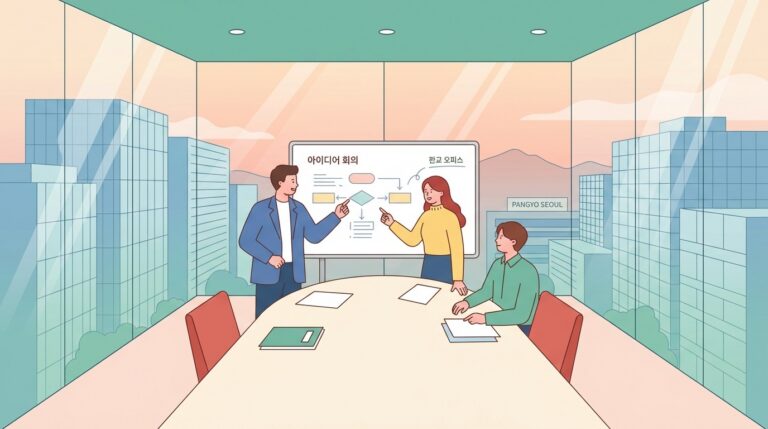
Imagine stepping into a sleek glass boardroom in Pangyo Techno Valley—often called the Silicon Valley of South Korea. You are pitching an ambitious internal startup concept, something as groundbreaking as the ventures featured in K-Dramas like Start-Up or Search: WWW. Your team is thrilled, but a heavy tension lingers in the room. In South Korea’s traditionally risk-averse corporate landscape, employees often ask themselves the ultimate question: “What happens if this venture fails? Will I be relegated to an obscure regional branch, or gently pressured to resign?”
To unleash true innovation, forward-thinking Korean conglomerates (대기업) and tech giants now offer transformative conditions: independent budget authority and a guaranteed return to one’s original team without penalty. However, expressing these delicate corporate arrangements requires sophisticated C1-level business Korean. Many advanced learners stumble here, relying on awkward direct translations like “실패해도 괜찮아요” which can sound naive in a boardroom. Today, we will master the polished, high-stakes executive phrasing that commands respect, builds psychological safety, and elevates your professional communication to native fluency.
Phase 2: Core Expressions Deep Dive
1. 독립된 예산 전결권을 부여하다 (Dongnipdoen yesan jeongyeolgwon-eul buyeohada)
- Pronunciation: [Dong-nip-doen ye-san jeon-gyeol-gwon-eul bu-yeo-ha-da] (Pronounce ‘jeon-gyeol’ with a crisp ‘g’ like in ‘gallop’, rolling smoothly into ‘gwon’)
- Meaning: To grant autonomous/discretionary budget approval authority (Direct: To bestow independent budget self-decision rights).
- K-Culture Moment: Heard in office dramas like Misaeng or Agency, where a visionary director cuts through red tape so a rogue project team can bypass standard multi-step corporate approvals.
- Editor’s Insight: ‘전결권’ (Jeongyeolgwon) comes from Sino-Korean roots: 專 (sole/exclusive) and 決 (decide). It means you do not need executive sign-off for day-to-day expenditures. Using this term signals that you understand corporate governance at an executive level.
- Situation Spectrum: Casual 🚫 | Semi-formal ⚠️ | Formal ✅
- 🤔 Think About It: In hierarchical corporate cultures, why is relinquishing financial approval rights considered the ultimate demonstration of executive trust?
2. 불이익 없는 원대 복귀권을 보장하다 (Buri-ik eomneun wondae bokgwigwon-eul bojanghada)
- Pronunciation: [Bu-ri-ik eom-neun won-dae bok-gwi-gwon-eul bo-jang-ha-da] (Note the liaison: ‘eomneun’ sounds like ‘um-neun’)
- Meaning: To guarantee penalty-free return rights to one’s original post (Direct: To guarantee return to original base without disadvantages).
- K-Culture Moment: Reminiscent of scenes where an intrapreneur hesitates to leave a comfortable corporate ladder until the CEO offers an ironclad safety net in writing.
- Editor’s Insight: ‘원대 복귀’ (Wondae bokgwi) originally stems from military terminology referring to returning to one’s mother unit. In modern business, it represents a gold-standard safety net against Korea’s deep-seated fear of career derailment.
- Situation Spectrum: Casual 🚫 | Semi-formal ⚠️ | Formal ✅
- 🤔 Think About It: How does institutionalizing a “right to return” challenge the traditional Korean stigma around failure?
3. 분사 의사결정을 신속하게 매듭짓다 (Bunsa uisagyeoljeong-eul sinsokhage maedeupjitta)
- Pronunciation: [Bun-sa ui-sa-gyeol-jeong-eul sin-sok-ha-ge mae-deup-jit-ta] (Pronounce ‘maedeupjitta’ with a tense, sharp ‘tt’ sound at the end)
- Meaning: To promptly finalize spin-off decisions (Direct: To tie the knot on spin-off decision-making quickly).
- K-Culture Moment: Found in financial thrillers like Reborn Rich, when board members deliberate whether to keep a thriving business unit in-house or spin it off into an independent entity.
- Editor’s Insight: ‘매듭짓다’ (to tie a knot) adds an idiomatic elegance to formal decision-making phrases, expressing closure and resolve rather than merely “deciding” (결정하다).
- Situation Spectrum: Casual ⚠️ | Semi-formal ✅ | Formal ✅
- 🤔 Think About It: Why do Korean executives favor visceral idioms like “tying a knot” when announcing monumental strategic pivots?
Phase 3: Textbook Korean vs. Real Korean
Situation 1: Reassuring a team member that taking startup risks will not hurt their corporate track record.
- 📖 교과서 한국어: 실패해도 회사에서 당신을 해고하지 않고 원래 자리로 돌려보낼 것입니다. (Silpaehaedo hoesa-eseo dangsin-eul haegohaji anko wonrae jariro dollyeobonael geosimnida. – Even if you fail, the company will not fire you and will send you back to your original seat.)
- 🗣️ 진짜 한국어: 실패 시 불이익 없는 원대 복귀권을 보장했으니, 커리어 걱정 말고 공격적으로 밀어붙이세요. (Silpae si buri-ik eomneun wondae bokgwigwon-eul bojanghaesseuni, keorieo geokjeong malgo gonggyeokjeog-euro mireobut-iseyo. – We guaranteed penalty-free return rights in case of failure, so push forward aggressively without worrying about your career.)
- 💡 왜 다를까?: Native Korean professionals rarely utter blunt words like “해고” (firing) in polite corporate strategy meetings. Instead, they use systemic assurances like “원대 복귀권 보장” paired with dynamic idioms like “공격적으로 밀어붙이다” (push aggressively).
Situation 2: Asking leadership for discretionary budget authority without bureaucratic friction.
- 📖 교과서 한국어: 우리가 돈을 자유롭게 쓸 수 있는 권리를 주시면 좋겠습니다. (Uriga don-eul jayuropge sseul su inneun gwonrireul jusimyeon jokesseumnida. – It would be good if you give us the right to spend money freely.)
- 🗣️ 진짜 한국어: 빠른 피벗과 시장 검증을 위해, 팀에 독립된 예산 전결권을 실어주십시오. (Ppareun pibeot-gwa sijang geomjeung-eul wihae, time dongnipdoen yesan jeongyeolgwon-eul sireojusipsio. – For fast pivoting and market validation, please empower our team with independent budget approval authority.)
- 💡 왜 다를까?: Asking to “spend money freely” sounds undisciplined. Using high-register terminology like “예산 전결권을 싣다” (to empower with discretionary budget authority) frames the request as a strategic lever for velocity and validation.
Phase 4: K-Culture Deep Dive & Non-verbal Manners
4-1. 눈치 (Nunchi) & Boardroom Non-verbal Posture
When negotiating corporate venturing conditions in a Korean boardroom, vocal tone and posture speak louder than your slides:
* The Two-Handed Pitch: When delivering printed venture prospectuses or tablet displays to an executive, hold the device with both hands, elbows close to your torso. It balances startup agility with traditional deference.
* Subtle Nod Alignment (고개 끄덕임): When a senior director grants budget autonomy, do not celebrate loudly. Offer a controlled 15-degree bow of the head with steady eye contact, saying: “신뢰해 주신 만큼 성과로 입증하겠습니다” (Sinroehae jusin mankeum seongkwaro ipjeunghagesseumnida – I will prove our worth with results, matching your trust).
4-2. Cultural Code: The Pangyo Intrapreneurship Revolution
Historically, Korean conglomerates operated on 연공서열 (seniority-based hierarchy). Leaving your designated track was perilous. However, modern hubs like Pangyo Techno Valley and initiative programs such as Samsung C-Lab have normalized “사내벤처” (in-house ventures). To attract millennial and Gen-Z top performers who dream of founding unicorn startups, modern Korean enterprises realized they must guarantee psychological safety (심리적 안전감). Offering a “penalty-free return ticket” is now a premier branding tool for elite Korean employers.
Phase 5: Real Roleplay Scenario
Setting: Conference Room A at a prominent IT enterprise in Pangyo.
Characters:
* Director Park (박 상무): A pragmatic, experienced corporate executive overseeing business incubation.
* Team Lead Min (민 팀장): An ambitious intrapreneur leading a newly selected AI-commerce incubator team.
— Dialogue —
- Director Park: 🎭 [안경을 고쳐 쓰며 서류를 검토한다] 이번 신사업 아이템, 시장 반응성은 검증되었지만 리스크가 꽤 큽니다. (Ibeon sinsaeop aitem, sijang baneungseong-eun geomjeungdoeeotjiman riseukeuga kkwae keumnida. / This new business concept shows validated market response, but the risk remains considerable.)
- Team Lead Min: 🎭 [단호하면서도 차분한 어조로] 네, 상무님. 다만 빠른 피벗을 통한 가설 검증이 성패를 좌우합니다. (Ne, sangmunim. Daman ppareun pibeot-eul tonghan gaseol geomjeung-i seongpaereul jwauhamnida. / Yes, Director. However, hypothesis validation through rapid pivoting will determine our success or failure.)
- Director Park: 🎭 [고개를 끄덕이며 찻잔을 내려놓는다] 좋습니다. 선발된 팀에는 1년간 독립된 예산 전결권을 부여했어요. (Jotseumnida. Seonbaldoen tim-eneun ilnyeongan dongnipdoen yesan jeongyeolgwon-eul buyeohaesseoyo. / Very well. We have granted selected teams one year of independent budget approval authority.)
- Team Lead Min: 🎭 [두 손을 모으고 경청하며] 결재 라인 단축 덕분에 기민하게 움직일 수 있겠습니다. 감사드립니다. (Gyeoljae rain danchuk deokbune gimin-hage umjigil su itgesseumnida. Gamsadeurimnida. / Thanks to shortening the approval chain, we will be able to move with agility. Thank you.)
- Director Park: 🎭 [미소를 띠며 진지하게 덧붙인다] 그리고 실패 시 불이익 없는 원대 복귀권도 계약서에 명시했습니다. (Geurigo silpae si buri-ik eomneun wondae bokgwigwondo gyeyakseoe myeongsihaesseumnida. / Furthermore, penalty-free return rights in the event of failure are explicitly stipulated in the contract.)
- Team Lead Min: 🎭 [안도하는 표정을 지으며 살짝 숙인다] 팀원들의 심리적 부담이 말끔히 해소되었습니다. (Timwondeurui simrijeok budam-i malkkeumhi haesodoeeotseumnida. / The team’s psychological burden has been completely cleared.)
- Director Park: 🎭 [단단한 눈빛으로 시선을 맞춘다] 1년 뒤 지표에 따라 분사 의사결정을 내릴 테니 전력투구해 주세요. (Ilnyeon dwi jipyoe ttara bunsa uisagyeoljeong-eul naeril teni jeonryeoktuguhae juseyo. / In one year, we will decide on a spin-off based on your metrics, so give it your absolute all.)
- Team Lead Min: 🎭 [자신감 넘치는 목소리로] 네, 기대에 부응하여 반드시 가시적인 성과를 내겠습니다! (Ne, gidae-e bueunghayeo bandeusi gasijeogin seongkwareul naegesseumnida! / Understood, I will live up to expectations and deliver tangible results!)
🔀 Interactive Decision Point
If Director Park suddenly asks how you plan to manage budget accountability, how would you respond?
* Option A: “예산 전결권이 있으니 저희 마음대로 효율적으로 써보겠습니다.” (Since we have budget autonomy, we will spend it as we please efficiently.)
* Option B: “매월 지출 내역과 KPI 달성 추이를 투명하게 공유하여 책임 경영을 실천하겠습니다.” (We will practice accountable management by transparently sharing monthly expenditures and KPI progress.)
* Option C: “실패해도 복귀할 수 있으니 일단 최대한 많은 실험에 예산을 쏟아붓겠습니다.” (Since we can return anyway if we fail, we will pour the entire budget into as many experiments as possible.)
- Feedback:
- Option A (Risk): “저희 마음대로” (as we please) sounds careless and erodes professional credibility in a corporate setting.
- Option B (Best): Perfect C1 executive response! It balances the autonomy granted with “책임 경영” (responsible/accountable governance).
- Option C (Bad): Exploiting return rights carelessly signals a lack of ownership and disrespects company capital.
Phase 6: 10-Second Emotion Shadowing Drill
Practice these natural rhythm pauses (/) with designated emotional targets:
[👔 자신감 있고 명확하게 / Confidently and decisively]
선발된 팀에는 / 1년간 독립된 / 예산 전결권을 부여했어요.
(Seonbaldoen tim-eneun / ilnyeongan dongnipdoen / yesan jeongyeolgwon-eul buyeohaesseoyo.)-
[🤝 든든하고 신뢰감을 주며 / Reassuring and supportive]
실패 시 불이익 없는 / 원대 복귀권을 보장하니 / 과감하게 도전하십시오.
(Silpae si buri-ik eomneun / wondae bokgwigwon-eul bojanghani / gwagamhage dojeonhasipsio.) -
[🎯 결단력 있고 진중하게 / Resolute and focused]
1년 후 지표에 기반하여 / 분사 의사결정을 / 신속히 매듭짓겠습니다.
(Ilnyeon hu jipyoe gibanhayeo / bunsa uisagyeoljeong-eul / sinsokhi maedeupjitgesseumnida.)
Phase 7: K-Culture Mini Dictionary
- 사내벤처 (Sanaebencheo) | Corporate In-house Venture
- Meaning: A specialized, semi-independent project team inside an established enterprise aimed at creating breakthrough products.
- 전결권 (Jeongyeolgwon) | Discretionary Approval Authority
- Meaning: The official corporate right to approve actions and expenditures without seeking superior counter-signatures.
- 원대 복귀 (Wondae Bokgwi) | Return to Original Post
- Meaning: Reinstatement into one’s original team or equivalent status if an overseas assignment or risky project concludes.
- 분사 (Bunsa / Spin-off) | Corporate Spin-off
- Meaning: Legally separating a successful internal unit into an independent corporate entity, often rewarding founders with equity.
Phase 8: Traveler & Professional Survival Kit
TOP 3 Executive Survival Phrases
- “전결 규정이 어떻게 됩니까?” (Jeongyeol gyujeong-i eotteoke doemnikka?)
- Meaning: “What are the discretionary approval regulations?”
- Pro Tip: Ask this early when joining a Korean joint venture or branch office to map approval hierarchies.
- “원대 복귀 조건을 계약서에 명문화해 주십시오.” (Wondae bokgwi jogeon-eul gyeyakseoe myeongmunhwahae jusipsio.)
- Meaning: “Please state the terms of return to my original post explicitly in the contract.”
- Pro Tip: Use the verb ‘명문화하다’ (to put in writing) to sound sophisticated and legally astute.
- “피벗 시점과 기준을 사전 합의하고 싶습니다.” (Pibeot sijeom-gwa gijun-eul sajeon hap-uihago sipseumnida.)
- Meaning: “I would like to agree in advance on the criteria and timeline for pivoting.”
- Pro Tip: Demonstrates high foresight during project kickoff meetings.
Editor’s Travel & Professional Note
If you are attending corporate meetings in Seoul’s major business hubs like Gangnam Teheran Valley or Pangyo, ditch international mapping tools. Navigate like an insider by utilizing the Naver Map Application to find exact office tower gate numbers. Furthermore, when taking partners out to dinner, avoid splitting checks on the spot; senior counterparts prefer settling corporate meals using dedicated corporate expense cards (법인카드, commonly abbreviated as ‘법카’).
Phase 9: A Step Deeper (Reflection)
In many Western startup ecosystems, failure is regarded as a standalone badge of honor. In South Korea, however, collectivist corporate traditions historically penalized derailment, making failure a communal anxiety. The introduction of institutional mechanisms like 원대 복귀권 (guaranteed return rights) represents a monumental cultural compromise: it honors the Korean employee’s need for social stability while infusing the enterprise with Silicon Valley risk tolerance.
💬 Your Turn: Does your native corporate culture provide institutional safety nets for internal innovation, or is entrepreneurial risk borne entirely by the individual? Share your thoughts below in Korean!
Phase 10: FAQ & Common Mistakes
Q: Can I use the phrase ‘원대 복귀’ in casual, non-business conversations?
A: Yes, native speakers frequently use it with playful irony! For instance, after finishing an exciting vacation or temporary project, you can jokingly say to friends: “내일부터 다시 일상으로 원대 복귀합니다” (Returning to base/daily reality starting tomorrow).
Q: What is the exact difference between ‘분사’ (Bunsa) and ‘창업’ (Changeop)?
A: ‘창업’ is founding a startup from scratch with independent capital. ‘분사’ (Spin-off) refers specifically to an existing business division separating from a parent corporation while maintaining formal organizational or financial ties.
Q: Is ‘전결권’ limited only to money and budget?
A: While it is most frequently used with budget (예산 전결권), it also applies to personnel decisions (인사 전결권) and operational decisions (업무 전결권).
🚨 Common Mistakes Warning Board
- ❌ Mistake 1: Saying “망하면 다시 원래 팀으로 갈게요” (If I ruin it, I will go back to the original team).
- 👉 Correct Action: Use formal terminology: “실패 시 원대 복귀권을 행사하겠습니다” (In case of project termination, I will exercise my return rights).
- ❌ Mistake 2: Saying “제 마음대로 돈을 쓸게요” (I’ll spend money as I wish).
- 👉 Correct Action: State: “독립된 예산 집행 권한을 위임받았습니다” (I have been delegated independent budget execution authority).
- ❌ Mistake 3: Confusing ‘피벗’ (Pivot – strategic direction change) with complete liquidation (‘청산’).
- 👉 Correct Action: Keep ‘피벗하다’ as an active strategic maneuver to protect capital and discover product-market fit.
Phase 11: Action Missions
- 🥉 Bronze Mission: Record yourself saying the Phase 6 shadowing sentences, emphasizing pauses at each
/mark. - 🥈 Silver Mission: Write a mock business email to an executive requesting “독립된 예산 전결권” and post it on your study feed.
- 🥇 Gold Mission: In your next Korean language exchange or business dialogue, roleplay a spin-off pitch defending your venture’s safety net.
- 🎮 K-Culture Mission: Watch an episode of a Korean business drama (such as Start-Up or Misaeng) and spot when junior managers negotiate decision-making authority with senior executives!
Phase 12: Interactive Quiz Challenge
1. Situation Judgment Quiz
Which phrase is most appropriate when requesting full autonomous decision-making power from a corporate board?
* (A) “예산 쓰는 법을 신경 쓰지 마세요.”
* (B) “신속한 가설 검증을 위해 독립된 예산 전결권을 부여해 주십시오.”
* (C) “실패해도 제 책임이 아니라는 각서를 써 주세요.”
Click here for Answer & Explanation
Correct Answer: (B)
Explanation: (B) uses sophisticated executive terminology (“독립된 예산 전결권”) while articulating clear strategic intent (“신속한 가설 검증”). (A) sounds insolent, and (C) evades executive accountability.
2. Fill-in-the-Blank
Fill in the missing words for the sentence: “선발된 팀에는 1년간 독립된 예산 ______과 실패 시 불이익 없는 원대 ______을 부여했어요.”
Click here for Answer & Explanation
Correct Answer: 전결권 / 복귀권
Explanation: Together, ‘예산 전결권’ (budget autonomy) and ‘원대 복귀권’ (penalty-free return rights) form the core twin pillars of modern Korean corporate incubation.
3. Cultural True or False
True or False: In modern Korean corporate ventures, requesting a written guarantee of return rights (원대 복귀권) is viewed as an insult that shows a lack of confidence in one’s venture.
Click here for Answer & Explanation
Correct Answer: False
Explanation: On the contrary! In cutting-edge Korean corporate venturing programs (like Samsung C-Lab or Naver D2), formalized return rights are standard contractual clauses designed specifically to provide the psychological safety required for radical innovation.







