

Handling Rental Car Accidents in Korea: How Zero-Deductible Insurance Saved My Trip
Phase 1: Empathy (스토리 몰입형 오프닝)
안녕하세요! 매일한글 에디터입니다.
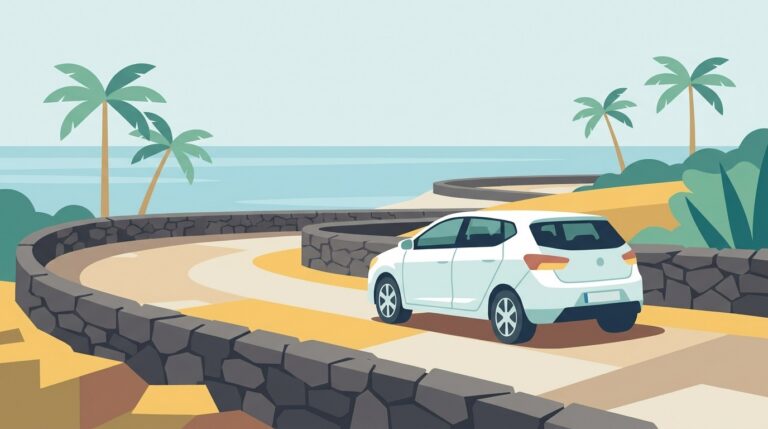
Picture this: You are cruising along the breathtaking coastal highway of Jeju Island, breeze blowing in your hair, listening to your favorite K-Indie playlist. You pull into a scenic cafe parking lot bordered by traditional Jeju black basalt stone walls (doldam). As you reverse into a snug spot, crunch. Your heart drops into your stomach. You get out and see a jagged scratch on the rear bumper. In that split second, dread kicks in: How do I call car insurance in Korean? Am I going to be slapped with thousands of dollars for repairs and daily rental downtime?
If you have ever felt your throat tighten at the thought of dealing with an emergency abroad, you are definitely not alone. Many of our international students tell us that driving in Korea feels exhilarating until unexpected bumps happen. But here is the secret that seasoned travelers know: if you registered for 완전 자차 (Zero-Deductible Full Coverage), you can handle the entire situation smoothly without paying a single won for repairs (수리비) or lost rental income (휴차 보상료). Today, we will equip you with the essential, street-smart phrases to communicate clearly with insurance dispatchers and rental car agents, turning a potential disaster into a minor travel anecdote.
Phase 2: 핵심 표현 3선 심층 분석
1. 완전 자차 보험에 가입해 두었어요 (한글)
- Pronunciation: [Wanjeon jacha boheom-e ga-ip-hae du-eoss-eo-yo] (Sounds like: wahn-jeon jah-chah bo-hum-eh gah-eep-hae doo-uss-aw-yo)
- Meaning: Literal: “I have subscribed to complete own-car insurance.” | Actual: “I registered for zero-deductible full collision coverage, so I have no out-of-pocket costs.”
- K-Culture Moment: Seen frequently in travel vlog reality shows like Twogether or variety programs when members confirm their rental car contracts before starting a road trip.
- Editor’s Insight: 자차 (jacha) is short for 자기차량손해 (own-vehicle damage coverage). Adding 완전 (wanjeon = complete/full) signals that your deductible (면책금) and loss-of-use fee (휴차료) are reduced to zero.
- Situation Spectrum: Casual: ⚠️ (drop 요) | Semi-formal: ✅ | Formal: ✅ (가입해 두었습니다)
- 🤔 Think About It: In many Western countries, car insurance is modular. In Korea, rental agencies bundle everything under recognizable tiers (일반 자차 vs. 완전 자차 / 슈퍼 자차). Why do you think Korean services prefer all-inclusive package terms?
2. 경미한 접촉 사고가 나서 출동 요청합니다 (한글)
- Pronunciation: [Gyeong-mi-han jeop-chok sa-go-ga na-seo chul-dong yo-cheong-ham-ni-da] (Sounds like: gyung-mee-hahn jup-choke sah-go-gah nah-saw chool-dong yo-chung-hahm-nee-dah)
- Meaning: Literal: “A minor contact accident happened, so I request mobilization.” | Actual: “I had a minor fender bender, and I need roadside dispatch on-site.”
- K-Culture Moment: A staple line in K-Dramas where a flustered protagonist calls the hotline immediately after scraping a parked luxury sedan.
- Editor’s Insight: 접촉 사고 (jeopchok sago) refers specifically to minor physical scrapes or bumps between vehicles or stationary obstacles, distinct from major collisions (추돌 사고 or 충돌 사고). Calling for 출동 (chuldong = dispatch) gets an agent sent directly to your GPS coordinates.
- Situation Spectrum: Casual: 🚫 | Semi-formal: ⚠️ | Formal: ✅
- 🤔 Think About It: Korean motorists rarely resolve minor scrapes purely through cash on the spot without consulting dispatch agents. How does immediate roadside mediation reflect Korean views on institutional safety?
3. 면책금이나 휴차 보상료가 발생하나요? (한글)
- Pronunciation: [Myeon-chaek-geum-i-na hyu-cha bo-sang-ryo-ga bal-saeng-ha-na-yo?] (Sounds like: myun-check-geum-ee-nah hyoo-chah bo-sahng-ryo-gah bahl-seng-hah-nah-yo?)
- Meaning: Literal: “Do exemption fees or vehicle resting compensation occur?” | Actual: “Do I need to pay any deductible or daily rental downtime fees?”
- K-Culture Moment: Used by practical characters checking rental return counters at Jeju International Airport before catching their return flight.
- Editor’s Insight: 휴차 보상료 (hyucha bosangnyo, often shortened to 휴차료) is the rental company’s lost business fee while the car is in the repair shop. Even if repairs are covered, cheap insurance excludes 휴차료. Checking this confirms whether you owe zero.
- Situation Spectrum: Casual: 🚫 | Semi-formal: ✅ | Formal: ✅
- 🤔 Think About It: 면책 literally breaks down to 면 (exempt) + 책 (responsibility/liability). What does the existence of a specific single word for “lost-day rental fee” say about the efficiency of Korean rental businesses?
Phase 3: 교과서 한국어 vs 진짜 한국어
Situation 1: Explaining you have zero liability at the rental office
- 📖 교과서 한국어: 저는 완전 자기차량손해보험 계약자입니다. 수리 비용을 지불해야 합니까? (Jeoneun wanjeon jagicharyangsonhaeboheom gyeyakjainnida. Suri biyongeul jibulhaeya hamnikka? / “I am a full own-vehicle damage policyholder. Must I pay repair expenses?”)
- 🗣️ 진짜 한국어: 완전 자차 들어 둬서, 제가 낼 돈은 없는 거죠? (Wanjeon jacha deureo dwoseo, jega nael doneun eomneun geojyo? / “I took out full zero-deductible insurance, so there is nothing I need to pay, right?”)
- 💡 왜 다를까?: Native speakers rarely say the full bureaucratic title 자기차량손해보험. Instead, they use the verb 들다 (deulda = to subscribe/take out insurance) and shorten the policy name to 완전 자차.
Situation 2: Calling the insurance hotline after scraping a pole or car
- 📖 교과서 한국어: 사고 현장으로 보험사 직원을 즉시 파견해 주시기를 바랍니다. (Sago hyeonjangeuro boheomsa jikwoneul jeuksi pagyeonhae jusigireul baramnida. / “I hope you promptly dispatch an insurance employee to the accident site.”)
- 🗣️ 진짜 한국어: 렌터카인데요, 긁힘 사고 나서 현장 출동 기사님 좀 보내주세요. (Renteokeaindeyo, geulkhim sago naseo hyeonjang chuldong gisanim jom bonaejuseyo. / “This is a rental car; I got a scratch, so please dispatch a roadside technician to my location.”)
- 💡 왜 다를까?: Asking for a 기사님 (technician/driver) to 출동 (dispatch) is the standard natural way to ask for roadside help without sounding like a robotic legal document.
Phase 4: K-Culture 딥다이브 & 비언어적 매너
4-1. 눈치 (Nunchi) & Field Etiquette
If a scratch happens, keep your calm and deploy your nunchi (social radar):
1. Do not immediately apologize with excessive bows or phrases like 제 잘못이에요 (Je jalmotsieyo = It is entirely my fault): In Korean traffic custom, accepting total blame prematurely before black box cameras (블랙박스) and insurance agents examine the scene complicates legal liability ratios (과실 비율). A polite head nod and inquiring 다치신 곳은 없으세요? (Dachisin goseun eopseuseyo? / “Are you hurt anywhere?”) is courteous and neutral.
2. Document everything visually: Take photos of both cars from 3 meters away, close-ups of tire angles, paint scratches, and surrounding street cameras. If you have chalk or spray marker, mark the ground around the tires before moving the vehicle to the shoulder.
4-2. Cultural Code: The Black Box & Jeju Roadway Dynamics
Korea is the world capital of vehicular dashcams, known as 블랙박스 (Black Box). Almost 100% of rental cars come equipped with front and rear dual-channel cameras. When an incident occurs, neither party needs to shout or argue on the road; both drivers simply call their respective insurers (보험사 출동), let the agents extract the memory card, and negotiate calmly over coffee while the tow or repair team takes over.
Phase 5: 실전 롤플레이 시나리오
Setting: Jeju Island, after a slight bumper scratch while parking near Aewol cafe road. Driver Alex calls the 24-hour rental insurance response agent, Min-ji (민지).
- Turn 1 (Alex): 여보세요, 렌터카 접촉 사고가 나서 전화드렸어요. (Yeoboseyo, renteokea jeopchok sagoga naseo jeonhwadeuryeosseoyo.)
- 🎭 Action: Speaking calmly into the smartphone while standing by the sidewalk curb.
- “Hello, I am calling because I had a minor contact accident with my rental car.”
- Turn 2 (민지): 네, 고객님. 다치신 분은 없으신가요? 현재 위치가 어디쯤이신가요? (Ne, gogaeknim. Dachisin buneun eopseusingayo? Hyeonjae wichiga eodijjeum-isingayo?)
- 🎭 Action: Typing rapidly on her service console with a reassuring tone.
- “Yes, customer. Is anyone injured? Around where is your current location?”
- Turn 3 (Alex): 다친 사람은 없어요. 애월 카페거리 주차장인데, 기사님 출동 부탁드려요. (Dachin sarameun eopseoyo. Aewol kapegeori juchajang-inde, gisanim chuldong butakdeuryeoyo.)
- 🎭 Action: Checking the nearest building signpost to give the exact address.
- “No one is hurt. I am at the parking lot of Aewol Cafe Street; please dispatch a technician.”
- Turn 4 (민지): 알겠습니다. 혹시 예약하실 때 어떤 자차 보험으로 가입하셨나요? (Algesseumnida. Hoksi yeyakhasil ttae eotteon jacha boheom-euro ga-iphasyeonnayo?)
- 🎭 Action: Pulling up Alex’s rental contract profile on screen.
- “Understood. By any chance, which collision damage waiver did you subscribe to when booking?”
- Turn 5 (Alex): 면책금 없는 완전 자차 보험에 가입해 두었어요. (Myeonchaekgeum eomneun wanjeon jacha boheom-e ga-ip-hae dueosseoyo.)
- 🎭 Action: Double-checking the confirmation text message voucher on his phone.
- “I enrolled in zero-deductible full coverage with no liability fee.”
- Turn 6 (민지): 확인되었습니다. 그러면 수리비와 휴차 보상료 전액 면제 대상이세요. (Hwagindoe-eosseumnida. Geureomyeon suribi-wa hyucha bosangnyo jeonaek myeonje daesang-iseyo.)
- 🎭 Action: Clicking an approval checkmark on the dispatch system.
- “Confirmed! In that case, you are eligible for a 100% waiver of both repair costs and lost-use fees.”
- Turn 7 (Alex): 정말 다행이네요! 제가 현장에서 추가로 지불할 비용은 없지요? (Jeongmal dahaeng-ineyo! Jega hyeonjang-eseo chugaro jibulhal biyongeun eopjiyo?)
- 🎭 Action: Letting out a deep sigh of pure relief.
- “What a huge relief! There are no additional fees I need to pay on site, right?”
- Turn 8 (민지): 네, 전혀 없습니다. 기사님 15분 내로 도착하니 사진 찍고 기다려 주세요. (Ne, jeonhyeo eopseumnida. Gisanim sib-o-bun naero dochakhani sajin jjikgo gidaryeo juseyo.)
- 🎭 Action: Concluding the call cheerily with clear instructions.
- “Yes, none at all. The technician will arrive within 15 minutes, so please take photos and wait.”
🔀 인터랙티브 분기점
What should Alex do right after hanging up the phone?
* Choice A: Immediately pull the car forward 10 meters and wipe the scratch with wet wipes.
* Feedback: [Bad] ❌ Moving the car without photos destroys accident evidence, and rubbing the paint can scratch the clear coat deeper.
* Choice B: Take high-angle and wheel-alignment photos, leave the black box active, and wait in a safe sidewalk spot.
* Feedback: [Best] 🌟 Excellent! This safeguards your insurance claim and complies with Korean traffic safety guidelines.
* Choice C: Offer 50,000 KRW cash directly to the other car owner to avoid paperwork.
* Feedback: [Risk] ⚠️ High Risk. Since you have 완전 자차, you owe 0 KRW. Private cash settlement forfeits insurance tracking and can lead to fraudulent future claims.
Phase 6: 10초 감정 섀도잉 드릴
Read aloud focusing on natural pauses marked with / and emotional cues:
[😰 당황하지만 침착하게 - Flustered but calm]
경미한 접촉 사고가 나서 / 현장 출동 요청합니다.
(Gyeongmihan jeopchok sagoga naseo / hyeonjang chuldong yocheonghamnida.)-
[😎 당당하고 안도하며 - Confident and relieved]
완전 자차 가입해서 / 면책금이랑 휴차료 / 하나도 안 냈어요!
(Wanjeon jacha gaiphaeseo / myeonchaekgeum-irang hyucharyo / hanado an naesseoyo!) -
[🤝 정중하고 똑 부러지게 - Polite and precise]
현장 사진 다 찍어 두었으니 / 보험사 기사님 오시면 / 확인해 주세요.
(Hyeonjang sajin da jjigeo dueosseuni / boheomsa gisanim osimyeon / hwaginhae juseyo.)
Phase 7: K-Culture 미니 사전
- 완전 자차 (Wanjeon Jacha) | Zero-Deductible Full Collision Damage Waiver
- The highest standard tier of rental car insurance in Korea. Eliminates out-of-pocket deductibles and downtime penalty fees for eligible accidents.
- 휴차 보상료 (Hyucha Bosangnyo) | Loss-of-Use Compensation Fee
- The fee charged for each calendar day a damaged rental vehicle remains in the repair garage unable to be rented out. Without full coverage, it is typically calculated at 50% of the normal daily walk-in rate.
- 긴급출동 (Gingeup Chuldong) | Emergency Roadside Dispatch Service
- A hallmark of Korean insurance efficiency. Towing, tire changes, battery boosts, and on-site accident inspectors typically arrive within 15–20 minutes anywhere in the country.
- 면책금 (Myeonchaekgeum) | Insurance Deductible / Liability Cap
- The fixed ceiling amount a driver must pay when claiming insurance repairs. In basic rental plans (일반 자차), this often ranges from 100,000 to 500,000 KRW.
Phase 8: 여행자를 위한 생존 키트
서바이벌 표현 TOP 3
- 1. 보험사 접수 번호 나왔나요? (Boheomsa jeopsu beonho nawannayo?)
- Romanization: [Bo-heom-sa jeop-su beon-ho na-wat-na-yo?]
- Pro Tip: When dealing with another driver, ask for their “insurance claim intake number” (접수 번호). Once both parties exchange claim numbers, adjusters handle the rest automatically.
- 2. 블랙박스 영상 확인해 주세요. (Beullaekbakseu yeongsang hwaginhae juseyo.)
- Romanization: [Beul-laek-bak-seu yeong-sang hwa-gin-hae ju-se-yo.]
- Pro Tip: Use this when explaining to the adjuster that the incident was recorded on dashcam.
- 3. 견인차 불러야 하나요? (Gyeon-in-cha bul-leo-ya ha-na-yo?)
- Romanization: [Gyeon-in-cha bul-leo-ya ha-na-yo?]
- Pro Tip: Ask if a tow truck is necessary if the vehicle cannot steer properly.
Editor’s Travel Note
- Navigation Setup: Foreign visitors cannot use Google Maps for turn-by-turn driving directions in South Korea. Prior to picking up your rental vehicle, download navigation tools like the 네이버 지도 앱 다운로드 (Download Naver Map App) or 카카오 T 앱 다운로드 (Download Kakao T App) which support English interfaces and speed camera warnings.
- Payment Tip: Roadside recovery fees or toll charges cannot always be paid with international credit cards. Keep at least 50,000 KRW in cash or maintain a local transportation card with a balance.
Phase 9: “한 발 더 깊이” (생각 질문)
In Korean traffic disputes, you will rarely hear an insurance company declare a collision 100% to 0% unless one party ran a red light or hit a stationary parked vehicle. This concept is called 과실 비율 (Fault Proportion/Ratio), often settled as 80:20 or 70:30. This custom stems from a community-oriented perspective that drivers sharing public roads share a mutual duty of care. This is why having 완전 자차 is an absolute game-changer for tourists: even if an adjuster rules you are 30% at fault for an ambiguous scrape, your zero-deductible policy absorbs your share completely.
- 💬 Your Turn: How does your home country manage minor car accidents? Do drivers negotiate directly, or do dispatchers handle everything roadside like in Korea? Share your story in the comments below!
Phase 10: FAQ & 오해 방지
Q: Does “완전 자차 (Wanjeon Jacha)” cover 100% of everything, including flat tires and lost keys?
A: Usually no. Standard 완전 자차 covers vehicle body panel repairs and 휴차료 (downtime). Consumables like punctured tires, towing beyond 10km, or lost smart keys require a supplementary rider often marketed as “슈퍼 자차 (Super Jacha)” or “특약 (Special Add-on).” Always check the rental counter terms.
Q: What happens if I have an accident and don’t call the rental company immediately?
A: Failing to report an accident immediately to the rental hotline (즉시 신고 의무) violates standard contract terms and can instantly invalidate your insurance coverage. Even for tiny stone chips or scuffs, notify the agency right away.
Q: Can foreign international driving permits (IDP) drive rental cars legally in Korea?
A: Yes, an International Driving Permit (Geneva or Vienna Convention format) along with your original valid passport and home driver’s license is legally required. Most agencies require you to have held your driver’s license for at least 1 year.
🚨 흔한 실수 (Common Mistakes) 경고판
- Mistake: Signing for basic insurance (일반 자차) to save 15,000 KRW per day.
- Correct Action: Always pay the slight upgrade for 완전 자차 (Zero Deductible). Minor repairs in Korea can incur 300,000 KRW in baseline deductibles plus 50% daily downtime fees without it.
- Mistake: Apologizing profusely (죄송합니다! 제가 못 봤어요!) to the other party.
- Correct Action: Politely check their safety (괜찮으세요?), then suggest waiting for the insurance dispatch (보험사 올 때까지 기다리시죠).
- Mistake: Moving the vehicle off the road before taking wide-angle reference photos.
- Correct Action: Take clear photos showing lane markings, wheel angles, and dashcam lights before safely pulling over to the shoulder.
Phase 11: 액션 미션 & 참여 유도
- 🥉 Bronze Mission (Solo Shadowing): Record a voice memo saying “완전 자차 보험에 가입해 두었어요” until you can say it under 3 seconds smoothly.
- 🥈 Silver Mission (Social Share): Leave a comment naming one scenic Korean road you want to drive along (e.g., 제주 애월 해안도로 or 강릉 헌화로) using the phrase 접촉 사고 조심하세요 (Watch out for minor bumps)!
- 🥇 Gold Mission (Real-world Readiness): When booking your next Korean rental car via car rental apps, locate the insurance selection screen and verify whether 면책금 0원 (Zero deductible) and 휴차료 면제 (Lost rental fee exemption) are checked.
- 🎮 K-Culture Mission: Watch any Korean variety show road trip episode (like 2 Days & 1 Night) and listen for the cast members signing rental forms and mentioning 자차 보험.
Phase 12: 인터랙티브 퀴즈 챌린지
1. Situation Quiz: You accidentally scraped a guardrail while turning. You have 완전 자차. What should you say to the rental return agent?
* (A) 제가 현금으로 지금 50만 원 드릴게요. (I will give you 500,000 KRW in cash now.)
* (B) 완전 자차 가입해서 면책금이랑 휴차료 없는 거 맞죠? (I have full coverage, so there is no deductible or downtime fee, right?)
* (C) 제 잘못이 아니니까 그냥 갈게요. (It is not my fault, so I will just leave.)
2. Fill-in-the-blank: When requesting roadside help after a parking bump, you tell the operator: “경미한 _____ 사고가 나서 출동 요청합니다.”
3. True or False: Korean 완전 자차 rental coverage always reimburses you for lost smart keys automatically without special riders.
👉 Click to view answers and explanations
- Answer: (B) – Correct! With 완전 자차, you are entitled to zero deductible (면책금) and zero downtime penalty (휴차료).
- Answer: 접촉 (Jeopchok – contact/fender bender). The full phrase is 경미한 접촉 사고 (minor contact accident).
- Answer: False – Lost smart keys, locked-out keys, and flat tire patches are typically classified as driver negligence consumables and require additional roadside rider coverage (특약).







