

Phase 1: Empathy (Story Opening)
안녕하세요! 매일한글 에디터입니다.
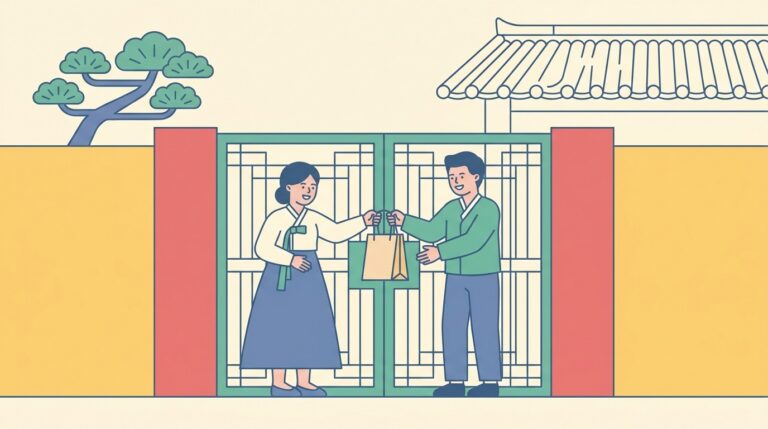
Picture this: You are standing outside Exit 2 of a bustling subway station on a brisk Seoul evening. In your hand, your phone is buzzing with notifications from Karrot (당근마켓)—Korea’s favorite hyper-local secondhand marketplace. You just found a nearly brand-new winter coat listed for almost nothing, labeled as a heartwarming “nanum” (나눔, generous share). A neighbor walks up with a warm smile, handing you the neatly packed bag. Your heart beats fast. You want to say so much more than just a robotic “Kamsahamnida,” but your mind goes blank. How do you express genuine appreciation for their kindness without sounding stiff or awkward? This guide draws directly from real learner struggles and local etiquette to give you the exact warm words locals cherish during in-person trades.
Phase 2: Top 3 Core Expressions
1. 좋은 물건 저렴하게 주셔서 감사해요! (Joeun mulgeon jeoryeomhage jusyeoseo gamsahaeyo!)
- Pronunciation: [Joeun mool-geon juh-ryum-hah-geh joo-shuh-suh gahm-sah-heh-yo!] (Sounds like mool-geon,rhyming with “fun”, and gahm-sah like “calm star”).
- Meaning: Literal: “Thank you for giving me a good item cheaply!” / Real Nuance: “Thank you so much for offering such a great deal!”
- K-Culture Moment: You often hear this in modern lifestyle K-dramas where frugal young professionals exchange kitchenware or furniture with their kind apartment neighbors.
- Editor’s Insight: Adding 좋은 물건 (good item) validates the seller’s care for their belongings, while 저렴하게 (at a low price) acknowledges their generosity.
- Situation Spectrum:
- Casual (Friends): 🚫
- Semi-formal (Polite everyday transactions): ✅
- Formal (Business/Official): ⚠️
- 🤔 Think About It: In English, commenting directly on how “cheap” something was might feel slightly blunt. Why do you think acknowledging the low price is considered warm and appreciative in Korean neighborhood culture?
2. 따뜻한 나눔 감사드립니다. (Ttatteut-han nanum gamsadeurimnida.)
- Pronunciation: [Tah-teut-hahn nah-noom gahm-sah-deu-reem-nee-dah] (Ttatteut sounds like “tah-teut” with a crisp initial T).
- Meaning: Literal: “Thank you for the warm sharing.” / Real Nuance: “Thank you sincerely for your touching generosity.”
- K-Culture Moment: Commonly written in review comments or text messages when picking up free items marked as 0 KRW on community boards.
- Editor’s Insight: The word 나눔 (nanum) literally means “sharing.” Koreans view giving away useful items not as discarding junk, but as circulating goodwill through the community.
- Situation Spectrum:
- Casual: ⚠️
- Semi-formal: ✅
- Formal: ✅
- 🤔 Think About It: What word in your native language captures both “free giveaway” and “heartfelt neighborly gift” at the same time?
3. 잘 쓸게요! (Jal sseulgeyo!)
- Pronunciation: [Jahl seul-geh-yo!] (Sseul sounds similar to the English verb “slurp” without the -rp).
- Meaning: Literal: “I will use it well!” / Real Nuance: “I’ll make great use of it! / I’ll take good care of it!”
- K-Culture Moment: The classic parting phrase whenever receiving any gift, souvenir, or secondhand treasure from anyone in Korea.
- Editor’s Insight: For sellers, their pre-loved items carry memories. Hearing 잘 쓸게요! reassures them that the object is going to a loving home.
- Situation Spectrum:
- Casual: ✅ (without -yo: 잘 쓸게!)
- Semi-formal: ✅
- Formal: ⚠️ (Use ‘유용하게 잘 쓰겠습니다’ instead)
- 🤔 Think About It: Why does Korean emphasize how the receiver will treat the item, rather than simply thanking the giver?
Phase 3: Textbook Korean vs. Real Korean
Situation 1: Saying goodbye after the meetup
- 📖 교과서 한국어 (Textbook Korean): 귀하께서 물품을 싸게 공급해 주셔서 대단히 감사합니다. (Gweehakkeseo mulpumeul ssage gong-geuphae jusyeoseo daedanhi gamsahamnida. / Thank you very much for supplying the goods at a low rate.)
- 🗣️ 진짜 한국어 (Real Korean): 좋은 물건 싸게 주셔서 진짜 감사해요! (Joeun mulgeon ssage jusyeoseo jinjja gamsahaeyo! / Thank you so much for giving me a great item so cheaply!)
- 💡 왜 다를까?: Textbook phrases use stiff corporate terminology like gong-geup (supply) and gweeha (honored customer). In neighborhood apps, simple words like 싸게 (cheaply) and 진짜 (really) feel far more sincere and human.
Situation 2: Promising to cherish the item
- 📖 교과서 한국어 (Textbook Korean): 저는 이 제품을 유익하게 활용하도록 하겠습니다. (Jeoneun i jepumeul yuyikhage hwalyonghadorok hagesseumnida. / I will utilize this manufactured product beneficially.)
- 🗣️ 진짜 한국어 (Real Korean): 소중하게 잘 쓸게요, 감사해요! (Sojunghage jal sseulgeyo, gamsahaeyo! / I’ll treasure it and use it well, thank you!)
- 💡 왜 다를까?: Secondhand deals among neighbors are emotional micro-interactions. Saying 소중하게 (preciously) conveys warmth that dry business jargon completely misses.
Phase 4: K-Culture Deep Dive & Non-verbal Manners
4-1. 눈치 (Nunchi) & Polite Body Language
When meeting for a direct deal (직거래, jikgeorae), non-verbal cues speak louder than words:
* Two-Hand Rule: Always receive the bag or item using both hands (or place your left hand gently supporting your right forearm). Never grab it with one casual hand.
* The 15-Degree Nod: As you say 감사합니다 or 잘 쓸게요, bow your head slightly around 15 to 30 degrees. This immediately softens the interaction.
* The “Jeong Drink” Trick: If someone is giving you a high-value item for free (nanum), it is customary Korean manners to hand them a small token of appreciation, such as a warm canned coffee or vitamin drink from a convenience store.
4-2. Cultural Code: Manner Temperature (매너온도)
On apps like Karrot, every user starts at 36.5°C—the average human body temperature. As you receive compliments for punctuality, pleasant communication, and warm gratitude, your temperature rises. A buyer who smiles, bows politely, and leaves a thoughtful review saying 좋은 물건 저렴하게 주셔서 감사해요! directly helps the seller climb toward the coveted 40°C+ mark.
Phase 5: Real-world Roleplay Scenario
Setting: In front of the CU Convenience store near Mangwon Station. Minho (a polite neighborhood resident selling a sleek desk lamp for 5,000 KRW) meets Alex (an international student).
- Turn 1 (Minho): 혹시 당근… 알렉스 님 맞으세요? (Hoksi danggeun… Alex-nim majeuseyo?) [🎭 Looking around politely holding a clean shopping bag]
- “Excuse me… are you Alex from Karrot?”
- Turn 2 (Alex): 네, 맞아요! 민호 님 안녕하세요! (Ne, majayo! Minho-nim annyeonghaseyo!) [🎭 Bowing lightly with a friendly smile]
- “Yes, that’s right! Hello, Minho!”
- Turn 3 (Minho): 안녕하세요! 전등 작동 잘 되는지 아까 한 번 더 확인했어요. (Annyeonghaseyo! Jeondeung jakdong jal doeneunji akka han beon deo hwaginhaesseoyo.) [🎭 Opening the paper bag slightly to show the lamp]
- “Hello! I checked once more earlier to make sure the lamp works properly.”
- Turn 4 (Alex): 와, 깨끗하네요! 좋은 물건 저렴하게 주셔서 감사해요. (Wa, kkaekkeuthaneyo! Joeun mulgeon jeoryeomhage jusyeoseo gamsahaeyo.) [🎭 Looking at the lamp with admiration]
- “Wow, it is so clean! Thank you for giving me such a great item at a low price.”
- Turn 5 (Minho): 마음에 드신다니 다행이네요. 잘 쓰시면 좋겠어요. (Maeume deusindani dahaeng-ineyo. Jal sseusimyeon jokesseoyo.) [🎭 Handing over the bag using both hands]
- “I’m glad you like it. I hope you use it well.”
- Turn 6 (Alex): 네! 소중하게 잘 쓸게요. (Ne! Sojunghage jal sseulgeyo.) [🎭 Receiving the bag with both hands]
- “Yes! I’ll take great care of it and use it well.”
- Turn 7 (Alex): 여기 시원한 캔커피 하나 드세요! (Yeogi siwonhan kaen-keopi hana deuseyo!) [🎭 Offering a cold canned coffee from a convenience store]
- “Here, please have a cold canned coffee!”
- Turn 8 (Minho): 아이고, 안 주셔도 되는데… 정말 감사합니다! 조심히 들어가세요! (Aigo, an jusyeodo doeneunde… Jeongmal gamsahamnida! Josimhi deureogaseyo!) [🎭 Waving gently with a touched smile]
- “Oh goodness, you really didn’t need to… Thank you so much! Get home safely!”
🔀 Interactive Choice Point
Imagine Minho just handed you the item for free as a gift (nanum). What do you say?
* Option A: “공짜로 줘서 땡큐!” (Gongjjaro jwoseo ttaengkyu!)
* Option B: “따뜻한 나눔 정말 감사드려요. 잘 쓸게요!” (Ttatteut-han nanum jeongmal gamsadeuryeoyo. Jal sseulgeyo!)
* Option C: “이거 진짜 안 쓰는 거예요? 왜 버려요?” (Igeo jinjja an sseuneun geoyeyo? Wae beoryeoyo?)
Feedback Breakdown:
* Option A (Bad): Gongjja (freebie) and slang ttaengkyu sound crude and disrespectful to a kind stranger.
* Option B (Best): Perfect! It acknowledges their goodwill (nanum), expresses refined gratitude, and promises to cherish the item.
* Option C (Risk): Asking “Why are you throwing this away?” sounds invasive and turns a generous gesture into an uncomfortable interrogation.
Phase 6: 10-Second Emotion Shadowing Drill
Read aloud focusing on natural cadence, pauses (/), and emotional intent:
[😊 기쁘고 활기차게 - Bright & Cheerful]- 좋은 물건 / 저렴하게 주셔서 / 진짜 감사해요!
- (Joeun mulgeon / jeoryeomhage jusyeoseo / jinjja gamsahaeyo!)
[🥺 감동받은 표정으로 - Touched & Sincere]- 따뜻한 나눔 / 정말 감사드립니다. / 잘 쓸게요!
- (Ttatteut-han nanum / jeongmal gamsadeurimnida. / Jal sseulgeyo!)
[👋 다정하게 인사하며 - Friendly Goodbye]- 덕분에 구했어요. / 조심히 들어가세요!
- (Deokbune guhaesseoyo. / Josimhi deureogaseyo!)
Phase 7: K-Culture Mini Dictionary
- 나눔 (Nanum) | Free sharing / Donation
- Used whenever users post items at 0 KRW to share with neighbors rather than creating waste.
- 직거래 (Jikgeorae) | Direct in-person deal
- Meeting face-to-face to inspect the item and avoid delivery fees or fraud.
- 쿨거래 (Kulgeorae) | Cool, fast, hassle-free transaction
- A deal executed swiftly without endless haggling, hesitation, or sudden cancellations.
- 매너온도 (Maeneoon-do) | Manner Temperature
- Karrot’s peer-review score system starting at human body temperature (36.5°C).
Phase 8: Traveler’s Survival Kit
Survival TOP 3 Phrases
- 혹시 당근이세요? (Hoksi danggeun-iseyo?) | “By any chance, are you from Karrot?”
- Pro Tip: The universal code sentence muttered by millions when approaching strangers near subway station exits.
- 계좌번호 알려주시면 지금 바로 보낼게요. (Gyejwabeonho allyeojusimyeon jigeum baro bonaelgeyo.) | “If you let me know your account number, I’ll transfer it right now.”
- Pro Tip: Most Koreans transfer money on the spot using mobile banking apps rather than carrying cash.
- 후기 예쁘게 남겨드릴게요! (Hugi yeppeuge namgyeodeurilgeyo!) | “I’ll leave a lovely review for you!”
- Pro Tip: The ultimate sweet farewell that guarantees you a high buyer rating in return.
Editor’s Travel Note
Before stepping out, download the 당근 공식 앱 다운로드 페이지 to verify your neighborhood GPS setting. To navigate neighborhood alleys and convenience store meetup points without getting lost, check the route using 네이버 지도 길찾기 서비스. Always choose public, well-lit spaces like subway exits or apartment security offices (gyeongbisi) for safe direct trades.
Phase 9: “One Step Deeper” (Thinking Question)
Korea’s thriving secondhand culture is powered by a unique social glue called 정 (Jeong)—a deep-seated bond of communal affection and neighborhood empathy. In massive apartment complexes where people rarely know their next-door neighbors, secondhand apps function as modern village squares. Passing down a baby stroller, a study desk, or homemade food at nominal prices is less about monetary profit and more about shared connection.
💬 Your Turn: Does your home country have an active local secondhand market? How do people normally greet each other when trading face-to-face? Share your stories in the comments below!
Phase 10: FAQ & Common Mistakes
Q: What should I say if the item was completely free (나눔)?
A: Never just say “Bye!” or offer no reaction. Say warmly: 좋은 물건 나눔해 주셔서 감사해요! 잘 쓸게요! (Thank you for sharing this great item! I will use it well!). If possible, giving a small 1,000 KRW snack or drink is the gold standard of etiquette.
Q: Is it okay to haggle the price when meeting in person?
A: Never negotiate price on-site. In Korean marketplace etiquette, all bargaining must be completed via chat before meeting. Attempting on-site price reductions (known as hyun-jang ne-go) will severely hurt your Manner Temperature.
Q: How do I address the seller if I don’t know their real name?
A: Address them using their app nickname followed by 님 (nim), for example: 민호 님 (Minho-nim) or 판매자 님 (Panmaeja-nim, Dear Seller).
🚨 Common Mistakes Warning Board
- Mistake: Using 반말 (informal talk) like “고마워! (Thanks!)” just because the seller looks young.
- Correct Action: Always use 존댓말 (polite speech) ending in -요 or -습니다 with strangers.
- Mistake: Showing up 10 minutes late without messaging.
- Correct Action: Korean meetup culture values punctuality strictly. If running late, text at least 15 minutes before the scheduled time.
- Mistake: Forgetting to leave a transaction review.
- Correct Action: Within a few hours of the trade, submit a warm feedback review stating that the seller was punctual and kind.
Phase 11: Action Missions
- 🥉 Bronze Mission (Solo Shadowing): Practice saying 좋은 물건 저렴하게 주셔서 감사해요! aloud 5 times in front of the mirror while practicing your two-hand gesture and slight bow.
- 🥈 Silver Mission (SNS / Study Group): Leave a comment under a Korean friend’s post or study forum sharing an item you recently bought or received, writing: 소중하게 잘 쓸게요!
- 🥇 Gold Mission (Real Life Execution): Next time you pick up a secondhand purchase or receive a generous free item in Korea, hand the seller a small beverage and say the full phrase with a warm smile!
🎮 K-Culture Mission: Watch an episode of a slice-of-life K-drama (like Hospital Playlist or Our Blues) and spot instances where characters say 잘 쓸게요! or 잘 먹을게요! when receiving something.
Phase 12: Interactive Quiz Challenge
1. Situational Judgment: You just received a bookshelf from a neighbor for free (나눔). Which sentence is the most polite and natural?
* A) 얼마예요? (How much is it?)
* B) 따뜻한 나눔 감사드려요, 잘 쓸게요! (Thank you for the warm sharing, I will use it well!)
* C) 다음에 더 좋은 거 주세요. (Give me a better one next time.)
👉 Click to reveal Answer & Explanation
Correct Answer: B
* Explanation: When receiving a free item (나눔), thanking the seller for their generosity with 따뜻한 나눔 감사드려요 and promising to take care of it with 잘 쓸게요 is the ideal response. Choice A makes no sense for a free item, and Choice C is extremely rude.
2. Fill-in-the-Blank: Fill in the missing polite verb ending:
“좋은 물건 저렴하게 주셔서 정말 감사____!”
👉 Click to reveal Answer & Explanation
Correct Answer: 해요 (or 드려요 / 드립니다)
* Explanation: 감사해요 (friendly polite) or 감사드립니다 (respectful formal) perfectly completes this phrase.
3. True or False Cultural Quiz: In Korea, it is polite to aggressively negotiate the item’s price face-to-face when you meet the seller at the subway station. (True / False)
👉 Click to reveal Answer & Explanation
Correct Answer: False
* Explanation: On-site haggling (현장 네고) is considered very impolite and violates community trust. Any price discussions must take place inside the chat beforehand.







