

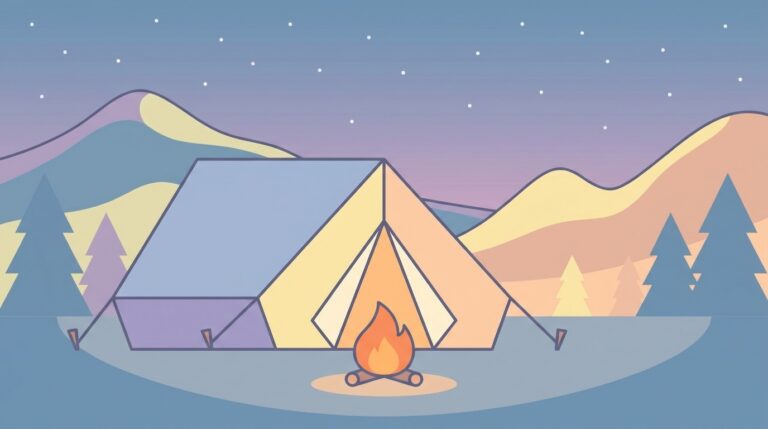
Escape the City: How to Describe Forest Camping & Healing in Natural Korean
Phase 1: 공감 (Empathetic Story Intro)
안녕하세요! 매일한글 에디터입니다.
Imagine this: After battling the bustling crowds of Seoul’s Line 2 subway and surviving another fast-paced week of endless screen time, you finally hop onto the ITX train heading toward the lush pine mountains of Gapyeong. As you step out onto the wooden deck of a serene glamping tent, the constant city hum vanishes. A cool breeze rustles through the pine needles, birds are chirping gently in the trees, and the earthy aroma of damp pine needles fills your lungs.
You want to sigh with deep relief and share this exact feeling with your Korean travel buddies. But wait—what words come out? If you’re like many of our beginner students, you might just freeze and default to a basic sentence like “산이 좋아요” (The mountain is good) or “기분이 좋아요” (I feel good). While accurate, these textbook phrases don’t capture that magical, restorative sensation of leaving urban chaos behind.
Over the past decade of guiding global learners through real-life Korean culture, I’ve seen how learning just a couple of authentic sensory expressions transforms everyday travel into deep personal connection. In this guide, designed specifically for your A2 level, you’ll learn natural phrases to talk about fresh air, nature sounds, and Korea’s beloved healing outdoor culture. Let’s get you ready for your next glamping weekend!
Phase 2: 핵심 표현 3선 심층 분석 (Top 3 Core Expressions)
1. 힐링하는 기분이에요 (Healing-haneun gibun-ieyo)
- Pronunciation: [Heel-ling-ha-neun gee-boon-ee-ye-yo] (Think of the English word ‘healing’, but soften the ‘h’ and roll smoothly into ‘gee-boon’)
- Meaning: Literally “It is a healing feeling” → Natural Nuance: “It feels so restorative and refreshing!”
- K-Culture Moment: You’ll hear idols on shows like BTS In the SOOP say this while sitting on a camp chair with an iced coffee, watching mist roll over the river.
- Editor’s Insight: In Korean, the English loanword 힐링 (healing) isn’t medical; it specifically describes mental rejuvenation, de-stressing, and taking time away from busy daily life.
- Situation Spectrum: Casual ✅ | Semi-formal ✅ | Formal ⚠️ (For very formal presentations, use 회복되다 (hoebok-doeda))
- 🤔 Think About It: In English, we often say “I’m relaxing.” Why do you think modern Korean culture adopted the word “healing” instead of just “resting”?
2. 공기가 진짜 맑아요 (Gong-giga jinjja malgayo)
- Pronunciation: [Gong-gee-ga jeen-jja mahl-gah-yo] (Notice the ‘mal’ sounds like ‘mall’ without the heavy L-stop, followed by a bright ‘gayo’)
- Meaning: Literally “The air is truly clear” → Natural Nuance: “The air is so clean and crisp!”
- K-Culture Moment: Whenever city folk in K-dramas step out of their cars in countryside towns like Gangneung or Jeju, they inhale deeply with eyes closed and utter this exact line.
- Editor’s Insight: Koreans take fine dust (미세먼지) very seriously. When escaping to pine forests, highlighting that the air is 맑다 (to be clear/pure) expresses the highest physical relief.
- Situation Spectrum: Casual ✅ | Semi-formal ✅ | Formal ✅
- 🤔 Think About It: How does weather and air quality change the small-talk habits in your native culture compared to Korea?
3. 새소리가 듣기 좋아요 (Saesori-ga deutgi joayo)
- Pronunciation: [Seh-so-ree-ga deut-gee joh-ah-yo] (The ‘sae’ rhymes with ‘say’, and ‘deut’ is like ‘dirt’ without the ‘r’)
- Meaning: Literally “Bird sounds are good to hear” → Natural Nuance: “The sound of the birds is so pleasant.”
- K-Culture Moment: Used in ASMR travel vlogs and outdoor variety shows when characters sit beside morning campfire embers in silence.
- Editor’s Insight: The pattern ~기 좋아요 (~gi joayo) means “it’s nice to do [verb]”. Pair it with sensory verbs like 듣다 (to listen) or 보다 (to see) to instantly sound like a native speaker.
- Situation Spectrum: Casual ✅ | Semi-formal ✅ | Formal ✅
- 🤔 Think About It: English often uses adjectives like “peaceful birdsong,” whereas Korean prefers experiential verb forms (listening to it is good). Notice the active listening focus!
Phase 3: 교과서 한국어 vs 진짜 한국어 (Textbook vs. Real Korean)
Situation 1: Relaxing under the forest trees
- 📖 교과서 한국어: 자연 속에서 심신이 회복됩니다. (Jayeon sogeseo simsini hoebokdoemnida. / My mind and body recover in nature.)
- 🗣️ 진짜 한국어: 숲속에 있으니까 완전 힐링돼요! (Sup-soge isseunikka wanjeon heel-ling-dwaeyo! / Being in the forest is totally healing!)
- 💡 왜 다를까? Textbook Korean uses heavy Sino-Korean vocabulary (심신, 회복), whereas native speakers use lively conversational adverbs like 완전 (totally) paired with 힐링돼요.
Situation 2: Inhaling the mountain breeze
- 📖 교과서 한국어: 공기의 오염도가 낮아서 상쾌합니다. (Gonggi-ui oyeomdoga najaseo sangkwaehamnida. / The air is pleasant because pollution is low.)
- 🗣️ 진짜 한국어: 와, 도심 벗어나니까 숨통이 트여요! (Wa, dosim beoseonanikka sumtong-i teuyeoyo! / Wow, getting out of the city lets me breathe again!)
- 💡 왜 다를까? Koreans express physical freedom idiomatically with 숨통이 트이다 (to have one’s airway opened / to finally catch a breath) when leaving high-stress environments.
Phase 4: K-Culture 딥다이브 & 비언어적 매너 (Deep Dive & Camp Manners)
4-1. 눈치 (Nunchi) & Forest Camping Etiquette
- 매너타임 (Manner Time): Korean campsites and glamping grounds strictly enforce Manner Time, usually starting between 10:00 PM and 11:00 PM. Keep your voice at a gentle whisper and turn off exterior lanterns.
- The “Breathe & Sigh” Gesture: When praising the forest air, Korean friends often take an exaggerated deep inhale through the nose, look up at the canopy, and exhale with a satisfied smile. Doing this naturally signals that you appreciate the quiet surroundings.
4-2. The “Meong” Phenomenon (불멍 and 숲멍)
In Korea’s hyper-connected society, spacing out with zero thoughts has evolved into a respected art form called 멍때리기 (meong-ttaerigi). At glamping grounds, you will encounter:
1. 불멍 (Bul-meong): Mesmerized campfire gazing.
2. 숲멍 (Sup-meong): Silently staring into dense green tree branches.
Both represent deliberate pauses to recharge mental energy away from notifications.
Phase 5: 실전 롤플레이 시나리오 (Roleplay Scenario)
Setting: A peaceful glamping ground in Gapyeong surrounded by towering pine trees. Minho, your Korean outdoor enthusiast friend, is setting up folding chairs near the fire pit.
- Minho: 도시에서 여기까지 오느라 고생 많았지? (Dosi-eseo yeogikkaji oneura gosaeng manatji?)
(It was tough coming all the way here from the city, right?)
🎭 Unfolds a cozy canvas camp chair and gestures toward it with a friendly smile. -
You: 아니에요! 숲속 공기가 맑아서 도심을 벗어난 기분이에요. (Anieyo! Supsok gonggiga malgaseo dosimeul beoseonan gibunieyo.)
(Not at all! The forest air is so crisp, I feel like I’ve escaped the city.)
🎭 Takes a deep breath and leans back into the chair. -
Minho: 맞아요. 여기 새소리도 참 듣기 좋죠? (Majayo. Yeogi saesorido cham deutgi jochyo?)
(Right? The birdsong here is really lovely to listen to, isn’t it?)
🎭 Points upward toward a tall pine branch. -
You: 네, 새소리가 들리니까 진짜 힐링돼요. (Ne, saesoriga deullinikka jinjja heel-ling-dwaeyo.)
(Yes, hearing the birds makes it feel truly restorative.)
🎭 Closes eyes slightly, soaking in the peaceful vibe. -
Minho: 이제 조금 있으면 어두워질 텐데, 불멍 준비할까? (Ije jogeum isseumyeon eoduwojil tende, bul-meong junbihalkka?)
(It will get dark soon, shall we prepare for some campfire gazing?)
🎭 Taps a bundle of dried oak firewood. -
You: 좋아요! 불멍 꼭 해보고 싶었어요. (Joayo! Bul-meong kkok haebogo sipeosseoyo.)
(Sounds great! I really wanted to try campfire gazing.)
🎭 Nods enthusiastically. -
Minho: 밤에는 추우니까 따뜻한 차도 끓여 마시자. (Bameneun chu-unikka ttatteutan chado kkeulryeo masija.)
(It gets chilly at night, so let’s boil some hot tea to drink too.)
🎭 Places a camp kettle over the portable burner. -
You: 완벽해요. 오늘 밤 정말 기대돼요! (Wanbyeokhaeyo. Oneul bam jeongmal gidaedwaeyo!)
(Perfect. I’m really looking forward to tonight!)
🎭 Claps hands gently in anticipation.
🔀 인터랙티브 분기점 (Interactive Choice)
Minho lights the campfire, and quiet settles over the campsite. What do you say?
* Choice A: “불빛 보면서 가만히 있으니까 잡생각이 다 사라져요.” (Looking at the flame, all my distracting thoughts disappear.)
* Choice B: “여기 너무 조용해서 심심해요. 음악 크게 틀까요?” (It’s too quiet here, it’s boring. Shall we blast loud music?)
* Choice C: “핸드폰 와이파이 비밀번호가 뭐예요?” (What is the Wi-Fi password for the phone?)
Feedback:
* Choice A (Best!): 🌟 You perfectly hit the Korean outdoor vibe! Minho will nod approvingly and say, “이게 바로 불멍의 매력이지!” (This is the charm of bul-meong!).
* Choice B (Bad): 🚫 Danger! Blasting music breaks camping etiquette (매너타임) and disrupts others seeking quiet healing.
* Choice C (Risk): ⚠️ While normal, checking your phone defeats the whole purpose of escaping the city (숲멍/불멍). Put the screen away for an hour!
Phase 6: 10초 감정 섀도잉 드릴 (Shadowing Drill)
Practice rhythm, pauses (/), and natural feeling!
[😌 Relieved & Breathing deep]
와/ 공기가 맑아서/ 숨통이 트여요.
(Wa / gong-giga malgaseo / sumtong-i teuyeoyo.)-
[🌿 Peaceful & Content]
새소리가 들려서/ 도심을 벗어난 기분이에요.
(Saesori-ga deul-lyeoseo / dosim-eul beoseonan gibun-ieyo.) -
[🔥 Calm & Contemplative]
불멍하니까/ 마음이 정말 편안해져요.
(Bul-meong-hanikka / ma-eumi jeongmal pyeon-anhae-jyeoyo.)
Phase 7: K-Culture 미니 사전 (Mini Dictionary)
- 힐링 (Heel-ling) | Healing / Soul recharging
Used universally for any self-care activity, from walking in nature to enjoying a quiet latte in a forest cafe. - 불멍 (Bul-meong) | Campfire spacing-out
A blend of 불 (fire) and 멍 (zoning out). The national pastime of watching wood flames in silence. - 숲세권 (Sup-se-gwon) | Forest-adjacent area
Derived from 역세권 (subway vicinity). Refers to neighborhoods or accommodations within immediate walking distance of green forests. - 매너타임 (Mae-neo-ta-im) | Camping quiet hours
The designated camp courtesy curfew (typically 10 PM to 7 AM) when talking loudly, chopping wood, or playing music is prohibited.
Phase 8: 여행자를 위한 생존 키트 (Traveler’s Survival Kit)
Survival Phrases TOP 3
- 여기 불멍 세트 추가할 수 있나요? (Yeogi bul-meong set-teu chugahal su innayo?)
Can I add a campfire gazing set here?
Pro Tip: Glamping sites provide fire pits and firewood bundles for about 15,000–25,000 KRW upon request. - 매너타임이 몇 시부터예요? (Mae-neo-ta-imi myeot sibuteoyeyo?)
What time do quiet hours start? - 난방 어떻게 켜요? (Nanbang eotteoke kyeoyo?)
How do I turn on the floor heating?
Pro Tip: Mountain glamping gets surprisingly cold at night! Check your ondol (underfloor heating) before sunset.
Editor’s Travel Note
- Campsite Reservations: Download the Camfit Camping Reservation App to browse premium glamping sites in Gapyeong, Chuncheon, and Pyeongchang.
- Navigation: Google Maps often lags with Korean trailheads. Always use the KakaoMap Navigation App for accurate countryside bus and walking directions.
Phase 9: “한 발 더 깊이” (Cultural Reflection)
In South Korea’s high-density metropolitan lifestyle, life runs on Ppalli-ppalli (빨리빨리, fast-paced urgency). Every minute is scheduled, every subway car is crowded, and performance pressure is palpable.
Because of this intensity, the modern Korean obsession with 힐링 (healing) and 불멍 (campfire gazing) is not just a leisure trend—it is a collective social remedy. When Koreans go into the forest, they intentionally strip away hierarchy, job titles, and hurry. Sitting beside the quiet trees and acknowledging that the air is clean is a cultural permission slip to do nothing and simply exist.
💬 Your Turn: What is your favorite way to “heal” when daily life feels overwhelming? Does your language have a word like 불멍? Share your thoughts below!
Phase 10: FAQ & 흔한 실수 (FAQ & Common Mistakes)
Q: Can I use “힐링” in formal business settings?
A: It is slightly casual for boardrooms. In corporate presentations, opt for 휴식 (hyusik, rest) or 재충전 (jaechungjeon, recharge). However, chatting with colleagues during coffee breaks about your weekend? “힐링” is 100% fine!
Q: What is the difference between “공기가 맑아요” and “날씨가 좋아요”?
A: 날씨가 좋아요 refers to sunny, rain-free weather. 공기가 맑아요 specifically praises fresh, clean, low-pollution air. In mountain forests, you can say both together: “날씨도 좋고 공기도 맑아요!”
Q: How do I say “bird chirping” naturally?
A: While textbooks teach onomatopoeia like 짹짹 (jjaek-jjaek), native speakers casually say 새소리가 들려요 (I hear birdsong) or 새소리가 듣기 좋아요 (The birdsong is nice to hear).
🚨 Common Mistakes Warning Board
- ❌ Mistake 1: Saying “숲이 치료해요” (Thinking 치료 is healing).
Correct Action: 치료 (chiryo) means medical clinic treatment! For personal recovery, say 힐링돼요 (It feels healing). - ❌ Mistake 2: Using “공기가 깨끗해요” instead of 맑아요.
Correct Action: While understandable, Koreans almost always describe fresh outdoor air as 맑다 (clear/pure) rather than just 깨끗하다 (clean/sanitized). - ❌ Mistake 3: Shouting 불멍! loudly at the campsite.
Correct Action: Bul-meong is an inward, meditative activity. Keep your voice soft and tranquil.
Phase 11: 액션 미션 & 참여 유도 (Action Missions)
- 🥉 Bronze Mission (Solo): Look out your window right now. Take a deep breath and say aloud: “공기가 맑아서 기분이 좋아요!” (Gong-giga malgaseo gibuni joayo!)
- 🥈 Silver Mission (Social): Snap a photo of a green plant, park, or candle flame. Post it on your social story with the sticker: #힐링 #불멍.
- 🥇 Gold Mission (Real Life): On your next trip to Korea, tell your glamping host: “공기도 맑고 새소리가 참 좋네요!” (Gonggido malgo saesoriga cham jonneyo!).
🎮 K-Culture Mission: Watch an episode of a forest-based K-variety show (like Three Meals a Day or In the SOOP). Count how many times the members sit quietly and mention the word 힐링 or 불멍!
Phase 12: 인터랙티브 퀴즈 챌린지 (Interactive Quiz)
Test your A2 outdoor Korean skills!
1. Situation Quiz: You are sitting in front of a warm campfire at night with friends. What is the most natural comment?
* A) 불멍하니까 마음이 정말 편안해요.
* B) 불이 뜨거우니까 빨리 병원에 가요.
* C) 공기가 너무 더러워서 숨을 못 쉬겠어요.
2. Fill-in-the-Blank:
“숲속에 오니까 새소리가 듣기 ________.” (Coming to the forest, the birdsong is nice to hear.)
* A) 바빠요 (busy)
* B) 좋아요 (good/pleasant)
* C) 매워요 (spicy)
3. True or False:
In Korean camping culture, 매너타임 (Manner Time) means you are expected to tell funny stories loudly around the fire pit late at night.
* [True / False]
👉 Click to view answers and explanations
- Answer: A (불멍하니까 마음이 정말 편안해요. zoning out by the fire makes my mind peaceful. B is an emergency phrase, and C is negative!)
- Answer: B (좋아요 – combines with ~기 to mean ‘pleasant to do’).
- Answer: False (매너타임 is quiet curfew time; campers lower their voices to a gentle whisper or head inside tents to sleep!)







