

Gas Station Anxiety No More! How to Rent and Fuel Your Korean Rental Car Like a Pro
Phase 1: Empathy (Story-driven Opening)
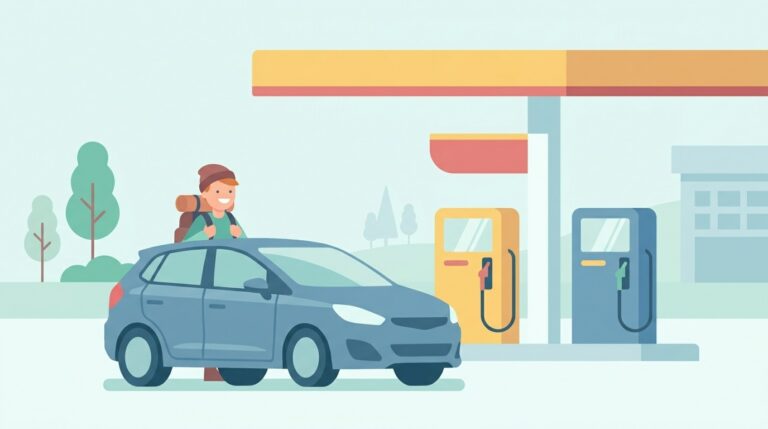
안녕하세요! 매일한글 에디터입니다. Picture this: you just landed at Jeju International Airport, picked up the keys to a sleek white rental car, and hit the coastal highway with your favorite K-drama playlist blasting through the speakers. The ocean breeze feels amazing, but suddenly, the fuel gauge flashes amber. You pull into a bustling Korean gas station (주유소, juyuso), roll down your window, and freeze. A friendly attendant walks over and smiles. That is the exact moment of terror: Wait, is this car gasoline or diesel?! Putting the wrong fuel into a rental car can turn a dreamy K-travel fantasy into a multi-thousand-dollar engine disaster in seconds. Thousands of international road-trippers face this exact dilemma every year. With our practical A2-level guide—built straight from real learner experiences and roadside feedback—you will learn how to verify your fuel type at the rental counter, speak with gas station attendants confidently, and navigate self-service pumps like a seasoned Seoulite!
Phase 2: Core Expressions Deep Dive (핵심 표현 3선)
1. 이 차는 휘발유 차예요, 경유 차예요? (I cha-neun hwi-bal-yu cha-ye-yo, gyeong-yu cha-ye-yo?)
- Pronunciation: [I cha-neun hwi-bal-yu cha-ye-yo, gyeong-yu cha-ye-yo?] (Think: “hwi” like ‘whistle’, “bal-yu” like ‘bal-yoo’, “gyeong-yu” like ‘gyung-yoo’)
- Meaning: “Is this car a gasoline car or a diesel car?” (Direct translation matches actual communicative nuance perfectly).
- K-Culture Moment: The classic rental car pickup scene in healing travel variety shows like House on Wheels or Campfire, where the cast double-checks the car specs before hitting the mountain roads.
- Editor’s Insight: Koreans also commonly use English loanwords: 가솔린 (gasolin = gasoline) and 디젤 (dijel = diesel). However, on receipt slips and pump handles, 휘발유 and 경유 are the standard terms you will see.
- Situation Spectrum: Casual: ⚠️ | Semi-formal: ✅ | Formal: ✅
- 🤔 Think About It: In Korean, choices joined with commas and intonation naturally convey “A or B?” without needing a heavy conjunction word like “or” (또는).
2. 휘발유 넣어 주세요. (Hwi-bal-yu neo-eo ju-se-yo.)
- Pronunciation: [Hwi-bal-yu neo-eo ju-se-yo] (Think: “neo-eo” pronounced like ‘nuh-uh’)
- Meaning: “Please put in gasoline.” (Polite request to the fuel attendant).
- K-Culture Moment: Heard in almost every road trip drama scene when the protagonist pulls up to a gas station on a rainy night and hands over a card without getting out of the car.
- Editor’s Insight: The verb 넣다 (neota) means “to insert” or “to put into.” Adding ~어 주세요 (~eo ju-se-yo) creates the golden polite request formula every A2 learner should master.
- Situation Spectrum: Casual: 🚫 | Semi-formal: ✅ | Formal: ✅
- 🤔 Think About It: Notice how natural it is in Korea to specify the fuel type first rather than the payment amount when speaking to staff.
3. 가득 채워 주세요. (Ga-deuk chae-wo ju-se-yo.)
- Pronunciation: [Ga-deuk chae-wo ju-se-yo] (Think: “ga-deuk” like ‘gah-deuk’, “chae-wo” like ‘chay-wo’)
- Meaning: “Please fill it up full.”
- K-Culture Moment: When characters prepare for a long cross-country trip from Seoul to Busan, they proudly tell the pump attendant to fill it all the way up.
- Editor’s Insight: While older drivers or taxi pros might use the slang 만땅 (man-ttang, derived from Japanese man + English tank), 가득 채워 주세요 is refined, courteous, and universally understood.
- Situation Spectrum: Casual: ⚠️ | Semi-formal: ✅ | Formal: ✅
- 🤔 Think About It: 가득 is an evocative mimetic word meaning “brimful,” expressing fullness both visually and emotionally in Korean.
Phase 3: Textbook Korean vs. Real Korean (교과서 vs. 진짜 한국어)
Situation 1: Inquiring about fuel at the rental agency
- 📖 교과서 한국어: 이 차량의 사용 유종은 무엇입니까? (I cha-ryang-ui sa-yong yu-jong-eun mu-eot-im-ni-kka? – “What is this vehicle’s type of fuel usage?”)
- 🗣️ 진짜 한국어: 이거 휘발유예요, 경유예요? (I-geo hwi-bal-yu-ye-yo, gyeong-yu-ye-yo? – “Is this gasoline or diesel?”)
- 💡 왜 다를까?: Real Koreans drop stiff administrative terms like 차량 (vehicle) and 유종 (fuel type) in face-to-face service interactions, preferring simple, everyday nouns.
Situation 2: Asking for a full tank at the station
- 📖 교과서 한국어: 연료 탱크를 완전히 채워 주시기 바랍니다. (Yeon-ryo taeng-keu-reul wan-jeon-hi chae-wo ju-si-gi ba-ram-ni-da. – “I hope that you fill the fuel tank completely.”)
- 🗣️ 진짜 한국어: 가득이요! (Ga-deuk-i-yo! – “Full, please!”) or 5만 원어치 넣어 주세요. (O-man-won-eo-chi neo-eo ju-se-yo. – “50,000 KRW worth, please.”)
- 💡 왜 다를까?: Gas station environments are noisy and fast-paced. Attendants love crisp, single-phrase answers with the polite ending ~요.
Phase 4: K-Culture Deep Dive & Non-Verbal Manners
4-1. 눈치 (Nunchi) & Gestures
When pulling into a full-service gas station in Korea, roll down your driver-side window about halfway as the attendant approaches. Do not get out of your vehicle unless it is a self-service (셀프) station! State your fuel type and amount clearly. When handing over your credit card or cash, always use two hands (or your right hand supported gently at the wrist/elbow by your left hand). This small gesture of 공손 (gong-son, politeness) immediately marks you as a respectful, culturally aware traveler.
4-2. Cultural Color Codes & Gas Pumps
In Korea, gas stations use strict color-coding on pump handles:
* Yellow handle (노란색): 휘발유 (Gasoline / Regular Unleaded)
* Red handle (빨간색): 고급 휘발유 (Premium Gasoline)
* Green or Blue handle (초록색 / 파란색): 경유 (Diesel)
* Black handle (검은색): Sometimes used for Diesel depending on brand chains (S-Oil, GS Caltex, SK Energy).
Remembering Yellow = Gasoline will save you from major rental repair bills!
Phase 5: Real-Life Roleplay Scenario (실전 롤플레이)
Setting: Jeju Island, Sunshine Rental Car Counter. Counter Agent Min-su is handing over the car keys to traveler Sarah.
- Sarah: 🎭 (Bowing slightly while taking the car contract) 안녕하세요! 차 키 받으러 왔어요. (An-nyeong-ha-se-yo! Cha ki bad-eu-reo wat-eo-yo. / Hello! I came to pick up the car keys.)
- Min-su: 🎭 (Smiling and pointing to the parking bay) 네, 고객님! 저기 12번에 있는 흰색 아반떼입니다. (Ne, go-gaek-nim! Jeo-gi sip-i-beon-e it-neun huin-saek A-ban-tte-im-ni-da. / Yes, customer! It is the white Avante in spot number 12.)
- Sarah: 🎭 (Tilting head with curious eye contact) 저기, 확인차 여쭤보는데요… 이 차는 휘발유 차예요, 경유 차예요? (Jeo-gi, hwak-in-cha yeo-jwo-bo-neun-de-yo… I cha-neun hwi-bal-yu cha-ye-yo, gyeong-yu cha-ye-yo? / Excuse me, just to double check… Is this car a gasoline car or a diesel car?)
- Min-su: 🎭 (Tapping the fuel cap section on the paper contract) 이 차는 휘발유 차예요! 가솔린 넣으셔야 해요. (I cha-neun hwi-bal-yu cha-ye-yo! Ga-sol-lin neo-eu-syeo-ya hae-yo. / This car is a gasoline car! You must put in gasoline.)
- Sarah: 🎭 (Nodding with relief) 아, 휘발유군요. 주유구는 어느 쪽에 있어요? (A, hwi-bal-yu-gun-yo. Ju-yu-gu-neun eo-neu jjok-e it-eo-yo? / Ah, it is gasoline. Which side is the fuel door on?)
- Min-su: 🎭 (Gesturing to the left) 계기판 보시면 화살표가 왼쪽에 있어요. (Gye-gi-pan bo-si-myeon hwa-sal-pyo-ga oen-jjok-e it-eo-yo. / If you look at the dashboard gauge, the arrow points to the left.)
- Sarah: 🎭 (Handing clipboard back with both hands) 친절한 설명 감사해요! 반납할 때 가득 채워 올게요. (Chin-jeol-han seol-myeong gam-sa-hae-yo! Ban-nap-hal ttae ga-deuk chae-wo ol-ge-yo. / Thank you for the kind explanation! I will bring it back full upon return.)
- Min-su: 🎭 (Bowing warmly) 네, 안전 운전하세요! (Ne, an-jeon un-jeon-ha-se-yo! / Yes, drive safely!)
🔀 Interactive Choice Point
You arrive at a gas station with 1 bar of fuel left. An attendant walks to your window and asks: “어떻게 넣어 드릴까요?” (How much and what type shall I put in?)
- Choice A: “휘발유 가득 채워 주세요! 카드 결제할게요.” (Hwi-bal-yu ga-deuk chae-wo ju-se-yo! Ka-deu gyeol-je-hal-ge-yo.)
- Choice B: “디젤 만땅 주세요.” (Di-jel man-ttang ju-se-yo.)
- Choice C: “기름 주세요!” (Gi-reum ju-se-yo!)
Feedback:
* Choice A (Best!): Perfect! You explicitly stated the correct fuel type (gasoline), amount (full), and payment method. The attendant will love your clear communication.
* Choice B (Risk!): Danger! Your car is a gasoline car. Asking for diesel (디젤) will wreck the engine and void your rental insurance.
* Choice C (Bad): Too vague! 기름 just means general oil/fuel. The attendant will still have to ask: “휘발유예요, 경유예요?”
Phase 6: 10-Second Emotion Shadowing Drill
Practice matching rhythm and pitch using natural pauses marked by /:
[🤔 Curious & Polite]이 차는 / 휘발유 차예요, / 경유 차예요? (I cha-neun / hwi-bal-yu cha-ye-yo, / gyeong-yu cha-ye-yo?)[⛽ Crisp & Confident]휘발유 / 오만 원어치 / 넣어 주세요. (Hwi-bal-yu / o-man-won-eo-chi / neo-eo ju-se-yo.)[😊 Cheerful & Decisive]가득 / 채워 주세요! / 카드로 할게요. (Ga-deuk / chae-wo ju-se-yo! / Ka-deu-ro hal-ge-yo.)
Phase 7: K-Culture Mini Dictionary (핵심 키워드 4개)
- 휘발유 (Hwi-bal-yu) / 가솔린 (Ga-sol-lin) | Gasoline / Regular Petrol | The standard yellow fuel pump in South Korea. Most modern compact and sedan rental cars use this.
- 경유 (Gyeong-yu) / 디젤 (Di-jel) | Diesel | Found at the green, blue, or black pump. Common in large SUVs, vans, and commercial trucks.
- 셀프 주유소 (Sel-peu Ju-yu-so) | Self-Service Gas Station | Highly popular throughout Korea offering cheaper prices per liter. Touchscreens usually support English options.
- 주유구 (Ju-yu-gu) | Fuel Tank Door / Cap | The door covering your fuel tank. Located on either side—look at the small fuel pump icon arrow on your dashboard display!
Phase 8: Traveler’s Survival Kit
Top 3 Survival Phrases
- 영수증 주세요. (Yeong-su-jeung ju-se-yo. – “Please give me a receipt.”)
- Pro Tip: Always keep gas receipts when driving rental cars in Korea; rental agencies often check fuel receipts upon return.
- 주유구 열어 주세요. (Ju-yu-gu yeol-eo ju-se-yo. – “Please open the fuel door.”)
- Pro Tip: If you cannot find the interior lever, gas station attendants will happily pull the exterior release flap if you unlock the doors.
- 카드로 계산할게요. (Ka-deu-ro gye-san-hal-ge-yo. – “I will pay by credit card.”)
- Pro Tip: Korea is practically cashless. Over 99% of gas stations accept international Visa and Mastercard.
Editor’s Travel Note
- Navigation Tip: Download the Naver Map navigation application before your road trip. It shows real-time fuel prices at nearby stations, clearly labeling 셀프 (self-service) for cheaper refueling.
- Self-Pump Card Kiosks: At self-service kiosks, machine prompts will ask you to select an estimated pre-authorized amount (e.g., 100,000 KRW). Once done pumping, the machine automatically voids the estimate and charges only the actual amount pumped.
Phase 9: “한 발 더 깊이” (Cultural Reflection)
In many Western countries, gas stations are strictly transactional or entirely self-serve outposts where you rarely exchange words with a human attendant. In Korea, however, full-service gas stations remain deeply rooted in hospitality and shared community care. Attendants often hand you complimentary boxed wet tissues (물티슈) or a free bottle of spring water through your car window as a token of appreciation. Taking the time to ask questions clearly and hand your payment card with two hands honors this everyday mutual warmth that keeps Korean society flowing smoothly.
💬 Your Turn: Have you ever driven in a foreign country and worried about fueling up? Which Korean expression feels easiest for you to remember? Share your thoughts in the comments below!
Phase 10: FAQ & Common Mistakes
Q: Can I just say “Gasoline” and “Diesel” at Korean gas stations?
A: Yes! Most attendants readily recognize 가솔린 (gasolin) and 디젤 (dijel). However, Korean pump labels, highway signage, and dashboard stickers almost always write 휘발유 and 경유. Knowing both pairs guarantees 100% safety.
Q: How do I know which side my rental car fuel cap is on without getting out?
A: Check your dashboard fuel gauge! Look closely at the tiny gas pump icon. There is a small triangular arrow next to it. If the arrow points left (◀), your 주유구 is on the left. If it points right (▶), it is on the right.
Q: What should I do if I mistakenly put the wrong fuel into my rental car?
A: Do not start the engine! Starting the ignition cycles the wrong fuel through the engine block, causing catastrophic damage. Call your rental agency and roadside assistance immediately.
🚨 Common Mistakes Alert
- Mistake 1: Relying on pump color alone without reading text. (Some older stations use green handles for gasoline instead of diesel! Always confirm the text: 휘발유 vs 경유).
- Correct Action: Match the word 휘발유 with gasoline on the screen and handle.
- Mistake 2: Getting out of the car at a non-self station. (Attendants prefer you stay comfortably inside your car).
- Correct Action: Stay seated, roll down the window, and speak directly from the driver seat.
- Mistake 3: Forgetting to take your credit card from the self-pump slot. (The card reader emits a chime after printing the receipt).
- Correct Action: Wait for the chime, retrieve your card first, then grab your receipt.
Phase 11: Action Mission & Engagement
- 🥉 Bronze Mission: Practice saying “이 차는 휘발유 차예요, 경유 차예요?” out loud 3 times in front of a mirror until smooth.
- 🥈 Silver Mission: Write down 휘발유 and 경유 on a sticky note and place it in your travel itinerary notebook or digital phone notes.
- 🥇 Gold Mission: Walk into a real Korean rental agency or self-service gas station and use “가득 채워 주세요” or “휘발유 넣어 주세요” with genuine confidence!
- 🎮 K-Culture Mission: Watch any episode of a Korean road-trip variety show (like 2 Days & 1 Night) and see if you can spot the words 주유소, 셀프, or 휘발유 on background highway road signs.
Phase 12: Interactive Quiz Challenge
1. Situational Judgment
You rented a Hyundai Tucson SUV. You look at the fuel door inside sticker and it says: 경유. What must you tell the gas attendant?
* A) 가솔린 넣어 주세요.
* B) 경유 넣어 주세요.
* C) 고급 휘발유 넣어 주세요.
2. Fill-in-the-Blank
Fill in the missing syllable to request a full tank:
* “_____득 채워 주세요.” (Fill it up full, please.)
3. Cultural True or False
True or False: At full-service gas stations in Korea, it is polite and expected for the driver to step outside the car and hold the pump handle with the attendant.
Click here for answers and explanations
- Answer: B (경유 넣어 주세요.) — 경유 means Diesel. Asking for gasoline (가솔린/휘발유) would damage a diesel engine.
- Answer: 가 (가득) — 가득 채워 주세요 (Ga-deuk chae-wo ju-se-yo) is the correct expression for “Fill it full, please.”
- Answer: False — In Korea, you should remain seated in your vehicle at full-service stations. The attendants take care of the entire fueling process while you stay comfortable inside!






