

Phase 1: 공감 (Story-driven Empathy Opening)
안녕하세요! 매일한글 에디터입니다.
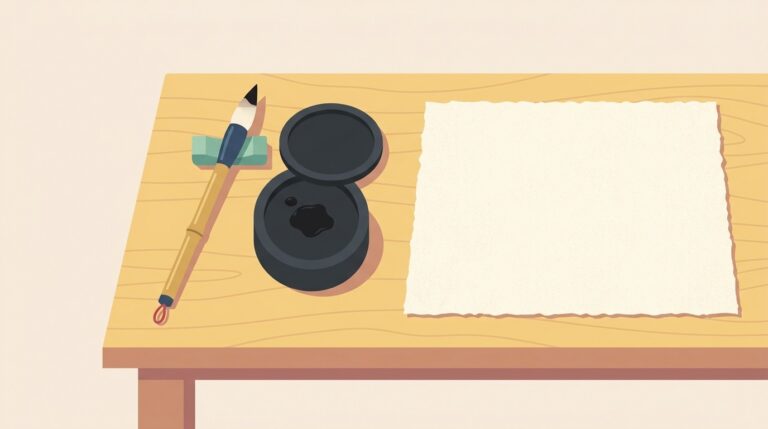
Picture this: You are sitting in a sunlit, cozy art atelier tucked away in an alley of Yeonnam-dong. The scent of traditional pine ink (meok) gently fills the room, soft indie acoustic music plays in the background, and everyone around you is quietly focused on their handmade Korean mulberry paper (hanji). You have just completed your very first brush lettering piece—a delicate lyric from your favorite K-drama OST.
The instructor walks over, smiles warmly, and asks how you felt about your brushwork. You want to say so much: how the stroke felt alive, how you appreciate the organic, tactile charm of handmade ink, or that drawing is your favorite way to wind down and heal after a hectic week. But suddenly, your mind freezes. The only words that come to mind are elementary phrases like “그림 좋아요” (Drawing is good) or “재미있어요” (It is fun).
If you have ever felt that frustrating gap between your creative thoughts and your intermediate Korean speaking skills, you are definitely not alone! Expressing artistic sensations and creative hobbies requires vocabulary steeped in nuance, emotion, and aesthetic culture. Based on feedback from hundreds of intermediate learners in our Daily Hangul community, we created this guide to elevate your creative conversations from basic survival level to expressive, culturally rich fluency.
Phase 2: 핵심 표현 3선 심층 분석
1. 필선이 살아있다 (Pilseon-i sara-itda)
- Pronunciation: [Pil-seon-i sa-ra-it-da] (Think of peel-sun-ee sah-rah-eet-dah, with a light bounce on sa-ra)
- Meaning: Literal: “The brushstroke line is alive.” / Actual Nuance: “The brushstroke has incredible vitality, dynamics, and character.”
- K-Culture Moment: Commonly heard in historical K-dramas (Sageuk) or variety shows like I Live Alone when cast members visit traditional calligraphy studios and admire the energetic rhythm of black ink moving across paper.
- Editor’s Insight: In Korean visual arts, a line is never just a static geometric boundary; it carries breathing (gi) and speed. When you praise someone’s calligraphy or sketch by saying “필선이 살아있네요!” (Pilseoni sarainneyo!), you instantly sound like an authentic art connoisseur.
- Situation Spectrum: Casual: ✅ | Semi-formal: ✅ | Formal: ✅
- 🤔 Think About It: In English, we often say “crisp line” or “bold stroke.” Why do you think Korean uses the word “alive” (살아있다) to describe brushwork?
2. 손맛이 느껴지다 (Sonmas-i neukkyeojida)
- Pronunciation: [Son-ma-si neu-kkeo-ji-da] (Sounds like sohn-mah-she nuh-kkyuh-jee-dah)
- Meaning: Literal: “The taste of the hand is felt.” / Actual Nuance: “It has a distinct handmade warmth, tactile charm, and personalized artisanal touch.”
- K-Culture Moment: Used frequently by Korean webtoon artists and illustrators when switching from iPad digital drawing back to pen and paper to capture that authentic, textured feel.
- Editor’s Insight: While 손맛 (hand-taste) is famous in Korean cuisine for a grandmother’s touch, in arts and crafts it means the natural imperfection, texture, and organic personality that digital filters cannot replicate.
- Situation Spectrum: Casual: ✅ | Semi-formal: ✅ | Formal: ⚠️ (Slightly colloquial for strict academic art criticism, but perfect for workshops and ateliers)
- 🤔 Think About It: How does the sensory metaphor of “taste” (맛) expand into creative design and visual satisfaction in Korean culture?
3. 취미로 끄적이다 (Chwimiro kkeujeogida)
- Pronunciation: [Chwi-mi-ro kkeu-jeo-gi-da] (Pronounced like chwee-mee-roh kkuh-juh-gee-dah, with a soft tense kk)
- Meaning: Literal: “To scribble/doodle casually as a hobby.” / Actual Nuance: “I casually sketch/write in my free time (polite modesty).”
- K-Culture Moment: When an actor or K-pop idol reveals an impressive sketchbook on a talk show and modestly downplays their mastery by saying, “그냥 취미로 끄적이는 정도예요.” (Geunyang chwimiro kkeujeogineun jeongdoyeyo.)
- Editor’s Insight: Korean social etiquette values artistic modesty (겸손). Even if your hand lettering or watercolor looks gallery-worthy, using 끄적이다 shows grounded humility while opening the door for compliments.
- Situation Spectrum: Casual: ✅ | Semi-formal: ✅ | Formal: 🚫 (Avoid in official portfolio submissions)
- 🤔 Think About It: Why does Korean culture value verbal self-effacement before accepting creative praise, compared to the Western instinct to say “Thank you, I worked hard on this”?
Phase 3: 교과서 한국어 vs 진짜 한국어
Situation 1: Praising the mood and emotional tone of someone’s art
- 📖 교과서 한국어: 이 그림은 분위기가 아주 좋습니다. (I geurimeun bunwigiga aju joeumnida.) – “This painting’s atmosphere is very good.”
- 🗣️ 진짜 한국어: 와, 작품에서 특유의 감성이 진하게 묻어나네요! (Wa, jakpumeseo teugyui gamseongi jinhage mudeonaneyo!) – “Wow, a truly unique emotional aesthetic shines right through this piece!”
- 💡 왜 다를까?: Intermediate textbook expressions rely heavily on generic adjectives like 좋다 (good). In real Korean creative circles, native speakers use words like 감성 (emotional aesthetic) and the evocative verb 묻어나다 (to seep through/emanate naturally).
Situation 2: Asking someone how they got into drawing or calligraphy
- 📖 교과서 한국어: 당신의 취미는 무엇입니까? (Dangsinui chwimineun mueosimnikka?) – “What is your hobby?”
- 🗣️ 진짜 한국어: 평소에 힐링 삼아 드로잉 자주 하세요? (Pyeongsoe hilling sama deuroing jaju haseyo?) – “Do you often draw as a way to find healing during your free time?”
- 💡 왜 다를까?: Native speakers rarely use 당신 (dangsin) in casual conversations, as it sounds confrontational or unnaturally formal. Instead, they refer to context or emotional benefits like 힐링 삼아 (for healing/wellness).
Phase 4: K-Culture 딥다이브 & 비언어적 매너
4-1. 눈치 (Nunchi) & Atelier Gestures
When attending a calligraphy or drawing workshop (원데이 클래스) in Korea, body language communicates respect for the craft:
* Two-Handed Appreciation: When the instructor or a fellow classmate hands you their artwork or demonstrates a brushstroke, support your right elbow with your left hand or hold the edges of the paper with both hands. Never place your palms directly on wet ink or delicate Xuan paper.
* Subtle Admiration Breath: Koreans express deep appreciation for visual art not through loud cheering, but through a thoughtful, drawn-out “와…” (Waa…) accompanied by a gentle head nod. Tilting your head slightly while observing the piece signals that you are admiring the composition from different angles.
4-2. Cultural Code: The Rise of “Healing Hobby Classes”
Over the past decade, calligraphy and botanical art have transformed into major emotional wellness rituals in Korea. In response to Korea’s fast-paced 빨리빨리 (ppalli-ppalli) work culture, young professionals flock to 원데이 클래스 (one-day classes) in neighborhoods like Mangwon, Seongsu, and Samcheong-dong. The tactile slowness of grinding ink on an inkstone (벼루) or carefully balancing the pressure of a brush pen is celebrated as mindfulness and digital detox. Furthermore, unique calligraphy styles (손글씨) are central to modern K-Drama title designs (such as Mr. Sunshine or Our Blues), turning lettering into a recognizable cultural art form.
Phase 5: 실전 롤플레이 시나리오
Setting: Atelier Yeonnam, a quiet, sunlit drawing studio.
Characters:
* 민호 (Minho): An intermediate Korean learner attending his first brush lettering class.
* 수진 (Sujin): A warm, experienced Korean calligraphy instructor.
- 수진: 민호 씨, 붓 잡는 자세가 꽤 안정적이네요! 캘리그라피 처음 해보시는 거 맞아요?
(Minho ssi, but jamneun jasega kkwae anjeongjeogineyyo! Kael-li-geu-ra-pi cheo-eum hae-bo-si-neun geo maj-a-yo?)
“Minho, your posture holding the brush is quite stable! Is this really your first time trying calligraphy?”
🎭 [부드러운 미소를 지으며 먹물 그릇을 건넨다] -
민호: 칭찬 감사합니다, 선생님. 그냥 집에서 혼자 끄적여 본 게 다예요.
(Chingchan gamsahamnida, seonsaengnim. Geunyang jib-eseo honja kkeujeogyeo bon ge dayeyo.)
“Thank you for the compliment, teacher. I’ve only casually doodled at home by myself.”
🎭 [살짝 쑥스러워하며 두 손으로 붓을 다듬는다] -
수진: 겸손하시네요! 자, 이번 획은 힘을 뺐다가 끝에서 살짝 꺾어주는 게 포인트예요.
(Gyeomsonhasineyyo! Ja, ibeon hwegeun himeul ppaetdaga kkeuteseo saljjak kkeokkeojuneun ge pointeuyeyo.)
“You are so modest! Now, the key to this stroke is releasing pressure and then lightly snapping at the tip.”
🎭 [화선지에 시범을 보이며 붓의 탄력을 보여준다] -
민호: 아, 그렇군요. 먹물을 머금는 정도에 따라 번짐 느낌이 완전히 달라지네요!
(A, geureokgunyo. Meongmureul meogeumneun jeongdoe ttara beonjim neukkimi wanjeonhi dallajineyyo!)
“Ah, I see. Depending on how much ink the brush holds, the paper bleeding texture feels completely different!”
🎭 [시범작을 진지한 눈빛으로 들여다보며 고개를 끄덕인다] -
수진: 맞아요. 바로 그 번짐에서 손맛이 살아나는 법이거든요. 한번 직접 그어보실래요?
(Maj-a-yo. Baro geu beonjimeseo sonmasi sarananeun beob-igeodeunyo. Hanbeon jikjeop geueobosillaeyo?)
“Exactly. It’s precisely in that ink bleed where the handmade charm comes alive. Would you like to draw a line yourself?”
🎭 [새 화선지를 펼쳐주며 기대를 담아 바라본다] -
민호: 네, 긴장되지만 한번 도전해 볼게요… 후, 필선이 생각보다 역동적으로 나왔네요!
(Ne, ginjangdoejiman hanbeon dojeonhae bolgeyo… Hu, pilseoni saenggakboda yeokdongjeogeuro nawassneyo!)
“Yes, I’m nervous, but I’ll give it a shot… Whew, the brushstroke came out more dynamic than I expected!”
🎭 [숨을 멈추고 과감하게 선을 내리그은 뒤 안도의 한숨을 쉰다] -
수진: 와, 대박! 강약 조절이 아주 훌륭해요. 필선이 생생하게 살아있는데요?
(Wa, daebak! Gang-yak jojeori aju hullyunghaeyo. Pilseoni saengsaenghage sarainneundeyo?)
“Wow, amazing! Your contrast between light and heavy pressure is wonderful. The brushstroke feels so alive!”
🎭 [감탄하며 민호의 작품을 두 손으로 가리킨다] -
민호: 선생님이 요령을 잘 알려주신 덕분이에요. 완전 힐링 되네요!
(Seonsaengnimi yoryeongeul jal allyeojusin deokbunieyo. Wanjeon hilling doeneyo!)
“It is all thanks to your great tips, teacher. This is completely therapeutic!”
🎭 [환하게 웃으며 완성된 종이를 뿌듯하게 바라본다]
🔀 인터랙티브 분기점 (Interactive Decision Point)
At step 8, what would you say next to deepen the bond with your instructor?
- Option A: “선생님, 이 글씨체에서 어떤 감성이 느껴지시는지 피드백 더 주실 수 있나요?”
(Seonsaengnim, i geulssiche-eseo eotteon gamseongi neukkyeojisineunji pideubaek deo jusil su innayo?)
(Feedback: Best Choice! Demonstrates passion for aesthetic depth and uses polite, natural intermediate vocabulary.) -
Option B: “선생님, 저 이제 프로 작가로 데뷔해도 되겠죠?”
(Seonsaengnim, jeo ije peuro jakgaro debwihaedo doegessjyo?)
(Feedback: Risk Choice. If said with a joking wink it’s funny, but if delivered deadpan it might sound slightly boastful.) -
Option C: “다 그렸으니까 그냥 갈게요. 싸게 해줘서 감사했습니다.”
(Da geuryeosseunikka geunyang galgeyo. Ssage haejwoseo gamsahaessseumnida.)
(Feedback: Bad Choice. Abrupt, ignores the artistic relationship, and inappropriately brings up money in a creative studio setting.)
Phase 6: 10초 감정 섀도잉 드릴
Master the natural intonation and rhythmic breathing of Korean art talk. Practice these three emotional deliveries aloud:
[😌 차분하고 감탄하며 - Calm & Admiring]
먹향을 맡으니까 / 마음이 / 차분하게 가라앉네요.
(Meokhyang-eul mateunikka / maeum-i / chabunhage garaannjneyo.)
“Smelling the ink fragrance / calms my mind down / so peacefully.”-
[✨ 눈을 반짝이며 진지하게 - Curious & Inspired]
붓끝의 강약에 따라 / 선의 굵기가 / 확 달라지는 게 신기해요!
(Butkkeut-ui gang-yage ttara / seon-ui gulgkiga / hwak dallajineun ge singihaeyo!)
“Depending on the brush tip’s pressure / the line thickness / changes dramatically—it’s so fascinating!” -
[😊 뿌듯하고 겸손하게 - Proud yet Modest]
아직 서툴지만 / 손맛이 느껴져서 / 애착이 가요.
(Ajik seotuljiman / sonmas-i neukkyeojyeoseo / aechag-i gayo.)
“I’m still clumsy / but because it feels handmade / I feel deeply attached to it.”
Phase 7: K-Culture 미니 사전
-
먹향 (Meokhyang) | Fragrance of traditional pine ink
- Usage: Refers to the calming, earthy scent of Korean inkstone friction. Often cited as the #1 reason Koreans choose traditional calligraphy over digital art for stress relief.
- 원데이 클래스 (Wondei keullaeseu) | Single-session workshop / One-day class
- Usage: Extremely popular lifestyle trend in Korea where working adults spend 2 to 3 hours learning pottery, calligraphy, baking, or oil pastel drawing without committing to a multi-month academy.
- 힐링 (Hilling) | Therapeutic rejuvenation / Emotional recharge
- Usage: A Konglish staple describing any leisure activity that repairs mental fatigue. In art workshops, you will hear participants sigh happily: “오늘 제대로 힐링했어요” (I got real healing today).
- 여백 (Yeobaek) | Negative space / Empty margin
- Usage: An essential concept in traditional Korean and East Asian aesthetics. Leaving deliberate blank areas on paper allows the viewer’s imagination to breathe.
Phase 8: 여행자를 위한 생존 키트
Top 3 Survival Phrases for Art Lovers
- 붓펜 리필 잉크는 어디에 있나요?
(Butpen ripil ingkeuneun eodie innayo?)
“Where can I find refill ink for brush pens?”- Pro Tip: Essential when shopping at massive stationery stores like Kyobo Hottracks or Alpha Stationery in Namdaemun.
- 초보자가 쓰기에 번짐이 적은 종이 추천해 주세요.
(Chobojaga sseugie beonjimi jeogeun jong-i chucheonhae juseyo.)
“Please recommend paper with less bleeding that is suitable for beginners.”- Pro Tip: Use this in traditional paper specialty stores (Jimil-sang) in Insadong.
- 이 원데이 클래스, 외국인도 예약 가능한가요?
(I wondei keullaeseu, oeguk-indo yeyak ganeunghangayo?)
“Can foreigners also book this one-day class?”- Pro Tip: Send this via Instagram DM or Naver TalkTalk before signing up for indie art studios.
Editor’s Travel Note
- Art Hotspot Tip: Head to Insadong Main Street and explore the hidden alleys near Anguk Station (Line 3). Stores like Tongingage offer authentic calligraphy brushes made from goat or wolf hair.
- App Guide: To easily search and reserve trendy drawing and calligraphy workshops, search for “원데이클래스” on the official 네이버 지도 앱 다운로드 platform, or use local hobby curation apps like Frip (프립).
Phase 9: “한 발 더 깊이” (Cultural Reflection)
In Western classical drawing, students are frequently taught to fill every inch of the canvas with light, shadow, and proportion. In contrast, traditional Korean art is rooted in the philosophy of 여백의 미 (Yeobaeg-ui mi)—the Beauty of Emptiness. A blank space on hanji paper is not an unfinished flaw; rather, it is an intentional, breathing presence where silence and imagination dwell. This aesthetic mirror reflects Korean interpersonal relationships (인간관계), where unspoken feelings, pauses, and nunchi are often more meaningful than an endless stream of words. When you pick up a Korean brush, you are not just drawing; you are practicing the art of leaving room for others.
💬 Your Turn: What hobby brings you true “healing” (힐링) when you are feeling burnt out? Have you ever tried expressing your art through words in another language? Leave your thoughts in Korean below!
Phase 10: FAQ & 오해 방지
Q: Is calligraphy in Korea called 서예 (Seoye) or 캘리그라피 (Calligraphy)?
A: Both terms are used, but they represent different nuances! 서예 (Seoye) refers strictly to traditional Korean and East Asian brush-and-ink calligraphy rooted in classical discipline and stroke rules. 캘리그라피 (Kael-li-geu-ra-pi) refers to modern, stylized, and creative hand lettering used in logos, cards, book covers, and K-drama titles.
Q: Can I use the verb 만들다 (to make) when talking about drawings?
A: While you can say you “made a piece” (작품을 만들다), native speakers predominantly say 그림을 그리다 (to draw/paint a picture) or 글씨를 쓰다 (to write/letter characters). Saying 그림을 만들다 sounds distinctly translated and awkward.
Q: How do I compliment an artist without sounding overly generic?
A: Instead of just saying 잘 그렸어요 (You drew well), praise specific aesthetic qualities using intermediate words: “구도가 참 안정적이네요” (The composition is very well-balanced) or “색감이 너무 따뜻해요” (The color palette feels so warm).
🚨 Common Mistakes Warning Board
- Mistake: Using 칠하다 (to paint/coat) when you mean sketching or artistic drawing.
- Correction: 칠하다 means applying paint over a surface (like painting a wall). Use 스케치하다 (to sketch), 드로잉하다 (to draw), or 채색하다 (to color/fill artistic pigment).
- Mistake: Confusing 글씨 (handwriting) with 글 (prose/writing).
- Correction: When admiring someone’s lettering, say “글씨체가 예뻐요” (Your handwriting style is pretty), not “글이 예뻐요” (which means the essay/literature is pretty).
- Mistake: Forgetting honorifics when complimenting teachers.
- Correction: Say “선생님 획이 정말 힘있으세요” (Teacher, your strokes have great power), applying -(으)시- honorific particle to their artistic action.
Phase 11: 액션 미션 & 참여 유도
Take your Korean from the screen to real life with this 3-tier milestone:
- 🥉 Bronze Level (Solo Practice): Write your favorite Korean word or song title on paper using a brush pen. Post a photo in your private notes and label it with: “취미로 끄적여 본 내 첫 캘리그라피!”
- 🥈 Silver Level (Social Share): Share a quick sketch or lettering piece on your Instagram Story. Tag a friend and use the caption: “오늘 드로잉으로 제대로 힐링 중 🌿 #취미생활 #손맛”
- 🥇 Gold Level (Real-World Mission): Visit a local Korean stationery store or an online community, and ask for a product recommendation using: “캘리그라피 입문자용 세트 추천해 주실 수 있나요?”
🎮 K-Culture Bonus Quest: Find the title screen of a K-drama on Netflix (e.g., Hotel Del Luna or Hospital Playlist). Identify whether the title font is standard computer digital typography or personalized handmade 캘리그라피!
Phase 12: 인터랙티브 퀴즈 챌린지
Test your intermediate artistic vocabulary! Check your answers below.
- Situation Judgment: You visit an art gallery in Insadong and notice an ink painting where dynamic brush lines evoke moving wind. Which phrase best demonstrates your intermediate grasp of art vocabulary?
- A) 이 그림 진짜 비싸 보여요. (This painting looks really expensive.)
- B) 필선에서 강한 생동감이 살아있네요! (The brushwork exudes a strong, vivid vitality!)
- C) 색깔이 너무 까매서 아무것도 안 보여요. (The color is too black to see anything.)
- Fill in the Blank: Complete this sentence to express modest dedication to art:
“대단한 작품은 아니고요, 그냥 주말마다 집에서 _________________ 수준이에요.”
(It’s not an extraordinary masterpiece; it’s just at the level of casually doodling at home on weekends.) -
True / False Culture Quiz: In Korean traditional painting and calligraphy, having large areas of empty white paper (여백) is traditionally considered an unfinished mistake that detracts from the value of the piece. (True / False)
👉 정답과 해설 확인하기 (Click for Answers & Explanations)
- Answer: B | 필선에서 강한 생동감이 살아있네요! accurately highlights artistic technique and energy using natural B2 nuance.
- Answer: 취미로 끄적이는 (Chwimiro kkeujeogineun) | 끄적이다 perfectly conveys modest, casual doodling without arrogant presumption.
- Answer: False | Empty space (여백의 미) is a celebrated foundational philosophy in Korean art representing balance, mindfulness, and the beauty of silence.







