

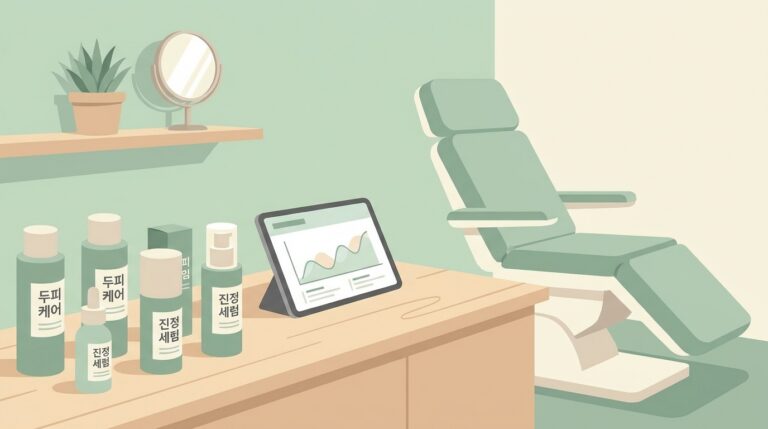
The Great Korean Hair Care Dilemma: Functional Shampoos vs. Clinical Interventions
Phase 1: 공감 (Story-Immersive Opening)
안녕하세요! 매일한글 에디터입니다. Have you ever stood in the dazzling, labyrinthine hair-care aisle of an Olive Young in Gangnam or Myeongdong, staring at endless rows of sleek bottles labeled ‘탈모 증상 완화’ (hair loss symptom relief)? Or perhaps you were watching an episode of I Live Alone (나 혼자 산다) where a seemingly immortal celebrity suddenly confesses to obsessively scrutinizing their widening hair part (가르마) under harsh vanity mirrors. If you’ve spent any significant time immersing yourself in Korean culture, you already know that hair density isn’t just about grooming—it is treated as the ultimate frontier of self-discipline and vitality.
Yet, for high-level Korean learners, this topic presents a fascinating paradox. We often find ourselves caught between commercial marketing buzzwords and rigid medical jargon. You buy a 45,000 KRW premium caffeine-infused scalp formula hoping for a miracle, only to have your Korean dermatologist tell you bluntly: “그건 샴푸일 뿐입니다” (That is merely shampoo). Navigating the delicate nuance between cosmetic maintenance (홈케어) and actual trichological therapy (전문 임상 치료) requires sophisticated language skills. Based on real feedback from our advanced learners navigating Korean healthcare systems, this guide is crafted to elevate your Korean expression to CEFR C2 fluency, decoding not only the linguistic intricacies of hair care but also the social psychology behind South Korea’s vibrant ‘preventative aesthetic’ culture.
Phase 2: 핵심 표현 3선 심층 분석 (Core Expressions Deep-Dive)
1. 머리숱이 눈에 띄게 줄다 (Meorisureul nune ttuige julda)
- Pronunciation: [Meo-ri-su-si nu-ne tti-ge jul-da] (Think of ‘meori’ like ‘mercy’ without the ‘cy’, and ‘tteui’ as a sharp, glided diphthong rhyming with a swift ‘tweet’ without the ‘t’.)
- Meaning: Literal: Hair volume decreases visibly. / Nuance: An alarming, undeniable reduction in hair density that signals an urgent transition from casual indifference to immediate intervention.
- K-Culture Moment: The dreaded realization scene in K-Dramas where a high-flying CEO rubs their scalp in a luxury restroom, finding several strands on their fingers, muttering this exact phrase to their secretary.
- Editor’s Insight: ‘머리숱’ specifically refers to the collective density or thickness of hair strands, not the length. Adding ‘눈에 띄게’ (noticeably/markedly) transforms this from an objective observation into a high-stakes realization.
- Situation Spectrum: Casual (✅), Semi-formal (✅), Formal (✅)
- 🤔 Think About It: In many Western societies, admitting hair thinning can be taboo or heavily masked with humor. Why do Koreans address shifts in physical density with such clinical candor?
2. 밑 빠진 독에 물 붓기 (Mit ppajin doge mul butgi)
- Pronunciation: [Mit ppa-jin do-ge mul but-gi] (Imagine ‘Mit’ as ‘mitt’, ‘ppa’ as an explosive ‘ppa’ like ‘pop’, and ‘doge’ like ‘doh-geh’.)
- Meaning: Literal: Pouring water into a bottomless earthenware jar. / Nuance: A futile, Sisyphean expenditure of money and energy on temporary or superficial remedies while ignoring root clinical causes.
- K-Culture Moment: A pragmatic Korean pharmacist gently advising an international customer that purchasing expensive functional shampoos without an oral prescription (like finasteride/dutasteride) is simply 밑 빠진 독에 물 붓기.
- Editor’s Insight: This classic proverb reaches peak rhetorical power at the C2 level when debating cost-efficiency. It carries a cutting, pragmatic weight that cautions against wishful thinking.
- Situation Spectrum: Casual (✅), Semi-formal (✅), Formal (⚠️ — use with care, can sound overly blunt)
- 🤔 Think About It: How does the cultural ubiquity of this proverb reflect the Korean prioritization of rapid, tangible efficacy (가성비 and 효능) over prolonged aesthetic hope?
3. 골든타임을 놓치다 (Goldeuntaimeul notchida)
- Pronunciation: [Gol-deun-ta-i-meul not-chi-da] (Koreanized English loanword ‘Golden Time’ followed by the verb ‘notchida’, pronounced like ‘note-chee-dah’.)
- Meaning: Literal: To miss the golden hour. / Nuance: Failing to act during the critical medical window before irreversible follicle miniaturization (연모화) and permanent cell death occur.
- K-Culture Moment: Frequently heard in medical dramas like Hospital Playlist (슬기로운 의사생활), but now a staple phrase across Korean dermatology consults to emphasize early intervention.
- Editor’s Insight: In Korean trichology, follicle death is permanent. Borrowed from trauma medicine, ‘골든타임’ emphasizes that hair restoration is time-sensitive, distinguishing proactive treatment from retroactive regret.
- Situation Spectrum: Casual (✅), Semi-formal (✅), Formal (✅)
- 🤔 Think About It: Contrast the medical framing of aesthetic aging in Korea with other cultures. Does framing cosmetic preservation as an emergency medical timeframe motivate healthier habits or heighten collective anxiety?
Phase 3: 교과서 한국어 vs 진짜 한국어 (Textbook vs. Authentic Korean)
Situation A: Asking if anti-hair loss shampoo actually produces biological regrowth
- 📖 교과서 한국어: 이 기능성 샴푸는 탈모 치료에 의학적 효과가 있습니까? (I gineungseong syampuneun talmo chiryoe uihakjeok hyogwaga itsseumnikka? / Does this functional shampoo have medical efficacy in treating hair loss?)
- 🗣️ 진짜 한국어: 솔직히 이 샴푸 쓰면 모발 연모화가 잡히나요, 아니면 그냥 플라시보 효과에 불과한가요? (Soljiki i syampu sseumyeon mobal yeonmohwaga japhinayo, animyeon geunyang peullasibo hyogwae bulgwahangayo? / Honestly, does using this shampoo arrest hair miniaturization, or is it nothing more than a placebo effect?)
- 💡 왜 다를까? Educated Koreans rarely ask generic questions about ‘medical efficacy’ (의학적 효과). At an advanced level, discerning consumers use clinical terms like 연모화 (hair miniaturization) and contrast genuine outcomes against 플라시보 (placebo), demonstrating sharp consumer literacy.
Situation B: Deciding between home cosmetics and clinical prescriptions
- 📖 교과서 한국어: 병원에서 의사의 진료를 받는 것이 더 좋습니다. (Byeongwoneseo uisaui jinryoreul banneun geosi deo joseumnida. / It is better to receive an examination from a doctor at a hospital.)
- 🗣️ 진짜 한국어: 비싼 홈케어로 시간 낭비하지 마시고, 당장 피부과 가서 처방전부터 떼시는 게 남는 장사예요. (Bissan homkeeoro sigan nangbihaji masigo, dangjang pibugwa gaseo cheobangjeonbuteo ttesineun ge namneun jangsayeo. / Don’t waste precious time on pricey home cosmetics; getting an immediate dermatology prescription is what actually saves your investment.)
- 💡 왜 다를까? C2 native speakers favor transactional, highly colloquial metaphors like 남는 장사예요 (it is a profitable deal/worthwhile move) and direct actions like 처방전부터 떼다 (to pull/procure a prescription), moving past passive textbook suggestions.
Phase 4: K-Culture 딥다이브 & 비언어적 매너 (Cultural Codes & Mannerisms)
4-1. 눈치 (Nunchi) & Consultation Non-Verbal Manners
When discussing hair loss (탈모) in Korea, remember that while the society is clinically pragmatic, personal pride remains delicately fragile. When visiting a clinic or consulting a Korean specialist:
1. The Gentle Tilt: Rather than bluntly pointing at your thinning crown, slightly bow your head toward the doctor and trace the area lightly with the back of your fingertips, using phrases like “이쪽 가르마 라인이 예전 같지 않아서요” (The part line around here isn’t what it used to be).
2. Indirect Inquiries on Heredity: When doctors ask about family history (유전력), Koreans rarely say “My father is bald.” Instead, they soften the blow: “집안 내력이 조금 있는 편이라 미리 예방 차원에서 왔습니다” (There is a slight familial tendency, so I came early as a preventative measure).
4-2. Cultural Code Analysis: The ‘득모 (Deukmo)’ Solidarity
In Korea’s hyper-digital sphere, hair loss has spawned its own subculture. Online communities like the legendary 탈모 갤러리 (Hair Loss Gallery) and specialized platforms have turned a source of profound insecurity into a shared community journey. The overarching greeting among members is “득모하세요!” (Deukmo-haseyo! — literally “May you acquire hair!”, modeled after the Buddhist or martial arts term 득도 / 득점). Understanding this term exposes a core feature of modern Korean collectivism: communal solidarity through self-deprecating humor and shared clinical triumphs over biological destiny.
Phase 5: 실전 롤플레이 시나리오 (Advanced Roleplay Scenario)
Setting: Consultation Room 3 at an elite dermatology & trichology clinic in Sinsa-dong, Seoul. Dr. Min (민 원장님), an incisive board-certified dermatologist, examines Julian, an advanced foreign professional experiencing thinning hair.
- 민 원장님: 어서 오세요. 줄리안 님, 차트에 정수리 쪽 볼륨 감소 때문에 오셨다고 적어주셨네요. 어디 한번 볼까요?
(Eoseo oseyo. Jullian nim, chateue jeongsuri jjok bollyum gamso ttaemune osyeotdago jeogeojusyeotneyo. Eodi hanbeon bolkkayo?)
(Welcome, Julian. You noted on your chart that you came in due to decreased volume around your crown. Shall we take a look?)
🎭 민 원장님이 확대경 카메라(Dermatoscope)를 집어 들며 환자의 정수리 부위를 조심스럽게 가르마 탄다. -
줄리안: 네, 원장님. 최근 몇 달간 머리 감을 때 배수구에 빠지는 양이 심상치 않더라고요. 시중에서 유명하다는 비오틴 탈모 샴푸를 석 달째 쓰고 있는데 별 차도가 없어요.
(Ne, wonjangnim. Choegeun myeot dalgan meori gameul ttae baesugue ppajineun yangi simsangchi anteoragoyo. Sijungeseo yumeonghadaneun biotin talmo syampureul seok daltjjae sseugo inneunde byeol chadoga eopseoyo.)
(Yes, Doctor. For the past few months, the amount falling into the drain when I wash my hair has been alarming. I’ve been using that famous biotin anti-hair loss shampoo for three months, but there’s no visible improvement.)
🎭 줄리안은 초조한 듯 손가락을 깍지 끼고 모니터 화면을 응시한다. -
민 원장님: 화면 보시면요, 후두부에 비해 정수리 모발 굵기가 절반 이하로 가늘어졌죠? 전형적인 남성형 탈모의 연모화 초기 단계입니다.
(Hwamyeon bosimyeon-yo, hudubue bihae jeongsuri mobal gukgiga jeolban iharo ganeuleojyeotjyo? Jeonhyeongjeogin namseonghyeong talmoui yeonmohwa chogi dangye-imnida.)
(Looking at the screen, see how the hair shaft thickness at the crown is less than half compared to the occipital area at the back? This is the classic early miniaturization stage of male pattern hair loss.)
🎭 민 원장님이 정상 모발과 환자의 모낭 부위를 비교하는 캡처 이미지를 펜으로 가리킨다. -
줄리안: 그렇군요… 그럼 제가 쓰던 탈모 방지 샴푸는 의학적으로는 전혀 소용이 없었던 건가요?
(Geureokgunyo… Geureom jega sseudeon talmo bangji syampuneun uihakjeogeoroneun jeonhyeo soyongi eopseotdeon geongayo?)
(I see… So does that mean the anti-hair loss shampoo I was using was medically useless?)
🎭 씁쓸한 표정으로 헛웃음을 짓는다. -
민 원장님: 기능성 샴푸는 두피 각질과 피지를 세정해 주는 보조적 환경을 만들어줄 뿐이지, 호르몬성 유전 탈모의 진행을 멈추는 임상적 기전은 없습니다. 밑 빠진 독에 물 붓기였던 셈이죠.
(Gineungseong syampuneun dupi gakjilgwa pijireul sejeonghae juneun bojojeok hwan-gyeongeul mandeureojul ppuniji, horeumonseong yujeon talmoui jinhaengeul meomchuneun imsangjeok gijeoneun eopseumnida. Mit ppajin doge mul butgiyeotdeon semijyo.)
(Functional shampoos merely create an auxiliary environment by cleansing scalp sebum and dead skin cells; they possess no clinical mechanism to halt hormonal, hereditary hair loss. It was effectively pouring water into a bottomless jar.)
🎭 차분하지만 단호한 어조로 설명한다. -
줄리안: 결국 약물 치료라는 골든타임을 놓치기 전에 브레이크를 걸어야 한다는 말씀이시네요.
(Gyeolguk yangmul chiryoraneun goldeuntaimeul notchigi jeone beure-ikeureul georeoya handaneun malsseumisineyo.)
(In essence, you’re saying I must step on the brakes before missing the golden hour of pharmacological treatment.)
🎭 결심이 선 듯 고개를 끄덕인다. -
민 원장님: 정확합니다. 먹는 약으로 5알파 환원효소를 차단해 진행을 동결시키고, 필요시 메조테라피나 레이저 치료를 병행하는 게 교과서적 정공법입니다.
(Jeonghwakhamnida. Meongneun yageuro o-alpa hwan-wonhyosoreul chadanhae jinhaengeul donggyeolsikigo, piryosi mejoterapina re-ijeo chiryoreul byeonghaenghaneun ge gyogwaseojeok jeonggongbeobimnida.)
(Exactly. Freezing progression by inhibiting the 5-alpha reductase enzyme with oral medication, combined with mesotherapy or laser treatment if necessary, is the textbook orthodox approach.)
🎭 처방전 입력창을 열며 환자를 안심시키는 미소를 짓는다. -
줄리안: 원장님 말씀대로 하겠습니다. 샴푸에 헛돈 쓰지 말고, 근본적인 원인부터 잡아야겠네요.
(Wonjangnim malsseumdaero hagetseumnida. Syampue heotdon sseuji malgo, geunbonjeogin woninbuteo jabayagetneyo.)
(I’ll follow your recommendation, Doctor. Rather than throwing money away on shampoos, I need to tackle the root cause head-on.)
🔀 인터랙티브 분기점 (Choose Your Response)
At turn 6, what if Julian had responded differently?
- Option A: “샴푸는 화장품일 뿐이니까, 당장 피나스테리드 계열 경구약 처방해 주시고 두피 주사 스케줄도 잡아주세요.”
- Outcome: [BEST] Shows exceptional clinical discernment and linguistic naturalness. The doctor treats you as a thoroughly informed peer.
- Option B: “선생님, 그래도 샴푸가 천연 성분이라 더 안전하지 않을까요? 약은 부작용이 무서워서요.”
- Outcome: [RISK] While valid, falling back on ‘natural ingredients’ (천연 성분) triggers a long medical lecture from Korean doctors tired of greenwashing marketing myths.
- Option C: “그럼 머리 심는 수술(모발 이식) 지금 당장 예약할게요!”
- Outcome: [BAD] Suggesting surgical transplant (모발 이식) during early miniaturization skips essential pharmacological stabilization, marking you as impulsive rather than strategic.
Phase 6: 10초 감정 섀도잉 드릴 (Emotional Shadowing Drill)
Repeat each sentence aloud, strictly honoring the intonation slashes (/) and internalizing the specific psychological state:
- [😟 깊은 좌절과 불안감을 담아]
매일 / 배수구를 볼 때마다 / 머리숱이 눈에 띄게 줄어드는 게 / 피부로 체감돼요.
(Maeil / baesugureul bol ttaemada / meorisureul nune ttuige jureodeuneun ge / piburo chegamdwaeyo.)
“Every single day / whenever I look at the shower drain / the visible decline in my hair density / hits home so painfully.” -
[👨⚕️ 단호하고 명쾌한 전문가의 톤으로]
기능성 샴푸에만 매달리는 건 / 밑 빠진 독에 물 붓기예요, / 지금 골든타임을 잡으셔야 합니다.
(Gineungseong syampu-eman maedallineun geon / mit ppajin doge mul butgi-yeyo, / jigeum goldeuntaimeul jabusyeoya hamnida.)
“Clinging only to functional shampoos / is pouring water into a bottomless jar; / you must seize the golden hour right now.” -
[💡 냉철한 확신과 안도감을 느끼며]
샴푸는 / 단순 세정제일 뿐이라는 걸 인정하니까, / 오히려 치료 방향이 / 명확해졌어요.
(Syampuneun / dansun sejeongje-il ppuniraneun geol injeonghanikka, / ohiryeo chiryo banghyangi / myeonghwak-haejyeosseoyo.)
“Once I accepted that shampoo / is nothing more than a simple cleansing agent, / my clinical treatment path / became completely clear.”
Phase 7: K-Culture 미니 사전 (Mini Dictionary)
-
탈모 기능성 샴푸 (Talmo gineungseong syampu) | Cosmeceutical Anti-Hair Loss Shampoo
- A cosmetic formulation classified by the Korean Ministry of Food and Drug Safety (MFDS) as ‘functional’ to alleviate scalp conditions. Widely used daily, but legally recognized as unable to stimulate new follicle growth or cure genetic alopecia.
- 연모화 (Yeonmo-hwa) | Hair Miniaturization
- The pathological thinning of individual hair shafts caused by dihydrotestosterone (DHT). Used in advanced clinical diagnostics to distinguish natural shedding from progressive hereditary alopecia.
- 득모 (Deukmo) | Gaining/Preserving Follicles
- An iconic neologism born in online trichology forums. Used as both a congratulatory cheer and a parting blessing (“오늘도 득모하는 하루 되세요!”).
- 모발 이식 (Mobal isik) | Autologous Hair Transplantation
- Surgical relocation of DHT-resistant follicles from the occipital scalp to the hairline or crown. Considered the definitive architectural restoration once pharmacological treatments stabilize hair loss.
Phase 8: 여행자를 위한 생존 키트 (Traveler’s Survival Kit)
Survival Expressions TOP 3
- 처방전 없이 살 수 있는 바르는 탈모약 있나요?
(Cheobangjeon eopsi sal su inneun bareuneun talmoyak innayo?)- Pro Tip: Perfect for Korean pharmacies (약국) when buying OTC topical Minoxidil (미녹시딜) without paying a clinical consult fee.
- 이 성분이 식품의약품안전처 인증을 받은 탈모 완화 성분인가요?
(I seongbuni sikpum-uiyakpum-anjeoncheo injeungeul badeun talmo wanhwa seongbuningayo?)- Pro Tip: Use this at department stores or health & beauty retailers to separate rigorous MFDS-verified cosmeceuticals from unverified marketing claims.
- 피부과 전문의가 진료하는 병원이 맞나요?
(Pibugwa jeonmun-uiga jinryohaneun byeongwoni mannayo?)- Pro Tip: In Korea, general practitioners can open aesthetic clinics. Looking for genuine 피부과 전문의 (Board-certified Dermatologist) ensures rigorous diagnostic trichology rather than mere cosmetic upsells.
Editor’s Travel Note
If you’re residing in or visiting Seoul and need reliable consultation without language friction, utilize the [굿닥(Goodoc) 병원 예약 및 비대면 진료 플랫폼] to verify whether the clinic houses board-certified dermatologists (전문의). For those navigating health products, consult the [올리브영 공식 모바일 앱 헤어케어 카테고리] to check real user reviews filtered by scalp type and ingredient verification before visiting brick-and-mortar stores.
Phase 9: “한 발 더 깊이” (Humanities Essay & Critical Thinking)
South Korea’s preoccupation with hair density exposes deep sociological dimensions of modern Korean life. In a hyper-dense society shaped by Confucian self-cultivation (신체발부 수지부모, the body as a gift from parents to be preserved impeccably) and intense modern professional aesthetics, visible hair thinning is rarely seen as a mere biological variance. Instead, it is frequently misattributed to stress, self-neglect, or premature decline. Yet, this high social pressure has catalyzed one of the most clinically transparent and accessible dermatological ecosystems on earth. Rather than letting shame force individuals into isolation, modern Koreans democratize clinical literacy, transforming private anxieties into open medical strategy and collective encouragement.
💬 Your Turn: In your home country, is addressing hair thinning viewed primarily as a medical issue, a cosmetic embarrassment, or a natural badge of aging? How does this alter your approach to medical treatment versus over-the-counter purchases?
Phase 10: FAQ & 오해 방지 (FAQ Schema)
Q: Can anti-hair loss functional shampoos (탈모 기능성 샴푸) actually regrow fallen hair?
A: Legally and scientifically, no. Under South Korea’s Ministry of Food and Drug Safety guidelines, functional shampoos only alleviate symptoms by cleansing sebum and soothing scalp inflammation. True regrowth requires clinical vasodilators (topical Minoxidil) or 5-alpha reductase inhibitors (oral Finasteride/Dutasteride) prescribed by a doctor.
Q: Is a dermatologist (피부과) or a hair loss oriental clinic (탈모 한의원) the better starting point in Korea?
A: If your priority is rapid, evidence-based pharmacological stabilization of genetic male/female pattern hair loss, a board-certified dermatologist (피부과 전문의) is the international standard. Korean oriental clinics focus heavily on constitutional heat dissipation (두피 열 내리기) and herbal decoctions, which cater to holistic lifestyle management rather than direct DHT suppression.
Q: Are hair loss prescriptions covered by Korean National Health Insurance (국민건강보험)?
A: Generally, hereditary alopecia (유전성 안드로겐 탈모) is classified as cosmetic/non-benefit (비급여), meaning the patient pays the full price for consultation and medication. However, autoimmune-related alopecia areata (원형 탈모) is considered a systemic medical condition and is widely covered by national insurance.
🚨 Common Mistakes (흔한 실수 TOP 3)
- Mistake 1: Expecting shampoos to replace clinical prescriptions.
- Correct Action: Treat shampoo strictly as scalp hygiene; consult a clinic immediately if miniaturization is observed.
- Mistake 2: Quitting oral medication after seeing hair shedding in the first month (셰딩 현상).
- Correct Action: Recognize that initial telogen effluvium shedding is a standard clinical indicator that new, healthier follicles are pushing out weak hair shafts.
- Mistake 3: Concealing thinning areas with heavy styling waxes or powders without thorough nightly cleansing.
- Correct Action: Styling agents block scalp pores; use gentle water-soluble styling products and double-cleanse thoroughly.
Phase 11: 액션 미션 & 참여 유도 (Action Missions)
- 🥉 Bronze Mission (Solo Practice): Read the Phase 6 Shadowing Drills aloud three times in front of a mirror, matching native pace and emotional delivery.
- 🥈 Silver Mission (SNS & Forum Sharing): Leave a comment in Korean on an educational YouTube video or community post about hair health, using the idiom 밑 빠진 독에 물 붓기 accurately.
- 🥇 Gold Mission (Real-world Execution): Visit a Korean pharmacy or clinic and ask: “탈모 초기 증상 때문에 그러는데, 전문의 상담 전 처방전 없이 쓸 수 있는 외용제가 있을까요?”
- 🎮 K-Culture Mission: Watch an episode of a Korean variety show or YouTube vlog dealing with 자기관리 (self-care), and tally how many times you spot clinical terminology versus marketing jargon!
Phase 12: 인터랙티브 퀴즈 챌린지 (Interactive Quiz)
1. Situational Judgment:
Julian has noticed noticeable hair thinning for six months. A beauty clerk recommends a 100,000 KRW premium organic hair loss shampoo guaranteed to ‘sprout new baby hairs.’ How should an enlightened C2 learner respond?
* A) “정말요? 두 병 사서 아침저녁으로 감아볼게요.”
* B) “샴푸는 의약외 세정제일 뿐인데, 모낭 재생을 장담하시는 건 과장 광고 아닌가요?”
* C) “그럼 머리 심는 수술 예약부터 잡아주세요.”
👉 정답 및 해설 보기 (Click to reveal answer)
- Answer: B
- Explanation: A C2 speaker demonstrates intellectual autonomy. Recognizing that hair shampoos cannot clinically stimulate dead follicles and politely challenging misleading promotional assertions (과장 광고) represents authentic native-level mastery.
2. Fill-in-the-Blank:
모낭이 완전히 퇴화하기 전에 치료를 시작해야 합니다. 지금이 바로 탈모 치료의 ( )을/를 잡을 때입니다.
👉 정답 및 해설 보기 (Click to reveal answer)
- Answer: 골든타임 (Golden Time)
- Explanation: Refers to the critical clinical window required to intervene before hair follicle miniaturization (연모화) transitions into complete, irreversible hair loss.
3. True or False (K-Culture Quiz):
Korean cosmetic regulations permit functional anti-hair loss shampoos (탈모 기능성 샴푸) to be legally marketed as medical cures that halt genetic hair loss.
👉 정답 및 해설 보기 (Click to reveal answer)
- Answer: FALSE
- Explanation: The Korean MFDS strictly classifies these shampoos as functional cosmetics that assist in symptom alleviation, not clinical pharmaceuticals capable of altering hereditary progression.
“







