

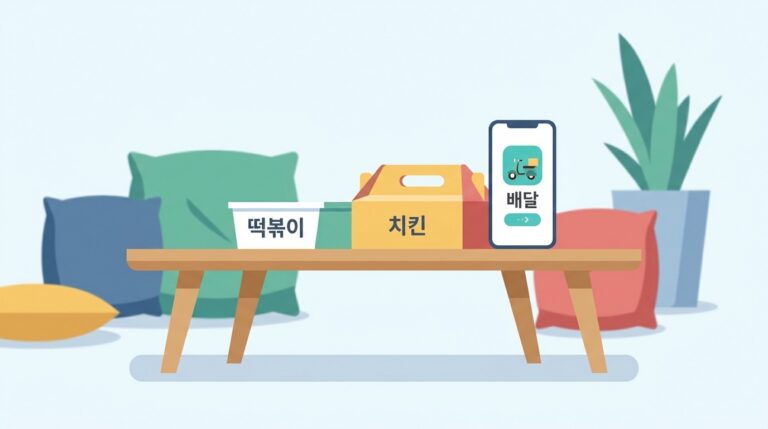
Phase 1: Empathy — The Late-Night Delivery Dilemma
안녕하세요! It’s your Daily Hangul editor here, your reliable companion navigating the delicious labyrinth of Korean daily life.
Picture this: It is 11:30 PM on a crisp Friday evening in Seoul. You have just finished a gripping K-drama marathon, and your stomach lets out an unmistakable rumble. Naturally, you crave late-night comfort food—piping-hot tteokbokki and crispy gim-mari seaweed rolls. You fire up a delivery app like Baedal Minjok (배달의민족), select your favorite local spot, and drop a generous portion into your cart: 9,000 KRW. You proudly tap “Order,” only to be greeted by an unapologetic, glowing red banner: “최소 주문 금액 15,000원” (Minimum Order Amount: 15,000 KRW).
You are stranded in a 6,000 KRW no-man’s-land. Ordering a second full entrée feels overwhelmingly wasteful, but giving up your midnight feast is out of the question. Many intermediate Korean learners experience this exact frustration. You understand basic dining vocabulary, yet when confronted with app-specific thresholds, real-time negotiation with friends, or strategically customizing your cart, textbooks leave you high and dry. Based on real-world experiences from international residents across Korea, this guide gives you the linguistic tools and cultural street-smarts to hit that minimum amount effortlessly like a true Seoulite.
Phase 2: Core 3 Expressions In-Depth
1. 최소 주문 금액 (Choeso jumun geumaek)
- Pronunciation: [Choeso jumun geumaek] (Sounds like chway-so joo-moon goo-mek, rhythmic and crisp)
- Meaning: Literal: “Minimum order amount” | Nuance: The threshold required by Korean restaurant owners to offset delivery partner platform commissions and rider dispatch costs.
- K-Culture Moment: You will see this prominently displayed in bold red letters on every delivery app UI and food truck pickup screen.
- Editor’s Insight: The word 최소 (choeso) means “minimum” (antonym: 최대, choedae). In Korean consumer culture, hitting this threshold is not just a checkout rule—it is a game of optimization.
- Situation Spectrum: Casual ✅ / Semi-formal ✅ / Formal ✅
- 🤔 Think About It: In many Western countries, delivery fees scale dynamically if your order is small. Why do Korean platforms enforce a strict threshold floor before allowing payment?
2. 사이드로 채우자 (Saideuro chaeuja)
- Pronunciation: [Saideuro chaeuja] (Sounds like sigh-deu-roh chay-oo-jah)
- Meaning: Literal: “Let’s fill [the remaining balance] with side dishes” | Nuance: The go-to tactical move when you lack just a few thousand won to meet delivery minimums.
- K-Culture Moment: Classic university dorm scenes in youth dramas where roommates negotiate their late-night chimaek (chicken + beer) order.
- Editor’s Insight: Notice the verb 채우다 (chaeuda), meaning “to fill up” or “to replenish.” Koreans rarely say “let’s buy more food”; they say “let’s fill the balance” (금액을 채우다).
- Situation Spectrum: Casual ✅ / Semi-formal ⚠️ / Formal 🚫
- 🤔 Think About It: How does phrasing extra food purchases as “filling a gap” reduce the psychological guilt of buying extra calories?
3. 토핑 추가할게요 (Toping chugahalgeyo)
- Pronunciation: [Toping chugahalgeyo] (Sounds like toh-ping choo-gah-hal-geh-yo)
- Meaning: Literal: “I will add toppings” | Nuance: Politely requesting customization or selecting add-ons in order to reach an order threshold without accumulating leftover food.
- K-Culture Moment: Customizing spicy yeopgi tteokbokki with mozzarella cheese, Chinese flat glass noodles (dangmyeon), and Vienna sausages.
- Editor’s Insight: The noun 추가 (chuga) means “addition” or “supplement.” Combining it with -하다 (hada) creates a versatile formula you can use in beauty clinics, cafes, and restaurants.
- Situation Spectrum: Casual ✅ / Semi-formal ✅ / Formal ✅
- 🤔 Think About It: Does your native culture embrace food customization as freely as Korean dining, where toppings fundamentally redefine dishes?
Phase 3: Textbook Korean vs. Real Korean
Scenario 1: Figuring out how much more money is needed
- 📖 Textbook Korean: 얼마를 더 주문해야 합니까? (Eolmareul deo jumunhaeya hamnikka? – How much more must I order?)
- 🗣️ Real Korean: 얼마 더 채워야 돼요? (Eolma deo chaewoya dwaeyo? – How much more do we need to fill the minimum?)
- 💡 Why it differs: Textbook phrasing sounds like an interrogation at customs. Native speakers gravitate naturally to the verb 채우다 (to fill) when dealing with quotas, hours, or minimum balances.
Scenario 2: Suggesting teaming up with someone nearby
- 📖 Textbook Korean: 저와 함께 음식을 주문하시겠습니까? (Jeowa hamkke eumsigeul jumunhasigesseumnikka? – Would you like to order food with me?)
- 🗣️ Real Korean: 배달비 아낄 겸 같이 시킬래? (Baedalbi akkil gyeom gachi sikillae? – Wanna order together to save on delivery fees?)
- 💡 Why it differs: Casual Korean values conversational economy. The grammar pattern -(으)ㄹ 겸 (겸사겸사) captures dual-purpose intentions smoothly without rigid formality.
Phase 4: K-Culture Deep Dive & Non-Verbal Manners
4-1. 눈치 (Nunchi) & Rider Etiquette
When ordering delivery in an apartment complex or officetel, situational awareness (nunchi) is essential. Delivery drivers move at breakneck speeds to fulfill tight platform windows.
* The Doorstep Protocol: Unless you are paying cash upon arrival (현장 결제), Korean residents rarely greet the driver face-to-face.
* The Quiet Note: In the delivery instructions box (라이더 요청사항), the golden standard is typing: 문 앞에 두고 벨 눌러주세요 (Mun ape dugo bel nulleojuseyo) — Please leave it at the door and ring the bell. It respects both the rider’s fast route and your personal privacy.
4-2. The “1-Person Household” Phenomenon
South Korea has seen a rapid explosion of 1인 가구 (single-person households). While restaurant bulk cooking requires minimum profitability margins, consumers push back against food waste. This cultural friction birthed 리뷰 이벤트 (Review Events), where store owners provide complimentary side dishes (like cheese balls or canned soda) in exchange for 5-star photo reviews. Knowing how to leverage these promotions helps you hit minimums strategically without overpaying.
Phase 5: Real-Life Roleplay Scenario
Setting: You are hanging out in the communal lounge of an international dormitory in Sinchon with your Korean dorm mate, Minji (민지), craving midnight fried chicken.
- 민지: 슬슬 출출한데 치킨 시켜 먹을까? (Seulseul chulchulhande chikin sikyeo meogeulkka?)
- 🎭 민지가 소파에 기대어 배달 앱을 켠다. (Minji leans against the sofa and opens the delivery app.)
- “I’m getting a bit peckish, should we order some chicken?”
- 학습자: 좋아! 반반 치킨 한 마리 시키자. (Joa! Banban chikin han mari sikija.)
- 🎭 메뉴를 고르며 신나게 핸드폰을 바라본다. (Excitedly looking at the phone while browsing the menu.)
- “Sounds great! Let’s get one half-and-half chicken.”
- 민지: 헐, 여기 최소 주문 금액이 22,000원이네? 우리 지금 19,000원이야. (Heol, yeogi choeso jumun geumaegi iman-icheon-won-ine? Uri jigeum man-gucheon-won-iya.)
- 🎭 화면 속 빨간 글씨를 가리키며 난감한 표정을 짓는다. (Points at the red text on screen with a perplexed look.)
- “Oh no, the minimum order here is 22,000 won? We’re only at 19,000 won right now.”
- 학습자: 3,000원 부족하네. 얼마 더 채워야 되는지 고민할 필요 없이 사이드 넣자. (Samcheon-won bujokane. Eolma deo chaewoya doeneunji gominhal piryo eopsi saideu neotja.)
- 🎭 자신감 있는 표정으로 사이드 메뉴 탭을 탭한다. (Taps the side menu tab with a confident expression.)
- “We are 3,000 won short. No need to fret over filling the gap—let’s just add a side.”
- 민지: 센스 대박! 감자튀김 넣을까, 치즈볼 넣을까? (Senseu daebak! Gamjatwigim neoeulkka, chijeubol neoeulkka?)
- 🎭 눈을 반짝이며 학습자를 쳐다본다. (Eyes sparkling, looking at you.)
- “Great instincts! Should we add French fries or cheese balls?”
- 학습자: 치즈볼 추가하고 콜라 사이즈업 하면 딱 맞겠다! (Chijeubol chugahago kolla saijeueop hamyeon ttak matgetda!)
- 🎭 손가락을 튕기며 장바구니에 아이템을 담는다. (Snaps fingers and adds items to the cart.)
- “If we add cheese balls and size up the cola, it’ll hit the amount perfectly!”
- 민지: 나이스. 요청사항에 ‘문 앞에 놓아주세요’ 체크했어. (Naiseu. Yocheongsahanga ‘mun ape noajuseyo’ chekeuhaesseo.)
- 🎭 결제 버튼을 누르며 고개를 끄덕인다. (Nods while pressing the checkout button.)
- “Nice. I checked ‘Please leave at the door’ in the request box.”
- 학습자: 배달비도 아끼고 야식도 성공했네! (Baedalbido akkigo yasikdo seonggonghaenne!)
- 🎭 뿌듯하게 미소 짓는다. (Smiles with immense satisfaction.)
- “We saved on delivery costs and secured our late-night snack!”
🔀 Interactive Decision Point
Suppose you are 1,500 KRW short of the minimum order, and adding an appetizer costs 5,000 KRW. What do you do?
* Choice A: 시키지 말고 그냥 라면 끓여 먹자. (Sikiji malgo geunyang ramyeon kkeullyeo meokja. – Cancel the order and just cook instant ramen.)
* Choice B: 소스 추가나 음료수 추가해서 금액 맞추자. (Soseu chugana eumnyosu chugahaeseo geumaek matchuja. – Add extra dipping sauces or a canned drink to hit the exact amount.)
* Choice C: 메인 메뉴를 하나 더 시켜서 내일도 먹자. (Mein menyureul hana deo sikyeoseo naeildo meokja. – Order an entire second main meal and save it for tomorrow.)
Feedback:
* Choice A (Risk): You save money, but you sacrifice the late-night satisfaction of a delicious meal.
* Choice B (Best!): Flawless strategy! Condiments (치킨무, 소스) or soft drinks (콜라, 사이다) cost between 1,000 and 2,000 KRW, bridging small gaps without surplus leftovers.
* Choice C (Bad): Delivery food rarely tastes as fresh reheated the next day, and it balloons your budget unnecessarily.
Phase 6: 10-Second Emotional Shadowing Drill
Practice reading these out loud, observing pauses (marked with /) and mimicking the emotional cue:
[🤔 고민하며 - Hesitant & contemplative]
2,000원 부족한데… / 그냥 치즈볼 추가할까?
(Icheon-won bujokande… / geunyang chijeubol chugahalkka?)-
[💡 번뜩이며 - Sudden realization & excitement]
최소 주문 금액 맞추려면 / 음료수 하나 더 넣자!
(Choeso jumun geumaek matchuryeomyeon / eumnyosu hana deo neotja!) -
[😋 기대하며 - Eager & appetizing anticipation]
리뷰 이벤트 참여하면 / 사이다 공짜로 주신대!
(Ribyu ibenteu chamyeohamyeon / saida gongjjaro jusindae!)
Phase 7: K-Culture Mini Dictionary
- 배달팁 (Baedaltip): The consumer-facing delivery fee calculated by distance, weather, and peak hours. Unlike gratuity in North America, this is a fixed digital surcharge, not an optional tip.
- 리뷰 이벤트 (Ribyu Ibenteu): A promotional mechanism where customers commit to writing a high-rating photo review in the app comments in exchange for an instant free side item.
- 모둠 튀김 (Modum Twigim): An assorted sampler of fried delicacies (squid, sweet potato, dumplings, seaweed rolls). The ultimate basket-builder when you need 4,000 to 5,000 KRW to bridge a cart gap.
- 1인분 (Irinbun): A single portion or serving. Knowing this helps you identify restaurants that cater specifically to solo diners without imposing crushing 2-person minimums.
Phase 8: Traveler’s Survival Kit
Top 3 Survival Phrases
- 최소 주문 금액이 얼마예요? (Choeso jumun geumaegi eolmayeyo?)
- “What is the minimum order amount?”
- 💡 Pro Tip: Use this when calling a mom-and-pop store or ordering takeaway at a neighborhood counter.
- 사이드 메뉴 추천해 주세요. (Saideu menyu chucheonhae juseyo.)
- “Please recommend a side dish.”
- 💡 Pro Tip: If you have to spend an extra 3,000 KRW, let the staff pick their store’s most popular snack item.
- 문 앞에 두고 문자 주세요. (Mun ape dugo munja juseyo.)
- “Please leave it in front of the door and send a text.”
- 💡 Pro Tip: Ideal for travelers in Airbnbs who want quiet drop-offs without awkward language encounters.
Editor’s Travel Note
For short-term travelers who lack a Korean phone verification number or domestic credit card, mainstream apps can be tricky. Use the official Shuttle Delivery mobile service which seamlessly accepts international Visa/Mastercard and features a 100% English interface. If you do have a domestic account, setting up payments inside the Baedal Minjok Android and iOS application opens up hyper-local culinary gems invisible on standard tourist maps.
Phase 9: A Step Deeper — The Culture of Sharing and Solitude
Traditional Korean food culture has long been anchored in the concept of 정 (Jeong) and communal sharing—gathering around a sizzling grill or scooping stew from a collective pot. However, the rise of the high-speed delivery app ecosystem reflects modern hyper-individualism meeting old-school hospitality. As solo diners struggle with structural minimum order quotas designed for groups, we see a fascinating adaptation: solo eaters negotiate with the system through calculated side orders, review giveaways, and shared delivery clusters (배달 공구). Food remains communal in spirit, even when consumed in solitary modern apartments.
💬 Your Turn: What is the late-night comfort meal in your hometown, and how does your culture handle minimum delivery orders? Share your thoughts below!
Phase 10: FAQ & Common Mistakes
Q: Can I ask the restaurant to lower the minimum order amount if I pay a higher delivery fee?
A: In Korea’s digital delivery platform ecosystem, minimum order thresholds are hard-coded into the software. Neither the driver nor the restaurant cashier can bypass this setting inside the app. Always pad the cart with sides or drinks instead.
Q: What is the best low-cost item to fill a 1,000–2,000 KRW gap?
A: Condiments and beverages are your best friends. Search for 공깃밥 (gonggitbap – bowl of rice), 음료수 (eumnyosu – canned soda), or extra specialty sauces like 디핑소스 (dipping sauce).
Q: Is it customary to tip delivery drivers extra cash at the door in Korea?
A: No. Tipping is not part of Korean dining culture. All associated logistics expenses are already baked into the 배달팁 (delivery fee) charged at checkout.
🚨 Common Mistakes Alert
- ❌ Mistake 1: Selecting “현장 결제” (pay on delivery) expecting the driver to carry change for large 50,000 KRW bills.
- ✅ Correct Action: Always pay in advance via app checkout to ensure smooth contactless handover.
- ❌ Mistake 2: Missing the “리뷰 이벤트 참여” (participate in review event) checkbox when requesting free sides.
- ✅ Correct Action: Write your order note clearly: “리뷰 이벤트 참여할게요! 치즈스틱 부탁드려요” (I’ll write a review! Cheese sticks please).
- ❌ Mistake 3: Confusing 배달팁 (delivery fee) with 최소 주문 금액 (minimum order amount).
- ✅ Correct Action: Delivery fees do NOT count toward meeting the minimum order amount threshold.
Phase 11: Action Missions
- 🥉 Bronze Mission (Solo Mastery): Open any Korean menu or delivery app simulation and practice pronouncing: “얼마 더 채워야 돼요?” (Eolma deo chaewoya dwaeyo?) out loud three times.
- 🥈 Silver Mission (Social Connection): The next time you order food with a classmate or colleague, text them: “사이드로 채우자!” (Let’s fill it with side dishes!).
- 🥇 Gold Mission (Real-world Pro): Successfully reach a delivery order threshold using a side menu item or extra topping customization without ordering an unnecessary second entrée.
- 🎮 K-Culture Mission: Watch a contemporary slice-of-life K-drama (like Hospital Playlist or Work Later, Drink Now) and spot the characters gathering around coffee tables piled with takeout containers!
Phase 12: Interactive Quiz Challenge
1. Situational Judgment
You are ordering jjajangmyeon (black bean noodles) for 8,000 KRW, but the minimum delivery threshold is 12,000 KRW. Which sentence sounds most natural when asking your roommate to join?
* A) 저와 함께 최소 주문 금액을 합산하시겠습니까?
* B) 4,000원 부족한데 군만두 하나 시켜서 채울까?
* C) 식당 주인에게 전화해서 8,000원에 배달해 달라고 부탁하자.
2. Fill-in-the-Blank
최소 주문 금액을 ________ 음료수를 장바구니에 추가했어요.
(In order to match/hit the minimum order amount, I added a drink to my cart.)
* A) 채우려고 (chaeuryeogo)
* B) 버리려고 (beoriryeogo)
* C) 부수려고 (busuryeogo)
3. True / False Cultural Fact
In South Korea, delivery platform surcharges (배달팁) count directly toward reaching the store’s minimum order requirement (최소 주문 금액).
* True
* False
👉 Click to reveal answers & explanations!
- Answer: B | 군만두 (fried dumplings) for 4,000 KRW is the quintessential gap-filling snack. Choice A is overly robotic, and Choice C ignores platform rules.
- Answer: A (채우려고) | The verb 채우다 (to fill up) combined with -(으)려고 expresses the intention to complete the required financial threshold.
- Answer: False | The minimum order amount applies exclusively to food and beverage items in your cart. Delivery fees are an added service surcharge calculated separately at checkout!







