

Mastering Korean Project Timelines: How to Negotiate Milestones Like a Pro
Phase 1: Empathy (Real-World Storytelling)
안녕하세요! 매일한글 에디터입니다.
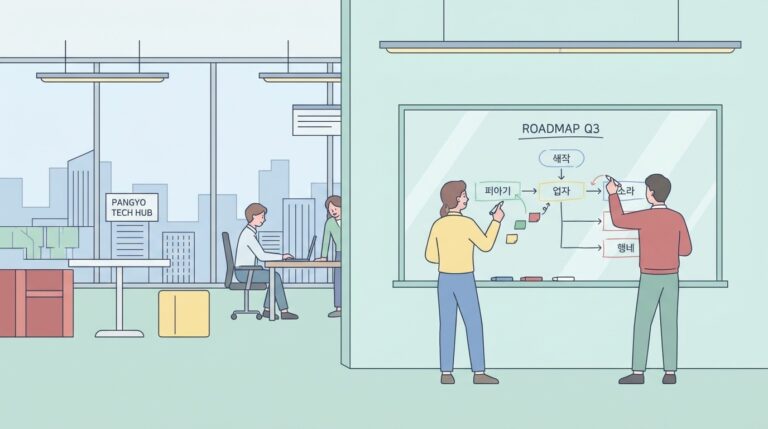
Picture this: You are standing in a sleek, glass-walled conference room overlooking the bustling tech district of Pangyo—Korea’s Silicon Valley. You have just pitched a comprehensive two-week sprint timeline to your department head. You feel confident. But then, your team lead tilts their head ever so slightly, exhales softly, and remarks: “글쎄요, 일정이 다소 빠듯할 것 같은데요…” (Well, the schedule seems a bit tight…).
Suddenly, your mind races. Did they just reject your proposal? Are they subtly urging you to push the team to work overtime? Or is this a polite corporate code pleading for a revised milestone before things fall apart?
If you have watched business K-Dramas like Misaeng (Incomplete Life) or Start-Up, you already know that schedule management in Korean corporate culture is never just about Gantt charts or Jira tickets. It is a high-stakes arena of hierarchy, relational harmony (인화), and acute contextual awareness (눈치). At a C1 proficiency level, relying on literal translations like “마감일을 바꾸겠습니다” (I will change the deadline) sounds abrupt, crude, and tactless. Instead, you need strategic, executive-level phrasing that asserts control, preserves relationships, and navigates organizational friction with grace. This guide is crafted directly from the real-world experiences of senior foreign professionals navigating Korea’s corporate waters.
Phase 2: Deep Dive into 3 Core Expressions
1. 일정을 조율하다 (Iljeong-eul joyulhada)
- Pronunciation: [Il-jeong-eul jo-yul-ha-da] (Pronounce ‘jo-yul’ like tuning the strings of an instrument)
- Meaning: Literal: To tune/coordinate a schedule | Actual: To negotiate, calibrate, or synchronize timelines harmoniously between multiple stakeholders.
- K-Culture Moment: In Start-Up, whenever CEO Seo Dal-mi meets with skeptical developers and venture capitalists, she avoids blunt phrases like “reschedule” and consistently proposes: “일정을 조율하겠습니다” (We will coordinate/tune the timeline).
- Editor’s Insight: The verb 조율하다 literally means “tuning a musical instrument” (악기를 조율하다). Using this word frames milestone shifts not as failures or missed targets, but as an artisan crafting harmony between teams.
- Situation Spectrum: Casual: 🚫 | Semi-formal: ⚠️ | Formal: ✅
- 🤔 Think About It: Why does Korean corporate culture prefer musical metaphors like “tuning” rather than mechanical words like “changing” or “moving” dates?
2. 마일스톤을 수립하다 (Maeilseuton-eul suriphada)
- Pronunciation: [Ma-il-seu-ton-eul su-rip-ha-da] (Crisp ‘su-rip’, rhyming with ‘deep’ but with an ‘r’ sound)
- Meaning: Literal: To establish milestones | Actual: To authoritatively set strategic checkpoints, stage gates, and key project deliverables.
- K-Culture Moment: In corporate legal or trading dramas like Misaeng, senior executives never simply “정하다” (pick/decide) deliverables; they “수립하다” roadmaps to display rigor and institutional governance.
- Editor’s Insight: While junior employees might use 마일스톤을 잡다 or 정하다, C1-level managers employ 수립하다 (to establish/found). It carries structural weight and demonstrates executive ownership.
- Situation Spectrum: Casual: 🚫 | Semi-formal: ⚠️ | Formal: ✅
- 🤔 Think About It: How does elevating everyday verbs into Sino-Korean formal terms shift the perceived authority of a project manager in your native language versus Korean?
3. 차질 없이 진행되도록 관리하겠습니다 (Chajil eopsi jinhaengdoedorok gwanrihagetseumnida)
- Pronunciation: [Cha-jil eop-si jin-haeng-doe-do-rok gwal-li-ha-get-seum-ni-da] (Note the liquid ‘l-l’ assimilation in ‘gwal-li’)
- Meaning: Literal: I will manage so that it proceeds without friction/disruption | Actual: “Consider it done on time; I take full professional ownership of this delivery pipeline.”
- K-Culture Moment: The iconic boardroom line spoken right before a commercial break in any K-Drama. It conveys absolute reliability to directors and reassuring peace of mind to investors.
- Editor’s Insight: 차질 refers to an unforeseen snag or glitch. By attaching the volitional suffix -겠- (관리하겠습니다), you offer stakeholders psychological reassurance (안도감).
- Situation Spectrum: Casual: 🚫 | Semi-formal: ⚠️ | Formal: ✅
- 🤔 Think About It: Western business communication often favors caveats and hedging to avoid liability, whereas Korean executives look for decisive verbal commitments of responsibility. Which do you lean toward?
Phase 3: Textbook Korean vs. Real-World Korean
Case 1: Negotiating a Buffer for Milestones
- 📖 교과서 한국어: “마감일을 지키세요.” (Magam-il-eul jikiseyo. / Please meet the deadline.)
- 🗣️ 진짜 한국어: “기한 내 납품될 수 있도록 일정 버퍼를 사전에 확보해 두겠습니다.” (Gihan nae nappumdoel su itdorok iljeong beopeoreul sajeone hwakbohae dugetseumnida. / I will secure a schedule buffer in advance so delivery completes within the deadline.)
- 💡 왜 다를까?: Demanding someone “keep the deadline” sounds accusatory and transactional. High-level corporate Korean frames the process around securing structural buffers (버퍼 확보) to preemptively eliminate execution risk.
Case 2: Announcing an Unavoidable Delay
- 📖 교과서 한국어: “프로젝트 일정이 늦어질 것 같습니다.” (Peurojekteu iljeong-i neujeojil geot gatseumnida. / The project schedule seems likely to be delayed.)
- 🗣️ 진짜 한국어: “예기치 못한 이슈로 병목 현상이 발생하여, 마일스톤 재조정이 불가피한 상황입니다.” (Yegichi mothan issyuro byeongmok hyeonsang-i balsaenghayeo, maeilseuton jaejoyeong-i bulgapihan sanghwang-imnida. / Due to unexpected issues causing bottlenecks, milestone recalibration is inevitable.)
- 💡 왜 다를까?: Saying “we are late” points blame directly at human incompetence. Advanced Korean detaches blame by identifying objective system constraints (병목 현상 – bottleneck), justifying the adjustment rationally.
Phase 4: K-Culture Deep Dive & Non-Verbal Nuance
4-1. 눈치 (Nunchi) & Body Language
When discussing milestones, never point directly at a screen or printed Gantt chart with an index finger. Always motion with an open palm facing upward (손바닥을 위로 향하기). If you must present a schedule delay, maintain a grounded posture with your upper body leaning slightly forward (상체를 약간 앞으로 기울이기) and take a deliberate, half-second pause before proposing dates. This physical cue shows that the adjustment was weighed with serious gravity and respect for the team’s workload.
4-2. Culture Code: Pangyo Tech Agility vs. Yeouido Rigor
Modern Korean workplaces reflect a dynamic tension between “Pangyo Style” (판교 테크 문화) and “Yeouido/Jongno Style” (여의도·종로 전통 대기업 문화). While Pangyo startups readily blend English agile terms with Korean honorifics (“스프린트 마일스톤 싱크 맞추시죠”), milestone agreements carry an unspoken communal pact across all sectors: a slipped deadline for one team almost certainly forces weekend work (주말 근무) onto down-stream dependencies. Setting milestones is therefore not just a technical computation—it is an exercise in mutual empathy and relational diplomacy.
Phase 5: Real-World Roleplay Scenario
Setting: A sunlit board room in Gangnam. Sujin (Project Lead) is reviewing Q3 platform deliverable timelines with Director Min (민 팀장), an exacting yet fair division head.
- 민 팀장: “수진 님, 이번 모바일 결제 엔진 고도화 건, 3차 스프린트 마일스톤이 다소 촉박해 보이는데 어떻게 보고 계신가요?”
(Sujin-nim, ibeon mobail gyeolje enjin godohwa geon, sam-cha seupeurinteu maeilseuton-i daso chokbakhae boineunde eotteoke bogo gyesingayo? / “Sujin, regarding the mobile payment engine upgrade, the 3rd sprint milestone looks somewhat tight. How do you view it?”)
🎭 [차분하게 슬라이드의 타임라인을 짚으며 안경을 고쳐 쓴다.] -
You (Sujin): “네, 팀장님. 코어 모듈 연동 테스트에서 종속성 이슈가 발생하여 일정 조율이 필요한 시점입니다.”
(Ne, timjangnim. Koeo modyul yeondong teseuteueseo jongsokseong issyuga balsaenghayeo iljeong joyuri pil-yohan sijeom-imnida. / “Yes, Team Lead Min. Dependency issues surfaced during core module integration testing, so schedule recalibration is required at this juncture.”)
🎭 [두 손을 단정히 모으고 객관적인 메트릭을 가리키며] -
민 팀장: “그렇군요. 하지만 다음 달 금융감독원 실사 일정과 맞물려 있어서, 최종 출시 마일스톤 자체는 홀딩하기 어려운 상황입니다.”
(Geureokunyo. Hajiman daeum dal geumyunggamdogwon silsa iljeong-gwa manmullyeo isseoseo, choejong chulsi maeilseuton jache-neun holdinghagi eoryeoun sanghwang-imnida. / “I see. However, because this intertwines with next month’s Financial Supervisory Service audit, holding off the release milestone itself will be difficult.”)
🎭 [서류를 넘기며 미간을 살짝 찌푸린다] -
You (Sujin): “충분히 인지하고 있습니다. 그래서 핵심 보안 기능 배포를 1차 마일스톤으로 수립하고, 부가 기능은 2차 스프린트로 이관하는 방안을 제안드리고자 합니다.”
(Chungbunhi injihago itseumnida. Geuraeseo haeksim boan gineung baeporeul il-cha maeilseutoneuro suriphago, buga gineung-eun i-cha seupeurinteuro igwanhaneun bang-aneul jeeandeurigoja hamnida. / “I am well aware. Therefore, I propose establishing mandatory security features as the 1st milestone, while migrating auxiliary features to the 2nd sprint.”)
🎭 [단호하면서도 정중하게 대안 슬라이드를 띄운다] -
민 팀장: “기능을 단계별로 릴리즈하자는 말씀이시죠? 그러면 규제 감사 일정에는 차질이 없겠습니까?”
(Gineung-eul dangyebyeollo ril-yijuhajaneun malsseumisijyo? Geureomyeon gyuje gamsa iljeong-eneun chajiri eopgetseumnikka? / “You mean a phased release? Will this ensure no disruption to the regulatory audit schedule?”)
🎭 [볼펜을 내려놓고 진지한 눈빛으로 응시한다] -
You (Sujin): “네, 규제 필수 요건에 해당하는 암호화 모듈을 최우선 배치했기 때문에, 실사 일정은 차질 없이 진행되도록 관리하겠습니다.”
(Ne, gyuje pilsu yogeone hae-danghaneun amhohwa modyureul choe-useon baechihaetgi ttaemune, silsa iljeong-eun chajil eopsi jinhaengdoedorok gwanrihagetseumnida. / “Yes, because encryption modules meeting mandatory regulations are prioritized, I will manage it so the audit proceeds without disruption.”)
🎭 [신뢰감 있는 미소와 함께 고개를 가볍게 끄덕인다] -
민 팀장: “좋습니다. 리스크를 사전에 분산시키는 합리적인 대안이네요. 이 변경안으로 유관 부서에 즉시 공유해 주시겠어요?”
(Jotseumnida. Riseukeureul sajeone bunsansikineun hamrijeogin dae-aninyeo. I byeongyeong-an-euro yugwan buseoe jeuksi gong-yuhae jusigesseoyo? / “Excellent. That is a rational alternative that preemptively disperses risk. Could you share this revision with related departments immediately?”)
🎭 [안도하며 메모패드에 승인 표시를 남긴다] -
You (Sujin): “감사합니다. 금일 중으로 조정된 마일스톤 로드맵을 유관 부서 및 프로젝트 슬랙 채널에 공지하겠습니다.”
(Gamsahamnida. Geum-il jung-euro jojeongdoen maeilseuton rodeumaep-eul yugwan buseo mit peurojekteu seullaek chaeneore gongjihagetseumnida. / “Thank you. Within today, I will announce the adjusted milestone roadmap to related departments and the project Slack channel.”)
🎭 [공손히 목례하며 미팅을 성공적으로 마친다]
🔀 Interactive Decision Point
How would you respond to Director Min in Turn 6 when asked if the deadline is truly safe?
- Option A: “솔직히 개발팀 사정 때문에 100% 장담하기는 어렵지만 최대한 해보겠습니다.” (To be honest, given dev team issues I can’t guarantee 100%, but I’ll try my best.)
👉 Bad: Hedging with “cannot guarantee” induces immediate panic in Korean leadership and indicates a lack of control. - Option B: “네, 규제 요건 모듈을 최우선 배치했기 때문에, 실사 일정은 차질 없이 진행되도록 관리하겠습니다.” (Yes, mandatory modules are prioritized, so I will manage it without disruption.)
👉 Best: Blends structural risk mitigation with executive personal accountability. - Option C: “일정이 너무 위험하니 금융감독원에 실사 일정을 미뤄달라고 공문을 먼저 보냅시다.” (The schedule is too risky, so let’s send an official letter asking the government to postpone the audit.)
👉 Risk: Presumptuous and unrealistic; external regulatory dates are rarely moved for internal convenience.
Phase 6: 10-Second Emotion Shadowing Drill
Practice reading these sentences aloud, paying attention to the pause markers (/) and feeling the indicated emotions:
[💼 단호하고 든든한 프로의 톤으로 / Resolute and assuring professional tone]
“리스크를 최소화하기 위해 / 핵심 마일스톤 일정을 / 선제적으로 재조정하겠습니다.”
(Riseukeureul choesohwahagi wihae / haeksim maeilseuton iljeong-eul / seonjejeogeuro jaejoyeonghagetseumnida.)-
[🤝 신뢰를 형성하는 부드러운 협상 톤으로 / Smooth, trust-building negotiation tone]
“유관 부서와의 긴밀한 협의를 거쳐 / 전체 릴리즈에 차질이 없도록 / 만전을 기하겠습니다.”
(Yugwan buseowaui ginmilhan hyeob-uireul geochyeo / jeonche ril-yijeue chajiri eopdorok / manjeon-eul gihagetseumnida.) -
[📊 명확하고 객관적인 엔지니어링 리포트 톤으로 / Objective engineering reporting tone]
“현재 병목 구간을 해소하여 / 차주 금요일까지는 / 목표 산출물을 반드시 납품하겠습니다.”
(Hyeonjae byeongmok guganeul haesohayeo / chaju geum-yoilkkajineun / mokpyo sanchulmureul bandeusi nappumhagetseumnida.)
Phase 7: K-Culture Mini Dictionary
- 산출물 (Sanchulmul) — Deliverable / Artifact
Formal business term for the tangible work product of a milestone (e.g., source code, design mockups, legal audit documentation). - 병목 현상 (Byeongmok Hyeonsang) — Bottleneck
Literally “bottle-neck phenomenon.” Crucial C1 vocabulary for attributing project lag to process gridlocks rather than individual human error. - 공정률 (Gongjeongnyul) — Progress Rate / Burn-down Percentage
Used extensively in Korean enterprise milestone dashboards. Example: “현재 공정률은 85%입니다” (The current progress rate is 85%). - 킥오프 미팅 (Kiko-peu Miting) — Kickoff Meeting
Widely used Konglish standard across both Pangyo startups and conglomerate culture to signal the launch of a new milestone phase.
Phase 8: Business Visitor Survival Kit
Top 3 On-the-Fly Milestone Phrases
- “미팅 일정을 30분 정도 늦출 수 있을까요?” (Miting iljeong-eul samsip-bun jeongdo neutchul su isseulkkayo?)
Pro Tip: Use this when traveling between client sites in traffic-heavy Seoul hubs like Teheran-ro. - “최종 마일스톤 일정표를 이메일로 송부해 주시겠어요?” (Choejong maeilseuton iljeongpyoreul imeillo songbuhae jusigesseoyo?)
Pro Tip: 송부하다 (to send) is far more polished than the basic 보내다 when addressing clients. - “오늘 중으로 마일스톤 검토 의견을 전달해 드리겠습니다.” (Oneul jung-euro maeilseuton geomto uigyeoneul jeondalhae deurigetseumnida.)
Pro Tip: 오늘 중으로 (within today) sets a clear expectation without committing to a specific hour.
Editor’s Travel & Workflow Note
When coordinating meetings across Seoul and Pangyo, download the KakaoMap transit navigation app to track real-time subway transfers and building exit numbers accurately. In Korean office towers, milestone syncs often happen over quick, post-lunch 커피 타임 (coffee breaks); having your mobile calendar or Notion workspace ready on your phone will help you confirm milestone dates effortlessly on the move.
Phase 9: A Step Deeper (Cultural Reflection)
In Korean corporate life, the word 약속 (promise/commitment) carries ethical weight that goes far beyond operational logistics. Built upon Korea’s collectivist foundation, an agreed-upon milestone is viewed as an interpersonal covenant of 성의 (sincerity and devotion) to your peers. When an engineer or manager stays up late to meet a deadline, they are not simply obeying a manager—they are protecting their teammates down the line from bearing an unfair burden. Understanding this mutual interdependence (상부상조) transforms timeline management from dry numbers into an empathetic leadership skill.
💬 Your Turn: Have you ever had to push back an important project milestone? In your home culture, is it preferred to be brutally blunt early on, or do you take time to soften the news? Let’s discuss in the comments below!
Phase 10: FAQ & Common Pitfalls
Q: Can I openly say “불가능합니다” (That is impossible) if a boss sets an unrealistic milestone?
A: Avoid this at all costs. Outright saying “불가능합니다” shuts down conversation and damages face (체면). Instead, cushion your response: “현재 리소스로는 다소 빠듯하여, 우선순위를 조정하거나 일정을 단계별로 분할하는 방안을 검토해 봐도 되겠습니까?” (It is somewhat tight with our current resources; may we review prioritizing or phasing the schedule?).
Q: What is the practical difference between 마감일 (Magam-il) and 납기일 (Napgi-il)?
A: 마감일 is the general deadline for submissions, applications, or tasks (e.g., submitting an expense report). 납기일 specifically applies to formal contracted delivery dates of deliverables, goods, software releases, or client artifacts.
Q: How do Korean project teams handle sprint delays on Slack or KakaoWork?
A: They practice 선제적 공유 (preemptive sharing). Notifying stakeholders 3 to 4 days ahead with a proposed mitigation alternative is respected as diligence, whereas staying silent until the due date is considered an unforgivable failure of 눈치.
🚨 Common Mistakes Warning Board
- Mistake: Exclaiming “일정이 펑크 났어요!” in front of clients or senior leadership.
Correct Action: While 펑크 (punctured/blown out) is common office slang among peers, use “일정에 차질이 발생했습니다” in professional company. - Mistake: Translating English “sync” literally as “동기화합시다”.
Correct Action: Say “일정 싱크를 맞추시죠” (casual Pangyo tech) or formal “일정을 조율하겠습니다”. - Mistake: Nodding silently without concluding with a statement of ownership.
Correct Action: Seal the milestone discussion with “차질 없이 진행되도록 관리하겠습니다”.
Phase 11: Action Missions
- 🥉 Bronze Mission (Solo Shadowing): Record a 10-second voice memo of yourself pronouncing “차질 없이 진행되도록 관리하겠습니다” with crisp enunciation and steady confidence.
- 🥈 Silver Mission (Community Sharing): Share an update or study note on LinkedIn or your social channels outlining your upcoming personal milestones using the phrase “일정을 조율하다”.
- 🥇 Gold Mission (Live Application): In your next standup, meeting, or 1-on-1 language exchange, describe an active project obstacle using “병목 현상” and negotiate a delivery date.
- 🎮 K-Culture Mission: Watch Episode 1 or 2 of Misaeng. Watch how the interns and managers stand, hold documents, and speak when turning in deliverables to section chiefs. Notice their tone!
Phase 12: Interactive Quiz Challenge
1. Situation Judgment: Your software build failed testing, making tomorrow’s client presentation unrealistic. How should you message the client’s account lead?
* A) “내일 발표는 불가능하니 취소합니다.” (Tomorrow’s presentation is impossible, so it is canceled.)
* B) “예기치 못한 빌드 이슈로 인해, 완성도 높은 시연을 위해 발표 일정을 하루 조율하고자 양해를 구합니다.” (Due to an unexpected build issue, we seek your understanding to adjust the demo by one day to ensure a high-quality showcase.)
* C) “개발팀이 실수를 해서 일정이 펑크 났습니다.” (The dev team made a mistake, so the schedule blew out.)
2. Fill-in-the-Blank: Complete the formal milestone commitment phrase:
“규제 심사에 ________ 없이 진행되도록 철저히 관리하겠습니다.”
3. True or False: In Korean tech workplaces, using the phrase “일정을 수립하다” is considered rude because it sounds too casual. (True / False)
👉 Click to view Answers & Explanations!
- Answer: B — Option B provides a graceful, professional rationale focusing on deliverable quality while politely requesting schedule coordination (일정 조율).
- Answer: 차질 (Chajil) — The standard business phrase is “차질 없이 진행되도록” (proceeding without hitch or disruption).
- Answer: False — 수립하다 is an advanced, formal Sino-Korean verb that elevates project milestone setting to an authoritative, strategic level!







