

안녕하세요! 매일한글 에디터입니다.
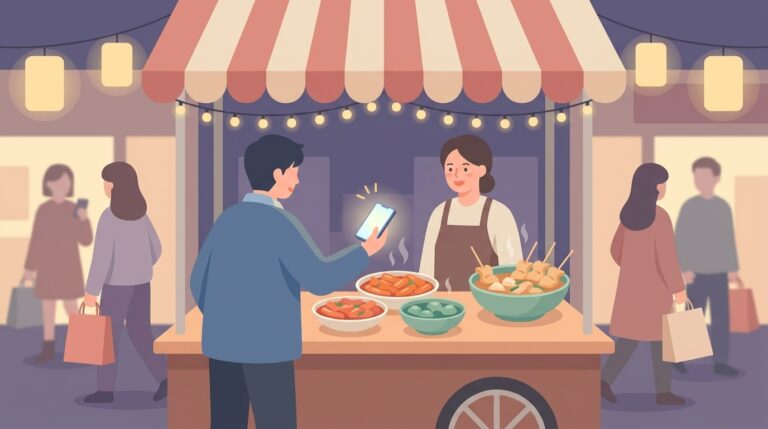
Imagine this: It is a brisk winter evening in Seoul. You are strolling down the vibrant alleys of Myeongdong or Hongdae, surrounded by neon lights and laughter. Suddenly, the irresistible aroma of sweet, sizzling hotteok (brown sugar pancakes) and spicy, bubbling tteokbokki stops you in your tracks. Your mouth waters. You step up to the steaming cart, order a skewer of savory fish cakes, and reach for your wallet—only to freeze in utter panic.
You don’t have a single paper won on you. The vendor politely shakes their head at your foreign Visa card. At that moment, you spot a piece of cardboard taped to the counter with a bank name and a string of handwritten numbers. Local Koreans around you are simply tapping their phones, smiling, and walking away with warm food. How are they doing that? They are using Korea’s favorite cashless payment method: direct bank transfer (gyejwai-che).
Not knowing how to navigate this can leave you hungry, embarrassed, and stepping away from the best culinary experiences Korea has to offer. But do not worry! As your personal culture navigator, I have taught hundreds of beginner learners how to handle this exact street-level scenario with confidence. Today, with just one simple A1-level phrase, you will turn that awkward panic into an authentic local bonding moment.
Phase 2: Core Expressions Deep Dive
1. 계좌이체 돼요? (Gyejwai-che dwaeyo?)
- Pronunciation: [Gye-jwa-i-che dwae-yo?] (Think: ‘Gay-jwa-ee-chay dway-yo’)
- Meaning: “Is account transfer possible?” / “Can I pay by bank transfer?”
- K-Culture Moment: In modern K-dramas like Hospital Playlist or Weightlifting Fairy Kim Bok-joo, characters visiting food carts or outdoor markets instinctively pull out their banking apps whenever cash is low.
- Editor’s Insight: Even if you are a foreign tourist using travel cards or fintech apps like Wise or Namane, vendors love hearing this question because street carts often pay high processing fees on credit cards.
- Situation Spectrum: Casual ⚠️ | Semi-formal ✅ | Formal 🚫
- 🤔 Think About It: In your home country, would a tiny street cart owner trust a stranger to send money straight into their private personal bank account? Why do you think this works so seamlessly in Korea?
2. 현금 없어요 (Hyeongeum eopseoyo)
- Pronunciation: [Hyeon-geum eop-seo-yo] (Think: ‘Hyun-gum up-suh-yo’)
- Meaning: “I don’t have cash.”
- K-Culture Moment: In variety shows like Running Man, cast members running out of mission funds frantically confess this to street stall vendors with a polite bow.
- Editor’s Insight: Eopseoyo simply means “there is none / I don’t have.” Combining it with hyeongeum (cash) quickly explains why your card or phone is out before you ask for an alternative.
- Situation Spectrum: Casual ⚠️ | Semi-formal ✅ | Formal 🚫
- 🤔 Think About It: Notice how Koreans often omit “I” (jeoneun) in short daily conversations. What does this tell you about Korean contextual communication?
3. 얼마예요? (Eolmayeyo?)
- Pronunciation: [Eol-ma-ye-yo?] (Think: ‘Uhl-ma-yay-yo’)
- Meaning: “How much is it?”
- K-Culture Moment: The quintessential traveler phrase heard at every bustling night market in Busan and Seoul.
- Editor’s Insight: Keep your pitch rising gently at the end. It is friendly, easy to say, and invites the vendor to point at the price or write the amount down for you.
- Situation Spectrum: Casual ⚠️ | Semi-formal ✅ | Formal 🚫
- 🤔 Think About It: Does your language change pitch to turn a sentence into a polite question?
Phase 3: Textbook Korean vs. Real Korean
Situation 1: Asking if you can transfer money
- 📖 교과서 한국어: 은행 계좌로 송금해도 되겠습니까? (Eunhaeng gyejwaro song-geumhaedo doegesseumnikka?) — Would it be permissible for me to remit funds to your bank account?
- 🗣️ 진짜 한국어: 계좌이체 돼요? (Gyejwai-che dwaeyo?) — Can I do a bank transfer?
- 💡 왜 다를까?: Street vendors are busy flipping pancakes and ladling broth. Ultra-formal textbook phrasing sounds like an official corporate transaction. Real street Korean is snappy, polite, and directly to the point.
Situation 2: Asking where to send the payment
- 📖 교과서 한국어: 선생님의 계좌 번호를 적어 주시겠습니까? (Seonsaengnim-ui gyejwa beonhoreul jeogeo jusigesseumnikka?) — Would you please write down your account number?
- 🗣️ 진짜 한국어: 여기 번호로 보내요? (Yeogi beonhoro bonaeyo?) — Do I send it to this number here?
- 💡 왜 다를까?: Korean street carts almost always have their bank name (e.g., 농협, 카카오뱅크) and account numbers taped right on the cart shelf. Pointing and saying Yeogi beonhoro bonaeyo? saves everyone time.
Phase 4: K-Culture Deep Dive & Non-Verbal Manners
4-1. Nunchi (눈치) & Body Gestures
When paying via bank transfer at a Korean food stall, your smartphone screen is your receipt!
1. The Screen Tilt: Once your transfer confirmation screen pops up (showing the transferred amount and the vendor’s name), hold your phone with both hands and tilt the screen toward the vendor.
2. The Polite Bow: Give a light head nod (about 15 degrees) while showing the completed screen.
3. The Voice Signal: Say “보냈어요!” (Bonaesseoyo! – Sent!). Vendors glance at your screen for just a fraction of a second, nod, and hand over your warm snacks.
4-2. Cultural Code: The High-Trust Cashless Society
Korea is one of the most cashless societies in the world, with fintech apps like Toss and KakaoPay woven into daily life. Even an 80-year-old grandmother running an outdoor street cart has a mobile bank account. Why? Street stalls operate on razor-thin margins and often want to avoid high card processing terminals. Transferring directly via bank account is considered 100% equivalent to handing over physical cash, built upon immense mutual social trust.
Phase 5: Real-Life Roleplay Scenario
Setting: A steamy street food cart (pojangmacha) on a chilly evening in Insadong. Warm yellow bulbs illuminate trays of red tteokbokki and golden fried mandu. The vendor is a friendly Korean auntie (Imo).
- You: 저기요, 떡볶이 1인분 얼마예요? (Jeogiyo, tteokbokki il-inbun eolmayeyo?)
🎭 Action: Pointing gently at the simmering rice cakes with a bright smile.
(Excuse me, how much is one serving of tteokbokki?) -
Imo (Vendor): 4천 원이에요! 오뎅 국물도 마셔요. (Sacheon-won-ieyo! Odeng gukmuldo masyeoyo.)
🎭 Action: Scooping a generous portion into a paper bowl and offering a cup of broth.
(It’s 4,000 won! Drink some fish cake broth too.) -
You: 아, 그런데 카드 돼요? (A, geureonde kadeu dwaeyo?)
🎭 Action: Reaching toward your card pouch with an apologetic look.
(Ah, but do you take card?) -
Imo (Vendor): 미안해요, 카드는 안 돼요. 현금 있어요? (Mianhaeyo, kadeuneun an dwaeyo. Hyeongeum isseoyo?)
🎭 Action: Shaking her hands gently with a sympathetic smile.
(Sorry, no cards. Do you have cash?) -
You: 현금 없어요… 혹시 계좌이체 돼요? (Hyeongeum eopseoyo… hoksi gyejwai-che dwaeyo?)
🎭 Action: Taking out your phone and looking hopeful.
(I don’t have cash… By any chance, can I do a bank transfer?) -
Imo (Vendor): 그럼요! 저기 앞에 계좌번호 있어요. (Geureomyo! Jeogi ape gyejwabeonho isseoyo.)
🎭 Action: Tapping on a laminated paper taped near the napkin dispenser.
(Of course! The account number is right in front there.) -
You: 네! 보냈어요, 이모! (Ne! Bonaesseoyo, imo!)
🎭 Action: Holding phone screen with two hands and showing the green success checkmark.
(Yes! I sent it, Auntie!) -
Imo (Vendor): 아이고, 고마워요! 맛있게 먹어요! (Aigo, gomawoyo! Mas-itge meogeoyo!)
🎭 Action: Giving an extra fish cake as service with a beaming smile.
(Oh my, thank you! Enjoy your food!)
🔀 Interactive Decision Branch
What do you do when the vendor says cards aren’t accepted?
* Choice A: Put your phone away, say nothing, and walk away looking sad.
* Feedback (Bad): You leave hungry, and the vendor might feel bad that they had already begun preparing your food!
* Choice B: Ask “계좌이체 돼요?” (Gyejwai-che dwaeyo?) while showing your mobile banking app screen.
* Feedback (Best): Perfect cultural etiquette! The vendor will immediately point to their account details, and you get delicious hot food.
* Choice C: Wave your foreign credit card insistently and say “Card! Card!”
* Feedback (Risk): Uncomfortable and stressful for both sides. Most street food carts physically do not have a card reader.
Phase 6: 10-Second Emotion Shadowing Drill
Practice these emotional cadences out loud! Use / as a micro-pause mark.
[😅 Polite & Slightly Hesitant]
현금 없어요… / 계좌이체 돼요?
(Hyeongeum eopseoyo… / gyejwai-che dwaeyo?)-
[😊 Relieved & Cheerful]
네! / 여기 번호로 / 보낼게요!
(Ne! / yeogi beonhoro / bonaelkeyo!) -
[✨ Bright & Grateful]
보냈어요! / 맛있게 먹겠습니다!
(Bonaesseoyo! / mas-itge meokgetseumnida!)
Phase 7: K-Culture Mini Dictionary
- 계좌이체 (Gyejwai-che) | Noun | Direct bank account transfer. Used everywhere in Korea from split-billing dinners among friends to paying at street stalls and local flea markets.
- 현금 (Hyeongeum) | Noun | Cash. Always good to carry 10,000-20,000 KRW in crisp notes for small stalls that do not have bank transfer capabilities for non-residents.
- 포장마차 (Pojangmacha) | Noun | Street food cart or tented food wagon. Often affectionately shortened to Pocha (포차), offering comfort foods like tteokbokki, sundae, and hot broth.
- 이모 (Imo) | Noun | Literally “maternal aunt,” but universally used to address friendly middle-aged female restaurant or street food owners with warmth.
Phase 8: Survival Kit for Travelers
Top 3 Survival Phrases
- 이거 얼마예요? (Igeo eolmayeyo?) — How much is this?
Pro Tip: Point right at the specific item with two fingers or an open palm to be ultra-clear. - 계좌번호 보여주세요. (Gyejwabeonho boyeojuseyo.) — Please show me the account number.
Pro Tip: Use this if you cannot spot the written paper taped to the stall. - 영수증 필요 없어요. (Yeongsujeung piryo eopseoyo.) — I don’t need a receipt.
Pro Tip: Super helpful when paying at convenience stores or casual counters.
Editor’s Travel Note
- Foreign banking apps often struggle with direct Korean bank accounts unless you set up international remittance services. We highly recommend checking out a verified prepaid transit and payment card option like the Namane Card before your trip, which allows both transit and local Korean debit functions. Also keep Naver Map search guide bookmarked to locate nearby Global ATMs in case you need quick paper cash!
Phase 9: “One Step Deeper” (Reflective Thought)
In many global cities, posting your private bank account number in big bold letters for thousands of passing strangers to see would sound like an invitation to financial theft. Yet in South Korea, bank account numbers are practically public knowledge on carts, business cards, and club flyers. Why? Korean digital banking relies on multi-layered identification systems where simply knowing someone’s account number allows you to do only one thing: deposit money into it. This high-trust dynamic makes everyday street transactions warm and human rather than guarded.
💬 Your Turn: Would you feel comfortable using direct bank transfer at a street food market? What is the most common payment method at food stalls in your home country? Drop your thoughts in the comments below!
Phase 10: FAQ & Common Mistakes
Q: Can foreign travelers with international bank apps do a Korean bank transfer?
A: Standard foreign banking apps cannot wire money directly into domestic Korean accounts in real-time. However, travelers using modern fintech cards (such as the Namane Card with app reload, or apps like Wise and Toss Global) can make domestic transfers easily. Always keep a backup 10,000 won bill in your phone case just in case!
Q: Is it rude to ask for a bank transfer for a tiny purchase like a 1,000-won fish cake?
A: Not at all! Korean vendors are completely used to digital micro-transfers. Whether it is 1,000 won or 20,000 won, 계좌이체 돼요? is always welcomed over card transactions for street carts.
Q: How do I know the transfer actually went through?
A: Look at the recipient’s name that pops up on your app screen before confirming. It will usually match the family name or stall name provided on the handwritten card. Once sent, show the green confirmation screen to the owner.
🚨 Common Mistakes Alert!
- Mistake: Handing your phone to the vendor so they can do it for you.
Correct Action: Keep your phone in your hands. Just show the final completed screen to maintain personal privacy. - Mistake: Calling the vendor Ajumma loudly.
Correct Action: Use the warmer, friendlier title 이모 (Imo) or simply start with a polite 저기요 (Jeogiyo – Excuse me). - Mistake: Assuming every cart accepts credit cards because Seoul is high-tech.
Correct Action: Traditional street carts frequently operate without credit card terminals. Always ask 계좌이체 돼요? or prepare cash.
Phase 11: Action Missions
- 🥉 Bronze Level: Practice saying “계좌이체 돼요?” 5 times in front of the mirror with your smartphone ready.
- 🥈 Silver Level: Share this phrase on your Instagram or TikTok story while watching your favorite K-drama food scene, tagging your favorite travel buddy!
- 🥇 Gold Level: During your next trip to Korea (or at a local Korean street food festival), order without English and ask for payment options using “계좌이체 돼요?” or “현금 있어요!”
🎮 K-Culture Mission: Watch an episode of a Korean street food travel vlog on YouTube. Count how many times you spot a white taped slip of paper showing a bank name (like 국민, 신한, or 농협) on the food carts!
Phase 12: Interactive Quiz Challenge
1. Situation Quiz
You ordered 3,000 won worth of hotteok, but your wallet is completely empty of cash. What is the most natural, polite way to ask the vendor if you can transfer the money?
* A) 돈 없어요, 그냥 주세요. (Don eopseoyo, geunyang juseyo.)
* B) 계좌이체 돼요? (Gyejwai-che dwaeyo?)
* C) 카드밖에 안 돼요! (Kadeubakke an dwaeyo!)
2. Fill-in-the-Blank
Complete the sentence to tell the vendor you don’t have paper money:
“_______ 없어요.” (Hyeongeum eopseoyo. – I don’t have cash.)
3. True or False?
In Korea, it is considered impolite to show your completed transfer screen to the vendor. (True / False)
👉 Click here to reveal the answers and explanations!
-
Answer: B) 계좌이체 돼요? (Gyejwai-che dwaeyo?)
Explanation: Choice A means “I have no money, just give it to me” (very rude!), and Choice C blames the vendor for not taking cards. Choice B is the perfect, friendly question! -
Answer: 현금 (Hyeongeum)
Explanation: Hyeongeum means cash. Saying 현금 없어요 clearly signals why you need an alternative payment method. -
Answer: False
Explanation: Showing your completed mobile screen (보여주기) is the universal etiquette in Korea! It acts as your instant visual receipt so the vendor can continue cooking with peace of mind.






