

Mastering the Chabak Craze: Outdoor Leisure Etiquette and Legal Camping in Korea
Phase 1: Empathy (Story Immersion Opening)
안녕하세요! 매일한글 에디터입니다.
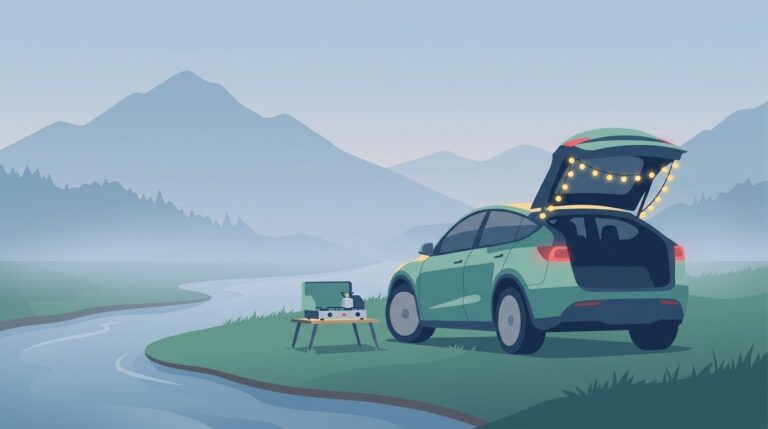
Picture this: you have spent the entire week navigating Seoul’s neon-lit concrete canyons. Inspired by dreamy K-drama aesthetics and cozy YouTube vlogs featuring converted SUVs, customized string lights, and sizzling pork belly grilled beside tranquil rivers, you rent a camper SUV. You drive out to the emerald coastline of Gangwon-do or the misty banks of Gapyeong for a scenic weekend of chabak (차박, car-camping). The tailgate is open, the acoustic playlist is humming, and your portable butane burner (beoneo, 버너) is heating up a pot of spicy ramyeon.
Suddenly, an official in a high-visibility vest taps on your car window, pointing sternly to a crimson-lettered banner overhead: 취사 및 야영 금지 구역 (Chwisa mit yayeong geumji guyeok, Open-Flame Cooking and Camping Prohibited Zone). Behind him stands an aggrieved local resident clutching a smartphone. In an instant, your serene escape dissolves into frantic confusion. Are you legally parked, or are you liable for a two-million-won administrative fine (gwataeryo) under the River Act?
Navigating Korea’s booming outdoor leisure scene requires far more than basic survival vocabulary. As camping (kaemping) and car-camping (chabak) have skyrocketed into high-status recreational subcultures, they have triggered unprecedented regulatory backlash against littering, noise pollution, and illegal encampment. To truly enjoy Korea’s majestic outdoors like a sophisticated insider, you need C2-level sociolinguistic competence—the precise legal distinctions, native colloquialisms, and de-escalation strategies that keep your outdoor adventures both sublime and completely lawful. Let’s dive in!
Phase 2: In-Depth Analysis of 3 Key Expressions
1. 야영 및 취사 금지 구역 (Yayeong mit chwisa geumji gu-yeok)
- Pronunciation: [Ya-yeong meet chwi-sa geom-ji goo-yeok] (Phonetic analogy: Think of ‘ya-young’ like a spirited shout, ‘meet’ as an encounter, ‘chwi’ like a crisp ‘tree-chew’, and ‘gu-yeok’ sounding akin to ‘goo-yuck’.)
- Meaning: Literal: “Camping and Cooking Prohibited Zone.” Nuance: A legally enforceable public boundary where pitching tents, deploying awnings, or using open heating appliances (gas stoves, charcoal braziers) incurs statutory fines.
- K-Culture Moment: Seen prominently in environmental documentaries, outdoor variety shows like House on Wheels (바퀴 달린 집), and local news exposes highlighting weekend crackdowns at popular beaches and national parks.
- Editor’s Insight: Notice the legal distinction between 야영 (yayeong, pitching shelter/staying overnight) and 취사 (chwisa, open-flame cooking/preparing meals). You might occasionally be permitted to park or rest (hyusik) in a public lot, but the moment you click your portable butane burner to boil water, you cross into an administrative violation under Korea’s River Act (Hacheonbeop) or Natural Parks Act (Jayeon Gongwonbeop).
- Situation Spectrum: Casual: ⚠️ | Semi-formal: ✅ | Formal: ✅
- 🤔 Think About It: In many Western countries, “Leave No Trace” dispersed camping is widely embraced on vast public crown land. Why do Korea’s strict spatial limitations make municipal governments define “cooking” and “sleeping” through such stringent statutory terms?
2. 차박 성지 (Chabak seongji)
- Pronunciation: [Cha-bak seong-ji] (Phonetic analogy: ‘Cha’ like chai tea, ‘bak’ like ‘bark’ without the r, and ‘seong-ji’ like ‘sung-jee’.)
- Meaning: Literal: “Car-camping Mecca / Sacred ground.” Nuance: A viral, breathtakingly scenic, vehicle-accessible outdoor spot celebrated on social media for hassle-free overnight car bivouacs.
- K-Culture Moment: Frequently hashtagged across Instagram and YouTube outdoor channels where creators display aesthetic tailgate setups with fairy lights, drip coffee kits, and portable heaters overlooking scenic coastal cliffs.
- Editor’s Insight: The word 성지 (聖地, sacred ground) has evolved from religious pilgrimage sites to pop-culture hubs (e.g., K-pop pilgrimage spots) and leisure destinations. However, in contemporary Korean civic discourse, a location dubbed a “차박 성지” often experiences a tragic life cycle: viral fame, overwhelming overcrowding, irresponsible trash dumping, vehement local civic petitions (minwon), and ultimate municipal barricading.
- Situation Spectrum: Casual: ✅ | Semi-formal: ✅ | Formal: ⚠️
- 🤔 Think About It: How does the linguistic inflation of sacred terminology (seongji) in modern Korean consumer leisure mirror the hyper-rapid commodification of peaceful nature?
3. 원상 복구해 놓다 / 흔적을 남기지 않다 (Wonsang bok-gu-hae noh-da / Heunjeog-eul namgiji anta)
- Pronunciation: [Won-sang bok-goo-hae noh-ta / Heun-jeo-geul nam-gi-ji an-ta] (Phonetic analogy: ‘Won-sang’ rolls smoothly like ‘one-song’, and ‘bok-goo’ sounds like ‘book-goo’.)
- Meaning: Literal: “To restore to its original status / To leave no trace.” Nuance: The non-negotiable civic and legal obligation to return a natural space to its pristine, pre-visited state upon departure.
- K-Culture Moment: Emphasized in eco-conscious outdoor lifestyle campaigns, municipal warning signs, and respectful outdoor communities advocating for “Clean Camping” (클린 캠핑).
- Editor’s Insight: While “흔적을 남기지 않다” corresponds to the global outdoor ethos “Leave No Trace,” the phrase “원상 복구” (原狀復舊) carries explicit legal weight in administrative law. If your bonfire scorches municipal turf or your heavy vehicle damages public riverbed landscaping, local authorities will demand formal civil restitution (wonsang bok-gu).
- Situation Spectrum: Casual: ✅ | Semi-formal: ✅ | Formal: ✅
- 🤔 Think About It: Reflect on how East Asian community-first social contracts emphasize communal restoration (bok-gu) rather than merely individual restraint.
Phase 3: Textbook Korean vs. Real Korean
Situation 1: Inquiring if sleeping in an SUV is permitted at a public seaside lot
- 📖 교과서 한국어 (Textbook):
이곳에서 자동차 숙박이 가능합니까?
(Igos-eseo jadongcha sukbagi ganeunghabnikka?)
“Is automobile lodging permissible in this location?” - 🗣️ 진짜 한국어 (Real-World C2):
여기 혹시 어닝이나 텐트 안 치고 스텔스 차박만 하는 것도 단속 대상인가요?
(Yeogi hoksi eoning-ina tenteu an chigo seutelseu chabak-man haneun geot-do dansok daesang-ingayo?)
“Excuse me, would even ‘stealth car-camping’—without deploying awnings or tents—be subject to a municipal crackdown here?” - 💡 왜 다를까? (Why the difference?):
Textbooks introduce unnatural, stilted compound phrases like 자동차 숙박 (automobile lodging). Native campers use specialized modern loanwords like “스텔스 차박” (stealth chabak, sleeping inside the vehicle without external gear) and the administrative noun 단속 대상 (subject to enforcement/crackdown).
Situation 2: Warning a fellow camper about aggressive municipal ticketing
- 📖 교과서 한국어 (Textbook):
불법 야영을 하면 벌금을 낼 수 있습니다.
(Bulbeop yayeong-eul hamyeon beolgeum-eul nael su isseumnida.)
“If you conduct illegal camping, you may pay a fine.” - 🗣️ 진짜 한국어 (Real-World C2):
여기 주민 민원 빗발쳐서 구청 단속반이 바로 과태료 딱지 떼러 와요.
(Yeogi jumin minwon bitbalchyeoseo gucheong dansokbani baro gwataeryo ttakji ttereo wayo.)
“Local resident complaints are pouring in here, so the district enforcement team will come slap an administrative fine on you in no time.” - 💡 왜 다를까? (Why the difference?):
The textbook uses the broad legal term 벌금 (beolgeum, criminal fine), whereas illegal camping actually results in 과태료 (gwataeryo, non-criminal administrative surcharge). Native speakers naturally employ vivid idioms such as 민원이 빗발치다 (complaints pouring like rain) and 딱지를 떼다 (to slap a ticket/infraction notice).
Phase 4: K-Culture Deep Dive & Non-Verbal Manners
4-1. 눈치 (Nunchi), Banners, and Patrol De-escalation
When setting up camp or chabak in Korean coastal or mountainous rural districts, your cultural antenna—nunchi (눈치)—must be finely tuned to visual and interpersonal signals.
- Decoding the Hyeonsumak (현수막, Banners): Red or yellow municipal vinyl banners are not decorative warnings. In Korea, administrative warnings must precede formal enforcement. If a banner displays the municipal seal (gucheong / guncheong) alongside specific statutory citations (e.g., 하천법 제46조 위반시 과태료 부과 – Fine imposed under Article 46 of the River Act), enforcement patrols visit that perimeter daily.
- Body Language during Inspections: If approached by a local official (dansokban) or a senior village representative (ijangnim / 이장님), immediately switch off your gas burner and step outside the vehicle. Adopt the gongsu (공수) posture—hands loosely clasped in front of your lower torso. Maintain respectful eye contact without staring confrontational daggers, and bow slightly (15 to 30 degrees). Feigning ignorance as an international visitor will rarely absolve you; instead, an immediate display of civic contrition and rapid compliance will turn a steep fine into a courteous verbal caution (gyeong-go 조치).
4-2. Cultural Code: The Paradox of Bulmeong (불멍) in a High-Density Society
One of the most defining cultural phenomena of the modern Korean camping landscape is 불멍 (bulmeong), a portmanteau of 불 (fire) and 멍때리다 (to zone out / space out). In a society characterized by intense professional pressure and dense high-rise urban living, staring vacantly into flickering campfire flames has become an essential therapeutic ritual.
However, South Korea’s strict forest fire prevention protocols (Sanbul Yebang) and dry winter-spring winds create a severe cultural friction point. Unpermitted open fires (noji hwagui sayong, 노지 화기 사용) in non-designated wilderness areas are heavily criminalized due to recent catastrophic wildfires along the eastern coast. Therefore, true camping veterans take immense pride in using certified fire pits (hwandae / 화로대), fireproof ground mats (banghwapo / 방화포), and carrying portable ash disposal cans, demonstrating that sophisticated relaxation never jeopardizes communal safety.
Phase 5: Real-World Roleplay Scenario
Context & Characters
- Setting: Friday at 8:30 PM. An unpaved gravel riverside clearing near the Bukhan River in Gapyeong. Mist is rolling over the water. You have backed your SUV into a quiet corner with the tailgate open.
- Characters:
- You (Advanced Camper): A seasoned foreign resident looking for a peaceful overnight car bivouac.
- Choi Ju-im (최 주임님): A municipal official from the Gapyeong County Safety and Disaster Division, clad in an orange reflective patrol jacket and carrying a flashlight and inspection clipboard.
Dialogue
Turn 1
* 최 주임: 선생님, 늦은 시간에 죄송합니다만, 가평군청 안전관리과에서 야간 단속 나왔습니다. 여기 차박이나 야영하시면 안 되는 구역인 거 모르셨나요?
(Seonsaengnim, neujeun sigane joesonghamnidaman, Gapyeong-guncheong anjeongwanrigwa-eseo yagan dansok nawasseumnida. Yeogi chabagina yayeonghasimyeon an doeneun guyeogin geo moreusyeonnayo?)
“Excuse me, sir/ma’am, apologies for the late hour, but we are conducting a night patrol from the Gapyeong County Safety Division. Were you unaware that car-camping and pitching tents are prohibited in this zone?”
🎭 (Flashes a flashlight towards the rear tires and the portable table sitting outside the tailgate)
Turn 2
* You: 아, 주임님! 날씨가 좋아서 잠시 강바람 쐬며 쉬어가려던 참이었습니다. 혹시 여기가 하천법상 취사나 야영이 전면 금지된 구역인가요?
(A, juimnim! Nalssiga jo-aseo jamsi gangbaram ssoemyeo swieogaryeodeon cham-ieosseumnida. Hoksi yeogiga hacheonbeopsang chwisana yayeong-i jeonmyeon geumjidoen guyeog-ingayo?)
“Ah, supervisor! The weather was pleasant, so I had simply stopped to catch the river breeze and rest for a bit. Is this a zone where cooking and overnight camping are completely barred under the River Act?”
🎭 (Instantly steps out of the car, offering a polite head nod with hands clasped in front)
Turn 3
* 최 주임: 네, 맞습니다. 최근 쓰레기 무단 투기랑 소음 때문에 인근 마을에서 민원이 워낙 심하게 들어와서요. 지금 트렁크 열고 테이블까지 펴놓으셔서 단속 대상에 해당됩니다.
(Ne, matseumnida. Choegeun sseuregi mudan tugirang so-eum ttaemune ingeun ma-eureseo minwoni wonak simhage deureowaseoyo. Jigeum teureongkeu yeolgo te-ibeulkkaji pyeonoh-yeoseo dansok daesang-e haedangdoemnida.)
“Yes, that is correct. Due to recent unauthorized trash dumping and noise, civil complaints from neighboring villages have been overwhelming. Since your tailgate is open and an outdoor table is deployed, this falls under enforcement criteria.”
🎭 (Sighs softly while pointing his pen toward the deployed foldable gear)
Turn 4
* You: 아, 그렇군요. 마을 주민분들 입장에선 충분히 불편하셨겠네요. 취사 도구는 일절 꺼내지 않았고, 단순히 스텔스 상태로 눈만 좀 붙이고 새벽 일찍 이동하려던 계획이었습니다.
(A, geureokgunyo. Ma-eul juminbundeul ipjang-eseon chungbunhi bulpyeonhasyeokgenneyo. Chwisa doguneun iljeol kkeonaeji anatgo, dansunhi seutelseu sangtaero nunman jom buchigo saebyeok iljjik idongharyeodeon gyehoe-igieosseumnida.)
“Ah, I understand completely. From the villagers’ perspective, that must have been thoroughly disruptive. I haven’t brought out any cooking appliances at all, and my intention was merely to sleep stealthily inside the vehicle and depart early at dawn.”
🎭 (Speaks in a calm, empathetic tone, acknowledging community grievances)
Turn 5
* 최 주임: 불을 피우거나 음식을 조리하시진 않은 것 같아 다행이네요. 취사 흔적까지 적발되면 1차 적발 시에도 백만 원 이상의 과태료가 바로 부과되거든요.
(Bureul pi-ugeona eumsigeul jorihasijin aneun geot gata dahaeng-ineyoyo. Chwisa heunjeokkkaji jeokbaldoemyeon il-cha jeokbal si-edo baekman won isang-ui gwataeryoga baro bugwadoegeodeunyo.)
“It appears fortunate that you haven’t lit a fire or cooked food. If evidence of cooking is cited, an administrative fine exceeding one million won is levied even on the first offense.”
🎭 (Lowers the clipboard slightly, visibly appreciating the cooperative attitude)
Turn 6
* You: 안내해 주셔서 정말 감사합니다. 제가 규정을 면밀히 확인하지 못했네요. 외부 집기는 즉시 정리해서 차 안에 수납하겠습니다.
(Annaehae jusyeoseo jeongmal gamsahamnida. Jega gyujeong-eul myeonmilhi hwaginhaji mothaenneyo. Oebu jipgineun jeuksi jeongrihaeseo cha ane sunapgohagessseumnida.)
“Thank you very much for clarifying the regulations. I failed to inspect the local bylaws thoroughly. I will pack away all external gear into the car immediately.”
🎭 (Immediately folds the camping table and places it inside the trunk)
Turn 7
* 최 주임: 태도가 워낙 신사적이셔서 이번엔 공식 경고 계도 조치로만 갈음하겠습니다. 대신 여기서 주무시는 건 곤란하니, 10분 거리에 있는 공영 유료 오토캠핑장으로 이동해 주시겠어요?
(Taedoga wonak sinsajeog-isyeoseo ibeonen gongsik gyeong-go gyedo jochiro-man gareumhagessseumnida. Daesin yeogiseo jumusineun geon gonranhani, sip-bun geori-e inneun gong-yeong yuryo o-to-kaempingjang-euro idonghae jusigesseoyo?)
“Because you are being so civil and cooperative, I will conclude this with an official administrative warning instead. However, sleeping overnight here remains problematic, so would you mind relocating to the public auto-campsite ten minutes away?”
🎭 (Tears a small directional slip from his pocket and hands it over warmly)
Turn 8
* You: 물론입니다, 주임님. 말씀해 주신 등록 야영장으로 즉시 이동하여 안전하게 머물겠습니다. 야간 근무 노고 많으십니다!
(Mollonimnida, juimnim. Malsseumhae jusin deungrok yayeongjang-euro jeuksi idonghayeo anjeonhage meomulgesseumnida. Yagan geunmu nogo maneusimnida!)
“Certainly, supervisor. I will relocate right away to the registered campground you recommended and stay there safely. Thank you for your hard work on night patrol!”
🎭 (Bows respectfully with a warm smile before closing the tailgate)
🔀 Interactive Decision Point
Imagine the patrol officer had pointed at your vehicle while you were boiling tea on a small camping stove. How do you respond?
- Option A: “외국인이라 법을 전혀 몰랐어요! 그냥 물만 끓이는 건데 이번 한 번만 눈감아 주시면 안 될까요?”
(Pleads ignorance as an international traveler and asks the official to overlook it.) - Option B: “죄송합니다, 주임님! 제 불찰입니다. 버너 불 즉시 끄고 흔적 없이 정리하겠습니다. 과태료 처분 대신 계도 조치로 선처해 주실 수 있을까요?”
(Immediately extinguishes the flame, takes personal accountability, and respectfully requests administrative guidance instead of a ticket.) - Option C: “다른 차들도 다 텐트 치고 라면 끓여 먹고 있는데 왜 저한테만 와서 이러시는 겁니까? 편파 단속 아닌가요?”
(Aggressively challenges the officer, pointing out other violators and accusing them of biased enforcement.)
Feedback on Your Choice:
- Option A (Risk): Claiming ignorance (“몰랐어요”) undermines your C2 credibility. While officers might occasionally be lenient, legal precedents state that ignorance of municipal bylaws does not exempt anyone from administrative fines (과태료). You risk looking irresponsible.
- Option B (Best): Outstanding! You take immediate ownership (“제 불찰입니다”), neutralize the hazard instantly, show command of procedural terminology (계도 조치, administrative guidance/admonition; 선처, clemency), and maintain utmost decorum.
- Option C (Bad): Catastrophic. Accusing a Korean civil servant of discriminatory enforcement (편파 단속) will compel them to enforce the absolute maximum penalty under statutory law, potentially escalating into obstruction of official duties (gongmu jibhaeng banghae, 공무집행방해).
Phase 6: 10-Second Emotional Shadowing Drill
Practice these high-frequency advanced sentences aloud. Pay close attention to the pause markers (/) and emotional tone flags.
Drill 1: The Courteous Civic Inquiry
- [😊 Polished, inquisitive, and effortlessly respectful]
“실례지만, / 여기가 혹시 하천법상 / 야영이나 취사가 제한된 구역인지 / 여쭤봐도 될까요?”
(Sillyejiman, / yeogiga hoksi hacheonbeopsang / yayeong-ina chwisaga jehandoen guyeoginji / yeojjwobwado doelkkayo?)
“Pardon me, / would it be alright if I inquired / whether camping or open cooking is restricted here / under the River Act?”
Drill 2: The De-escalating Apology
- [🙇♂️ Sincere, humble, and taking rapid accountability]
“규정을 미처 숙지하지 못한 / 제 불찰입니다. / 지금 당장 / 장비를 원상 복구해 놓겠습니다.”
(Gyujeong-eul micheo sukjihaji mothan / je bulchal-imnida. / Jigeum dangjang / jangbireul wonsang bok-gu-hae noh-gessseumnida.)
“It is entirely my fault / for not familiarizing myself with the regulations. / I will restore the site / to its pristine original state immediately.”
Drill 3: The Knowledgeable Outdoor Affirmation
- [🌿 Confident, environmentally conscious, and warm]
“저희는 흔적을 남기지 않는 / 클린 캠핑을 지향해서, / 쓰레기는 전부 종량제 봉투에 담아 / 되가져가고 있습니다.”
(Jeohineun heunjeog-eul namgiji anneun / keullin kaemping-eul jihyanghaeseo, / sseuregineun jeonbu jongryangje bongtue dama / doegajyeogago isseumnida.)
“Because we prioritize ‘Clean Camping’ / that leaves no trace behind, / we place all waste into authorized municipal bags / and carry it back home with us.”
Phase 7: K-Culture Mini Dictionary
- 불멍 (Bulmeong) [Noun]
Literal: Fire + spacing out.
Usage: The ubiquitous meditative practice of staring silently into a campfire or wood-burning stove to decompress from modern sensory overload. Commonly combined with mulmeong (물멍, spacing out while watching running water) and soopmeong (숲멍, zoning out in deep forest greenery). -
노지 캠핑 (Noji Kaemping) [Noun]
Literal: Raw ground camping.
Usage: Dispersed, primitive, or off-grid camping in wilderness areas without dedicated amenities (restrooms, electricity, tap water). Highly romanticized by purists, but frequently the target of strict municipal bans due to hygiene and environmental issues. -
알박기 (Albakgi) [Noun / Slang]
Literal: Egg-planting / Stakeout pegging.
Usage: Originally a real-estate term for holding out on land plots, in camping culture it denotes the selfish practice of pitching an inexpensive tent permanently at a free public campsite to monopolize the prime spot for weekends. A major societal issue that recently led to legal amendments allowing municipal authorities to forcibly dismantle unattended tents. -
클린캠핑 (Keullin Kaemping) [Noun]
Literal: Clean Camping.
Usage: The Korean adaptation of “Leave No Trace.” It mandates bringing personal trash bags, picking up surrounding cigarette butts (ssu-re-gi jup-gi or plogging), and ensuring that even greywater from dishes is carried to authorized drainage facilities rather than dumped into pristine streams.
Phase 8: Survival Kit for Travelers
Top 3 Practical Survival Expressions
-
“여기 종량제 쓰레기봉투 어디서 구매할 수 있나요?”
(Yeogi jongryangje sseuregibongtu eodiseo gumaehal su innayo?)
Pro Tip: In South Korea, waste management is fiercely regionalized. You cannot use a Seoul trash bag in Gyeonggi-do or Gangwon-do! Always stop at a local convenience store or mart in the destination county (gun / gu) and purchase their designated volume-rate garbage bag (jongryangje bongtu). -
“이 근처에 지자체에서 운영하는 공영 야영장이 있습니까?”
(I geuncheo-e jijache-eseo un-yeonghaneun gong-yeong yayeongjang-i isseumnikka?)
Pro Tip: Municipal public campgrounds (gong-yeong yayeongjang) are exceptionally clean, well-equipped with heated shower stalls, legally sanctioned, and cost a fraction of private commercial glamping grounds (often 20,000 to 35,000 KRW per night). -
“화로대 받침대 깔면 장작불 피워도 되나요?”
(Hwarodae batchimdae kkalmyeon jangjakbul piwodo doenayo?)
Pro Tip: Even in licensed auto-campgrounds, building a ground fire directly on grass or soil is strictly taboo. Always ask if using an elevated brazier (hwarodae) with a heat-resistant ground mat (batchimdae) complies with the campsite’s fire regulations.
Editor’s Travel Note: Essential Outdoor Apps & Navigation
- Finding Verified Campsites: Avoid unauthorized riverbanks found on unverified lifestyle blogs. Instead, download the official government outdoor portal via the GoCamping Official Korea Tourism Platform to filter through over 3,000 legally registered campsites (deungrok yayeongjang).
- Navigation & Satellite Mapping: Google Maps has severe functional limitations in South Korea. Always rely on the Naver Map Navigation App or KakaoMap. Switch to the satellite terrain layer to check whether a remote parking destination has paved access and public restroom facilities before venturing out for chabak.
- National Park Bivouacs: Pitching tents or sleeping in cars anywhere inside Korea’s 22 National Parks outside of registered campgrounds is heavily penalized. Check availability months in advance through the Korea National Park Reservation Service.
Phase 9: “One Step Deeper” (Sociolinguistic Essay)
South Korea’s outdoor culture reflects a captivating intersection of hyper-modern leisure aspirations and centuries-old communal spatial philosophy. In a nation where over 70% of the landscape is mountainous and more than 80% of the population resides in dense high-rise apartment complexes, the great outdoors is paradoxically viewed not as an untamed frontier, but as shared public commons (gonggong changgo). When Western outdoor philosophy celebrates individualism and solitary wilderness survival, Korean outdoor leisure operates under an unwritten social covenant: your personal rejuvenation (healing, 힐링) must never inconvenience your neighbor or degrade the collective inheritance of the community. As a result, terms like albakgi (tent hoarding) or illegal chwisa trigger visceral public indignation not simply because they break municipal statutes, but because they violate the foundational civic ethos of gongdeoksim (공덕심, public civic morality).
💬 Your Turn: Have you ever experienced a sudden cultural difference regarding environmental regulations or outdoor etiquette while traveling abroad? Share your story in the comments below!
Phase 10: FAQ & Avoiding Misunderstandings
Q: Can I legally sleep inside my car (차박) in any public seaside or riverside parking lot?
A: No. While resting inside a parked vehicle is generally legal under the Road Traffic Act, the moment you recline your seats for overnight lodging, attach window insulation screens, open the rear tailgate, or step outside with recreational gear, local municipal bylaws can classify your activity as an unauthorized encampment (bulbeop yayeong). Always look for signage indicating whether overnight stays (yadok / sukbak) are prohibited by local county ordinances.
Q: Why do local convenience stores sell camping firewood (장작) if campfires are banned in so many areas?
A: Retailers sell firewood for licensed campsites, designated private glamping grounds, and private rural homesteads. The sale of firewood or portable butane stoves is completely unregulated, but their usage is strictly confined to licensed zones. Possessing gear is never an offense; lighting it on unauthorized riverbeds or public beaches is.
Q: What happens if a municipal enforcement officer catches me cooking on a riverbank?
A: Under Article 46 and Article 98 of the River Act (Hacheonbeop), cooking in a restricted conservation area carries administrative fines starting at 1,000,000 KRW for a first violation, escalating to 3,000,000 KRW for subsequent offenses. Unlike parking fines, these carry heavy financial penalties intended to prevent water contamination and flash-flood casualties.
🚨 Common Mistakes Warning Board
- Mistake: Emptying portable camping toilet cassettes or dish soap water into storm drains or mountain streams.
Correct Action: Greywater and blackwater must be transported to official campsite dumping stations (odeumbangnyuso) or public restroom toilets. Storm drains discharge directly into drinking water reservoirs. - Mistake: Leaving trash bags beside full municipal bins on country roads under the assumption that street sweepers will collect them.
Correct Action: Rural districts do not operate daily municipal collection on remote roads. If there is no designated garbage sorting stall (bunrisuggeo-jang), pack all waste inside your vehicle and dispose of it at home or at an authorized toll station rest stop. - Mistake: Using charcoal briquettes or wood stoves inside an enclosed vehicle or ground tent for warmth.
Correct Action: Carbon monoxide (ilsanhwatanso) poisoning is the leading cause of seasonal camping fatalities in Korea. Never burn combustible fuels inside a sealed tent or car. Use certified 12V electric heated blankets or specialized diesel parking heaters (musi-dong hiteo) with external exhaust venting.
Phase 11: Action Mission & Engagement
Take your outdoor Korean skills from theoretical knowledge to active mastery with these progressive action steps:
- 🥉 Bronze Mission (Solo Drill): Practice speaking Dialogue Turn 4 aloud until you can fluently express the sentence “취사 도구는 일절 꺼내지 않았고 단순히 스텔스 상태로 머물다 갈 예정이었습니다” in under 6 seconds with natural pauses.
- 🥈 Silver Mission (Observation & Social Drill): Next time you watch a Korean camping vlog on YouTube or a scene from Hospital Playlist (슬기로운 의사생활), pause whenever outdoor gear or warning banners appear. Identify whether they are in a licensed campground (deungrok yayeongjang) or an unpaved wild spot (noji).
- 🥇 Gold Mission (Real-Life Mastery): Visit a local mart or outdoor retailer in Korea. Walk up to the clerk and ask: “사장님, 이 주변에 불멍 가능한 공영 캠핑장이 어디 있는지 추천해 주실 수 있나요?” (Boss, could you recommend a public campsite around here where campfire spacing-out is allowed?)
Phase 12: Interactive Quiz Challenge
Test your situational mastery and cultural intuition with these three challenging questions!
1. Situational Judgment
You have parked your SUV at an unpaved beach parking lot in Taean. The sun has set, and you want to prepare dinner. You see no signs prohibiting parking, but a banner says “연안해역 안전관리구역 (취사·야영 금지).” What is the legally and culturally appropriate action?
* A) Light your portable gas stove inside the trunk with the tailgate shut so nobody sees the flame.
* B) Refrain from using any open flames or outdoor gear; consume pre-packaged cold food or visit a nearby local seafood restaurant, keeping your setup strictly stealth.
* C) Pitch a small pop-up tent on the sand since the banner only applies to the vehicle parking lot.
2. Fill in the Blank
Complete this advanced civil de-escalation sentence with the most appropriate legal term:
* “주임님, 규정을 미리 확인하지 못해 죄송합니다. 외부 장비는 즉시 정리하여 현장을 깨끗이 ____________ 놓겠습니다.”
* (A) 방치해 (Bangchi-hae)
* (B) 원상 복구해 (Wonsang bok-gu-hae)
* (C) 알박아 (Albak-ah)
3. True or False Cultural Insight
- Statement: Under recent Korean law revisions, local municipal governments have the statutory power to forcibly dismantle and dispose of unattended long-term tents (albakgi) pitched in public parks and riverbanks without compensating the owner. (True / False?)
👉 Click to reveal answers & detailed explanations!
Answers & Explanations
-
Correct Answer: B
Explanation: The banner explicitly prohibits 취사 (cooking) and 야영 (camping) under coastal maritime safety regulations. Lighting a flame inside the car (A) poses a lethal carbon monoxide and fire hazard. Pitching a tent on the sand (C) is a direct statutory violation of coastal protection laws. Consuming prepared meals and avoiding external gear deployment (B) respects both the law and civic harmony. -
Correct Answer: B (원상 복구해)
Explanation: 원상 복구하다 means to restore a site to its original, pristine condition. (A) 방치하다 means to neglect/abandon, and (C) 알박다 means to hoard a spot selfishly. -
Correct Answer: True
Explanation: Following public outcry over chronic albakgi (알박기) tents monopolizing scenic riverbanks and beaches for months on end, the River Act and related public recreation statutes were amended in 2023-2024 to empower municipal authorities to immediately seize and scrap abandoned outdoor equipment.







