

Phase 1: 공감 (Story Opening)
안녕하세요! 매일한글 에디터입니다.
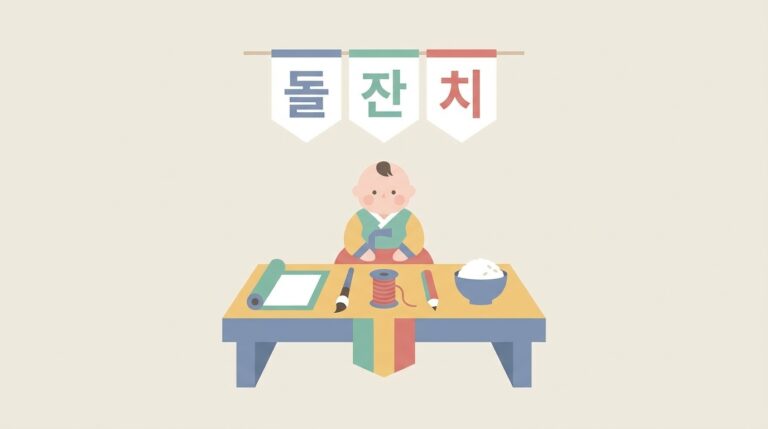
Picture this: You are dressed in your best smart-casual outfit, sitting at a banquet hall in Seoul for your Korean coworker’s baby’s Doljanchi (돌잔치, Korean first birthday celebration). Colorful banners hang across the stage, plates clink at the buffet, and the guest of honor—an adorable 12-month-old dressed in a silk traditional hanbok—sits proudly in front of the ceremonial table.
The master of ceremonies raises the microphone for the grand highlight: the Doljabi (돌잡이), where the baby picks an item to predict their future fortune. Suddenly, right as everyone leans in with smartphone cameras flashing, the baby bursts into a hearty, breathless wail. Tears stream down chubby cheeks, the parents turn crimson with panic, and a sudden wave of flustered silence sweeps across the room.
If your heart starts pounding in that moment, wondering, “Should I look away? Should I say something, or will that make it worse?”—take a deep breath! Many of our intermediate learners share this exact pain point: knowing basic conversational Korean doesn’t always prepare you for the delicate social dynamics of family milestones. In this guide, you will master the exact reassuring phrases and considerate body language that locals use to instantly dissolve awkwardness and support young parents with authentic Korean warmth.
Phase 2: 핵심 표현 3선 심층 분석 (Top 3 Core Expressions)
1. 아기가 낯을 가리나 봐요 (Agiga naceul garina bwayo)
- Pronunciation: [Agiga naceul garina bwayo] (Sounds like ah-gee-gah nah-chul gah-ree-nah bwa-yo — pronounce naceul like “nah” quickly linked with “chul”)
- Meaning: Literal: “It looks like the baby is separating faces.” vs Nuance: “The baby seems a bit shy around unfamiliar faces today.”
- K-Culture Moment: In variety shows like The Return of Superman (슈퍼맨이 돌아왔다), whenever a guest arrives and a toddler retreats behind their parent’s legs whimpering, the guest immediately offers this sentence with a gentle grin to ease parental anxiety.
- Editor’s Insight: ‘낯을 가리다’ is the quintessential Korean idiom for infant stranger anxiety. Pairing it with the speculative ending ‘~나 봐요’ (it appears that…) keeps your tone soft, observational, and completely free of judgment.
- Situation Spectrum: Casual: ✅ | Semi-formal: ✅ | Formal: ⚠️
- 🤔 Think About It: In many Western cultures, pointing out a child’s shyness in public can feel intrusive. Why do you think acknowledging stranger anxiety out loud in Korea actually brings immense relief to parents?
2. 울어도 너무 귀여워요! (Ureodo neomu gwiyeowoyo!)
- Pronunciation: [Ureodo neomu gwiyeowoyo] (Sounds like oo-ruh-doh nuh-moo gwee-yuh-wo-yo — let ureodo roll smoothly like “woo-raw-dough”)
- Meaning: Literal: “Even crying, [the baby] is so cute!” vs Nuance: “Aww, don’t worry, even their crying face is absolutely adorable!”
- K-Culture Moment: In heartwarming family K-dramas, whenever an infant cries at a gathering and parents begin sweating profusely, the elders and friendly guests promptly chime in with this line to melt the tension into laughter.
- Editor’s Insight: Parents often feel a surge of minpye (민폐, being a public nuisance) when their child cries. This line flips the narrative from an awkward disturbance into a shared moment of cuteness.
- Situation Spectrum: Casual: ✅ | Semi-formal: ✅ | Formal: ✅
- 🤔 Think About It: Notice how finding beauty or charm in vulnerability helps build communal bonds in Korean culture.
3. 천천히 해도 괜찮아요 (Cheoncheonhi haedo gwaenchanayo)
- Pronunciation: [Cheoncheonhi haedo gwaenchanayo] (Sounds like chuhn-chuhn-hee hae-doh gwaen-chah-nah-yo)
- Meaning: Literal: “It is okay even if you do it slowly.” vs Nuance: “Take all the time you need, there is no rush at all.”
- K-Culture Moment: During a paused event program when parents are desperately jiggling a rattle to soothe a tearful toddler, a warm guest offers this line to let the parents take a breather.
- Editor’s Insight: Korea is famous for its fast-paced Palli-palli (빨리빨리, hurry-hurry) lifestyle. Intentionally offering the word ‘천천히’ (slowly) signals that you prioritize their comfort over event schedules.
- Situation Spectrum: Casual: ✅ | Semi-formal: ✅ | Formal: ✅
- 🤔 Think About It: How does granting permission to slow down redefine hospitality in modern society?
Phase 3: 교과서 한국어 vs 진짜 한국어 (Textbook vs. Real Korean)
Situation 1: Soothing parents when the baby starts crying uncontrollably
- 📖 교과서 한국어: 아기가 울고 있으니 걱정하지 마십시오. (Agiga ulgo isseuni geokjeonghaji masipsio. / “Do not worry because the baby is crying.”)
- 🗣️ 진짜 한국어: 원래 이맘때 다 울어요, 괜찮아요! (Wollae imamttae da ureoyo, gwaenchanayo! / “Babies all cry at this age anyway, it is totally fine!”)
- 💡 왜 다를까?: Textbook phrasing sounds like an automated public announcement. Real Korean speakers normalize infant development by referencing the developmental milestone (이맘때, this time/age), which instantly removes shame.
Situation 2: Suggesting the parents take a break during the ceremony
- 📖 교과서 한국어: 돌잡이를 나중에 진행하시겠습니까? (Doljabireul najunge jinhaenghasigesseumnikka? / “Will you proceed with the Doljabi later?”)
- 🗣️ 진짜 한국어: 아기 진정되면 천천히 해요~ (Agi jinjeongdoemyeon cheoncheonhi haeyo~ / “Let’s take our time once the baby calms down~”)
- 💡 왜 다를까?: Asking rigid formal questions forces flustered parents to make high-stakes operational choices. Using the soft suggestion ending
~해요with a trailing melodious intonation lifts that pressure.
Phase 4: K-Culture 딥다이브 & 비언어적 매너 (Deep Dive & Non-Verbal Etiquette)
4-1. 눈치 (Nunchi) & Gestures
- Eye Contact: Never stare intently with furrowed brows or open-mouthed concern. Soften your eyes, smile gently, and nod reassuringly toward the parents.
- Physical Space: Resist the sudden urge to jump out of your seat to hug or touch the baby. For an infant in the throes of natch-garim (낯가림), an approaching stranger feels threatening. Keep a comfortable physical distance.
- Collective Support: Softly clap or lightly sway in rhythm when parents attempt to soothe the baby. Your relaxed composure gives the parents emotional permission to calm down.
4-2. Cultural Code Analysis: The Spirit of the Doljabi
Historically in Korea, surviving past infancy was an arduous milestone due to seasonal hardships and disease. Reaching the first birthday was celebrated as a miraculous triumph of life. The crying of a baby at a Doljanchi is therefore not viewed as a misstep; rather, traditional culture interprets a booming cry as 우렁찬 울음소리 (ureongchan ureumsori)—proof of vibrant lungs, vitality, and tenacity!
Phase 5: 실전 롤플레이 시나리오 (Roleplay Scenario)
- Setting: The ballroom of a boutique hotel in Gangnam. Min-woo (민우), your coworker, is holding his son Seojun, who is wailing amidst the flashing camera lights.
- Min-woo: 죄송해요 여러분, 서준이가 낮잠을 못 자서 그런지 계속 우네요… (Joesonghaeyo yeoreobun, Seojuniga natjameul mot jaseo geureonji gyesok uneyo…) [🎭 Dabbing his forehead with a handkerchief and bowing apologetically]
- You: 아니에요, 민우 씨! 원래 이맘때는 낯도 많이 가리고 울기도 하죠. (Anieyo, Min-u ssi! Wollae imamttaeneun natdo mani garigo ulgido hajyo.) [🎭 Waving both hands lightly to brush off his apology with a warm smile]
- Min-woo: 돌잡이 사진도 찍어야 하는데 달래지지가 않아서 식은땀이 나요. (Doljabi sajindo jjigeoya haneunde dallaejijiga anaseo sigeunttami nayo.) [🎭 Rocking the crying baby back and forth with wide, nervous eyes]
- You: 천천히 해도 괜찮아요. 서준이 울어도 너무 귀여운데요! (Cheoncheonhi haedo gwaenchanayo. Seojuni ureodo neomu gwiyeowondeyo!) [🎭 Tilting head slightly, admiring the baby’s puffy cheeks with an affectionate tone]
- Min-woo: 정말요? 민폐 끼치는 것 같아서 너무 당황스러웠어요. (Jeongmallyo? Minpye kkichineun geot gataseo neomu danghwangseoreowosseoyo.) [🎭 Letting out a relieved sigh as his tense shoulders drop]
- You: 전혀 아니에요. 오히려 서준이 목소리가 우렁차서 아주 건강하게 자라겠어요! (Jeonhyeo anieyo. Ohiryeo Seojuni moksoriga ureongchaseo aju geonganghage jaragesseoyo!) [🎭 Laughing quietly and giving a subtle two-thumbs-up gesture]
- Min-woo: 그렇게 말씀해 주시니 마음이 훨씬 편해지네요. 물 한 잔 먹이고 다시 시작해 볼게요. (Geureoke malsseumhae jusini maeumi hwolssin pyeonhaejineyo. Mul han jan meogigo dasi sijakhae bolgeyo.) [🎭 Smiling gratefully while hugging his baby close]
- You: 네, 편하게 하세요! 저희는 여기서 든든하게 응원하고 있을게요. (Ne, pyeonhage haseyo! Jeohuineun yeogiseo deundeunhage eungwonhago isseulgeyo.) [🎭 Returning to your seat, clapping softly with cheerful eyes]
🔀 인터랙티브 분기점 (Interactive Choice)
The baby begins wailing even louder right before touching the Doljabi thread. What do you say?
- Option A: “민우 씨, 아기 울음소리가 너무 커서 머리가 아파요.” (Min-u ssi, agi ureomsoriga neomu keoseo meoriga apayo. – Min-woo, the crying is so loud my head hurts.)
- 🚫 Feedback (Bad): Calling attention to personal discomfort shames the host family and ruins the celebratory mood.
- Option B: “아기 낯가림이 심한가 봐요. 조용히 시켜야 할 텐데요.” (Agi natgarimi simhanga bwayo. Joyonghi sikyeoya hal tendeyo. – Looks like severe stranger anxiety. You should quiet him down.)
- ⚠️ Feedback (Risk): While noting 낯가림 is natural, telling parents to hush their child comes off as critical and patronizing.
- Option C: “괜찮아요, 울어도 너무 예뻐요! 서준이 천천히 달래고 오세요.” (Gwaenchanayo, ureodo neomu yeppeoyo! Seojuni cheoncheonhi dallaego oseyeo. – It’s totally fine, even crying he is so lovely! Take your time soothing Seojun.)
- 🌟 Feedback (Best): Perfect empathy! It validates the baby’s emotions and lifts the social burden off the parents.
Phase 6: 10초 감정 섀도잉 드릴 (Emotional Shadowing Drill)
[😊 따뜻하고 편안하게 / Warm and comforting]
괜찮아요, / 원래 이맘때 / 다 그래요. (Gwaenchanayo, / wollae imamttae / da geuraeyo.)-
[🥺 감탄하듯 다정하게 / Affectionate and adoring]
울어도 / 어쩜 이렇게 / 귀여울까요? (Ureodo / eojjeom ireoke / gwiyeoulkkayo?) -
[🤝 든든하고 여유롭게 / Reassuring and unhurried]
천천히 하세요, / 저희 아무 데도 / 안 가요! (Cheoncheonhi haseyo, / jeohui amu dedo / an gayo!)
Phase 7: K-Culture 미니 사전 (Mini Dictionary)
- 돌잔치 (Doljanchi) | Korean First Birthday Party | A milestone banquet honoring a baby’s survival through their first complete year and wishing longevity and success.
- 돌잡이 (Doljabi) | Fortune-Telling Ritual | The centerpiece activity of the Doljanchi where an infant selects an item (thread for long life, money for prosperity, pencil for intellect) predicting their path.
- 낯가림 (Natch-garim) | Infant Stranger Anxiety | The developmental phase (usually peaking between 8–15 months) where a child distinguishes between familiar and unfamiliar people, leading to tears.
- 축의금 (Chukhageum) | Congratulatory Money Gift | Cash gifted in a crisp white envelope handed to hosts upon arrival at significant milestone celebrations.
Phase 8: 여행자를 위한 생존 키트 (Traveler’s Survival Kit)
TOP 3 Survival Phrases
- 축하드려요! (Chukhadeuryeoyo!) – Congratulations! [Pro Tip: Say this with a warm bow when handing your gift envelope at the reception desk.]
- 사진 한 장 찍어도 될까요? (Sajin han jang jjigeodo doelkkayo?) – May I take a photo? [Pro Tip: Always ask before snapping close-up photos of the baby to respect their privacy.]
- 초대해 주셔서 감사합니다 (Chodaehae jusyeoseo gamsahamnida) – Thank you for inviting me. [Pro Tip: The best respectful closing line to express appreciation before heading home.]
Editor’s Travel Note
- Gift Etiquette: Most guests give cash inside a pristine white envelope. Prepare 50,000 to 100,000 KRW depending on your closeness to the coworker or friend. Envelopes are sold at all convenience stores.
- Punctuality: Doljanchi banquets start promptly with video reels and toasts. To ensure you navigate Seoul’s subways smoothly and arrive before the Doljabi ceremony, check transit routes with Naver Map transit planner.
Phase 9: “한 발 더 깊이” (Cultural Essay)
In many individualistic cultures, a child crying in a room full of guests triggers an immediate impulse to apologize for disturbing the peace. In Korea, however, centuries of communal living fostered Jeong (정) and the profound concept of Uri (우리, “we/our”). A child is celebrated not just as an individual family’s son or daughter, but as a collective treasure of the community. When you reassure a crying baby’s parents with grace, you step into this sacred circle of shared parenthood.
💬 Your Turn: How do guests react when a toddler cries during important ceremonies in your culture? Drop your thoughts and stories in the comments below!
Phase 10: FAQ & 오해 방지 (FAQ Schema)
Q: Should I try to carry the baby to help soothe them when they cry?
A: Unless the parents specifically pass the baby to you, you should refrain from touching or holding them. Infants experiencing 낯가림 (stranger anxiety) often cry harder when unfamiliar faces enter their intimate space. Warm words from a slight distance are much more effective.
Q: What is the appropriate dress code for a Doljanchi?
A: Smart-casual or neat business-casual is recommended. Avoid overly dark funeral attire, and steer clear of overly casual gym clothes or beach sandals. A tidy collared shirt, knit sweater, slacks, or a modest dress shows respect.
Q: Is it considered rude if I eat at the buffet while the baby is resting or crying?
A: Not at all! Doljanchi events are designed around enjoying good food together. Hosts love seeing their guests enjoy the banquet buffet. Eating comfortably while parents step aside to soothe their baby actually reduces the pressure on the family.
🚨 흔한 실수 (Common Mistakes) 경고판
- Mistake: Shushing the baby with a loud “쉿!” (Shh!). -> Correct Action: Use positive normalization phrases like “원래 이맘때 다 울어요” (Babies all cry at this age).
- Mistake: Making dramatic frowny faces of pity at the parents. -> Correct Action: Maintain a cheerful, relaxed smile to show you are having a wonderful time regardless.
- Mistake: Crowding right in front of the baby’s face with phone cameras. -> Correct Action: Stand back and use camera zoom so the baby has plenty of breathing room.
Phase 11: 액션 미션 & 참여 유도 (Action Missions)
- Bronze Mission: Practice saying “울어도 너무 귀여워요!” in front of a mirror with a warm, genuine smile 3 times.
- Silver Mission: Share this post on social media and teach your friends the meaning of the Korean idiom 낯을 가리다.
- Gold Mission: Use “천천히 해도 괜찮아요” (Take your time, it’s okay) the next time a Korean coworker or study partner feels rushed or overwhelmed.
- 🎮 K-Culture Mission: Watch an episode of KBS’s The Return of Superman or a family vlog on YouTube, and listen for the exact moment an adult uses “낯가림” when introducing a baby to guests!
Phase 12: 인터랙티브 퀴즈 챌린지 (Quiz Challenge)
Q1. Situational Judgment: The baby starts crying right as the Doljabi begins. Which response provides the most culturally supportive reaction to the anxious parents?
A) “왜 이렇게 시끄러워요?” (Why is it so noisy?)
B) “천천히 해도 괜찮아요, 울어도 귀여워요!” (Take your time, it’s okay, even crying he is cute!)
C) “빨리 아무거나 잡게 하세요.” (Make him pick something quickly.)
👉 Click to reveal Answer & Explanation
Correct Answer: B
Explanation: Reassuring the parents that crying is completely fine and telling them not to rush alleviates collective stress and creates a warm, supportive atmosphere.
Q2. Fill-in-the-blank: Complete the natural Korean idiom for infant stranger anxiety: “아기가 ___을/를 가리나 봐요.”
👉 Click to reveal Answer & Explanation
Correct Answer: 낯 (Face)
Explanation: ‘낯을 가리다’ translates literally to “separating faces,” meaning the baby is shy around unfamiliar people.
Q3. True or False: In Korean tradition, an infant crying loudly during their first birthday celebration is considered bad luck.
👉 Click to reveal Answer & Explanation
Correct Answer: False!
Explanation: A loud, resonant cry (우렁찬 울음소리) is traditionally celebrated as a sign of strong lungs, vitality, and health.







