

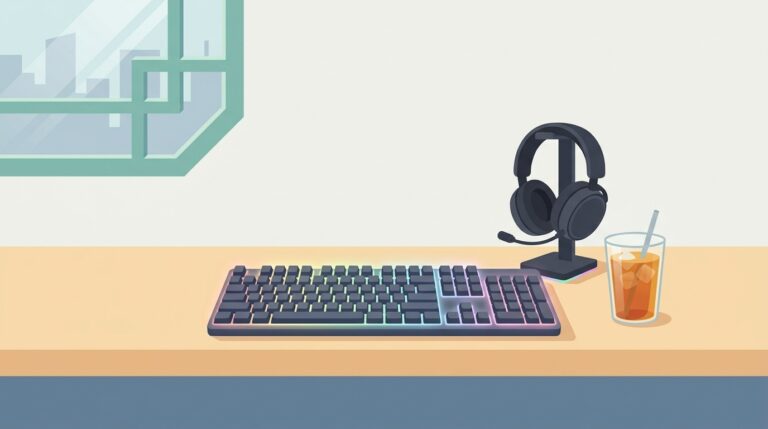
Your No-Panic Guide to Korean PC Bang Headset Troubles
Phase 1: 공감 (Story-Immersive Opening)
안녕하세요! (Annyeonghaseyo!) I’m your Daily Hangul editor and your 10-year Korean culture navigator! 🎉
Picture this: You finally step into a legendary Korean PC Bang (PC방)—the air smells of sizzling hot dogs and spicy ramen, neon RGB lights are glowing, and the ultra-widescreen monitor in front of you looks like a spaceship cockpit. You boot up your favorite game, slip on the oversized gaming headset, and… silence. Nothing. You click every audio setting on screen, tap the volume slider on the cord, but you still can’t hear a single footstep. Your team is waiting on Discord, and the front counter clerk is typing away under the glowing menu board. You want to ask for help, but your mind goes totally blank.
Don’t panic! You don’t need complex grammar or complicated tech vocabulary to get your gaming night back on track. With just three beginner-friendly (A1) phrases, you can handle any headset issue smoothly and sound like an effortless local. Based on feedback from hundreds of our foreign learners, these ultra-simple sentences will make you feel confident stepping into any gaming cafe in Seoul.
Phase 2: 핵심 표현 3선 심층 분석 (Top 3 Core Expressions)
1. 헤드셋 안 돼요. (Hediset an dwaeyo.)
- Pronunciation: [He-di-set an dwae-yo] (Sounds like “Heh-dee-set” + “on” + “dway-yo”)
- Meaning: Literal: “Headset does not become.” | Real Nuance: “The headset isn’t working.”
- K-Culture Moment: In gaming web-dramas or variety shows like Workman, when a part-timer or guest encounters malfunctioning equipment, they wave their hands and say “안 돼요! (An dwaeyo!)”
- Editor’s Insight: 안 돼요 (an dwaeyo) is the ultimate beginner magic word in Korea. Whenever any device, card, or machine fails to function, simply say the noun plus 안 돼요. It is polite, direct, and universally understood.
- Situation Spectrum: Casual: ⚠️ (Use 안 돼 with close friends) | Semi-formal: ✅ (안 돼요 is perfect for staff) | Formal: 🚫 (Not necessary for casual cafes)
- 🤔 Think About It: In English, we say “It is broken” or “It doesn’t work,” whereas Koreans use the versatile verb 되다 (to work / to become). How does focusing on the “state of functioning” rather than “brokenness” soften the tone?
2. 소리가 안 들려요. (Soriga an deullyeoyo.)
- Pronunciation: [So-ri-ga an deul-lyeo-yo] (Sounds like “So-ree-gah” + “on” + “dul-yuh-yo”)
- Meaning: Literal: “Sound is not heard.” | Real Nuance: “I can’t hear any sound.”
- K-Culture Moment: Seen constantly in idol live streams (VLive / Weverse) when fans spam the chat because the microphone volume is muted: “소리 안 들려요! (Sori an deullyeoyo!)”
- Editor’s Insight: 소리 (sori) means sound, and 들려요 (deullyeoyo) means to be heard. This phrase pinpoint-identifies that your screen works, but the audio output is dead.
- Situation Spectrum: Casual: ⚠️ | Semi-formal: ✅ (Standard polite for all shops) | Formal: 🚫
- 🤔 Think About It: Notice how Korean often describes passive perception (“sound is not heard”) rather than active blame (“the computer won’t play sound”).
3. 이거 바꿔 주세요. (Igeo bakkwo juseyo.)
- Pronunciation: [I-geo bak-kwo ju-se-yo] (Sounds like “Ee-guh” + “bahk-kwo” + “joo-seh-yo”)
- Meaning: Literal: “This thing, please exchange.” | Real Nuance: “Please swap/replace this for me.”
- K-Culture Moment: Often heard at street food stalls or convenience stores when exchanging an item or requesting a fresh pair of chopsticks.
- Editor’s Insight: 이거 (igeo) means “this,” and ~해 주세요 (~hae juseyo) means “please do this for me.” Combine them with 바꿔 (bakkwo) to politely request an equipment replacement.
- Situation Spectrum: Casual: ⚠️ | Semi-formal: ✅ | Formal: ✅
- 🤔 Think About It: Combining pointing (이거) with polite requests allows beginners to communicate clearly without needing high-level technical terms.
Phase 3: 교과서 한국어 vs 진짜 한국어 (Textbook vs. Real Korean)
Situation 1: Reporting an audio issue to the counter clerk
- 📖 교과서 한국어 (Textbook Korean): “헤드셋에서 소리가 출력되지 않습니다.” (The audio output is not functioning from the headset.)
- 🗣️ 진짜 한국어 (Real-life Korean): “저기요, 헤드셋 소리 안 나와요.” (Jeogiyo, hediset sori an nawayo. – Excuse me, no sound is coming out of the headset.)
- 💡 왜 다를까? (Why is it different?): Koreans rarely use mechanical jargon like “출력 (output)” in casual settings. Instead, they say sound “comes out” (나와요) or “doesn’t come out” (안 나와요).
Situation 2: Asking the staff to change your seat due to broken gear
- 📖 교과서 한국어 (Textbook Korean): “다른 좌석으로 이동해도 되겠습니까?” (May I relocate to another designated seat?)
- 🗣️ 진짜 한국어 (Real-life Korean): “자리 옮겨도 돼요?” (Jari olmgyeodo dwaeyo? – Can I switch seats?)
- 💡 왜 다를까? (Why is it different?): 자리 (seat) and 옮기다 (to move/shift) are standard everyday words that sound natural, breezy, and friendly.
Phase 4: K-Culture 딥다이브 & 비언어적 매너 (Deep Dive & Manners)
4-1. 눈치 (Nunchi) & Gestures
- Don’t Yell Across the Room: PC Bangs can be noisy with keyboard clicks, but shouting is considered bad etiquette. Walk up to the main counter (카운터) or use the PC chat call-button on your desktop screen.
- The Headset Lift Gesture: If you need to speak to the clerk at the counter, hold the headset lightly with one hand or rest it around your neck while holding the 3.5mm jack or USB cable end toward you. This gives visual context before you even speak.
- Two-Handed Return: When handing over a faulty headset or receiving a new one, hold it with both hands or support your right wrist with your left hand. This classic Korean non-verbal sign shows instant respect.
4-2. Cultural Code: The PC Bang Ecosystem
Modern Korean PC Bangs are multimedia entertainment centers and gourmet restaurants combined! People do not just play competitive games like League of Legends or Valorant; they order iced americano, tteokbokki, and pork belly rice bowls directly through the desktop interface. Headsets are essential because players constantly chat on voice servers or immerse themselves in high-end sound effects without disturbing neighbors.
Phase 5: 실전 롤플레이 시나리오 (Real Role-Play Scenario)
Setting: A vibrant, neon-lit PC Bang in Hongdae on a Friday evening.
Characters: You (foreign visitor) and Min-jun (friendly PC Bang clerk at the counter).
- Turn 1 (You): 🎭 Walking over to the counter with your headset in hand.
“저기요, 헤드셋 안 돼요.” (Jeogiyo, hediset an dwaeyo. / Excuse me, the headset isn’t working.) - Turn 2 (Min-jun): 🎭 Looking up from the terminal with a friendly smile.
“아, 소리가 아예 안 들려요?” (A, soriga aye an deullyeoyo? / Ah, you can’t hear any sound at all?) - Turn 3 (You): 🎭 Nodding lightly.
“네, 소리가 안 들려요.” (Ne, soriga an deullyeoyo. / Yes, I can’t hear sound.) - Turn 4 (Min-jun): 🎭 Checking the cable connection.
“뒤에 선은 잘 꽂으셨어요?” (Dwie seoneun jal kkojeusyeosseoyo? / Did you plug in the rear cable properly?) - Turn 5 (You): 🎭 Pointing gently at the cord.
“네, 확인했어요. 이거 바꿔 주세요.” (Ne, hwaginhaesseoyo. Igeo bakkwo juseyo. / Yes, I checked. Please exchange this for me.) - Turn 6 (Min-jun): 🎭 Taking a brand-new headset from the shelf behind him.
“네! 이거 새 걸로 쓰세요. 몇 번 자리세요?” (Ne! Igeo sae geollo sseuseyo. Myeot beon jariseyo? / Sure! Use this new one. What seat number are you at?) - Turn 7 (You): 🎭 Smiling and pointing to your computer area.
“15번 자리예요. 감사합니다!” (Sibo-beon jariyeyo. Gamsahamnida! / Seat 15. Thank you!) - Turn 8 (Min-jun): 🎭 Bowing slightly.
“즐겁게 게임하세요!” (Jeulgeopge geimhaseyo! / Enjoy your gaming!)
🔀 Interactive Decision Branch
What would you say if the headset still doesn’t work after swapping?
* Choice A: “이것도 안 돼요. 자리 옮겨도 돼요?” (Igeotdo an dwaeyo. Jari olmgyeodo dwaeyo? / This one doesn’t work either. Can I move seats?)
* 👉 Feedback: [BEST] Polite, clear, and solves the root cause (a broken audio port).
* Choice B: “컴퓨터 고장났어! 돈 돌려줘.” (Keompyuteo gojangnasseo! Don dollyeojwo. / The computer is broken! Give me money back.)
* 👉 Feedback: [BAD] Uses rude informal speech (반말) and creates unnecessary conflict.
* Choice C: (Walk out of the PC Bang in silence without saying anything)
* 👉 Feedback: [RISK] Your logged-in PC time will keep running and deducting your prepaid funds!
Phase 6: 10초 감정 섀도잉 드릴 (10-Second Emotion Shadowing Drill)
Repeat these aloud with matching emotional cadence!
[🥺 조금 답답하고 조심스럽게 / Hesitant & slightly frustrated]
“저기요… / 헤드셋 소리가 / 안 들려요.”
(Jeogiyo… / hediset soriga / an deullyeoyo.)-
[😊 정중하고 친절하게 / Polite & friendly request]
“이거 / 새 걸로 / 바꿔 주세요!”
(Igeo / sae geollo / bakkwo juseyo!) -
[😄 안도하며 밝게 / Relieved & energetic]
“와, / 이제 잘 들려요! / 감사합니다!”
(Wa, / ije jal deullyeoyo! / Gamsahamnida!)
Phase 7: K-Culture 미니 사전 (Mini Dictionary)
- 헤드셋 (Hediset) | Headset | Essential gaming headset equipped with a microphone for team voice chat.
- 카운터 (Kaunteo) | Counter / Front Desk | The central station where staff prepare food, lend accessories, and assist customers.
- 자리 (Jari) | Seat / Station | Your designated gaming desk (e.g., 15번 자리 = Seat number 15).
- 소리 (Sori) | Sound / Audio | The audio output from games, music, or video streaming.
Phase 8: 여행자를 위한 생존 키트 (Traveler’s Survival Kit)
Survival TOP 3 Phrases
- 1. 마이크 돼요? (Maikeu dwaeyo?) – Does the microphone work?
- Pro Tip: Useful if you plan to play co-op games and talk with your squad.
- 2. 볼륨 어디서 올려요? (Bollyum eodiseo ollyeoyo?) – Where do I turn up the volume?
- Pro Tip: Many Korean PC bang keyboards have volume buttons right on the top row function keys.
- 3. 충전기 빌려주세요. (Chungjeongi billyeojuseyo.) – Please lend me a phone charger.
- Pro Tip: Most PC bangs lend USB-C or iPhone charging cables for free at the counter!
Editor’s Travel Note
- Navigation: Before heading out to explore top-rated gaming lounges in Gangnam or Hongdae, ensure you are utilizing the Naver Map app download or KakaoMap app download for real-time walking routes and reviews, as Google Maps navigation is limited in Korea.
- Kiosk System: Most modern PC bangs use a self-service kiosk near the entrance. Select English language support, buy a 2-hour or 3-hour prepaid guest pass (비회원 결제), and print your receipt with your login code.
Phase 9: “한 발 더 깊이” (Deep Cultural Reflection)
In South Korea’s hyper-digital society, public spaces like PC bangs blend community comfort with high-speed efficiency. Using simple, respectful honorifics like ~요 (~yo) and ~주세요 (~juseyo) shows mutual consideration toward hardworking part-timers (알바생). Even as a beginner, reaching out with these tiny phrases bridges language barriers and creates warm, welcoming interactions.
💬 Your Turn: Have you ever experienced tech issues while traveling abroad? Which Korean phrase do you think will be your go-to lifesaver? Leave a comment below and share your thoughts!
Phase 10: FAQ & 오해 방지 (FAQ Schema & Common Mistakes)
Q: Can I plug my own personal wireless headset or Bluetooth earbuds into a PC Bang computer?
A: Most PC Bang computers have Bluetooth disabled for security and latency reasons. However, if your headset has a standard 3.5mm audio jack or USB cable, you can simply plug it into the front audio ports or keyboard hub.
Q: What should I do if the volume control on the desktop screen is already at 100% but there is still no sound?
A: Check the physical volume wheel on the headset wire or the left ear cup. Also, make sure the desktop sound output device is set to “Headset (헤드셋)” rather than “Speaker (스피커)” in the bottom-right Windows taskbar.
Q: Is it rude to ask the staff to change my seat if the headset cannot be fixed?
A: Not at all! Just approach the counter and say politely: “자리 옮겨도 돼요? (Jari olmgyeodo dwaeyo? / May I change seats?)”. Staff will effortlessly transfer your remaining prepaid login time to your new seat.
🚨 흔한 실수 (Common Mistakes) Warning Board
- Mistake: Shouting “야! (Ya!)” to call the clerk across the room.
- Correct Action: Walk to the counter or say “저기요 (Jeogiyo)” gently.
- Mistake: Unplugging cables from the back of other customers’ PCs.
- Correct Action: Always ask the counter clerk for a spare headset (이거 바꿔 주세요).
- Mistake: Leaving the seat without logging out or reporting broken gear.
- Correct Action: Inform the staff so they can fix it for the next gamer.
Phase 11: 액션 미션 & 참여 유도 (Action Missions)
- 🥉 Bronze Mission: Practice saying “헤드셋 안 돼요 (Hediset an dwaeyo)” 5 times in front of a mirror with clear pronunciation.
- 🥈 Silver Mission: Write a comment below using the phrase “~ 바꿔 주세요 (Please swap ~)” with an item you love (e.g., 라멘 바꿔 주세요).
- 🥇 Gold Mission: Visit a local Korean-style cafe, restaurant, or PC bang and successfully request a replacement item or napkin in polite Korean!
- 🎮 K-Culture Mission: Watch an episode of a Korean gaming streamer or K-Drama PC bang scene and listen for words like 소리 (sori) and 안 돼 (an dwae).
Phase 12: 인터랙티브 퀴즈 챌린지 (Interactive Quiz)
1. Situation Quiz: You put on your headset at a PC Bang, but sound only comes out of the left ear. How do you politely ask the counter clerk for an exchange?
* A) 이거 안 사요! (Igeo an sayo!)
* B) 이거 바꿔 주세요. (Igeo bakkwo juseyo.)
* C) 저기요, 가세요. (Jeogiyo, gaseyo.)
👉 Click to reveal Answer & Explanation
Correct Answer: B) 이거 바꿔 주세요.
* Explanation: 이거 바꿔 주세요 means “Please swap/exchange this.” Option A means “I won’t buy this,” and Option C means “Excuse me, please leave!”
2. Fill-in-the-Blank Quiz: Complete the phrase: “헤드셋 ____ 안 들려요.” (I can’t hear the headset sound.)
* Hint: Word for “sound” (starts with 소…)
👉 Click to reveal Answer & Explanation
Correct Answer: 소리가 (Soriga)
* Full sentence: “헤드셋 소리가 안 들려요.” (Hediset soriga an deullyeoyo. – I can’t hear the headset sound.)
3. True or False: In Korea, shouting loudly across a PC Bang room is considered standard gamer etiquette.
👉 Click to reveal Answer & Explanation
Correct Answer: False (F)
* Explanation: It is polite and standard practice to walk to the counter or use the desktop chat feature rather than shouting.







