

How to Send a Package at a Korean Convenience Store Without Panicking
Phase 1: Empathy (Story-Immersive Opening)
안녕하세요! 매일한글 에디터입니다. (Hello! This is your Daily Hangul editor.)
Picture this: You are wrapping up an unforgettable week exploring Seoul. Your luggage is bursting at the seams with K-pop albums from Myeongdong, skincare finds from Olive Young, and cute stationery from Hongdae. You want to send a box of souvenirs ahead to your friend’s guesthouse in Busan or directly to the airport. The local post office is already closed, but right across the street shines the cheerful 24/7 neon sign of a GS25 and a CU.
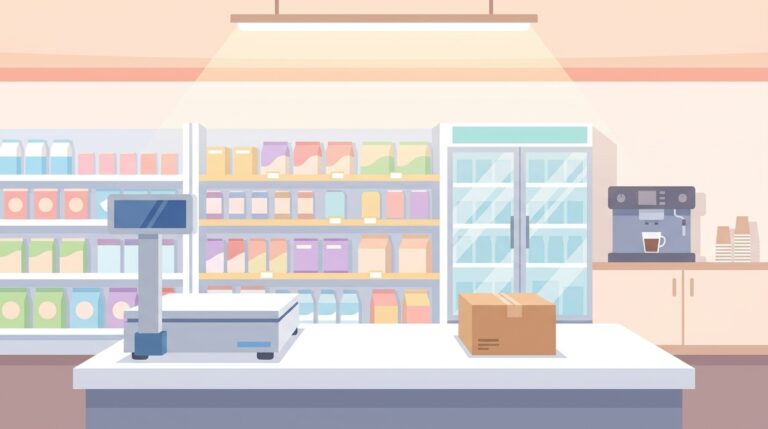
You walk inside with your taped cardboard box, heart beating slightly faster. In the corner stands the parcel machine (POSTBOX) with glowing Korean touchscreens and a digital weighing scale. The clerk is busy ringing up iced pouches of coffee. You freeze: “What if I press the wrong button and ship my favorite snacks into nowhere? How do I even tell the cashier I want to send this parcel?”
Take a deep breath! Sending a package at a Korean convenience store (편의점 택배, Pyeon-ui-jeom Taekbae) is one of the most rewarding real-life milestones in Korea. Based on real questions from dozens of our A2-level learners, this practical survival guide gives you the exact phrases, cultural etiquette, and confidence you need to breeze through the process like a savvy local.
Phase 2: Core 3 Expressions Deep Dive
1. 택배 보내려고 하는데요 (Taekbae bonaeryeogo haneundeyo)
- Pronunciation: [Taek-bae bo-nae-ryeo-go ha-neun-de-yo] (Think: “Tech-beh” + “bo-neh-ryuh-go ha-noon-deh-yoh”)
- Meaning: Literal: “I am intending to send a parcel, but/and…” → Natural: “Excuse me, I’d like to send a package.”
- K-Culture Moment: Just like in cozy slice-of-life K-dramas where the lead character drops off homemade side dishes at a neighborhood shop, this phrase gets the staff to instantly point you toward the machine or counter.
- Editor’s Insight: Ending a sentence with -는데요 (-neundeyo) softens your statement. Rather than sounding demanding, it gently opens the floor for the other person to assist you.
- Situation Spectrum: Casual (⚠️) | Semi-formal (✅) | Formal (✅)
- 🤔 Think About It: In English, we often say direct commands like “I need to ship this.” Why do you think Korean uses softer trailing endings like “-는데요” when initiating a service request?
2. 무게 먼저 잴게요 (Muge meonjeo jaelgeyo)
- Pronunciation: [Mu-ge meon-jeo jael-ge-yo] (Think: “Moo-geh mun-juh jel-geh-yoh”)
- Meaning: Literal: “I will measure weight first.” → Natural: “Let me weigh this on the scale first.”
- K-Culture Moment: You place your cardboard box right onto the metal scale plate connected to the convenience store counter or kiosk screen.
- Editor’s Insight: The grammar pattern -(으)ㄹ게요 (-eul-ge-yo) shows your proactive willingness to take an action while politely giving the listener a heads-up.
- Situation Spectrum: Casual (⚠️) | Semi-formal (✅) | Formal (✅)
- 🤔 Think About It: Notice how Korean speakers constantly narrate their immediate polite actions aloud to prevent any awkward silence or misunderstanding.
3. 운송장 여기 붙이면 되나요? (Unsongjang yeogi buchimyeon doenayo?)
- Pronunciation: [Un-song-jang yeo-gi bu-chi-myeon doe-na-yo?] (Think: “Oon-song-jahng yuh-gee boo-chee-myun dweh-nah-yoh?”)
- Meaning: Literal: “If I attach the waybill here, does it become okay?” → Natural: “Should I stick the shipping label right here?”
- K-Culture Moment: After printing the adhesive barcode sticker from the kiosk, you confirm with the cashier before pressing it down firmly on the box.
- Editor’s Insight: -면 되나요? (-myeon doenayo?) is a golden A2 pattern for asking “Is it okay if I do [verb]?” or “Should I just do [verb]?”.
- Situation Spectrum: Casual (🚫) | Semi-formal (✅) | Formal (✅)
- 🤔 Think About It: How does seeking confirmation with “-면 되나요?” help you avoid operational mistakes while showing respect to the store keeper?
Phase 3: Textbook Korean vs Real Korean
Situation 1: Asking if the store accepts parcel delivery
- 📖 교과서 한국어 (Textbook): 택배 배송 서비스를 제공합니까? (Taekbae baesong seobiseureul jegonghamnikka? – Do you provide package shipping service?)
- 🗣️ 진짜 한국어 (Real-Life): 여기 택배 돼요? (Yeogi taekbae dwaeyo? – Can I send parcels here?)
- 💡 왜 다를까? (Why the difference?): In everyday speech, native Koreans value speed and simplicity. Combining a noun with 돼요? (dwaeyo? / Does it work? / Is it possible?) makes your Korean sound effortlessly natural without losing any politeness.
Situation 2: Asking where to place the parcel box after paying
- 📖 교과서 한국어 (Textbook): 물품을 어느 보관함에 두어야 합니까? (Mulpumeul eoneu bogwanhame dueoya hamnikka? – In which storage container should I place the item?)
- 🗣️ 진짜 한국어 (Real-Life): 상자 어디에 둬요? (Sangja eodie dwoyo? – Where should I leave the box?)
- 💡 왜 다를까? (Why the difference?): Overly technical words like 보관함 (bogwanham) sound like a legal manual. Real shoppers use daily words like 상자 (box) and 둬요 (leave/put).
Phase 4: K-Culture Deep Dive & Non-Verbal Manners
4-1. 눈치 (Nunchi) & Polite Gestures
- The Two-Handed Hand-off: When handing your printed shipping label barcode or credit card to the store clerk, support your right wrist or forearm with your left hand. This classic Korean etiquette demonstrates instant respect.
- Clean Label Placement: Avoid taping over the barcode or placing the shipping sticker directly over the box seams. Part-timers appreciate it when the barcode is flat and quick to scan.
4-2. The Magic of Ban-ggap Taekbae (Half-Price Delivery)
Korea’s delivery culture (택배 문화) is world-famous for its incredible speed (빨리빨리 / Bba-lli Bba-lli). Convenience store chains like GS25 and CU created a budget-friendly option called 반값택배 (Ban-ggap Taekbae). Instead of delivering to a home address, it delivers from one convenience store directly to another convenience store within 2-3 days for as low as 1,800 KRW (~$1.30 USD)! If your friend lives near any branch in Korea, this is the most popular, cost-effective way to swap gifts.
Phase 5: Real-Life Roleplay Scenario
Setting: A vibrant GS25 in Hongdae on a Tuesday evening.
Characters:
* You: An enthusiastic traveler sending a package to a guesthouse in Gangneung.
* Min-su: A friendly university student working the counter in an orange vest.
[Scene Start]
Turn 1 (You):
저기요, 택배 보내려고 하는데요.
(Jeogiyo, taekbae bonaeryeogo haneundeyo.)
“Excuse me, I’d like to send a package.”
🎭 Action: Approaching the counter politely with your taped box.
Turn 2 (Min-su):
네! 저쪽 기계에서 접수하셨어요?
(Ne! Jeojjok gigye-eseo jeopsuhasyeosseoyo?)
“Sure! Have you registered it on the kiosk over there?”
🎭 Action: Pointing toward the postbox machine screen.
Turn 3 (You):
아직 안 했어요. 무게 먼저 잴게요!
(Ajik an haesseoyo. Muge meonjeo jaelgeyo!)
“Not yet. Let me measure the weight on the scale first!”
🎭 Action: Placing the box gently on the scale platform.
Turn 4 (Min-su):
화면에서 ‘비회원 접수’ 누르시면 돼요.
(Hwamyeon-eseo ‘bi-hoewon jeopsu’ nureusimyeon dwaeyo.)
“You can just tap ‘Non-Member Registration’ on the screen.”
🎭 Action: Giving an encouraging smile.
Turn 5 (You):
스티커 나왔어요. 운송장 여기 붙이면 되나요?
(Seutikeo nawasseoyo. Unsongjang yeogi buchimyeon doenayo?)
“The sticker came out. Should I stick the waybill right here?”
🎭 Action: Showing the two-part printed label to Min-su.
Turn 6 (Min-su):
왼쪽 큰 스티커는 박스에 붙이시고, 오른쪽 바코드는 저 보여주세요.
(Oenjjok keun seutikeoneun bakseu-e buchisigo, oreunjjok bakodeuneun jeo boyeojuseyo.)
“Stick the big left sticker on the box, and show me the barcode on the right.”
🎭 Action: Scanning the barcode with the scanner gun.
Turn 7 (You):
네, 결제는 카드로 할게요.
(Ne, gyeoljeneun kadeuro halgeyo.)
“Got it, I will pay by card.”
🎭 Action: Holding out payment card with both hands.
Turn 8 (Min-su):
결제 완료되셨고요, 박스는 저쪽 택배 수거함 옆에 두시면 됩니다!
(Gyeolje wanryodoe-syeotgoyo, bakseuneun jeojjok taekbae sugeoham yeope dusimyeon doemnida!)
“Payment is complete! You can place the box next to the parcel pickup bin over there!”
🎭 Action: Handing back the customer receipt.
[Scene End]
🔀 Interactive Choice Point
After printing the sticker at the machine, what is your next best action?
* Option A: Stick both receipts onto the box, leave the box on the floor, and walk right out.
* Option B: Stick the package part on the box, bring the customer barcode receipt to the cashier, and pay.
* Option C: Hand the entire unpeeled sticker roll to the cashier and ask them to fill out your address by hand.
Feedback:
* Option A (Bad): 🚫 If you don’t scan and pay at the register, your package will never be picked up by the courier!
* Option B (Best): ✅ Perfect! The system requires the cashier to scan the store barcode to activate tracking and process payment.
* Option C (Risk): ⚠️ Cashiers cannot manually register your address at the counter; you must type the recipient’s information on the touchscreen kiosk first.
Phase 6: 10-Second Emotion Shadowing Drill
Practice reading these lines aloud with the emotional cues and natural pause points marked with /:
- [😊 Bright & Confident]
저기요, / 택배 보내려고 / 하는데요!
(Jeogiyo, / taekbae bonaeryeogo / haneundeyo!)
“Excuse me, / I’d like to / send a package!” -
[🤔 Inquiring politely]
운송장 / 여기에 / 붙이면 되나요?
(Unsongjang / yeogi-e / buchimyeon doenayo?)
“The shipping label… / if I stick it here, / is that okay?” -
[✨ Grateful & Polite]
상자 여기 둘게요! / 감사합니다!
(Sangja yeogi dulgeyo! / Gamsahamnida!)
“I will leave the box right here! / Thank you!”
Phase 7: K-Culture Mini Dictionary
- 택배 (Taekbae) | Parcel / Courier Delivery
Everyday shipping network across South Korea known for rapid 1-2 day turnaround. - 운송장 (Unsongjang) | Shipping Waybill / Tracking Sticker
The adhesive label containing the recipient’s phone number, postal code, and scannable barcode. - 반값택배 (Ban-ggap taekbae) | Half-Price Store Delivery
A cost-saving delivery model between branch convenience stores operated by GS25 and CU. - 선불 / 착불 (Seonbul / Chakbul) | Prepaid / Cash on Delivery
선불 (Seonbul) means the sender pays right away; 착불 (Chakbul) means the recipient pays upon receiving.
Phase 8: Survival Kit for Travelers
Top 3 Survival Phrases
- 박스 테이프 있어요? (Bakseu teipeu isseoyo?)
“Do you have packing tape?”
Pro Tip: Most stores keep a shared tape dispenser near the parcel machine for customer convenience. - 비회원으로 보낼게요. (Bi-hoewoneuro bonaelgeyo.)
“I will send it as a non-member.”
Pro Tip: On the kiosk screen, always tap the green/blue 비회원 접수 (Non-member registration) button so you don’t need a Korean portal login ID. - 영수증 버려주세요. (Yeongsujeung beoryeojuseyo.)
“Please throw away the receipt.”
Pro Tip: Keep your tracking barcode part, but you can discard the payment card slip if you wish.
Editor’s Travel Note
- Find Convenience Stores Quickly: Search for “편의점” on the Naver Map app download for iOS and Android to find 24-hour branches with active parcel kiosks nearby.
- Packaging Rule: All items must be packed inside an intact cardboard box before weighing. Paper shopping bags or open plastic bags may be rejected by couriers.
- Accepted Payment: You can pay for domestic shipping fees with domestic credit cards, foreign Visa/Mastercard, WOWPASS, and even Korean transportation cards (T-money).
Phase 9: A Step Deeper (Reflective Thought)
In South Korea, convenience stores are not merely corner grocers; they serve as essential civic infrastructure. From processing utility bills to acting as safe zones (여성안심지킴이집) and shipping hubs, the humble convenience store mirrors Korean society’s extreme emphasis on communal trust, efficiency, and high-tech accessibility.
💬 Your Turn: Does your home country offer parcel shipping inside local corner stores, or do you have to visit dedicated post offices? How would you compare this convenience culture to your own neighborhood?
Phase 10: FAQ & Avoiding Common Mistakes
Q: Can foreigners send packages without a Korean resident ID card?
A: Yes! Simply select 비회원 접수 (Non-member registration) on the touchscreen terminal. You only need a domestic delivery address, Korean postal code (5 digits), and an active recipient phone number.
Q: What should I do if the parcel terminal language is only in Korean?
A: Look for the key visual cues: Tap 비회원 접수 (Non-member) → 국내택배 (Domestic) → Place box on scale (무게 측정) → Enter addresses → Press 운송장 출력 (Print Label).
Q: Can I ship liquids, fresh food, or perfume?
A: Glass bottles, fresh raw foods, and liquids over 500ml are strictly prohibited for standard convenience store shipping due to breakage risks.
🚨 Common Mistakes Alert Board
| Common Mistake | Why It Happens | Correct Action |
|---|---|---|
| 1. Leaving the box without cashier scanning | Assuming printing the sticker is the final step | Always bring the customer barcode copy to the clerk to pay and register tracking. |
| 2. Taping over the printed barcode | Trying to protect the paper label from rain | Do not apply shiny tape over barcodes; scanners cannot read reflective surfaces. |
| 3. Using foreign phone numbers for recipient | Entering a non-Korean mobile number | Ensure you enter an 11-digit Korean mobile number (010-XXXX-XXXX) so the courier can text delivery updates. |
Phase 11: Action Missions
- 🥉 Bronze Mission (Solo Drill): Stand in front of your mirror and practice saying: “택배 보내려고 하는데요!” smoothly 5 times.
- 🥈 Silver Mission (Social Learning): Share this guide with a travel buddy and test each other on the difference between 선불 (Prepaid) and 착불 (Receiver pays).
- 🥇 Gold Mission (Real Action): Visit a local GS25 or CU during your next Korea trip, locate the parcel machine, and successfully ship a box or postcard to a friend’s accommodation!
- 🎮 K-Culture Mission: Watch an episode of a modern K-drama or Korean YouTube vlog and spot when characters drop by a convenience store for services other than buying food.
Phase 12: Interactive Quiz Challenge
1. Situation Check
What should you tell the convenience store part-timer when you first enter with your box?
* (A) 상자 버려주세요. (Sangja beoryeojuseyo.)
* (B) 택배 보내려고 하는데요. (Taekbae bonaeryeogo haneundeyo.)
* (C) 영수증 재발행해 주세요. (Yeongsujeung jaebalhaenghae juseyo.)
2. Fill-in-the-Blank
Complete the sentence to politely ask if you can attach the label here:
운송장 여기 ________ 되나요? (Unsongjang yeogi ________ doenayo?)
3. True or False Cultural Check
- Statement: “반값택배 (Half-Price Delivery) delivers packages directly to your friend’s doorstep within 1 hour.” (True / False)
🔍 Click here to reveal the answers and explanations!
Answers & Explanations
- Answer: (B)
Explanation: “택배 보내려고 하는데요” is the natural, polite opening expression to let the cashier know you intend to send a parcel. (A means “Please throw away this box,” and C means “Please reissue my receipt”). - Answer: 붙이면 (buchimyeon)
Explanation: The verb is 붙이다 (to stick/attach). Combined with -(으)면 되나요?, it becomes 붙이면 되나요? (Is it okay if I stick it here?). - Answer: False
Explanation: 반값택배 delivers from one convenience store to another branch convenience store (store-to-store pick-up), and takes 2–3 business days rather than 1 hour!







