

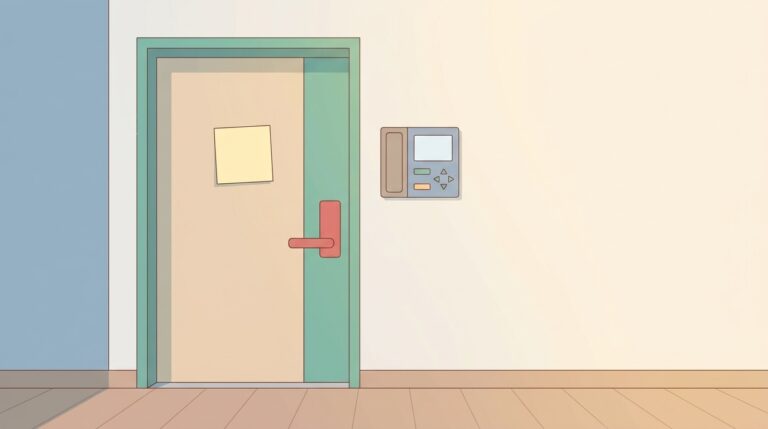
Handling Inter-Floor Noise in Korea: Intercom, Sticky Notes, and High-Context Etiquette
Phase 1: Empathy & Storytelling Opening
안녕하세요! 매일한글 에디터입니다. (Hello! This is your Daily Hangul Editor.)
Imagine this: It is 1:30 AM on a Tuesday in your cozy Seoul officetel or apartment (apateu). You have an important presentation at 9:00 AM, but the ceiling above you is rattling with the rhythmic, heavy thuds of someone heel-walking across their wooden floor—what Koreans vividly call bal-mangchi (heel hammer). Your heart races, your temples throb, and your instinct says: “I should march upstairs, knock on the door, and demand quiet right now!”
Stop right there. In Korean communal living culture, marching directly to a neighbor’s doorstep is not just considered confrontational; legally and culturally, it can instantly flip you from the aggrieved victim into an unlawful trespasser or aggressor. Navigating inter-floor noise (cheunggan so-eum) requires master-level social calibration (nunchi), an understanding of non-confrontational communication, and nuanced high-context phrasing.
Today’s guide is designed for advanced C2 learners living or planning to live in Korea. Built on real feedback from expats and native residents, this guide breaks down whether you should use the intercom (inteopon) or leave a sticky note (jjokji), and equips you with the most tactful, socially impenetrable Korean expressions to reclaim your peace without ruining neighborly relations.
Phase 2: Core Expressions Deep Dive (C2 Advanced Level)
1. 다름이 아니라 늦은 시간에 쿵쿵거리는 소리가 지속되어 조심스레 말씀드립니다.
- Pronunciation: [Da-reum-i a-ni-ra neu-jeun si-gan-e kung-kung-geo-ri-neun so-ri-ga ji-sok-doe-eo jo-sim-seu-re mal-sseum-deu-rim-ni-da] (Pronounce ‘kung-kung’ like the low resonant thumping of a bass drum)
- Meaning: Literal: “It is nothing other than, because a thumping sound continues at a late hour, I cautiously speak to you.” / Nuance: “I am truly sorry to bring this up, but the persistent thumping noise late at night is difficult to ignore, so I am reaching out with great care.”
- K-Culture Moment: Seen frequently in slice-of-life K-Dramas where a polite tenant slips an envelope under a noisy neighbor’s door or speaks over the intercom after nights of restless agony.
- Editor’s Insight: The phrase 다름이 아니라 (dareumi anira) is the ultimate Korean cushion word. It signals that you are not here for generic small talk, yet softens the blow before delivering delicate news. 조심스레 말씀드립니다 underlines your reluctance to criticize.
- Situation Spectrum: Casual 🚫 | Semi-formal ⚠️ | Formal/Written ✅
- 🤔 Think About It: Why does Korean prioritize self-diminishing cushion phrases (조심스레) before stating objective facts? How does this protect the listener’s “face” (che-myeon) compared to your native language?
2. 공동주택이다 보니 방음에 취약한 점 양해 부탁드립니다.
- Pronunciation: [Gong-dong-ju-taek-i-da bo-ni bang-eum-e chwi-yak-han jeom yang-hae bu-tak-deu-rim-ni-da] (Smoothly glide through ‘chwi-yak-han’ as ‘chwee-yak-han’)
- Meaning: Literal: “Since it is shared housing, please understand the aspect vulnerable to soundproofing.” / Nuance: “As we live in a shared building where sound travels easily, I kindly ask for your considerate understanding.”
- K-Culture Moment: Used by apartment management offices (gwanri-samuso) or diplomatic residents writing polite hallway notices.
- Editor’s Insight: Notice that this sentence avoids direct blame (“You are being too loud”). Instead, it externalizes the villain to the building’s structural limitations (방음에 취약한 점). This invites mutual solidarity rather than defensive hostility.
- Situation Spectrum: Casual 🚫 | Semi-formal ✅ | Formal ✅
- 🤔 Think About It: How does deflecting blame onto external factors (the building’s architecture) help preserve interpersonal harmony in high-density societies?
3. 피차 조심하면 좋겠지만, 생활 소음의 범위를 조금 넘어서는 것 같아서요.
- Pronunciation: [Pi-cha jo-sim-ha-myeon jo-ke-tji-man, saeng-hwal so-eum-ui beom-wi-reul jo-geum neom-eo-seo-neun geot ga-ta-seo-yo] (Pronounce ‘pi-cha’ sharply like ‘pee-cha’, pausing slightly before ‘saeng-hwal’)
- Meaning: Literal: “It would be good if both sides are careful, but it seems to slightly exceed the scope of everyday living noise.” / Nuance: “While I understand we must both be tolerant of normal daily sounds, this seems to exceed the threshold of reasonable living noise.”
- K-Culture Moment: An assertive yet sophisticated tenant calmly negotiating via the security office or a mediation board.
- Editor’s Insight: 피차 (mutual/both sides) demonstrates fairness, acknowledging that neither party is perfect. Adding ~것 같아서요 softens the finality of the statement, providing the other person room to adjust without humiliation.
- Situation Spectrum: Casual ⚠️ | Semi-formal ✅ | Formal ✅
- 🤔 Think About It: In your culture, would drawing a boundary between ‘routine noise’ and ‘excessive noise’ be done this indirectly, or through direct metrics (like decibels and timestamps)?
Phase 3: Textbook Korean vs. Real Korean
Situation 1: Leaving a Post-It Note on the Door
- 📖 교과서 한국어 (Textbook):
너무 시끄러우니 밤에는 조용히 해 주세요.
(Neomu sikkeureouni bame-neun joyonghi hae juseyo.)
“You are too loud, so please be quiet at night.” - 🗣️ 진짜 한국어 (Real-world C2 Native):
안녕하세요, 이웃 주민입니다. 밤늦은 시간 쿵쿵거리는 발소리가 조금 크게 울려서요. 조금만 신경 써 주시면 감사하겠습니다. 좋은 하루 보내세요!
(Annyeonghaseyo, i-ut jumin-imnida. Bam-neujeun sigan kung-kung-georineun bal-soriga jogeum keuge ullyeoseoyo. Jogeumman singyeong sseo jusimyeon gamsahagesseumnida. Joeun haru bonaeseyo!)
“Hello, this is your neighbor. The footsteps late at night resonate quite loudly downstairs. I would be deeply grateful if you could be a bit mindful. Wishing you a wonderful day!” - 💡 왜 다를까? (Why is it different?): Direct commands (조용히 해 주세요) trigger immediate defensiveness and are seen as aggressive demands. Real Korean combines a warm greeting, an indirect description of acoustic vibration (울려서요), and a polite wish for their wellbeing.
Situation 2: Contacting the Security Office via Intercom
- 📖 교과서 한국어 (Textbook):
위층이 시끄러우니까 경비실에서 위층에 전화해 주세요.
(Wicheungi sikkeureounikka gyeongbisireseo wicheunge jeonhwahae juseyo.)
“The floor above is noisy, so please call them from the security desk.” - 🗣️ 진짜 한국어 (Real-world C2 Native):
반장님, 고생 많으십니다. 다름이 아니라 000호인데요, 위층에서 지속적인 충격음이 전달되어서 연락드렸습니다. 방송이나 안내 한번 정중히 부탁드려도 될까요?
(Banjangnim, gosaeng maneusimnida. Dareumi anira 000-ho-indeyo, wicheung-eseo jisokjeogin chunggyeogeum-i jeondal-doeeoseo yeollak-deuryeosseum-nida. Bangsong-ina annae hanbeon jeongjung-hi butak-deuryeodo doelkkayo?)
“Chief, thank you for your hard work. I’m calling from Unit 000; persistent impact noises from upstairs are vibrating through. Could you kindly make a polite general announcement or check in for us?” - 💡 왜 다를까? (Why is it different?): Security officers (gyeongbi-won or banjang-nim) are mediators, not your personal enforcement agents. Acknowledging their labor (고생 많으십니다) and requesting systemic assistance (안내 방송) ensures proactive support.
Phase 4: K-Culture Deep Dive & Non-Verbal Etiquette
4-1. Nunchi & Physical Manners: Why Direct Doorstep Confrontations Fail
In South Korea, Supreme Court precedents and local community codes strictly regulate inter-floor noise disputes. Walking upstairs and pounding on your neighbor’s door, shouting through the door, or attempting to enter can result in police intervention for intimidation or disturbing the peace.
- The Golden Non-Verbal Rule: Avoid physical face-to-face visits (daemyeon bangmun).
- The Note & Gift Strategy: If leaving a note, stick a small, cheerful Post-it note at eye level alongside a small beverage or bakery item (e.g., a bottle of Bacchus or a package of premium cookies). This non-verbal offering instantly dissolves anger, framing the note not as an attack, but as a sincere appeal between decent neighbors.
4-2. Cultural Code Analysis: The High-Rise Architecture and “Bal-mangchi”
Over 60% of South Koreans live in apartment complexes. Most Korean apartments constructed before the mid-2010s utilize a “wall-slab structure” (byeok-sik gu-jo) rather than a “pillar-beam structure” (gidung-sik gu-jo). This means sound vibrations travel directly through the reinforced concrete walls and floors.
In K-Dramas like My Liberation Notes or modern webtoons, the apartment represents both a sanctuary of intense privacy and a fragile box where everyone hears everyone. The sound of bal-mangchi—walking heavily on bare heels—is considered the ultimate social oversight. When handling complaints, understanding that the neighbor might simply be unaware of their own walking style is essential to emotional diplomacy.
Phase 5: Real-World Roleplay Scenario
- Setting: 11:45 PM. You live in Unit 502. Unit 602 has been pacing loudly and rearranging furniture every midnight for three days.
- Characters:
- You (Unit 502 Resident): Exhausted, calm, striving for a peaceful resolution.
- Banjang-nim (Security Desk Officer / 경비반장): Friendly, veteran building caretaker with a radio strapped to his vest.
[Scene: Intercom Call to the Security Office]
- You: 🎭 [Pressing the call button on the wall panel, speaking in a composed, polite tone]
경비실 반장님, 늦은 시간에 죄송합니다. 502호입니다.
(Gyeongbisil banjangnim, neujeun sigane joesonghamnida. 502-ho-imnida.)
“Chief at the security desk, I apologize for calling so late. This is Unit 502.” -
Banjang-nim: 🎭 [Static crackles over the intercom]
네, 502호 입주민님. 무슨 일이신가요? 야간 순찰 중입니다.
(Ne, 502-ho ipjumin-nim. Museun irisin-gayo? Yagan sunchal jung-imnida.)
“Yes, resident of 502. What’s the matter? I’m currently on night patrol.” -
You: 🎭 [Lowering voice softly to show respect for the quiet hour]
순찰 중이신데 번거롭게 해드려 죄송해요. 다름이 아니라 며칠 전부터 위층에서 자정 무렵에 가구 끄는 소리와 쿵쿵거림이 반복되어서요.
(Sunchal jung-isinde beongeoropge haedeuryeo joesonghaeyo. Dareumi anira myeochil jeonbuteo wicheung-eseo jajeong muryeobe gagu kkeuneun soriga kung-kung-georimi banbok-doeeoseoyo.)
“I’m sorry to bother you during your patrol. It’s just that for a few days around midnight, heavy footfalls and furniture dragging noises have been recurring from upstairs.” -
Banjang-nim: 🎭 [Sighs sympathetically]
아이고, 잠드실 시간인데 많이 힘드시겠네요. 602호 맞으시죠?
(Aigo, jamdeusil siganinde mani himdeusigetneyo. 602-ho majeusicjyo?)
“Oh dear, it’s time to sleep; that must be very tough for you. It’s Unit 602, right?” -
You: 🎭 [Carefully avoiding direct confrontation]
네, 혹시 그 댁에 직접 따지기보다는, 전체 층 안내 방송이나 안내문으로 조율해 주실 수 있을까요?
(Ne, hoksi geu daege jikjeop ttajigibodaneun, jeonche cheung annae bangsong-ina annaemuneuro joyulhae jusil su isseulkkayo?)
“Yes. Rather than confronting that household directly, could you perhaps mediate through a floor-wide announcement or notice?” -
Banjang-nim: 🎭 [Nodding audibly]
좋은 생각이십니다. 직접 찾아가시면 감정만 상하니까요. 내일 오전에 관리실에서 공지 붙이고, 지금 제가 살짝 올라가서 조용히 순찰 돌겠습니다.
(Joeun saenggakisimnida. Jikjeop chajagasimyeon gamjeongman sanghanikkayo. Naeil ojeone gwanrisireseo gongji buchigo, jigeum jega saljjak ollagaseo joyonghi sunchal dolgetseumnida.)
“That’s a very wise approach. Going up in person only hurts feelings. I will have the management post a notice tomorrow morning, and I’ll quietly patrol upstairs right now.” -
You: 🎭 [Relieved, conveying deep gratitude]
배려해 주셔서 정말 감사합니다, 반장님. 순찰 조심히 다녀오세요.
(Baeryeohae jusyeoseo jeongmal gamsahamnida, banjangnim. Sunchal josimhi danyeo-oseyo.)
“Thank you so much for your consideration, Chief. Please stay safe on your patrol.” -
Banjang-nim: 🎭 [Warm tone]
네, 편안한 밤 되세요.
(Ne, pyeon-an-han bam doeseyo.)
“Yes, have a comfortable and restful night.”
🔀 Interactive Decision Branch
What would you do if the noise persisted the following weekend?
- Option A: Go upstairs at 1:00 AM, knock on their door firmly, and tell them to keep it down.
- Outcome: BAD. In Korea, knocking repeatedly on an upstairs neighbor’s door can lead to an official complaint to the police for harassment. It almost always results in a defensive, shouting match.
- Option B: Leave a warm, polite sticky note on their door with a small gift (like energy drinks) framed around structural resonance and mutual comfort.
- Outcome: BEST. Softens emotional defenses, demonstrates good character, and gives the resident face-saving space to change their habits without public embarrassment.
- Option C: Bang on your own ceiling with a broomstick (bo-bok so-eum / revenge thumping).
- Outcome: RISK. Intentional retaliatory noise using tools or subwoofers is legally actionable under the Inter-floor Noise Mediation Center rules and can make you liable for damages.
Phase 6: 10-Second Emotion Shadowing Drill
Practice these natural rhythm pauses (/) and emotional inflections out loud:
- [😔 조심스럽고 완곡하게 – Soft, careful, and polite]
저기… 실례지만 / 늦은 시간에 발소리가 조금 울려서요… / 조금만 양해해 주실 수 있을까요?
(Jeogi… sillyejiman / neujeun sigane balsoriga jogeum ullyeoseoyo… / jogeumman yanghaehae jusil su isseulkkayo?) -
[🤝 정중하지만 단호하게 – Respectful yet firm boundary setting]
공동 생활 공간인 만큼 / 밤 11시 이후에는 / 서로 조금씩만 조심해 주셨으면 합니다.
(Gongdong saenghwal gongganin mankeum / bam yeorhanssi ihue-neun / seoro jogeumssikman josimhaejusyeosseumyeon hamnida.) -
[🙏 깊은 감사와 안도감 – Warm and appreciative tone]
신경 써 주셔서 정말 감사합니다. / 이웃끼리 서로 배려하며 지냈으면 좋겠습니다.
(Singyeong sseo jusyeoseo jeongmal gamsahamnida. / I-utkkiri seoro baeryeohamyeo jinaesseumyeon joketseumnida.)
Phase 7: K-Culture Mini Dictionary
- 층간 소음 (Cheung-gan So-eum) | Noun
- Inter-floor noise in multi-unit buildings. A major socio-cultural topic in modern Korea with dedicated government mediation services.
- 발망치 (Bal-mang-chi) | Noun (Slang/Descriptive)
- Literally “foot-hammer.” Refers to the heavy, heel-striking walking style that transmits low-frequency shockwaves through concrete floors.
- 관리사무소 (Gwan-ri Sa-mu-so) | Noun
- The building management office. The legally recommended first point of contact for resolving neighbor disputes in Korean apartment complexes.
- 배려 (Bae-ryeo) | Noun
- Considerate thoughtfulness or empathy for others. The single most revered virtue in shared living spaces in Korea.
Phase 8: Traveler’s & Expat Survival Kit
Survival Expressions TOP 3
- 혹시 층간 소음 매트 깔아두셨나요? (Hoksi cheunggan soeum maeteu kkaraduseonnayo?)
- Meaning: “By any chance, do you have noise-dampening floor mats installed?”
- Pro Tip: If you have kids or an indoor workout routine, buying foam mats (soeum bangji maet) shows immense courtesy.
- 실내화 슬리퍼를 신어주시면 소음이 훨씬 덜할 것 같아요. (Silnaehwa seullipeoreul sineojusimyeon soeumi hwolssin deolhal geot gatayo.)
- Meaning: “If you could wear indoor slippers, I think the noise would be significantly reduced.”
- Pro Tip: Gifting a pair of soft EVA indoor slippers alongside a sticky note is a classic, ultra-effective Seoul neighbor trick.
- 관리사무소에 중재 요청을 드려야 할 것 같습니다. (Gwanrisamusoe jungjae yocheong-eul deuryeoya hal geot gatseumnida.)
- Meaning: “I believe we need to request formal mediation through the management office.”
- Pro Tip: Use this formal statement when direct notes yield no change.
Editor’s Travel & Living Note
- If noise issues escalate beyond neighborhood goodwill, download the official dispute portal on your mobile or bookmark the 국가소음정보시스템 이웃사이센터 공식 웹사이트 for professional decibel measurements and legal mediation.
- For local navigation and locating nearby hardware stores for door seals and foam slippers, check your route via the 네이버 지도 앱 다운로드.
Phase 9: A Step Deeper (한 발 더 깊이)
Korea transitioned from traditional detached courtyard houses (Hanok) to high-density apartment blocks within just two generations. In the past, Jeong (정) meant opening your gates and sharing food across short stone fences. Today, that dense proximity is compressed into concrete high-rises where personal boundaries are fiercely guarded, yet structurally permeable. Managing noise with delicate language isn’t weakness or passive aggression; it is Korea’s modern social contract—a collective effort to preserve dignity and peace in a hyper-compressed vertical society.
💬 Your Turn: Have you ever experienced neighbor noise in Korea or your home country? Would you prefer a polite sticky note with a drink, or an intercom call via security? Share your thoughts below in Korean or English!
Phase 10: FAQ & Common Mistakes
Q: Can I knock directly on the upstairs neighbor’s door if the noise is unbearable at night?
A: In South Korea, it is strongly advised not to visit their door directly. Korean court guidelines consider visiting, pounding on the door, or shouting inside the hallway as intrusive conduct that may lead to legal penalties or police involvement. Always contact the management office (관리사무소) or leave a gentle written note instead.
Q: What is the best item to attach to a sticky note when complaining about noise?
A: Light, non-alcoholic drinks (such as vitamin drinks like Vita500, Bacchus, or bottled tea) or wrapped bakery goods (like small financier cakes). Avoid expensive gifts, as they can create social awkwardness (budam).
Q: What should I do if the upstairs neighbor ignores both the security desk and my notes?
A: Escalate through the official government body known as the Floor Noise Neighborhood Center (이웃사이센터, 1661-2642). They offer free on-site consultations, noise level measurements, and legally structured mediation sessions.
🚨 Common Mistakes Warning Board
- Mistake: Writing an anonymous, accusatory note filled with exclamation marks (e.g., “잠 좀 잡시다!!!”).
- Correct Action: Write a polite note introducing yourself as an downstairs neighbor (아래층 주민), acknowledging shared building limits, and ending with a warm wish.
- Mistake: Retaliating by pounding on the ceiling with a broom.
- Correct Action: Record the sound on your phone with timestamps for objective evidence and report it systematically to building management.
- Mistake: Addressing the security guard as an employee who must obey your orders.
- Correct Action: Address them respectfully as 반장님 (Banjang-nim) or 경비선생님 (Gyeongbi-seonsaengnim) and frame your complaint as a collaborative request for guidance.
Phase 11: Action Missions
- 🥉 Bronze Mission (Solo Practice): Read Core Expression #1 aloud three times using the shadowing pauses until it rolls off your tongue smoothly in under 10 seconds.
- 🥈 Silver Mission (Social Sharing): Share this guide with a friend living in Korea or write your own sample 2-sentence sticky note (쪽지) in the comments below.
- 🥇 Gold Mission (Real Application): Buy a pack of soft indoor padded slippers (실내화) for your own apartment and check if your walking style makes a thud on your wood floors!
- 🎮 K-Culture Media Mission: Watch an episode of a modern Korean slice-of-life drama (like Hospital Playlist or Because This Is My First Life) and spot how neighbors interact when meeting in the apartment elevator or hallway.
Phase 12: Interactive Quiz Challenge
1. Situation Judgment
Which of the following is the most culturally appropriate first step when hearing midnight footsteps from upstairs?
* (A) Stomp hard on your own floor to send a message.
* (B) Knock on Unit 602’s front door immediately and explain your morning schedule.
* (C) Contact the security management office (경비실/관리사무소) or leave a considerate note with a beverage.
* (D) Call 112 immediately without informing building management.
정답 및 해설 확인하기 (Click to expand answer)
Correct Answer: (C)
Explanation: In Korean communal etiquette, mediating through the management office or leaving a courteous written note prevents direct emotional conflict and protects both parties’ privacy and legal boundaries.
2. Fill-in-the-Blank
Complete the cushion sentence:
“공동주택이다 보니 방음에 ________ 점 양해 부탁드립니다.”
* (A) 완벽한 (Perfect)
* (B) 취약한 (Vulnerable/Weak)
* (C) 시끄러운 (Noisy)
* (D) 무관한 (Irrelevant)
정답 및 해설 확인하기 (Click to expand answer)
Correct Answer: (B) 취약한
Explanation: 방음에 취약한 점 (“the aspect vulnerable to soundproofing”) is the classic high-context idiom used to diplomatically externalize fault to the building’s architecture.
3. True or False Cultural Quiz
- Statement: In Korea, going up to an upstairs neighbor’s front door and banging on it late at night can be classified as a violation of privacy and peace under local dispute regulations.
- [ True / False ]
정답 및 해설 확인하기 (Click to expand answer)
Correct Answer: True
Explanation: Legal precedents and mediation standards in Korea specifically discourage direct doorstep confrontations and emphasize intercom communication, management mediation, or written messages.







