

Mastering Year-End Charity and Volunteering Korean Like a Local
Phase 1: Empathy (Immersive Story Opening)
안녕하세요! It’s your Daily Hangul editor and cultural navigator.
Picture this: It’s a crisp December evening in Seoul. The glowing neon lights of Myeongdong reflect off light flurries of snow, street vendors are handing out piping-hot bungeoppang (carp bread), and right across the bustling intersection, a familiar, steady bell chimes: Clang, clang, clang.
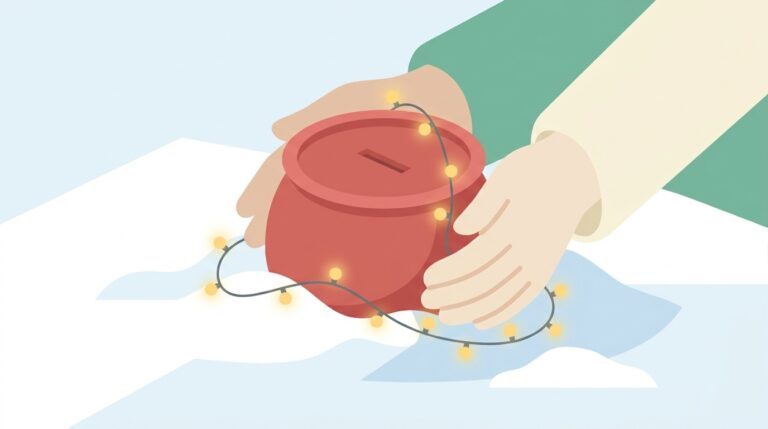
You look over and see the iconic red tripod holding the Salvation Army Charity Pot (구세군 자선냄비). Next to it, smiling volunteers in bright red coats are calling out warm greetings. You reach into your pocket, pull out some cash or your transport card, and walk toward them. But suddenly, your mind freezes.
What do I say as I drop this in? How do I ask if I can volunteer for the weekend coal briquette delivery? If I say ‘기부해요’ (I donate), does that sound too blunt or robotic?
If you have ever hesitated in front of a Korean charity booth or felt tongue-tied while trying to express genuine warmth in Korean, you are definitely not alone! In Korea, year-end charity (연말 불우이웃 돕기) is deeply rooted in communal warmth (정, Jeong) and mutual aid (품앗이, Pum-asi). Knowing how to navigate these moments with nuance turns a transactional donation into a heart-to-heart cultural connection. Today, tailored for B2 intermediate learners, we will break down authentic, high-frequency expressions and cultural codes so you can lend a helping hand with 100% confidence!
Phase 2: Core 3 Expressions In-Depth
1. 작은 정성이지만 도움이 되었으면 좋겠습니다.
- Pronunciation: Jageun jeongseong-ijiman doumi doe-eosseumyeon jokkess-eumnida. (Sound analogy: “Jah-geun jung-sung-ee-ji-mahn doh-oom-ee dweh-uh-ssuh-myun joh-kket-seum-nee-dah”)
- Meaning: Literal: “It is a small sincerity, but I hope it helps.” / Nuance: “It is not much, but I hope this humble contribution makes a difference.”
- K-Culture Moment: You will hear this exact sentence spoken by warm-hearted neighborhood elders in slice-of-life K-Dramas like Reply 1988 or Our Blues when handing over warm meals or donation envelopes.
- Editor’s Insight: The word 정성 (jeongseong) refers to heartfelt devotion. In Korean culture, self-humbling expressions are the pinnacle of polite etiquette. Claiming your donation is “huge” or “significant” sounds boastful; framing it as “small sincerity” shows true grace.
- Situation Spectrum: Casual (⚠️ with close friends you’d say 작은 정성이야), Semi-formal (✅ 작은 정성이지만 도움 됐으면 좋겠어요), Formal (✅ 작은 정성이지만 도움이 되었으면 좋겠습니다).
- 🤔 Think About It: Why does Korean giving etiquette emphasize lowering the giver’s gift while elevating the recipient’s dignity?
2. 연말 모금 행사에 자원봉사자로 참여하고 싶어요.
- Pronunciation: Yeonmal mogeum haengsa-e jawonbongsa-jaro cham-yeohago sipeoyo. (Sound analogy: “Yun-mahl moh-geum haeng-sah-eh jah-won-bong-sah-jah-roh chahm-yuh-hah-goh sheep-uh-yoh”)
- Meaning: Literal: “I want to participate as a volunteer in the year-end fundraising event.” / Nuance: “I’d love to join the team and volunteer for the year-end fundraising drive.”
- K-Culture Moment: Often heard at community welfare centers (주민센터) or university volunteer clubs during winter orientation.
- Editor’s Insight: 모금 (mogeum) combines 모으다 (to gather) and 금 (money/funds). Adding -자로 (-jaro, as a role/person) clearly establishes your intended role with intermediate syntactic flair.
- Situation Spectrum: Casual (🚫), Semi-formal (✅), Formal (✅ 자원봉사자로 참여하고자 합니다).
- 🤔 Think About It: How does phrasing a volunteering request as “participating” (참여하다) rather than “working” (일하다) change the social atmosphere?
3. 기부금 영수증 발급이 가능한가요?
- Pronunciation: Gibugeum yeongsujeung balgeubi ganeunghangayo? (Sound analogy: “Gee-boo-geum young-soo-jeung bahl-geub-ee gah-neung-hahn-gah-yoh?”)
- Meaning: Literal: “Is the issuance of a donation receipt possible?” / Nuance: “Can I get a tax-deductible donation receipt for this?”
- K-Culture Moment: Used by working professionals in Korea during the December year-end tax adjustment (연말정산) season when making NGO contributions.
- Editor’s Insight: 발급 (balgeup) is the formal term for official issuance of documents. Using -이/가 가능한가요? softens the request while maintaining a professional business-Korean tone.
- Situation Spectrum: Casual (🚫), Semi-formal (✅), Formal (✅).
- 🤔 Think About It: Notice how Korean nominalizes verbs (발급하다 -> 발급) in institutional inquiries to sound polished.
Phase 3: Textbook Korean vs. Real Native Korean
Situation 1: Dropping a cash donation into the charity pot
- 📖 교과서 한국어 (Textbook): “돈을 기부합니다.” (Don-eul gibuhamnida. – “I donate money.”)
- 🗣️ 진짜 한국어 (Real Native): “좋은 곳에 써 주세요!” (Joeun gose sseo juseyo! – “Please use it for a good cause!”)
- 💡 왜 다를까? (Why the difference?): Native speakers rarely declare the physical act of giving money. Instead, they warmly entrust the funds to the organization by asking them to put it toward a meaningful purpose.
Situation 2: Offering an extra hand at a charity booth
- 📖 교과서 한국어 (Textbook): “자원봉사 활동을 수행하겠습니다.” (Jawonbongsa hwaldong-eul suhaenghagessseumnida. – “I will execute volunteer activities.”)
- 🗣️ 진짜 한국어 (Real Native): “작은 손길이라도 보태고 싶어서요.” (Jageun son-girirado botaego sipeoseoyo. – “I just wanted to lend whatever helping hand I can.”)
- 💡 왜 다를까? (Why the difference?): The idiomatic metaphor 손길을 보태다 (to add a hand’s warmth/effort) sounds natural, modest, and emotionally resonant at the B2 level.
Phase 4: K-Culture Deep Dive & Non-Verbal Manners
4-1. 눈치 (Nunchi) & Gestures at the Charity Box
- The Two-Hand Rule: When sliding money or a donation envelope into a collection box or handing items to a charity worker, always hold the item with both hands, or support your right elbow/forearm with your left hand.
- The Vocal Bow: Accompany your donation with a slight 15-to-30-degree bow and a warm greeting: “추운데 수고 많으십니다!” (Chuwonde sugo maneusimnida! – “Thank you so much for your hard work in this cold weather!”). Acknowledging the volunteer’s physical discomfort creates immediate camaraderie.
4-2. Cultural Codes: The Fruit of Love & Winter Briquettes
- 사랑의 열매 (Fruit of Love): In December, you will see news anchors and citizens wearing a small badge with three red berries and a green stem. This represents the Community Chest of Korea. The three berries symbolize self, family, and neighbor.
- 연탄 봉사 (Coal Briquette Volunteer Drives): Despite high-tech heating, thousands of vulnerable elderly households still rely on yeontan (charcoal briquettes) for winter warmth. K-Pop idols, actors, and university groups regularly don black aprons to hand-deliver these heavy briquettes through narrow uphill alleys.
Phase 5: Real-World Roleplay Scenario
Setting: A chilly Saturday afternoon at a charity bazaar tent outside Seoul City Hall. You approach Min-ji, a volunteer coordinator organizing packages for local elderly citizens.
- Min-ji: 안녕하세요! 연말 나눔 바자회 부스에 오신 것을 환영합니다. (Annyeonghaseyo! Yeonmal nanum bajahoe buse-e osin geoseul hwanyeonghamnida. – “Hello! Welcome to the year-end sharing bazaar booth.”)
- You: 🎭 Nods with a warm smile
안녕하세요! 날씨가 많이 추운데 수고가 많으세요. (Annyeonghaseyo! Nalssiga mani chuwonde sugoga maneuseyo. – “Hello! It’s so cold today, thank you for your hard work.”) - Min-ji: 찾아주셔서 감사해요. 저희 부스는 독거 어르신들께 전달할 방한용품을 모금하고 있어요. (Chajajusyeoseo gamsahaeyo. Jeohui buseuneun dokgeo eoreosindeulkke jeondalhal banghanyongpumeul mogeumhago isseoyo. – “Thank you for coming by. Our booth is raising funds for winter supplies for elderly people living alone.”)
- You: 🎭 Presents a donation envelope with two hands
작은 정성이지만 좋은 곳에 써 주세요. 도움이 되었으면 좋겠습니다. (Jageun jeongseong-ijiman joeun gose sseo juseyo. Doumi doe-eosseumyeon jokkess-eumnida. – “It’s a small contribution, but please use it well. I hope it helps.”) - Min-ji: 어머, 정말 따뜻한 마음 감사합니다! 혹시 오늘 오후에 포장 작업도 도와주실 수 있나요? 일손이 조금 부족해서요. (Eomeo, jeongmal ttatteutan maeum gamsahamnida! Hoksi oneul ohue pojang jageopdo dowajusil su innayo? Ilsoni jogeum bujokhaeseoyo. – “Oh, thank you so much for your warm heart! By any chance, could you help us with packaging this afternoon? We’re a bit short-handed.”)
- You: 🎭 Considers schedule with enthusiasm
네! 작은 손길이라도 보태고 싶었는데, 참여해도 될까요? (Ne! Jageun son-girirado botaego sipeonneunde, cham-yeohaedo doelkkayo? – “Yes! I wanted to lend a hand anyway, may I join in?”) - Min-ji: 물론이죠! 저쪽 테이블에서 장갑 받으시고 바로 시작하시면 됩니다. (Mollonijyo! Jeojjok teibeureseo janggap badeusigo baro sijakhasimyeon doemnida. – “Of course! Grab a pair of gloves at that table over there and you can start right away.”)
- You: 🎭 Bows slightly and puts on cotton gloves
네, 열심히 돕겠습니다! (Ne, yeolsimhi dopgessseumnida! – “Yes, I will do my absolute best to help!”)
🔀 Interactive Decision Point
When Min-ji asks if you want a donation receipt for your tax deduction, how do you reply?
- Choice A (Best): “네, 소득공제용 기부금 영수증 발급 부탁드립니다.” (Ne, sodeukgongjeyong gibugeum yeongsujeung balgeup butakdeurimnida.)
👉 Feedback: Flawless B2 business-level Korean! Polite, concise, and clear. - Choice B (Bad): “돈 냈으니까 영수증 내놔.” (Don naesseunikka yeongsujeung naenwa.)
👉 Feedback: Extremely rude and aggressive imperative. Instant social faux pas! - Choice C (Risk): “영수증 필요 없으니까 그냥 가져가.” (Yeongsujeung piryo eopseunikka geunyang gajyeoga.)
👉 Feedback: Overly blunt banmal. Even if you want to decline, use honorifics: “영수증은 괜찮습니다, 좋은 일에 잘 써주세요!”
Phase 6: 10-Second Emotional Shadowing Drill
Practice reading these out loud, pausing at each / mark and infusing the specified emotion!
[😊 Warm and Humble]
“작은 정성이지만 / 추운 겨울을 보내는 분들께 / 큰 힘이 되었으면 좋겠습니다.”
(Jageun jeongseong-ijiman / chuun gyeoureul bonaeneun bundeulkke / keun himi doe-eosseumyeon jokkess-eumnida.)
(“It is a small sincerity / but for those spending a cold winter / I hope it gives great strength.”)-
[🤝 Heartfelt and Cooperative]
“부족하지만 / 저도 작은 손길을 보태서 / 함께 따뜻한 연말을 만들고 싶어요.”
(Bujokhajiman / jeodo jageun son-gireul botaeseo / hamkke ttatteutan yeonmareul mandeulgo sipeoyo.)
(“Though I lack much / I want to add my little helping hand / to create a warm year-end together.”)
Phase 7: K-Culture Mini Dictionary
- 구세군 자선냄비 (Gusegun Jaseon-naembi) – Salvation Army Charity Pot: The quintessential symbol of Korean winter streets since 1928, signaling the start of the holiday season.
- 연탄 봉사 (Yeontan Bongsa) – Coal Briquette Delivery Volunteering: A hands-on winter volunteer tradition where teams form human chains to transport heating fuel to hillside villages (달동네).
- 사랑의 열매 (Sarang-ui Yeolmae) – Fruit of Love: The emblem of the Community Chest of Korea representing collective neighborhood welfare.
- 불우이웃 (Buru-iut) – Underprivileged Neighbors: The traditional term used in charity campaigns to refer to marginalized individuals or families needing community care.
Phase 8: Survival Kit for Travelers
Top 3 On-the-Street Expressions
- “교통카드로도 기부할 수 있나요?” (Gyotongkadeurodo gibuhal su innayo?) – “Can I donate using my transport (T-money) card too?”
- “봉사활동 시간 인증이 되나요?” (Bongsahwaldong sigan injeung-i doenayo?) – “Can my volunteer hours be officially certified?”
- “추우신데 따뜻한 음료 한잔 드세요.” (Chuusinde ttatteutan eumryo hanjan deuseyo.) – “It’s freezing; please have a warm drink.” (A very popular gesture when handing canned hot coffee to street volunteers!)
Editor’s Travel Note
- Look out for digital donation pads on modern charity booths across Seoul subway stations where you can simply tap your T-money card or credit card.
- If you wish to register for official volunteer activities in Korea, you can sign up on the 1365 Volunteer Portal website or check local expat volunteer groups in Itaewon and Mapo.
Phase 9: A Step Deeper (Reflective Essay)
In Korean society, charity is rarely viewed merely as an individual tax write-off or top-down philanthropy. Instead, it traces back to Pum-asi (품앗이)—the ancient agrarian tradition of communal labor exchange where neighbors took turns harvesting crops and building houses together. Giving during the harsh Korean winter is an unspoken pact that no one in the village should freeze or go hungry alone. When you donate or volunteer in Korea, you aren’t just giving resources; you are weaving yourself into the communal fabric of Jeong (정).
💬 Your Turn: How does year-end charity in your home country compare to Korea’s communal volunteering culture? Have you ever participated in a fundraising drive? Share your thoughts below in Korean or English!
Phase 10: FAQ & Misconception Prevention
Q: Can non-Korean citizens get tax-deductible donation receipts in Korea?
A: Yes! If you are a registered foreign resident (외국인등록증 holder) filing Korean year-end taxes (연말정산), registered NGOs and charity organizations can issue receipts tied to your Alien Registration Number.
Q: Is it rude to donate loose pocket change into the Salvation Army pot?
A: Not at all! Every single coin counts. The motto of street charity pots is that every small sincere gesture (작은 정성) gathers to make a warm society.
Q: Can foreign tourists volunteer for short-term winter charity events?
A: Yes, many bazaar and food distribution events welcome walk-in volunteers. However, for specialized activities or certified hours, signing up in advance via official volunteer centers is recommended.
🚨 Common Mistakes Alert
- ❌ Mistake 1: Tossing cash into the charity box with one hand while looking away.
✅ Fix: Hold the money with two hands, make brief polite eye contact, and nod gently. - ❌ Mistake 2: Saying “수고하세요” to elderly charity workers.
✅ Fix: To elders, use “수고 많으십니다” or “감사합니다”, as “수고하세요” can occasionally sound slightly condescending coming from younger speakers. - ❌ Mistake 3: Assuming all charity booths only accept cash.
✅ Fix: Most modern Korean charity stands support ZeroPay, KakaoPay, and transport card tap-to-donate systems!
Phase 11: Action Mission & Engagement
- 🥉 Bronze Mission: Practice saying “작은 정성이지만 좋은 곳에 써 주세요” out loud 3 times until your pronunciation flows naturally.
- 🥈 Silver Mission: Leave a comment below introducing your favorite charity cause using the grammar -에 참여하고 싶어요.
- 🥇 Gold Mission: Spot a red charity pot (구세군 자선냄비) or donation box during your next trip/outing, donate a small amount with two hands, and greet the volunteer in Korean!
🎮 K-Culture Bonus Mission: In your next winter K-Drama binge, listen closely for the sound of the Salvation Army bell (구세군 종소리) during outdoor Seoul scenes!
Phase 12: Interactive Quiz Challenge
1. [Situational Judgment] You want to hand a donation envelope to a community volunteer at a winter bazaar. Which sentence is the most polite and natural?
* A) 돈 받으세요. (Don badeuseyo.)
* B) 작은 정성이지만 도움이 되었으면 좋겠습니다. (Jageun jeongseong-ijiman doumi doe-eosseumyeon jokkess-eumnida.)
* C) 제가 기부 활동을 완료했습니다. (Jega gibu hwaldong-eul wanryohaessseumnida.)
2. [Fill in the Blank] Fill in the missing idiomatic expression for “lending a helping hand”:
* “저도 봉사 활동에 작은 (________)을 보태고 싶어요.”
3. [True / False] The three red berries on the Korean 사랑의 열매 (Fruit of Love) badge represent ‘Myself’, ‘My Family’, and ‘My Neighbor’. (O / X)
👉 Click here to reveal the answers and detailed explanations!
- Answer: B — 작은 정성이지만 도움이 되었으면 좋겠습니다 expresses modesty, warmth, and impeccable intermediate etiquette.
- Answer: 손길 (son-gil) — 손길을 보태다 literally means “to add a hand’s touch/help”, a beloved native Korean idiom for volunteering.
- Answer: O (True) — The three berries symbolize self, family, and neighbor, coming together under the green stem of communal love!







