

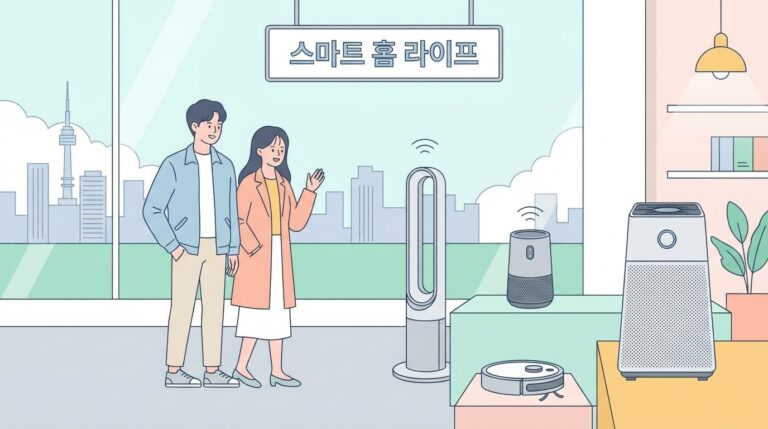
Master Korean Wedding Prep: Open-Run Tactics and Appliance Discounts
Phase 1: Empathy (Immersive Storyline Opening)
안녕하세요! 매일한글 에디터입니다. (Hello! This is your Daily Hangul editor.)
Imagine standing outside a premier department store in Gangnam at 9:15 AM on a crisp Saturday morning. You are clutching a queue number for an “open-run” (오픈런) to secure your wedding appliance package—a custom multi-door refrigerator, an OLED TV, and an AI-driven washer-dryer suite. Behind you are dozens of eager couples, each armed with spreadsheets and corporate perk codes. When the doors open and you sit across from a sharp retail master, they start throwing terms at you: dapummok hal-in (multi-item discount), chegamga (perceived net price), and imjigwon chan-seu (employee discount perk). If you only know textbook Korean like “이거 얼마예요?” (How much is this?), you will find yourself overwhelmed and missing out on millions of won in cashbacks.
Navigating high-value milestone purchases in South Korea requires not just advanced language skills, but an acute mastery of commercial sociolinguistics and retail psychology. This comprehensive C2-level guide turns real-world expat and bilingual couple pain points into elite negotiation prowess, ensuring you navigate appliance showrooms with absolute confidence and cultural finesse.
Phase 2: Top 3 Core Expressions In-Depth
1. 발품을 팔다 (Balpum-eul palda)
- Pronunciation: [Bal-poom-eul pal-da] (Sounds like “Bal-pum” with a gentle pop on ‘p’, flowing into ‘pal-da’ like ‘pal-dot’)
- Meaning: Literal: “To sell one’s footwork” | Actual Nuance: To tirelessly scout multiple physical locations to find the most competitive deal or insider quote.
- K-Culture Moment: In modern K-dramas depicting realistic newlywed journeys (such as Work Later, Drink Now or Because This Is My First Life), couples spend entire weekends visiting digital plazas across Seoul to compare floor-manager discretionary discounts.
- Editor’s Insight: At the C2 level, using balpum signals that you respect the effort of physical legwork over mere online scrolling (sonpum / 손품).
- Situation Spectrum: Casual: ✅ | Semi-formal: ✅ | Formal: ⚠️
- 🤔 Think About It: Why does Korean culture value physical presence and face-to-face negotiation (balpum) so highly even in the world’s most hyper-digitalized market?
2. 체감가로 견적 뽑아주세요 (Chegamgaro gyeonjeok ppobajuseyo)
- Pronunciation: [Che-gam-ga-ro gyeon-jeok ppo-ba-ju-se-yo] (Think: “Che-gahm-gah-ro” followed by a crisp “gyon-jok ppo-bah-joo-seh-yo”)
- Meaning: Literal: “Please pull out an estimate in perceived cost.” | Actual Nuance: “Show me the absolute bottom-line net price after applying all store points, cashback rebates, and affiliate card discounts.”
- K-Culture Moment: Essential vocabulary heard across flagship electronic department stores when couples sit with veteran sales managers to calculate complex incentive tiers.
- Editor’s Insight: Gyeoljega (결제가) is the initial swipe amount, whereas chegamga (체감가) is the real money out of pocket after vouchers are redeemed. Demanding the chegamga reveals you are an informed consumer who cannot be swayed by surface-level pricing.
- Situation Spectrum: Casual: 🚫 | Semi-formal: ✅ | Formal: ✅
- 🤔 Think About It: How does separating the nominal swipe price from the effective net price reflect Korea’s complex retail cashback ecosystem?
3. 지인 찬스나 임직원 코드 적용이 가능한가요? (Ji-in chanseuna imjigwon kodeu jeok-yong-i ganeunghangayo?)
- Pronunciation: [Ji-in chan-seu-na im-ji-gwon ko-deu jeok-yong-i ga-neung-han-ga-yo?]
- Meaning: Literal: “Is it possible to apply an acquaintance chance or employee code?” | Actual Nuance: “Can we route this transaction through corporate affiliate family discounts or partner promotion rates?”
- K-Culture Moment: Seen in contemporary lifestyle variety shows where family or close network perks (chan-seu, derived from ‘chance’) are tactfully leveraged for major life investments.
- Editor’s Insight: The word chan-seu (찬스) in Korean business-casual contexts softens what could otherwise sound like an aggressive demand for preferential treatment, transforming it into a cooperative search for mutual incentives.
- Situation Spectrum: Casual: ⚠️ | Semi-formal: ✅ | Formal: ✅
- 🤔 Think About It: What does the ubiquitous use of chan-seu tell us about the delicate balance between personal connections (yeonjul) and institutional discount policies in Korea?
Phase 3: Textbook Korean vs. Real Native Korean
Situation 1: Inquiring about package bundle discounts for wedding preparation
- 📖 교과서 한국어: 여러 개를 한꺼번에 구매하면 가격을 깎아 줄 수 있습니까? (Yeoreo gae-reul hankeobeone gumaehamyeon gagyeog-eul kkakka jul su isseumnikka?)
- 🗣️ 진짜 한국어: 이번에 혼수 다품목으로 맞추려고 하는데, 패키지 추가 DC나 지점장 재량 할인이 어디까지 들어가나요? (Ibeone honsu dapummog-euro matchuryeogo haneunde, paekiji chuga DC-na jijeomjang jaeryang harin-i eodikkaji deureoganayo?)
- 💡 왜 다를까?: Textbook phrasing sounds overly transactional and demanding. Sophisticated native shoppers specify the category (honsu dapummok) and politely inquire about the branch manager’s discretionary margin (jijeomjang jaeryang hal-in).
Situation 2: Asking if a new store opening offers superior gift card cashbacks
- 📖 교과서 한국어: 신규 매장이 다른 매장보다 더 쌉니까? (Sin-gyu maejang-i dareun maejangboda deo ssabnikka?)
- 🗣️ 진짜 한국어: 그랜드 오픈 매장 오픈런 특가로 상품권 페이백이랑 캐시백 비율을 최대로 맞추고 싶어서요. (Geuraendeu opeun maejang opeulleon teukgaro sangpumgwon peibaeg-irang kaesibaek biyur-eul choedaero matchugo sipeoseoyo.)
- 💡 왜 다를까?: Native consumers leverage specific industry mechanisms (open-run teukga, sangpumgwon payback) rather than asking a generic question about whether items are “cheap.”
Phase 4: K-Culture Deep Dive & Non-Verbal Etiquette
4-1. 눈치 (Nunchi) & Showroom Body Language
When negotiating bridal packages in major stores like Hyundai Mokdong, Lotte Main, or Shinsegae Gangnam:
* The Estimate Portfolio Glance: Never wave competing store estimates aggressively. Instead, keep your previous quotes (gyeonjeokseo) neatly folded in a binder. Discreetly glance at them or place the edge visible on the table. This signals to the sales master (maenijeo) that you have done extensive balpum without directly challenging their pride.
* The Polite Dual Nod: When the manager taps their calculator or checks back-office approval for extra vouchers (sangpumgwon), maintain relaxed eye contact paired with slight, rhythmic head nods. It shows patience and confidence.
4-2. Cultural Code Analysis: “가전 졸업” (Appliance Graduation)
In Korean wedding communities (such as Make My Wedding or Direct Wedding), finishing your electronics purchase is celebrated as 가전 졸업 (Gajeon Jor-eop)—literally “graduating from home appliances.” Because couples invest significant capital (often 15 to 30 million KRW) to synchronize their entire smart-home ecosystem in one go, shopping transforms into a strategic team sport involving online intelligence gathering, dawn open-runs at newly renovated branches, and strategic credit card threshold tracking (siljeok chae-ugi).
Phase 5: Real-World Roleplay Scenario
- Setting: Saturday 9:45 AM, VIP Bridal Consultation Lounge at a flagship electronics megastore in Yeouido.
- Characters:
- You (Chris): A bridegroom-to-be shopping for a multi-appliance package.
- Manager Kang (강 팀장): A seasoned, high-performing wedding electronics consultant.
[Scene Start]

강 팀장: 🎭 (미소를 지으며 견적 패드를 터치한다) 어서 오세요! 오픈런 번호표 7번 고객님이시죠? 오늘 어떤 품목 위주로 보고 계실까요?
(Eoseo oseyo! Opeulleon beonhopyo chilbeon gogaegnim-isijyo? Oneul eotteon pummok wiju-ro bogo gyesilkkayo? / "Welcome! Ticket #7 from the morning rush, right? Which specific items are we configuring today?")

Chris: 🎭 (정중하게 인사하며 스마트폰 메모장을 살며시 내려놓는다) 안녕하세요, 팀장님. 저희 올가을 입주 예정이라 TV, 냉장고, 워시타워까지 혼수 다품목 풀세트로 견적 뽑으러 왔습니다.
(Annyeonghaseyo, timjangnim. Jeohi ol-gaeul ipju yejeong-ira TV, naengjanggo, wositawogkaji honsu dapummok pulseteuro gyeonjeok ppobeureo watseumnida. / "Hello Manager Kang. We are moving in this autumn, so we came to get a full-package bridal quote for an OLED TV, refrigerator, and wash tower.")

강 팀장: 🎭 (태블릿에서 패키지 목록을 조합하며) 탁월한 선택이십니다. 현재 그랜드 오픈 지점 단독 다품목 패키지로 묶으시면 기본 출고가 대비 할인폭이 꽤 큽니다.
(Tagwolhan seontaeg-isimnida. Hyeonjae geuraendeu opeun jijeom dandok dapummok paekijiro mukkeusimyeon gibon chulgoga daebi harinpog-i kkwae keumnida. / "Excellent choice. With our grand opening exclusive multi-item bundle, the discount from retail list price is quite substantial.")

Chris: 🎭 (눈을 맞추며 차분하게) 네, 출고가 기준 말고 제휴카드 조건이랑 주말 결제 페이백까지 다 감안해서 최종 체감가로 산출해 주실 수 있을까요?
(Ne, chulgoga gijun malgo jehyukadeu jogeon-irang jumal gyeolje peibaek-kkaji da gamanhaeseo choejong chegamgaro sanchulhae jusil su isseulkkayo? / "Understood. Rather than the retail sticker price, could you calculate our final perceived cost, taking into account affiliate card terms and weekend cashback rebates?")

강 팀장: 🎭 (계산기 자판을 빠르게 두드리며) 역시 준비를 많이 하셨네요! 제휴카드 전월 실적 조건 30만 원 충족 시 청구할인 40만 원에, 백화점 상품권 모바일 페이백 60만 원이 추가됩니다.
(Yeogsi junbireul mani hasyeotneyo! Jehyukadeu jeonwol siljeok jogeon samsipman won chungjok si cheong-guharin sasipman wone, baekhwajeom sangpumgwon mobail peibaek yuksipman won-i chugadoemnida. / "You've really done your homework! If you meet the 300,000 KRW monthly card spend, you get 400,000 KRW off your billing statement, plus 600,000 KRW in department store mobile vouchers.")

Chris: 🎭 (살짝 고개를 갸웃하며 미소를 띤다) 혹시 여기에 저희 대기업 임직원 제휴 코드나 지점장님 특별 프로모션 재량까지 더 얹어주시면 오늘 바로 가전 졸업하고 싶은데요.
(Hogsi yeogie jeohi daegieop imjigwon jehyu kodeuna jijeomjangnim teukbyeol peuromosyeon jaeryangkkaji deo eonjeojusimyeon oneul baro gajeon jor-eophago sipeundeyo. / "If we could also apply our corporate partner discount code or your branch manager discretionary promo, we'd love to 'graduate' from our appliance search right here today.")

강 팀장: 🎭 (주변을 슬쩍 둘러보고 목소리를 낮추며) 하하, 고객님 말씀이 시원시원하시네요. 좋습니다. 지점장 찬스로 사은품 고급 인덕션 하나 더 얹어드리고 상품권 10만 원권 추가 상향해 드리겠습니다.
(Haha, gogaegnim malsseum-i siwonsiwonhasineyo. Joeumnida. Jijeomjang chanseuro saeunpum gogeup indeokseon hana deo eonjeodeurigo sangpumgwon simman won-gwon chuga sanghyanghae deurigetseumnida. / "Haha, you are delightfully straightforward! Deal. With a branch manager voucher, I will throw in a premium induction cooktop and upgrade your gift vouchers by another 100,000 KRW.")

Chris: 🎭 (환하게 웃으며 계약서를 확인한다) 깔끔한 조건 감사드립니다, 팀장님! 바로 결제 진행해 주세요.
(Kkalkkeumhan jogeon gamsadeurimnida, timjangnim! Baro gyeolje jinhaenghae juseyo. / "Thank you for the clean, generous deal, Manager! Let's proceed with the contract right away.")

[Scene End]
🔀 Interactive Choice Point
How would you respond if the manager says: “이 조건은 오늘 자정까지만 유효한 특가입니다.” (This deal is only valid until midnight tonight.)?
- Option A: “지금 당장 계약 안 하면 손해니까 그냥 바로 결제해 주세요.” (Best if you’re fully satisfied, but skips final review.)
- Option B: “다른 매장 한 군데만 더 비교해 보고 올 테니, 이 조건으로 견적서 킵해 주실 수 있나요?” (Best Choice! Tactfully preserves the deal while giving you room for a final verification.)
- Option C: “거짓말 마세요. 다음 주에도 똑같이 할인해 줄 거잖아요.” (High Risk! Highly confrontational and breaks social harmony/giboone).
Phase 6: 10-Second Emotion Shadowing Drill
Master the natural cadence, rhythm stops (/), and emotional registers of wedding retail bargaining:
[🔥 Determined & Businesslike]
“혼수 다품목으로 / 묶어서 맞출 테니, / 최종 체감가 / 견적 부탁드립니다.”
(Honsu dapummog-euro / mukkeoseo matchul teni, / choejong chegamga / gyeonjeok butagdeurimnida.)-
[🤫 Discreet & Highly Diplomatic]
“혹시 지점장님 재량으로 / 상품권 페이백 / 조금만 더 상향 가능할까요?”
(Hoksi jijeomjangnim jaeryang-euro / sangpumgwon peibaek / jogeumman deo sanghyang ganeunghalkkayo?) -
[🤩 Satisfied & Decisive]
“조건이 아주 깔끔하네요. / 오늘 여기서 / 기분 좋게 가전 졸업하겠습니다!”
(Jogeon-i aju kkalkkeumhaneyo. / Oneul yeogiseo / gibun joke gajeon jor-eophagetseumnida!)
Phase 7: K-Culture Mini Dictionary
-
가전 졸업 (Gajeon Jor-eop) (Noun)
- Literal: Appliance Graduation
- Context: The milestone moment when engaged couples finalize all their major household electronics contracts, freeing them from endless price comparisons.
- 체감가 vs. 결제가 (Chegamga vs. Gyeoljega) (Noun Phrase)
- Literal: Perceived Cost vs. Invoiced Swipe Amount
- Context: The crucial distinction between the raw amount billed on your credit card versus the effective total after deductions, points, and retail vouchers.
- 상품권 페이백 / 상테크 (Sangpumgwon Peibaek / Sang-teku) (Noun)
- Literal: Department Gift Card Cashback / Voucher Arbitrage Technique
- Context: A strategic savings method where store-issued physical or digital gift cards are combined with credit card promotions to shave 5–15% off big-ticket purchases.
- 다품목 할인 (Dapummok Har-in) (Noun)
- Literal: Multi-Item Bundle Discount
- Context: Tiered incentive structures deployed by electronics giants where purchasing 4 to 12 items simultaneously exponentially scales up instantaneous cash rebates.
Phase 8: Survival Kit for High-Value Shoppers
Top 3 Survival Expressions
- “전월 실적 조건 없는 카드로 추천해 주세요.” (Jeonwol siljeok jogeon eomneun kadeuro chucheonhae juseyo.)
- Pro Tip: Use this to avoid getting roped into complex credit cards that demand massive monthly spending commitments just to maintain the discount.
- “오픈런 사은품 수량 아직 남아있나요?” (Opeulleon sa-eunpum suryang ajik nama-itnayo?)
- Pro Tip: Use this at customer service counters during store grand openings to claim free high-end cookware sets given to early-morning shoppers.
- “견적서 유효기간이 언제까지인가요?” (Gyeonjeokseo yuhyo-gigani eonjekkaji-in-gayo?)
- Pro Tip: Crucial for locking in weekend promotional pricing before continuing your legwork.
Editor’s Travel & Expat Note
To scout flagship electronics stores running opening promotions, search for terms like “오픈점” (Opening Branch) or “리뉴얼 오픈” (Renewal Open) inside the Naver Map search portal for electronics. When making large payments, ensure your foreign resident registration (ARC) and Korean bank daily card limits (1-il gyeolje hando) are adjusted upwards in advance via your banking app.
Phase 9: “A Step Deeper” (Sociological Insight)
In South Korea, wedding prep is rarely an isolated individual affair; it is an intricate fusion of modern market efficiency and traditional collective presentation. The culture of sharing meticulous spreadsheets of chegamga on online communities reflects a high-trust collective intelligence where newlyweds pool negotiating leverage. Simultaneously, negotiating with a store manager isn’t viewed as combative haggling—it is a ritualized dance of mutual benefit (sangsaeng), where the buyer grants the salesperson bulk sales volume (siljeok) in exchange for insider perks and status recognition.
💬 Your Turn: In your home country, are large appliance purchases strictly fixed-price, or is there room to negotiate bundle packages and cashbacks? Share your experience in the comments below!
Phase 10: FAQ & Common Pitfalls
Q: Can foreigners without a Korean credit card still get multi-item wedding discounts?
A: Yes! While affiliate credit card (jehyu kadeu) cashbacks require a domestic card, cash transactions via bank transfer (hyeongeum yeongsujeung) often qualify for direct store voucher (sangpumgwon) paybacks and standard multi-item bundle rebates.
Q: What is the optimal time to do an appliance open-run?
A: Target “Grand Open” (그랜드 오픈) or “Grand Renewal” weekends of mega-department stores or electronics superstores. Arrive 30 to 45 minutes before opening (around 9:45–10:00 AM) to secure early-bird priority numbers.
Q: Is it rude to ask for an employee discount (임직원 할인) if you don’t work there?
A: It can be awkward if asked aggressively. However, asking tactfully whether their branch has partner corporate affiliate rates (“혹시 제휴사 임직원 프로모션이 적용되는 기업 목록을 볼 수 있을까요?”) is standard retail etiquette.
🚨 Common Mistakes Warning Board
- Mistake: Confusing Gyeoljega with Chegamga and overspending your budget.
- Correct Action: Always ask the manager to write down the exact split: [Credit Card Swipe Amount] minus [Direct Cashback] minus [Usable Gift Cards].
- Mistake: Ignoring affiliate credit card auto-debit conditions (yadang siljeok).
- Correct Action: Verify if the card discount requires keeping insurance, installment fees, or specific monthly spend tiers for 6+ months.
- Mistake: Aggressively demanding discounts without purchasing bundled products.
- Correct Action: Frame your request around multi-item loyalty (dapummok), which gives sales staff legitimate structural room to grant promotional bonuses.
Phase 11: Action Missions
- 🥉 Bronze Mission (Solo Practice): Read the Phase 6 Shadowing Drill aloud 3 times, matching the natural cadence and pause breaks (
/). - 🥈 Silver Mission (Community Engagement): Write a mock dialogue sentence in the comments using the term 체감가 (perceived cost).
- 🥇 Gold Mission (Real-World Application): Visit an electronics store or showroom, locate a sales consultant, and inquire about their current bundle benefits using: “다품목 패키지 견적 문의드리려고 하는데요.”
- 🎮 K-Culture Bonus Mission: Search YouTube or Instagram for the hashtag
#가전졸업and observe how Korean newlyweds document their appliance layouts and breakdown spreadsheets!
Phase 12: Interactive Quiz Challenge
1. Situational Judgment
Which phrase is the most sophisticated and culturally appropriate way to ask a department store sales consultant for their best bottom-line price on a wedding bundle?
* (A) “너무 비싸요. 그냥 반값으로 깎아주세요.”
* (B) “혼수 다품목 기준으로 상품권 페이백 포함한 최종 체감가 견적 부탁드립니다.”
* (C) “돈이 없는데 공짜 사은품 많이 주시면 살게요.”
🔍 Click to reveal answer & explanation
Correct Answer: (B)
Explanation: Option (B) demonstrates C2-level communicative competence by using precise industry terminology (honsu dapummok, sangpumgwon peibaek, choejong chegamga) while maintaining a polite, professional honorific tone. Options (A) and (C) are inappropriately blunt and ignore Korean retail norms.
2. Fill-in-the-Blank
Complete the sentence with the natural idiom:
“주말 내내 여러 매장을 직접 돌아다니며 __________(을/를) 판 덕분에 가장 저렴한 견적으로 가전을 맞출 수 있었다.”
🔍 Click to reveal answer & explanation
Correct Answer: 발품 (Balpum)
Explanation: The idiom 발품을 팔다 means to put in physical legwork visiting multiple locations to find the best deal.
3. True / False Cultural Check
Statement: In Korean wedding appliance culture, “가전 졸업” refers to returning all your purchased appliances after the wedding ceremony.
🔍 Click to reveal answer & explanation
Correct Answer: False (F)
Explanation: 가전 졸업 (Appliance Graduation) is a celebratory term meaning you have successfully finalized and contracted all your household electronics without needing to shop around any further!







