

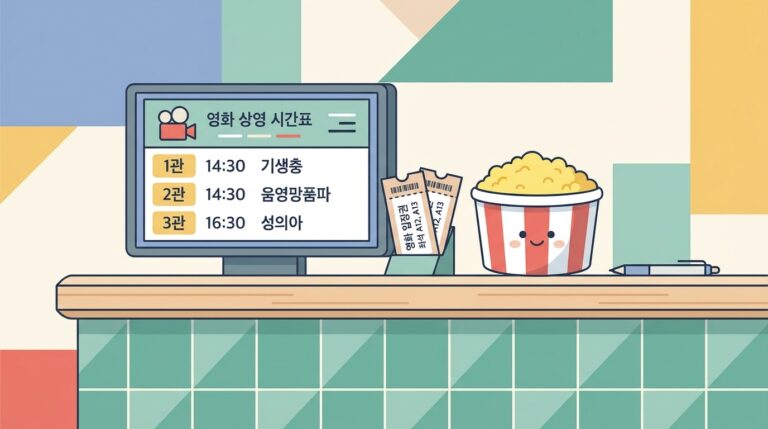
Phase 1: Empathy (Story-Immersive Opening)
안녕하세요! 매일한글 에디터입니다. (Hello! I’m your Daily Hangul editor.)
Picture this: You are standing in the vibrant, neon-lit lobby of a mega multiplex like CGV Yongsan or Megabox COEX in Seoul. The sweet aroma of caramel popcorn fills the air, and massive digital screens flash the latest blockbuster posters featuring your favorite K-drama actors. You step up toward the counter or touch the kiosk screen to catch the next showing, but the digital timetable is flickering fast with technical terms like ‘2D 자막’, ‘조조’, and ‘매진’. Your heart skips a beat. You want to ask the staff when the next screening is or if English subtitles are available, but you freeze because the textbook phrases you practiced feel way too robotic.
Don’t worry, you are not alone! Over the past decade of coaching foreign learners, navigating the fast-paced Korean cinema box office has consistently ranked as one of the most stressful yet rewarding hurdles. In South Korea, going to the cinema is practically a national pastime—Koreans visit movie theaters an average of over four times a year! Mastering how to check movie schedules and ask for showtimes won’t just save you from booking the wrong dubbed movie; it will unlock a beloved slice of everyday Korean lifestyle. Let’s dive in with practical, A2-level expressions that real locals use every single day!
Phase 2: Core 3 Expressions In-Depth
1. 이 영화 다음 상영 시간 언제예요?
- Pronunciation: I yeong-hwa da-eum sang-yeong si-gan eon-je-ye-yo? (Sounds like: ee yung-hwa da-oom sang-yung see-gahn un-jeh-yeh-yo? — say ‘da-eum’ quickly like ‘down’ without the ‘n’)
- Meaning: Literal: “This movie next screening time when is it?” / Nuance: “When is the next showtime for this movie?”
- K-Culture Moment: In the romance drama Our Beloved Summer, the leads casually check the cinema board before catching an impromptu evening movie date.
- Editor’s Insight: Instead of asking long, complicated sentences, pointing at the poster and asking “이 영화 다음 상영 시간 언제예요?” is the fastest, most natural way to get immediate help from staff.
- Situation Spectrum: Casual (⚠️ with close friends, use 언제야?) | Semi-formal (✅ 언제예요? – Perfect for staff) | Formal (✅ 언제입니까?)
- 🤔 Think About It: Notice how Korean places the topic (이 영화 – this movie) right at the front before asking 언제 (when). How does your native language structure time inquiries?
2. 오늘 자막 있는 시간대 있어요?
- Pronunciation: O-neul ja-mak in-neun si-gan-dae is-seo-yo? (Sounds like: oh-neul jah-mahk een-noon see-gahn-deh ees-suh-yo?)
- Meaning: Literal: “Today subtitles existing time slot is there?” / Nuance: “Are there any showtimes with subtitles available today?”
- K-Culture Moment: International tourists watching Hollywood or foreign indie films at the Busan International Film Festival (BIFF) venues.
- Editor’s Insight: In Korea, foreign films are usually screened in their original audio with Korean subtitles (자막), but animated films often have dubbed (더빙) versions. Asking for 자막 있는 시간대 ensures you don’t accidentally walk into a Korean-dubbed screening intended for kids!
- Situation Spectrum: Casual (⚠️ 자막 있는 거 있어?) | Semi-formal (✅ 시간대 있어요?) | Formal (✅ 시간대가 있습니까?)
- 🤔 Think About It: 시간대 (time slot/window) is a super versatile A2 word. It groups hours together rather than asking for just one specific minute.
3. 몇 관에서 상영해요?
- Pronunciation: Myeot gwan-e-seo sang-yeong-hae-yo? (Sounds like: myut-gwahn-eh-suh sang-yung-heh-yo? — the ‘t’ in myeot blends into gwan)
- Meaning: Literal: “Which hall in screening does it?” / Nuance: “Which theater screen/hall is it playing in?”
- K-Culture Moment: When rushing through a massive 15-screen theater complex in Gangnam trying to find Theater Hall 7 before the previews end.
- Editor’s Insight: Multiplexes in Korea number their individual screening rooms as 1관 (Hall 1), 2관 (Hall 2), etc. Knowing this phrase helps you navigate multi-story cinema layouts easily.
- Situation Spectrum: Casual (⚠️ 몇 관이야?) | Semi-formal (✅ 몇 관에서 상영해요?) | Formal (✅ 몇 관에서 상영합니까?)
- 🤔 Think About It: The counter 관 (gwan) specifically counts auditorium halls. Korean uses distinct counters for rooms (호), buildings (동), and theater screens (관).
Phase 3: Textbook Korean vs Real Korean
Situation 1: Asking for the earliest morning screening
- 📖 교과서 한국어 (Textbook): 가장 이른 아침 상영 시간표를 보여주시겠습니까? (Gajang ireun achim sang-yeong siganpyoreul boyeojusigesseumnikka? / Would you please show me the earliest morning screening timetable?)
- 🗣️ 진짜 한국어 (Real-life): 오늘 조조 영화 몇 시에 시작해요? (Oneul jojo yeonghwa myeot sie sijakhaeyo? / What time does today’s morning discount movie start?)
- 💡 왜 다를까? (Why is it different?): Koreans rarely ask for “earliest morning movie”; they use the dedicated cultural term 조조 (jojo), which refers to morning discount screenings before 10:00 AM.
Situation 2: Asking if good seats are still left for a specific time
- 📖 교과서 한국어 (Textbook): 그 시간에 좋은 좌석의 여유가 존재합니까? (Geu sigane joeun jwaseogui yeoyuga jonjaehamnikka? / Does availability of good seating exist at that time?)
- 🗣️ 진짜 한국어 (Real-life): 그 시간대 자리 많이 남았어요? (Geu sigandae jari mani namasseoyo? / Are there many seats left for that time slot?)
- 💡 왜 다를까? (Why is it different?): Native speakers favor simple, active verbs like 남다 (to remain/be left) and use everyday words like 자리 (seat) instead of formal Sino-Korean nouns like 좌석 (seating).
Phase 4: K-Culture Deep Dive & Non-Verbal Manners
4-1. 눈치 (Nunchi) & Cinema Etiquette
- Kiosk vs. Counter Manners: In Korea, most movie ticket bookings happen via automated touchscreen kiosks (키오스크). If you approach the ticketing counter (매표소), staff expect quick inquiries because lines move briskly. Hold your phone ready with the movie title or poster on screen.
- Point and Nod Gesture: When confirming a time on the counter monitor, point gently with your open hand or index finger while giving a polite micro-bow (목례). Avoid pointing directly at the clerk’s face.
4-2. Cultural Code: The ‘Photo Ticket’ & Night Owls
- 포토티켓 (Photo Ticket Culture): Korean cinema chains (CGV, Megabox, Lotte Cinema) allow you to print plastic, credit-card-sized commemorative tickets customized with your favorite smartphone photos or K-pop idols on the back for just 1,000 KRW.
- 심야 영화 (Late-Night Screenings): Korean movie theaters often run screenings well past midnight (until 2:00 AM or 3:00 AM), especially on Fridays and Saturdays. It is common for young adults and couples to grab late-night street food or chicken-and-beer (치맥) and finish the night with a midnight movie.
Phase 5: Real-Life Roleplay Scenario
- Setting: The buzzing ticket counter at CGV Hongdae on a Friday afternoon.
- Characters:
- 민지 (Minji): An energetic, friendly CGV cinema staff member wearing a name badge and headset.
- 알렉스 (Alex): An international student eager to watch the latest Korean sci-fi movie with friends.
민지: 어서 오세요, CGV입니다! 어떤 영화 예매 도와드릴까요?
      (Eoseo oseyo, CGV-imnida! Eotteon yeonghwa yemae dowadeurilkkayo?)
      [Welcome to CGV! Which movie can I help you book?]
      🎭 Bright smile with hands politely clasped in front.

알렉스: 안녕하세요! 저, '외계+인' 다음 상영 시간 언제예요?
        (Annyeonghaseyo! Jeo, 'Oegye+in' daeum sang-yeong sigan eonjeyeoyo?)
        [Hello! Um, when is the next screening time for 'Alienoid'?]
        🎭 Points politely toward the digital movie poster above.

민지: 다음 상영은 3시 20분하고 5시 40분에 있어요.
      (Daeum sang-yeongeun se-si i-sip-bun-ha-go da-seot-si sa-sip-bun-e isseoyo.)
      [The next screenings are at 3:20 PM and 5:40 PM.]
      🎭 Taps the monitor screen facing the customer.

알렉스: 3시 20분 영화는 자막 나와요?
        (Se-si i-sip-bun yeonghwaneun jamak nawayo?)
        [Does the 3:20 PM movie have subtitles?]
        🎭 Leans in slightly to listen attentively.

민지: 아, 3시 20분은 일반 한국어 상영이고, 5시 40분 타임에 영어 자막이 지원돼요!
      (A, se-si i-sip-buneun ilban hangugeo sang-yeong-igo, da-seot-si sa-sip-bun ta-im-e yeongeo jamagi jiwondwaeyo!)
      [Ah, 3:20 is the regular Korean screening, and the 5:40 time slot has English subtitles!]
      🎭 Points to the small [ENG SUB] icon on the monitor.

알렉스: 다행이네요! 5시 40분으로 두 장 주세요. 좋은 자리 남았어요?
        (Dahaeng-ineyoyo! Da-seot-si sa-sip-bun-euro du jang juseyo. Joeun jari namasseoyo?)
        [What a relief! Two tickets for 5:40 PM, please. Are there good seats left?]
        🎭 Holds up two fingers cheerfully.

민지: 네, H열 중앙 좌석 가능하세요. 7관에서 상영합니다.
      (Ne, H-yeol jung-ang jwaseok ganeunghaseyo. Chil-gwan-eseo sang-yeonghamnida.)
      [Yes, row H center seats are available. It will play in Screen 7.]
      🎭 Highlights the seats in green on the screen.

알렉스: 감사합니다! 팝콘도 매점에서 주문할게요.
        (Gamsahamnida! Pap-kondo maejeom-eseo jumunhalgeyo.)
        [Thank you! I will order popcorn at the snack bar too.]
        🎭 Hands over payment card with both hands.
🔀 Interactive Branching: If the 5:40 PM show is sold out (매진), what should Alex say?
- Option A:
다음 날 조조 시간표 보여주세요.(Show me tomorrow’s morning discount timetable.)- Feedback (Best): ⭐⭐⭐ Excellent! Asking for the 조조 schedule for the next day is natural, smart, and saves money.
- Option B:
왜 자리가 없어요? 빨리 만들어요!(Why are there no seats? Make one quickly!)- Feedback (Bad): ❌ Very rude and unrealistic in Korean culture.
- Option C:
그럼 다른 영화 아무거나 주세요.(Then give me any random movie.)- Feedback (Risk): ⚠️ Staff might pick a Korean animation or a movie without English subtitles.
Phase 6: 10-Second Emotion Shadowing Drill
Practice these lines out loud with proper rhythm breaks (/) and emotional tone!
[😊 Cheerful & Curious]- 저기요! / 이 영화 / 다음 상영 시간 / 언제예요?
- Jeogiyo! / I yeonghwa / daeum sang-yeong sigan / eonjeyeoyo?
- (Excuse me! / For this movie / the next showtime / when is it?)
[🧐 Focused & Inquiring]- 혹시 / 영어 자막 있는 / 시간대 / 있어요?
- Hoksi / yeongeo jamak inneun / sigandae / isseoyo?
- (By any chance / with English subtitles / time slot / is there?)
[😮 Relieved & Decisive]- 좋아요! / 4시 영화로 / 두 장 / 예매해 주세요.
- Joayo! / Ne-si yeonghwaro / du jang / yemaehae juseyo.
- (Great! / For the 4 o’clock movie / two tickets / please book.)
Phase 7: K-Culture Mini Dictionary
| Word (Hangul + Romanization) | English Meaning | Real-Life Usage Note |
|---|---|---|
| 1. 조조할인 (Jo-jo-ha-rin) | Early Morning Discount | Applied to screenings starting before 10:00 AM; tickets are typically 3,000–4,000 KRW cheaper. |
| 2. 매진 (Mae-jin) | Sold Out | Flashes in red on the schedule screen when all seats in that theater hall are booked. |
| 3. 상영관 (Sang-yeong-gwan) | Screening Auditorium | Often shortened to ~관 (3관, IMAX관, 4DX관) to indicate which hall to enter. |
| 4. 현장 예매 (Hyeon-jang Ye-mae) | On-Site Ticket Booking | Purchasing directly at the cinema counter or kiosk rather than booking ahead on mobile apps. |
Phase 8: Traveler’s Survival Kit
Top 3 Survival Expressions for the Cinema
- 가장 빠른 시간으로 주세요. (Gajang ppareun siganeuro juseyo. – Please give me the earliest available time.)
- Pro Tip: Use this when you don’t care about the exact minute and just want into the very next showing!
- 앞자리 말고 중간 자리로 해주세요. (Apjari malgo junggan jariro haejuseyo. – Center seats please, not front row.)
- Pro Tip: Front rows (A, B열) in Korean multiplexes are right against giant screens, so asking for 중간 자리 saves your neck.
- 주차 등록할 수 있어요? (Jucha deongnokhal su isseoyo? – Can I register parking validation?)
- Pro Tip: Most Korean malls provide 2–3 hours of free parking if you register your movie ticket at the counter.
💡 Editor’s Travel Note
- Mobile Navigation: Download the Naver Map app for mobile navigation to search “영화관” (movie theater) near your station.
- Booking App Tips: Major chains have mobile apps (CGV, Lotte Cinema, Megabox). While non-residents without a Korean phone number may find app payments tricky, you can always check real-time timetables without logging in before doing 현장 예매 (on-site booking).
Phase 9: “One Step Deeper” (Reflective Essay)
In South Korea, cinema halls are cultural community hubs where shared emotion (정 and collective excitement) runs high. From cheering together at webtoon-based blockbusters to bonding over experimental popcorn flavors like 갈릭버터 (garlic butter) or 어니언 (onion), checking the timetable is the first exciting step into Korea’s dynamic pop culture sphere.
💬 Your Turn: What genre of Korean movie would you love to watch in a Seoul cinema—a thrilling zombie apocalypse, a heartwarming romance, or a high-octane action film? Let us know in the comments below!
Phase 10: FAQ & Common Mistakes
Q: Can I find movie screenings with English subtitles in Korea?
A: Yes! While Hollywood films naturally have original English audio with Korean subtitles (한국어 자막), major Korean blockbusters occasionally offer special screenings with English subtitles (영어 자막) at flagship theaters like CGV Yongsan I’Park Mall or Megabox COEX.
Q: How early should I arrive before the showtime listed on the schedule?
A: The time printed on your ticket is when the theater opens its doors. Screenings in Korea typically start with 10 minutes of movie trailers and commercials (광고), so if your ticket says 14:00, the actual movie begins around 14:10.
Q: What is the difference between 2D, 3D, 4DX, and IMAX in the timetable?
A: 2D is standard. 4DX includes motion seats, wind, and scent effects. IMAX features massive screens and enhanced audio. These special formats are clearly labeled next to the movie title on the timetable.
🚨 Common Mistakes Warning Board
- Confusing ‘더빙’ (Dubbed) with ‘자막’ (Subtitled): Accidentally selecting animated films labeled [더빙] means you will hear Korean voice actors instead of the original audio.
- Correct Action: Always look for [자막] on the timetable.
- Using informal speech with staff: Saying “몇 시야?” instead of “몇 시예요?”.
- Correct Action: Always end your inquiry with -요 or -ㅂ니다.
- Rushing into the wrong hall: Multiplexes have multiple floors. Hall 1–5 might be on the 6th floor while Hall 6–10 is on the 8th floor.
- Correct Action: Double-check the ~관 number and follow floor directional arrows.
Phase 11: Action Mission & Engagement
- 🥉 Bronze Mission (Solo Practice): Read the 3 Core Expressions aloud 5 times in front of your mirror using natural gestures.
- 🥈 Silver Mission (Social Share): Open your notes app, write down your favorite Korean movie title, and formulate a sentence asking for its next showtime:
[영화 제목] 다음 상영 시간 언제예요?. - 🥇 Gold Mission (Real-life Execution): Next time you visit Korea or watch a Korean vlog, spot a cinema schedule board and identify at least three words (조조, 매진, ~관)!
🎮 K-Culture Mission: Search for a cinema scene in your favorite K-Drama (like Business Proposal or Record of Youth) and notice what snacks the characters order at the 매점 (concession stand)!
Phase 12: Interactive Quiz Challenge
Q1. (Situational Decision) You want to know if there is a morning discount screening available for today. Which expression is the most natural to use at the ticket counter?
* (A) 오늘 심야 영화 얼마예요?
* (B) 오늘 조조 영화 몇 시에 있어요?
* (C) 오늘 매진 언제 돼요?
Q2. (Fill in the Blank) Complete the sentence to ask which hall the movie is playing in:
“이 영화는 몇 _______에서 상영해요?”
* (A) 층 (Floor)
* (B) 번 (Number)
* (C) 관 (Auditorium/Screen)
Q3. (True or False) In Korea, foreign Hollywood films are labeled as ‘자막’ when they have Korean subtitles and original English audio.
* (A) True
* (B) False
👉 Click here to reveal the answers and explanations!
- Q1 Answer: (B) 조조 영화 specifically refers to early morning discount movies. (A refers to late-night midnight movies; C asks when it gets sold out).
- Q2 Answer: (C) 관. Theater halls in Korea are counted with the unit 관 (e.g., 1관, 2관).
- Q3 Answer: (A) True. 자막 indicates original audio with on-screen subtitles, whereas 더빙 means voice-dubbed.







