

Phase 1: 공감 (Storytelling Opening)
안녕하세요! 매일한글 에디터입니다.
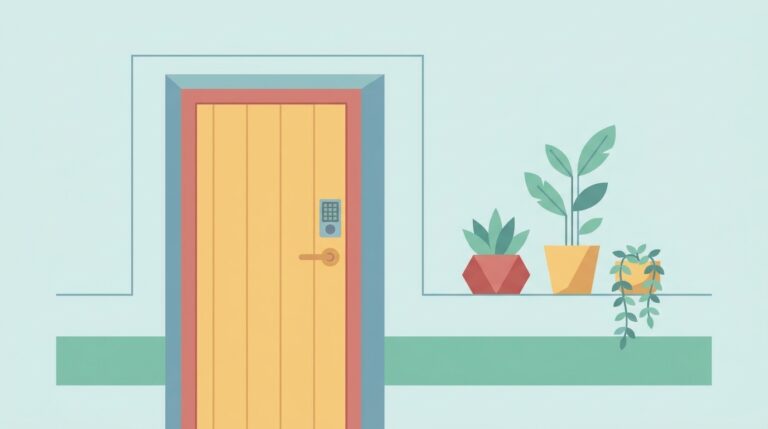
Imagine this: You are having the most aesthetic afternoon at a trendy industrial-chic cafe in Seongsu-dong. You just finished your iced Americano and salt bread, and suddenly nature calls. You walk towards the back hallway, spot a heavy steel door, and try the handle—only to find it firmly locked. Next to the handle is a glowing digital keypad, or perhaps a handwritten sign with small numbers. Panic starts creeping in. Do you need to buy another drink? Do you knock? What if you go inside and don’t know whether to throw the toilet paper into the bin or the bowl?
If you have traveled to South Korea or watched vlogs of life in Seoul, you know that navigating Korean public amenities—especially restrooms—can be a surprisingly high-stakes cultural adventure! From receipt passcodes to the famous 2018 “flush the toilet paper” revolution, Korean restrooms are ultra-clean, high-tech, but full of subtle unwritten rules.
In this lesson, curated directly from real feedback by international students and travelers, we will master the exact polite Korean expressions and cultural etiquette you need to conquer any restroom situation effortlessly. By the end of this guide, you will never feel awkward, locked out, or hesitant again!
Phase 2: 핵심 표현 3선 심층 분석 (Top 3 Core Expressions)
1. 화장실 깨끗이 사용해 주세요 (Hwajangsil kkaekkeusi sayonghae juseyo)
- Pronunciation: [Hwa-jang-sil kkae-kkeu-si sa-yong-hae ju-se-yo] (Think of ‘kkae’ as a crisp, snappy ‘k’ sound like snapping dry spaghetti, and ‘se-yo’ like ‘say-yo’ with a soft melody.)
- Meaning: Literal: “Please use the restroom cleanly.” | Real Nuance: “Please leave the restroom tidy for the next person.”
- K-Culture Moment: You will see this friendly civic reminder posted as a cute sticker inside almost every subway, train station, and cafe restroom across Korea.
- Editor’s Insight: In Korean culture, public spaces are treated as an extension of shared communal courtesy (배려, baeryeo). The adverb 깨끗이 (kkaekkeusi, cleanly) paired with the polite request ~해 주세요 (hae juseyo, please do) sets a warm, non-accusatory tone that encourages mutual respect.
- Situation Spectrum: Casual ⚠️ | Semi-formal ✅ | Formal ✅
- 🤔 Think About It: In English, signs often say “Keep Area Clean” or “Cleanliness is Appreciated.” How does the Korean grammatical request ~해 주세요 (please do for me/us) highlight community cooperation?
2. 휴지는 변기에 버려 주세요 (Hyujineun byeonggie beoryeo juseyo)
- Pronunciation: [Hyu-ji-neun byeong-gi-e beo-ryeo ju-se-yo] (Rhymes smoothly: ‘Hyu-ji’ like ‘huge-ee’ without the hard ‘g’, ‘byeong-gi’ like ‘byung-gee’.)
- Meaning: Literal: “Please discard tissue into the toilet bowl.” | Real Nuance: “Please flush toilet paper down the toilet (do not put it in the wastebasket).”
- K-Culture Moment: Seen in renovated KTX stations, department stores, and modern restaurants following Korea’s nationwide hygiene law update.
- Editor’s Insight: Historically, old plumbing led to trash cans inside stalls. However, since the government’s 2018 public restroom initiative, standard Korean toilet paper dissolves instantly. If you see this sign, flush it! (If you see the opposite: 휴지는 휴지통에, that means old pipes require the trash bin).
- Situation Spectrum: Casual ⚠️ | Semi-formal ✅ | Formal ✅
- 🤔 Think About It: Why does infrastructure modernization directly change daily polite language and signage in society?
3. 화장실 비밀번호 알려주시겠어요? (Hwajangsil bimilbeonho allyeojusigesseoyo?)
- Pronunciation: [Hwa-jang-sil bi-mil-beon-ho al-lyeo-ju-si-ge-sseo-yo] (Pronounce ‘bimil’ like ‘be-meal’ and ‘beonho’ like ‘bun-hoe’.)
- Meaning: Literal: “Could you inform me of the restroom secret number?” | Real Nuance: “Could you please tell me the restroom door passcode?”
- K-Culture Moment: In K-Dramas, whenever characters hang out in independent cafes or pochas (street pubs), you’ll often see someone glancing at the bottom of a paper receipt or asking the cashier this exact question before stepping outside.
- Editor’s Insight: Using ~시겠어요? (~sigesseoyo?) softens the request to a very courteous, natural B1-level intermediate honorific. It sounds far more polished than just asking “비번 뭐예요?” (Bibeon mwoyeyo?), especially when speaking to busy staff.
- Situation Spectrum: Casual 🚫 | Semi-formal ✅ | Formal ✅
- 🤔 Think About It: In your home country, are commercial restrooms locked with door lock keypads, or do you have to ask for a physical brass key attached to a giant object?
Phase 3: 교과서 한국어 vs 진짜 한국어 (Textbook vs. Real-World Korean)
Situation 1: Asking the cafe barista for the restroom door code
- 📖 교과서 한국어 (Textbook): 화장실의 비밀번호는 무엇입니까? (Hwajangsil-ui bimilbeonhoneun mueosimnikka?)
- 🗣️ 진짜 한국어 (Real-World): 저기요, 화장실 비번 좀 알려주세요! (Jeogiyo, hwajangsil bibeon jom allyeojuseyo!)
- 💡 왜 다를까? (Why is it different?): Koreans love abbreviations! 비밀번호 (bimilbeonho, password/passcode) is almost universally shortened to 비번 (bibeon) in conversational daily life. Adding 좀 (jom, a little / please) instantly softens your tone and makes you sound like a local.
Situation 2: Checking if there is toilet paper in the stall
- 📖 교과서 한국어 (Textbook): 화장실 안에 화장지가 비치되어 있습니까? (Hwajangsil ane hwajangjiga bichidoeeo itseumnikka?)
- 🗣️ 진짜 한국어 (Real-World): 안에 휴지 있어요? (Ane hyuji isseoyo?)
- 💡 왜 다를까? (Why is it different?): Formal words like 화장지 (hwajangji) and 비치되다 (bichidoeda, to be equipped/provided) sound like an official government report. In everyday spoken Korean, locals simply say 휴지 (hyuji, tissue/toilet paper) with a light rising intonation.
Phase 4: K-Culture 딥다이브 & 비언어적 매너 (Culture Deep Dive & Non-Verbal Manners)
4-1. 눈치 (Nunchi) & Restroom Etiquette
- Check the Receipt First (영수증 확인): Before walking up to a busy barista to ask for the door code, practice your Nunchi (situational awareness)! Look at the bottom of your printed receipt (영수증, yeongsujeung) or scan the cafe’s pickup counter. 90% of the time, the passcode and whether to press the asterisk (*) or pound (#) key is written there.
- The Double Knock (똑똑): If a stall door is shut, do not pull aggressively on the door handle. Gently knock twice (똑똑, ttok-ttok). If someone is inside, they will gently knock back twice or make a small clearing sound to signal occupancy.
- The Key-Keychain Phenomenon: In older alleys or neighborhood eateries, the staff might hand you a key tied to an enormous plastic ladle, a plush doll, or a wooden stick. This is intentional so customers don’t accidentally walk away with the key in their pockets!
4-2. The Evolution of Korea’s Public Restroom Culture
South Korea takes immense national pride in its public facilities. Around the 2002 FIFA World Cup, Korea launched a nationwide campaign to transform public restrooms into clean, hotel-grade cultural rest spaces complete with classical background music, heated bidet seats, and indoor potted plants. Knowing how to use these amenities cleanly shows that you appreciate and honor the collective social harmony (시민의식, civic consciousness) of Korea.
Phase 5: 실전 롤플레이 시나리오 (Real-World Roleplay Scenario)
Setting: A hip cafe in Ikseon-dong. The cafe is bustling with people enjoying croffles. Alex (an international traveler) needs to find the restroom and verify the passcode with Ji-woo, the barista.
- Ji-woo (Barista): 주문하신 아메리카노 나왔습니다! (Jumunhasin amerikano nawasseumnida! / Your Americano is ready!)
🎭 Hands over the tray with a warm smile. - Alex: 감사합니다! 저, 혹시 화장실이 어디에 있어요? (Gamsahamnida! Jeo, hoksi hwajangsiri eodie isseoyo? / Thank you! Um, by any chance, where is the restroom?)
🎭 Points slightly toward the hallway. - Ji-woo: 매장 밖으로 나가셔서 오른쪽 복도 끝에 있어요. (Maejang bakkeuro nagasyeoseo oreunjjok bokdo kkeute isseoyo. / Go outside the store, and it’s at the end of the hallway on the right.)
- Alex: 아, 도어락 잠겨 있나요? 비번이 뭐예요? (A, do-eorak jamgyeo innayo? Bibeoni mwoyeyo? / Ah, is it locked with a doorlock? What is the passcode?)
- Ji-woo: 영수증 맨 밑에 적혀 있는데, 1234 별표() 누르시면 돼요! (Yeongsujeung maen mite jeokhyeo inneunde, il-i-sam-sa byeolpyo nureusimyeon dwaeyo! / *It’s printed at the very bottom of the receipt, but you can just press 1234 and the star () key!*)
- Alex: 그렇군요. 휴지는 안에 준비되어 있나요? (Geureokgunyo. Hyujineun ane junbidoeeo innayo? / I see. Is there toilet paper prepared inside?)
- Ji-woo: 네, 안에 있어요! 변기에 바로 버려주시면 됩니다. (Ne, ane isseoyo! Byeonggie baro beoryeojusimyeon doemnida. / Yes, it’s inside! You can flush it right down the toilet.)
- Alex: 친절하게 알려주셔서 감사합니다! 깨끗이 쓸게요. (Chinjeolhage allyeojusyeoseo gamsahamnida! Kkaekkeusi sseulgeyo. / Thank you for kindly telling me! I will keep it clean.)
🎭 Gives a polite 15-degree bow.
🔀 인터랙티브 분기점 (Interactive Decision Point)
You walk to the restroom door in the hallway. You see the keypad blinking, but there are two buttons below the numbers: * (별표, Star) and # (우물정/샵, Pound). What do you do?
- Option A: Mash random buttons quickly until the red light turns green.
- Feedback [BAD]: 🚫 If you enter the wrong combination 5 times, modern Korean smart locks will trigger a loud anti-theft siren that echoes through the entire building!
- Option B: Check the receipt to see if it specifies the suffix symbol (e.g., 1234* vs 1234#).
- Feedback [BEST]: ✅ Korean doorlocks almost always end with the star (
*) key to open. Checking the receipt avoids noise and confusion!
- Feedback [BEST]: ✅ Korean doorlocks almost always end with the star (
- Option C: Knock loudly and shake the door handle repeatedly.
- Feedback [RISK]: ⚠️ If someone is inside, this can be startling and considered impolite. Always knock gently twice first.
Phase 6: 10초 감정 섀도잉 드릴 (10-Second Emotion Shadowing Drill)
Practice reading these out loud with natural rhythm and emotion markers!
[😅 당황스럽지만 정중하게 - Slightly flustered yet polite]- 저기요… / 화장실 비번 / 한 번만 더 / 알려주시겠어요? (Jeogiyo… / hwajangsil bibeon / han beonman deo / allyeojusigesseoyo?)
[😊 안도하며 상냥하게 - Relieved and pleasant]- 아, / 영수증에 / 적혀 있군요! / 깨끗이 / 쓸게요! (A, / yeongsujeunge / jeokhyeo itgunyo! / kkaekkeusi / sseulgeyo!)
[🚪 똑똑 노크하며 조심스럽게 - Knocking cautiously]- 혹시 / 안에 / 사람 / 계세요? (Hoksi / ane / saram / gyeseyo?)
Phase 7: K-Culture 미니 사전 (Mini Dictionary)
- 비번 (Bibeon) | Passcode / PIN
- Usage: Slang abbreviation for 비밀번호 (bimilbeonho). Used constantly in cafes, residential doorlocks, and Wi-Fi networks.
- 휴지통 (Hyujitong) | Trash can / Wastebasket
- Usage: You will see signs stating “휴지통 없는 화장실” (A Restroom Without Wastebaskets), which indicates you must flush toilet paper directly.
- 영수증 (Yeongsujeung) | Receipt
- Usage: In Korea, receipts aren’t just for accounting; they are your golden ticket containing restroom codes and Wi-Fi access info.
- 남녀공용 (Namnyeogongyong) | Unisex / Gender-Neutral Restroom
- Usage: Often marked on door entrances of smaller cafes and bars. Be sure to lock the main exterior door latch (걸쇠, geolsoe) when entering!
Phase 8: 여행자를 위한 생존 키트 (Traveler’s Survival Kit)
🆘 Survival Phrases TOP 3
- 화장실이 급해요! (Hwajangsiri geuphaeyo!)
- Meaning: “It’s an emergency! I urgently need a restroom!”
- Pro Tip: Use this at subway help booths or convenience stores when you urgently need assistance.
- 비번 누르고 별표(*) 누르면 돼요? (Bibeon nureugo byeolpyo nureumyeon dwaeyo?)
- Meaning: “Do I enter the passcode and press the star key?”
- Pro Tip: Confirms the digital lock mechanism quickly.
- 휴지가 다 떨어졌어요. (Hyujiga da tteoreojyeosseoyo.)
- Meaning: “The toilet paper has run out.”
- Pro Tip: Tell this to staff so they can restock the roll for everyone.
🗺️ Editor’s Travel Note
- Subway Stations are Your Best Friend: When on the move in Seoul or Busan, subway stations have some of the cleanest and safest restrooms in the world. If the restroom is inside the ticket gates and you are on the outside, simply look for the “Help (호출)” bell on the barrier gate, tap it, and say “화장실 가고 싶어요 (hwajangsil gago sipeoyo)”—the station master will buzz you in without deducting fare!
- Navigate Smart: Download the Naver Map Application to search for nearby open public amenities (개방화장실, gaebang hwajangsil).
Phase 9: “한 발 더 깊이” (Cultural Reflection Essay)
In South Korea, the phrase “내가 머문 자리도 아름답게” (Make the spot you stayed at beautiful as well) is etched into the collective social mindset. A public restroom is not viewed merely as a utility closet, but as a shared communal sanctuary where one’s public manners (공중도덕) reflect personal consideration for the next stranger. When you wipe a splash of water from the sink counter or flush properly, you are participating in this invisible thread of Korean hospitality.
💬 Your Turn: In your culture, what is the most important unspoken rule when using shared public spaces? Share your thoughts in the comments below!
Phase 10: FAQ & 오해 방지 (FAQ Schema)
Q: Can I use convenience store restrooms in Korea like in Japan or the US?
A: Usually, no. Unlike in some other countries, most 24-hour convenience stores (CU, GS25, 7-Eleven) in urban Korean cities do not have customer restrooms due to space limits. Instead, head to the nearest subway station, department store, or large commercial building.
Q: What should I do if the digital keypad on the restroom door doesn’t work?
A: First, wake up the keypad screen by touching it with the palm of your hand or back of your fingers. Enter the digits, and always finish by pressing the star (*) or pound (#) key. If it still doesn’t open, double-check your receipt for any specific alphabetical letters (e.g., 1234a*).
Q: What does the red light vs green light on the stall lock mean?
A: In modern Korean stalls, a red latch or red sensor indicator means “Occupied” (사용 중, Sayong jung), while green means “Vacant” (비어 있음, Bieo isseum).
🚨 흔한 실수 (Common Mistakes TOP 3)
- Throwing non-dissolvable wet wipes into the toilet:
- Correction: Ordinary toilet paper (휴지) can be flushed, but wet wipes (물티슈, multisyu) or sanitary products must ALWAYS go into the designated sanitary bin (위생용품 수거함).
- Yanking locked doors violently:
- Correction: Gently knock twice (똑똑). If someone is inside, they will knock back.
- Leaving the water running while soaping:
- Correction: Many Korean public sinks use automated infrared sensors or push-timer faucets to conserve water.
Phase 11: 액션 미션 & 참여 유도 (Action Mission)
- 🥉 Bronze Level: Say “화장실 깨끗이 쓸게요! (Hwajangsil kkaekkeusi sseulgeyo!)” out loud 3 times in front of your mirror.
- 🥈 Silver Level: Find a Korean cafe receipt (or look up an image of one online) and locate where the word 비번 or 화장실 is written.
- 🥇 Gold Level: Next time you visit a Korean restaurant or cafe in your city, politely ask the staff in Korean: “화장실이 어디에 있어요? (Hwajangsil-i eodie isseoyo?)”.
- 🎮 K-Culture Mission: Watch an episode of a slice-of-life K-Drama (like Hospital Playlist or Business Proposal) and spot how characters ask for amenities or handle keys!
Phase 12: 인터랙티브 퀴즈 챌린지 (Interactive Quiz Challenge)
Q1. [Situation Judgment] You are in a cafe in Seoul. You need the restroom passcode. What is the most natural, polite way to ask the staff?
1. 야, 문 열어! (Ya, mun yeoreo!)
2. 저기요, 화장실 비번 좀 알려주시겠어요? (Jeogiyo, hwajangsil bibeon jom allyeojusigesseoyo?)
3. 화장실 키를 버려주세요. (Hwajangsil kireul beoryeojuseyo.)
Q2. [Fill-in-the-Blank] Complete the common restroom etiquette slogan:
“휴지는 ________에 버려 주세요.” (Please flush the toilet paper down the toilet bowl.)
Q3. [True / False] In Korea, if a public restroom stall does not have a trash can next to the toilet, it means you should flush the toilet paper directly down the toilet.
👉 Click here to reveal the Answers & Explanations!
- Q1 Answer: 2번 (저기요, 화장실 비번 좀 알려주시겠어요?). Option 1 is impolite slang, and Option 3 means “Please throw away the key!”
- Q2 Answer: 변기 (Byeong-gi / Toilet bowl). The full sentence is “휴지는 변기에 버려 주세요.”
- Q3 Answer: TRUE (참)! Korea’s “Trash-Can-Free Restroom” initiative means soluble toilet paper is flushed directly to maintain better hygiene and eliminate odors.







