

Phase 1: Empathy & Opening
안녕하세요! 매일한글 에디터입니다.
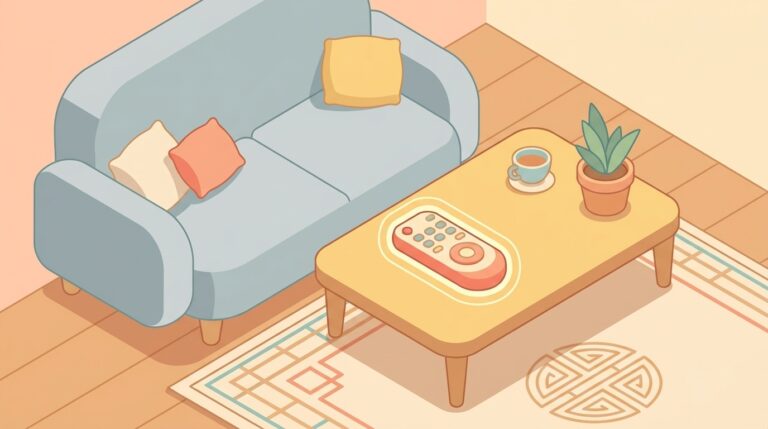
Picture this: You just returned to your cozy Seoul Airbnb after walking 20,000 steps through Hongdae and Bukchon Hanok Village. Your legs are throbbing, the summer heat outside is merciless, and all you want to do is collapse on the bed, turn on the air conditioner, and binge-watch a K-drama on TV. But there is just one tiny crisis: where on earth is the remote control?
You look on the coffee table, check under the sofa cushions, and peek near the bed. Nothing. You want to ask your Korean host, roommate, or friend for help, but your mind goes blank. In Korean households, appliances rule the daily routine, and remote controls—affectionately called rimokon—seem to have a magical ability to vanish right when you need them most!
As someone who has guided hundreds of absolute beginners through their first weeks in Korea, I know how intimidating even small daily interactions can feel. In this lesson, designed specifically for A1 beginners, we will master easy, natural phrases to locate missing remotes and conquer Korean home appliances with total confidence. Let’s dive in!
Phase 2: Core 3 Expressions
1. 리모컨 어디 있어요? (Rimokon eodi isseoyo?)
- Pronunciation: [Lee-mo-kon eo-di ee-sseo-yo?] (Think of ‘remote control’ shortened to ‘rimo-con’, then ‘eo-di’ sounding like ‘uh-dee’)
- Meaning: Literal: “Where is remote control?” | Nuance: “Where is the remote?”
- K-Culture Moment: In variety shows like I Live Alone (나 혼자 산다), you constantly see Korean celebrities wandering around their living rooms scratching their heads muttering this exact phrase.
- Editor’s Insight: Koreans love shortening long English loan words! “Remote control” becomes simply 리모컨 (rimokon). Just add 어디 있어요? (where is it?), which is your master key question for finding anything in Korea.
- Situation Spectrum:
- Casual (Friends/Family): ⚠️ 리모컨 어디 있어? (Rimokon eodi isseo?)
- Semi-formal (Polite everyday tone): ✅ 리모컨 어디 있어요? (Rimokon eodi isseoyo?)
- Formal (Official settings): 🚫 Too conversational for formal meetings
- 🤔 Think About It: Notice how Korean drops small words like ‘the’ or ‘a’. How does focusing purely on core keywords make learning Korean faster for beginners?
2. 저기 있어요 (Jeogi isseoyo)
- Pronunciation: [Jeo-gee ee-sseo-yo] (Sounds like ‘Juh-gee is-saw-yo’)
- Meaning: Literal: “It exists over there.” | Nuance: “It’s over there!”
- K-Culture Moment: When a friend spots the remote resting on top of the refrigerator or beside the TV stand, they will point two fingers and say this warmly.
- Editor’s Insight: In Korean, space is divided into three zones: 여기 (yeogi = here, near me), 거기 (geogi = there, near you), and 저기 (jeogi = over there, far from both of us). When pointing across the room, 저기 is your best friend!
- Situation Spectrum:
- Casual: ⚠️ 저기 있어 (Jeogi isseo)
- Semi-formal (Polite everyday tone): ✅ 저기 있어요 (Jeogi isseoyo)
- Formal: 🚫 저기 있습니다 (Jeogi itseumnida)
- 🤔 Think About It: Why do you think Korean distinguishes between ‘near you’ (거기) and ‘away from both of us’ (저기) so clearly?
3. 에어컨 리모컨이에요? (Eeokeon rimokon-ieyo?)
- Pronunciation: [Eh-uh-kon lee-mo-kon-ee-eh-yo?]
- Meaning: Literal: “Is it air conditioner remote?” | Nuance: “Is this the AC remote?”
- K-Culture Moment: Korean living rooms often have at least 3 remotes: one for the TV screen, one for the IPTV set-top box, and one for the wall-mounted air conditioner. Everyone gets them mixed up!
- Editor’s Insight: Just like 리모컨, “air conditioner” is trimmed down to 에어컨 (eeokeon). Put the two words together (에어컨 리모컨), add ~이에요? (Is it…?), and you have a perfect question.
- Situation Spectrum:
- Casual: ⚠️ 에어컨 리모컨이야? (Eeokeon rimokon-iya?)
- Semi-formal (Polite everyday tone): ✅ 에어컨 리모컨이에요? (Eeokeon rimokon-ieyo?)
- Formal: 🚫 에어컨 리모컨입니까? (Eeokeon rimokon-imnikka?)
- 🤔 Think About It: In English we say “AC remote”, in Korean “에어컨 리모컨”. Isn’t it fun how both languages love saving breath with abbreviations?
Phase 3: Textbook Korean vs Real Korean
Scenario 1: Asking where the TV remote is
- 📖 Textbook Korean: 텔레비전 원격 제어기가 어디에 위치합니까? (Quelle formal and robotic! Nobody speaks like this.)
- 🗣️ Real Korean: TV 리모컨 어디 있어요? (TV rimokon eodi isseoyo?)
- 💡 Why is it different?: Native speakers rarely say the full Sino-Korean term for remote control (원격 제어기). They simply say TV 리모컨 in everyday modern life.
Scenario 2: Saying you found it
- 📖 Textbook Korean: 제가 그것을 발견하였습니다. (Sounds like a 19th-century detective novel.)
- 🗣️ Real Korean: 아, 찾았다! 여기 있어요! (A, chajatda! Yeogi isseoyo!)
- 💡 Why is it different?: Real Koreans use the lively exclamation 찾았다! (I found it!) the split second their eyes land on the missing item.
Phase 4: K-Culture Deep Dive & Non-verbal Manners
4-1. Nunchi (눈치) & Gestures
When searching for a lost item in a shared Korean home or Airbnb with a host:
* Look with your eyes first: Before asking your host, make a quick, visible effort to check obvious spots (table, sofa, under the TV). This shows respectful nunchi (consideration) that you aren’t treating them like room service.
* Two-handed handover: When someone hands you the remote control or when you hand it to an elder/host, receive or pass it using both hands (or support your right wrist with your left hand). It’s an instant sign of good manners!
4-2. Cultural Code: The Multi-Remote Living Room
In South Korea, almost every household uses a high-speed fiber IPTV service (like Olleh TV, B tv, or U+ tv). This means Korean TVs usually have two power buttons on one remote: one red button labeled TV 전원 (TV Power) and another labeled 셋톱 전원 (Set-top box Power). If your screen stays black, you probably only turned on the box and not the screen! Knowing this saves travelers hours of panic.
Phase 5: Real-Life Roleplay Scenario
Setting: You are sitting on the living room sofa of a guesthouse in Mapo-gu, Seoul. Minho, the friendly Korean guesthouse manager, is setting down a pitcher of cold barley tea.
- Turn 1 (You): 🎭 Looking around the sofa and under cushions
“저기요, TV 리모컨 어디 있어요?”
(Jeogiyo, TV rimokon eodi isseoyo? / Excuse me, where is the TV remote?) - Turn 2 (Minho): 🎭 Points toward the coffee table
“테이블 위에 없어요?”
(Teibeul wie eopseoyo? / Isn’t it on the table?) - Turn 3 (You): 🎭 Shakes head gently
“네, 없어요.”
(Ne, eopseoyo. / Yes, it’s not there.) - Turn 4 (Minho): 🎭 Looks under the TV stand
“아! 저기 소파 밑에 있어요!”
(A! Jeogi sopa mite isseoyo! / Ah! It’s over there under the sofa!) - Turn 5 (You): 🎭 Reaches down and picks up a small white remote
“이거 에어컨 리모컨이에요?”
(Igeo eeokeon rimokon-ieyo? / Is this the AC remote?) - Turn 6 (Minho): 🎭 Laughs softly and hands you the black remote
“아니요, 그건 에어컨이고, 이게 TV 리모컨이에요.”
(Aniyo, geugeon eeokeon-igo, ige TV rimokon-ieyo. / No, that’s the AC, and this one is the TV remote.) - Turn 7 (You): 🎭 Receives it with both hands with a bright smile
“감사합니다!”
(Gamsahamnida! / Thank you!) - Turn 8 (Minho): 🎭 Nods pleasantly
“네, 편하게 보세요!”
(Ne, pyeonhage boseyo! / Sure, enjoy watching!)
🔀 Interactive Branching Choice
When Minho points under the sofa in Turn 4, what do you say?
* Choice A: “저기 있어요? 감사합니다!” (Jeogi isseoyo? Gamsahamnida!)
* Choice B: “리모컨 줘.” (Rimokon jwo. – Give me the remote.)
* Choice C: “이거 뭐야?” (Igeo mwoya? – What is this?)
Feedback:
* Option A [BEST]: Perfect polite A1 response! It shows gratitude and confirms the location naturally.
* Option B [BAD]: 반말 (informal speech) alert! Saying 줘 (give it) sounds bossy and impolite to a host.
* Option C [RISK]: Too blunt and informal. Use 이게 뭐예요? (What is this?) instead if you are curious.
Phase 6: 10-Second Emotion Shadowing Drill
Practice reading these out loud with natural intonation and emotion markers!
[🤔 Confused & searching]
“리모컨이… / 어디 / 있어요?”
(Rimokoni… / eodi / isseoyo?)-
[💡 Delighted & excited realization]
“아! / 찾았다! / 저기 / 있어요!”
(A! / Chajatda! / Jeogi / isseoyo!) -
[🙏 Polite & relieved smile]
“에어컨 / 켜도 / 돼요?”
(Eeokeon / kyeodo / dwaeyo? – May I turn on the AC?)
Phase 7: K-Culture Mini Dictionary
- 리모컨 (Rimokon) | Remote control
Shortened form of ‘remote control’. Used for TVs, ACs, robot vacuums, and digital door locks. - 전원 (Jeon-won) | Power button / Source
The most crucial word on any Korean appliance button. Look for the circle-line icon with this word. - 에어컨 (Eeokeon) | Air conditioner
Essential for surviving Korea’s humid summers. Often paired with 켜다 (turn on) or 끄다 (turn off). - 배터리 / 건전지 (Baeteori / Geonjeonji) | Battery
If the remote doesn’t work, tell your host: “건전지 없어요” (There are no batteries).
Phase 8: Traveler’s Survival Kit
TOP 3 Survival Expressions
- TV 켜주세요 (TV kyeo-juseyo)
Pronunciation: [TV kyeo-joo-seh-yo]
Pro Tip: Use this when you want someone to help turn on the TV. - 리모컨 안 돼요 (Rimokon an dwaeyo)
Pronunciation: [Lee-mo-kon an dway-yo]
Pro Tip: Means “The remote isn’t working.” Instant problem-solver for hotel front desks! - 이거 어떻게 켜요? (Igeo eotteoke kyeoyo?)
Pronunciation: [Ee-geo uh-tteo-keh kyeo-yo?]
Pro Tip: Means “How do I turn this on?” Great for tricky Korean heating/boiler controllers.
Editor’s Travel Note
When checking into an Airbnb or traditional Hanok in Seoul, take a photo of the appliance control panels immediately. Open the Naver Papago translation app and use the live camera feature to read the Korean button labels instantly. For finding the nearest convenience store to buy replacement AAA batteries (건전지), open the Naver Map app download and search for ‘편의점’ (convenience store).
Phase 9: Stepping Deeper
In Korean homes, modern technology and communal comfort blend seamlessly. Notice how many daily Korean loanwords like 리모컨, 에어컨, and 원룸 (one-room studio) are shortened into neat two-or-three-syllable blocks. This reflects the Korean linguistic love for rhythmic efficiency (빨리빨리 culture). When you speak these condensed words, you sound instantly more like an insider rather than a textbook robot.
💬 Your Turn: What appliance in your home is the hardest to find the remote for? Have you ever had a funny mix-up with remotes while traveling? Share in the comments below!
Phase 10: FAQ & Common Mistakes
Q: Can I just say ‘Remote’ in English when asking for help?
A: Most younger Koreans will understand ‘remote control’, but pronouncing it the Korean way as 리모컨 (rimokon) ensures everyone from taxi drivers to elderly Airbnb hosts understands you in 0.1 seconds.
Q: What is the difference between ‘여기 있어요’ and ‘저기 있어요’?
A: Use 여기 있어요 (Yeogi isseoyo) when the remote is close to you (e.g., right next to your hand). Use 저기 있어요 (Jeogi isseoyo) when it is across the room away from both you and the listener.
Q: How do I ask for TV batteries politely?
A: Simply say: **”건전지 있어요?” (Geonjeonji isseoyo? – Do you have batteries? / Are there batteries?)
🚨 Common Mistakes Warning Board
- Saying ‘리모트’ instead of ‘리모컨’: ‘리모트’ (remote) sounds unnatural. Always stick to 리모컨.
- Confusing 켜다 (turn on) and 끄다 (turn off): Remember, 켜요 (kyeo-yo = turn on) vs 꺼요 (kkeo-yo = turn off). Don’t freeze yourself in summer by mixing them up!
- Omitting ‘요 (yo)’ with strangers: Saying 어디 있어? instead of 어디 있어요? can sound rude to older hosts. Always keep the 요 at the end for safe, polite communication.
Phase 11: Action Mission
- 🥉 Bronze Mission (Solo Practice): Point to 3 items in your room right now and say aloud: “[Item] 어디 있어요? 저기 있어요!”
- 🥈 Silver Mission (Social Share): Share this post on your Instagram Story or X (Twitter) with the caption: “리모컨 어디 있어요? 📺 #DailyHangul”
- 🥇 Gold Mission (Real Life Execution): Next time you watch a K-drama or Korean vlog, spot the remote control and yell “찾았다! 리모컨 저기 있어요!”
🎮 K-Culture Mission: Watch an episode of Running Man or I Live Alone. Listen closely for how many times members say “어디 있어?” when searching for hidden game items!
Phase 12: Interactive Quiz Challenge
Question 1: Situation Check
You are at a Seoul hotel and can’t find the air conditioner remote. Which polite phrase should you say to the staff?
1. 에어컨 리모컨 어디 있어요?
2. 에어컨 리모컨 어디 있어?
3. 에어컨 꺼주세요.
👉 Click to view Answer & Explanation
Correct Answer: 1
Explanation: Option 1 is polite and asks precisely where the AC remote is located. Option 2 lacks the polite ending ‘요’, and Option 3 means “Please turn off the AC.”
Question 2: Fill in the Blank
Complete the natural Korean phrase:
“아! ________! 여기 있어요!” (Ah! I found it! It’s here!)
(Hint: Past tense of finding something)
👉 Click to view Answer & Explanation
Correct Answer: 찾았다 (Chajatda)
Explanation: 찾았다! is the universal, spontaneous Korean reaction when finding a lost item!
Question 3: True or False Cultural Quiz
In Korea, TV remotes for IPTV often have separate power buttons for the TV screen and the set-top box. (True / False)
👉 Click to view Answer & Explanation
Correct Answer: True
Explanation: Korean IPTV remotes usually have both ‘TV 전원’ and ‘셋톱 전원’ buttons. Make sure both are turned on to watch your favorite K-drama!







